
Getting remote students to participate — and stay focused — is one of the hardest parts of teaching online. Unlike an in-person classroom, you can’t read the room, pull a distracted student back with eye contact, or feel the energy shift when you’ve lost them.
Whether you’re running a fully remote course or managing a hybrid classroom where some students join via screen, the strategies that drive engagement are learnable and repeatable. This guide covers what the research says about student engagement, and the practical techniques that work across grade levels and formats.
How do you engage remote students? Engaging remote students requires addressing four dimensions simultaneously: behavioral (participating in activities), emotional (feeling connected to the class), cognitive (actively processing content), and agentic (taking ownership of their learning). The most effective strategies combine structured interaction — breakout groups, live polls, chat-based quizzes — with consistent teacher presence and clear expectations for participation in every session.
The 4 Dimensions of Student Engagement
Student engagement widely consists of four distinct components: behavioral, emotional, cognitive, and agentic. Motivating students in each of these four areas is the key to keeping students engaged in any classroom setting.
-
Behavioral engagement consists of all learning-related activities that take place both inside and outside the classroom. At a deeper level, behavioral engagement also involves a student’s ability to effectively follow established classroom norms.
-
Emotional engagement encompasses the social and emotional responses from students in their interactions with teachers and peers. This type of engagement can be both positive or negative, represented through emotions such as excitement, happiness, boredom, or anxiety.
-
Cognitive engagement refers to things like processing, or the amount of time students spend working on course-related activities or material. Often, cognitive engagement can be measured through the quality of the work students are submitting or the level of participation from students during small group activities.
-
Agentic engagement is the ability for a student to take a proactive approach to their learning. Actions such as providing feedback on a lesson or addressing a skills gap with an instructor are both indicators of agentic engagement.
As educators transition from remote to hybrid and in-person learning, best practices for student engagement all start with creating an environment with each of these engagement types in mind.
Related: Vibe: Interactive Whiteboarding for Distance and Hybrid Learning
 A student answers a question while learning at home on their tablet.
The Right Material for the Right Environment
Not all activities can take place effectively online. As you outline your course, consider the modules or activities that are best for in-person learning and the ones that can be completed online. Labs and experiments are a great example of in-person activities. Silent reading, writing or independently paced lessons that can be completed asynchronously are great examples of activities best for online learning days.
It’s important to keep in mind that not all students have the skills needed to adapt to learning in different classroom settings. One way to ensure access and inclusivity for all students is to incorporate the Universal Design for Learning strategies suggested by the National Education Association.
For elementary students, it’s important to start by gauging the understanding of your students as you progress through your lesson. In an in-person setting, you may rely largely on facial expressions, body language and verbal feedback to do so.
For hybrid students learning remotely, things get a little more challenging. You can’t have students coming off mute every two minutes to say if they understand the material or not. Try to give students opportunities to share their understanding throughout the lesson in fun and creative new ways. For example, you can have students ask and answer short questions via chat. More on that later.
In a high school or higher-education setting, set clear expectations for how and when you can be reached for questions about assignments by utilizing office hours, both virtually and in-person.
Make Space for Socialization and Meaningful Discussion
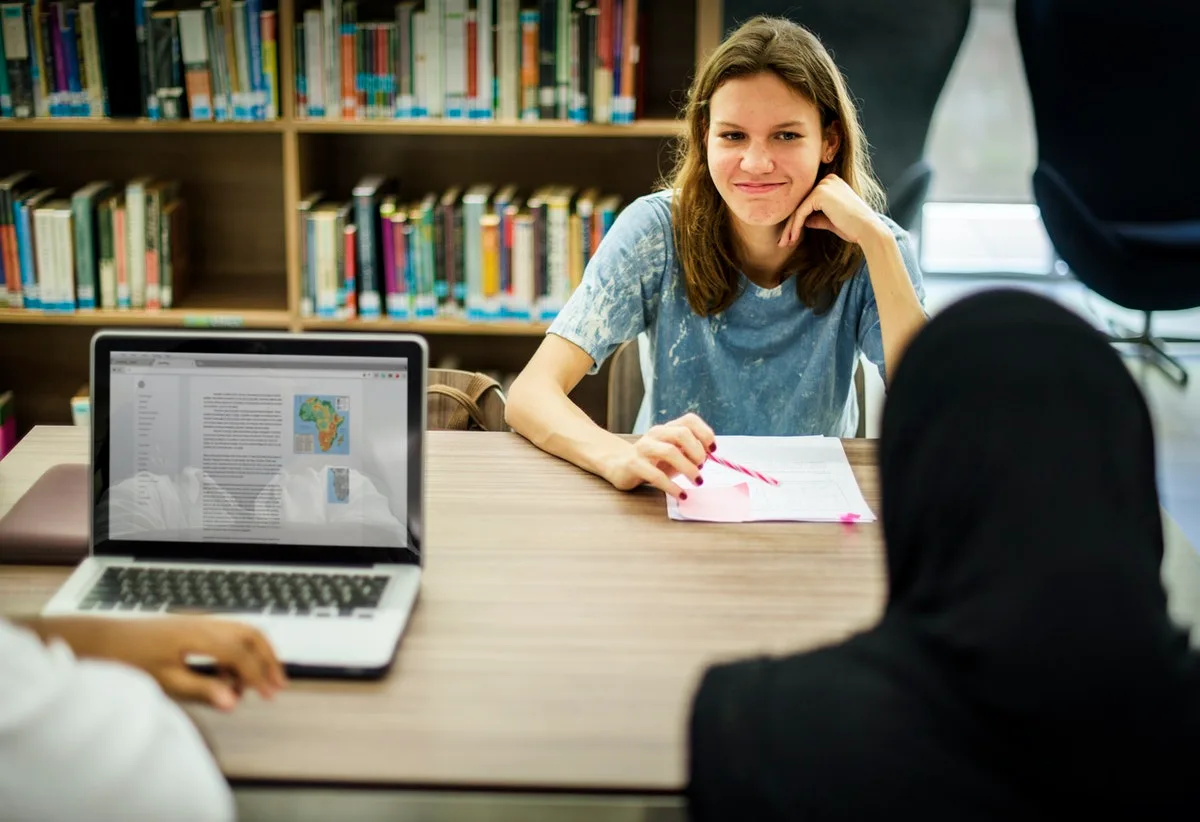
For middle and high-school students, the discussion format is one of the most popular options for in-person and remote learning. Hybrid classes can accommodate this set-up through break-out rooms.
Here’s how:
-
Start by providing your students with an open-ended prompt on a relevant topic.
-
Divide students into pairs or small groups through break-out rooms.
-
Have students discuss their thoughts for a set amount of time.
-
Ask students to note their key ideas in a Google Doc.
-
Use a round-robin format to allow each group to share their discussion.
-
As other groups present, students can jot down their thoughts on the information and presentations in a Google Sheet.
This virtual take on the traditional discussion allows for personal and group reflection while strengthening written and verbal communication skills.
Missing the conversations that tend to flow before and after class? For higher-education settings, consider giving students a few minutes to socialize before getting started, or hold open office hours on the classroom video channel after class ends.
Related: Smart Ideas for Fostering Teamwork in Hybrid Learning Environments
Consider providing a place for discussion with a classroom lounge. To make it more inclusive for a hybrid setting, add a virtual forum and share material you otherwise wouldn’t be able to get to in class for students to interact with. To keep it fun, play trivia or post links to interesting subtopics to spark casual conversation.
Making Your Classroom Interactive for Stronger Student Engagement
Incorporating interactive learning opportunities is one of the most effective ways to maximize cognitive engagement.
For elementary students, games are the perfect way to add that interactive element to the learning experience. Using a Vibe Smart Whiteboard, students from all locations can join together to play fun and engaging games such as Kahoot, story sequence, Pictionary, and more.
Using interactive games and other multimedia types can also be effective for engagement at the high school level or in a higher education setting. A 2025 review published in the ELSES conference proceedings found that interactive course content and multimedia resources are among the most consistent drivers of student engagement in online learning environments — and that how activities are designed matters as much as which tools are used.
These different strategies don’t have to be limited to only synchronous or asynchronous settings. For example, Vibe Smart Whiteboards integrate with a variety of video-conferencing platforms, meaning live debates can take place in real time with both in-person and remote students.
In Higher Education
In higher education, consider the "Students as Partners," or SaP approach. The SaP approach works to reverse the norm that faculty are the single experts on a particular topic by giving all participants the opportunity to engage as they would on a peer to peer level.
While instructors are experts at knowing what to teach, students are experts at knowing how they learn. According to the research, by giving students an active role in deciding how they learn, it creates a classroom environment where students can share new perspectives and ultimately gain a deeper understanding of course material.
Explore How Students Want to Learn
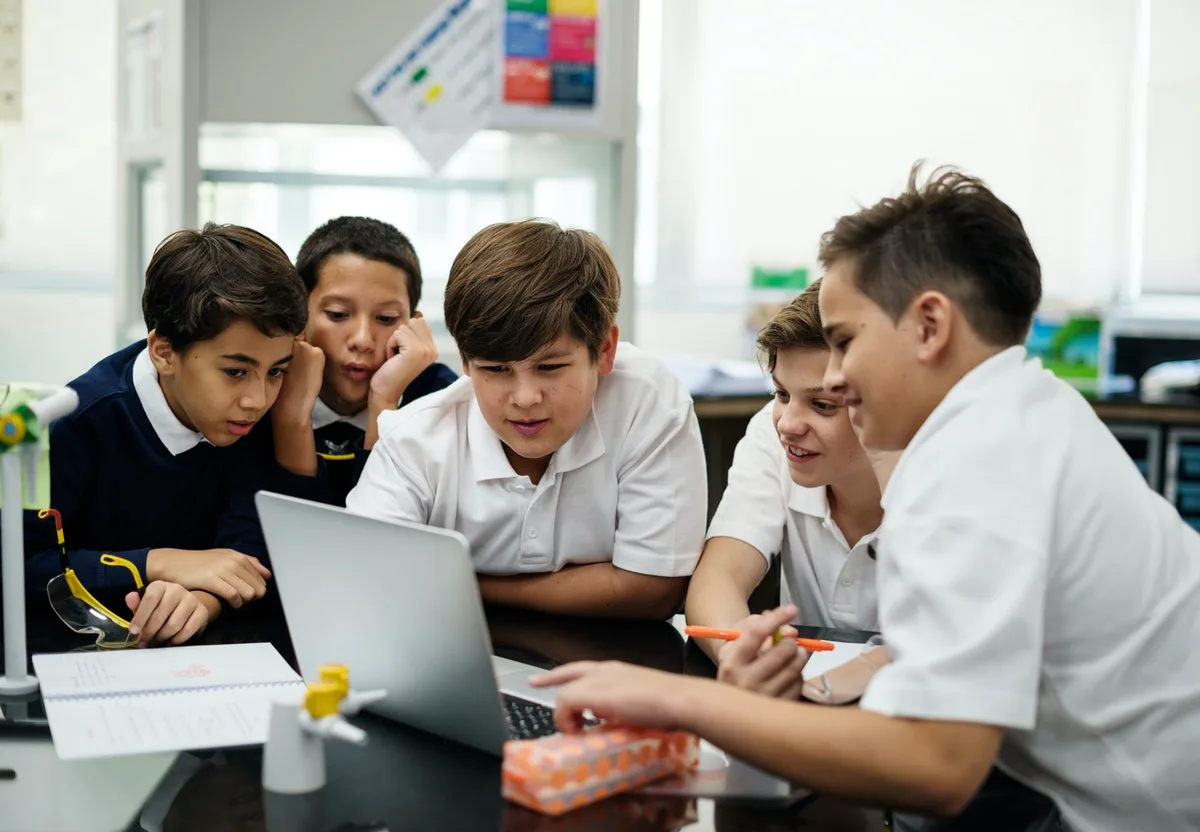
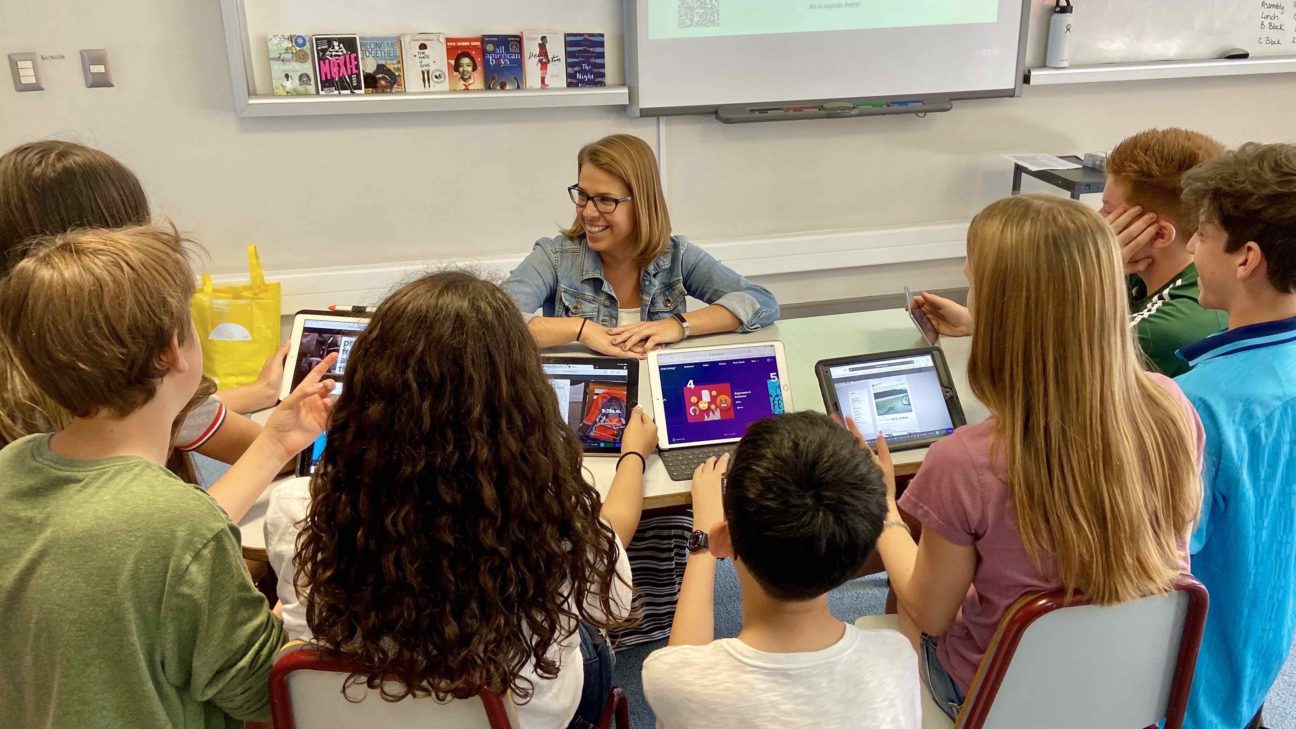 a group students are learning
While all-remote learning has its advantages and challenges, one of the biggest pros is the ability for students to engage with a lesson at their own pace through asynchronous learning.
On the other hand, one of the biggest cons is missing out on valuable feedback from learners. As educators and students transition back to the classroom, it’s important to make sure all students have the opportunity to remain stakeholders in their learning experience.
In fact, the higher-education study referenced in the last section noted that when students were put in charge of the content in a leading position, that experience enhanced both emotional and cognitive engagement.
Here are a few ways to empower your students to get involved in their learning:
For a quick temperature check, request thumbs up or thumbs down emojis. You may even have students share their favorite and least favorite emojis to serve as a "Yes, I get it" or "No, I need help" to put a more creative spin on things.
Need to do a quick overview of yesterday’s concepts? Try a Zoom chat quiz. These informal tests don’t have to be graded. Instead, they can help you determine what to review and what to move onto next. For best results, stick to a handful of key questions. You can try True/False or multiple choice for easy scanning of responses.
Classroomscreen recently added a polling feature that allows educators to get open feedback from students related to the lesson of the day. The polling feature is completely customizable and students can access it directly from a Vibe Board S1.
Elevating Student Engagement With Vibe
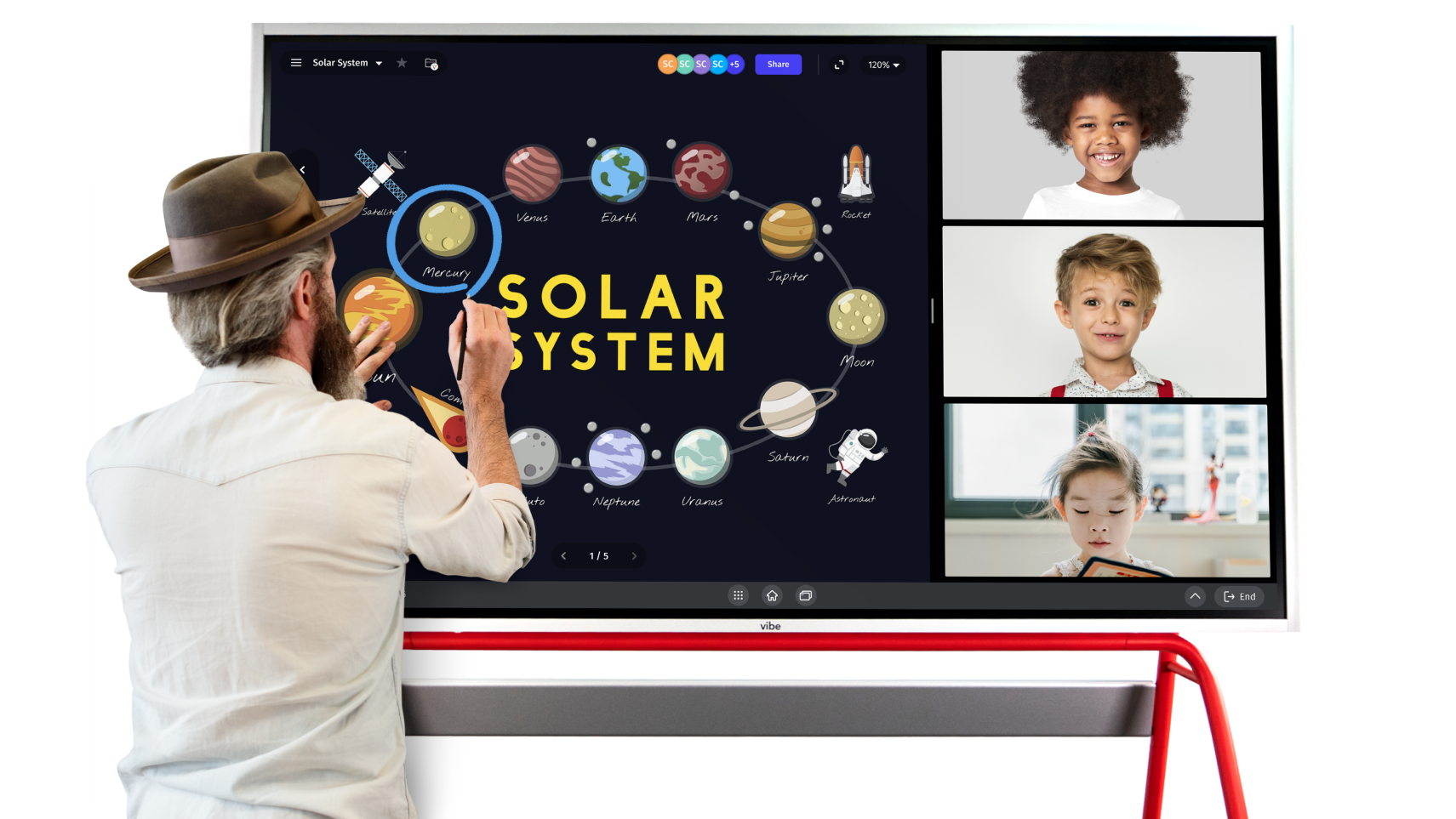 teacher using Vibe Smartboard
The Vibe Board S1 is built for exactly the kind of classroom this guide describes — one where in-person and remote students participate together in real time. Teachers can share a live canvas, run interactive exercises, and cast student work to the board, whether the students are in the room or joining via Zoom. Request a demo to see how it works in a hybrid or remote classroom setting.
Frequently Asked Questions
What are the most effective strategies for engaging remote students?
The most effective strategies combine structured participation with teacher presence. Breakout rooms give students space to talk without the pressure of the full class watching. Live polls and chat-based quizzes create low-stakes ways to respond. Calling on students by name — at random or in rotation — keeps attention high. The consistent finding across research is that students engage more when they feel seen, not just streamed at.
How do you keep remote students from getting distracted?
Shorter segments help: remote learners disengage faster than in-person students when sessions run long without interaction. Breaking a 60-minute class into 15–20 minute blocks with a brief activity or discussion between each keeps cognitive load manageable. Requiring cameras on, setting clear participation norms at the start of the course, and building predictable routines also reduce the conditions that lead to distraction.
What is the difference between engaging in-class and remote students at the same time?
In a simultaneous hybrid setting — where some students are in the room and others are joining remotely — remote students are at a structural disadvantage. They can’t catch side conversations, read body language, or signal confusion the way in-person students can. Effective hybrid engagement means explicitly designing for remote participation: assigning remote students speaking roles, using a shared digital canvas both groups can interact with, and monitoring the chat actively rather than treating it as secondary.
How does student engagement affect academic performance?
Research consistently shows that engagement — particularly cognitive and agentic engagement — is one of the strongest predictors of academic outcomes. Students who actively process content and take ownership of their learning retain more, perform better on assessments, and are less likely to disengage over time. Behavioral engagement (showing up, completing work) is necessary but not sufficient; the deeper types of engagement are what drive meaningful learning gains.