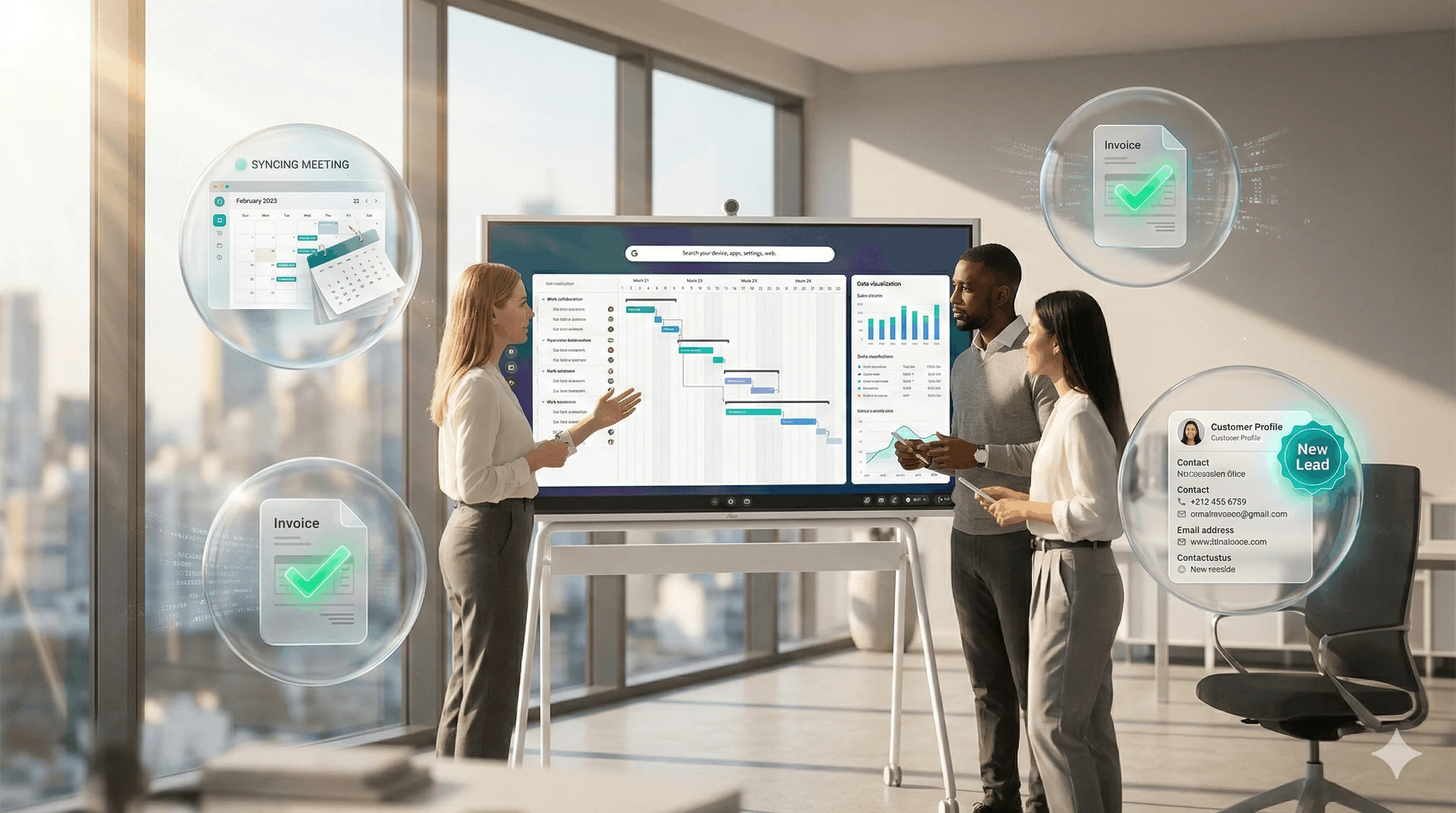

Most marketing and sales struggles trace back to the same root cause: a fuzzy picture of who you’re actually selling to. Buyer personas solve that. A buyer persona is a research-based profile of your ideal customer—built from real data about their goals, challenges, behaviors, and buying triggers—that gives your entire team a shared, concrete picture of who they’re serving.
HubSpot’s research finds that using marketing personas makes websites 2–5x more effective and easier for target users to navigate, and that persona-driven email campaigns see open rates double compared to generic sends. Those aren’t gains from doing more marketing—they’re gains from doing more relevant marketing.
This guide walks through every step of building a buyer persona, from raw research to a finished profile you can actually use.
What Is a Buyer Persona?
A buyer persona (also called a marketing persona, customer persona, or audience persona) is a semi-fictional representation of your ideal customer, grounded in real research. It goes well beyond basic demographics. Where a market segment might tell you "B2B tech buyers aged 30–45," a persona named "Operations Manager Omar" tells you he runs a 60-person team, spends his mornings in back-to-back meetings, makes purchasing decisions based on peer recommendations and implementation risk, and gets frustrated when vendors can’t show a clear ROI within 90 days.
 Marketing and sales are struggling creating buyer persona
That specificity is what makes personas useful. They give marketing something concrete to write toward, give sales something concrete to pitch toward, and give product something concrete to build toward.
Buyer persona vs. ideal customer profile (ICP)
These two terms often get confused. An ICP describes the type of company that’s the best fit for your product—industry, size, tech stack, budget. A buyer persona describes the individual inside that company: their role, motivations, daily frustrations, and how they personally experience the problem you solve. Both matter; personas work best when they’re built on top of a clear ICP.
How many personas do you need?
Most businesses work well with 3–5 personas covering their core customer segments. Start with 2–3 for your highest-value segments and add more as you learn. If personas start overlapping significantly, you have too many.
Why Buyer Personas Matter
Personas aren’t a planning exercise—they’re a performance lever. Companies that exceed their revenue and lead goals are significantly more likely to have formally documented personas than those that miss targets. The mechanism is straightforward: when you know exactly who you’re talking to, every content decision, channel choice, and sales conversation becomes more targeted, less wasteful, and more likely to convert.

Personas are useful across the entire business:
-
Marketing uses them to create campaigns, content, and ads that speak to real pain points rather than assumed ones.
-
Sales uses them to tailor outreach, anticipate objections, and prioritize which leads to pursue.
-
Product uses them to prioritize features based on what actually matters to real users.
-
Customer success uses them to set appropriate expectations and identify churn risk early.
How to Create a Buyer Persona: 6 Steps
Step 1: Gather research from real sources
Personas built on assumptions are worse than no personas—they point your team confidently in the wrong direction. All useful persona research comes from one of three places:
 To create a buyer persona: step 1 – Gather research from real sources
Direct customer interviews. Talk to 8–12 existing customers, recently churned customers, and promising prospects who didn’t convert. Ask about their goals, how they discovered you, what almost stopped them from buying, and how they’d describe the problem in their own words. Churned customers are especially candid.
Surveys. Use short surveys (5–8 questions) sent to your customer list or prospects to get quantitative signal on demographics, job function, and priorities. Keep them focused—one survey per persona segment works better than one survey trying to cover everything.
Internal data. Mine your CRM, website analytics, and support tickets for behavioral patterns. Which industries close fastest? Which roles generate the most support tickets? What search queries bring people to your site? Your sales team’s call notes and objection logs are often the most underused research asset in the building.
Step 2: Identify patterns and segment
With research in hand, look for clusters—groups of people who share the same goals, the same frustrations, or the same buying behavior. Don’t force segments; let them emerge from what you’re hearing repeatedly.
 To create a buyer persona: step 2 – Step 2: Identify patterns and segment
A useful organizing question for each emerging segment: what is this person trying to accomplish, and what’s standing in their way? That tension—goal vs. obstacle—is the core of a persona, and everything else fills in around it.
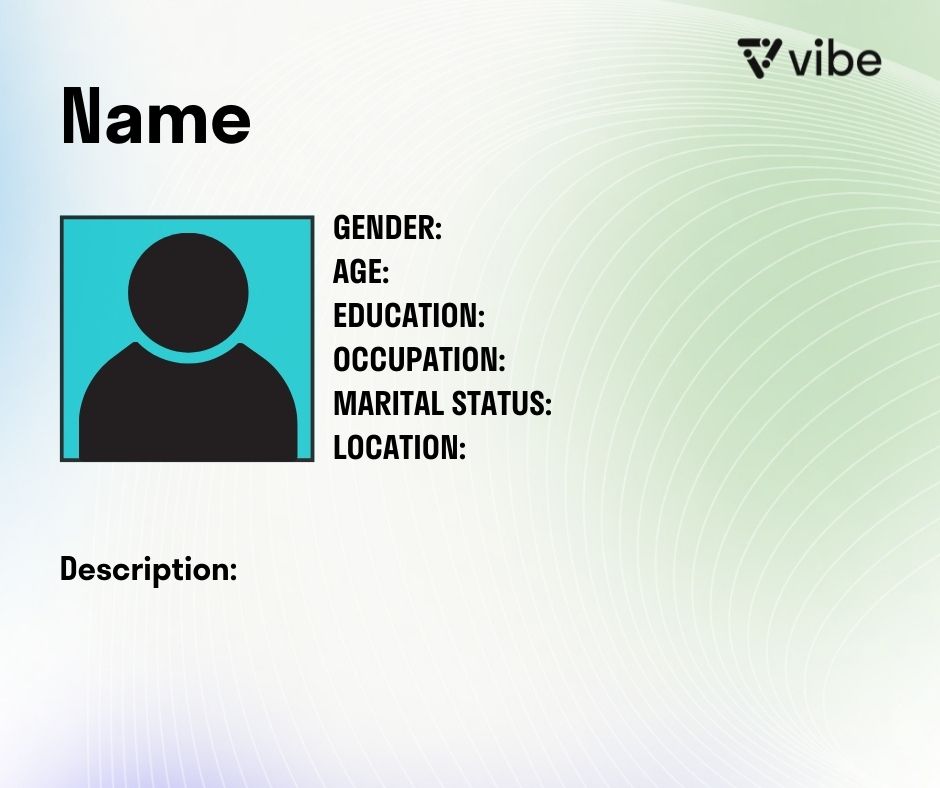
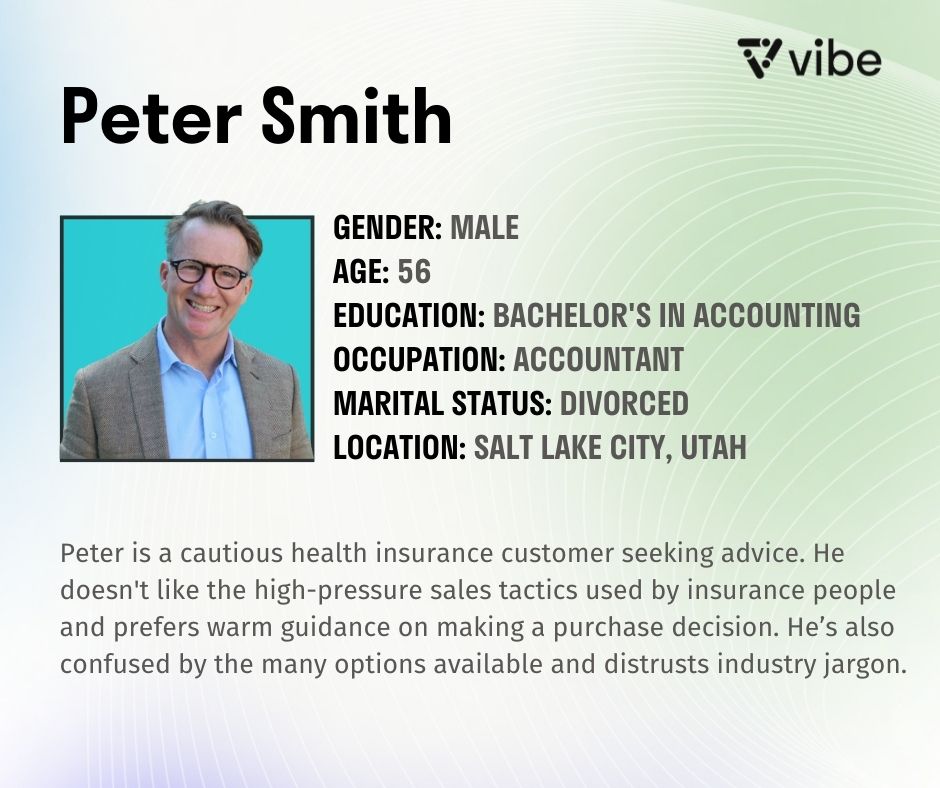
Step 3: Fill out the persona template
For each persona, document the following. Be specific; vague personas produce vague marketing.
 To create a buyer persona: step 3 – Fill out the persona template
Identity
-
Name (fictional but memorable—"CMO Claire," "IT Director Ivan")
-
Role and seniority
-
Industry and company size
Demographics
-
Age range
-
Location
-
Education background
Professional context
-
Day-to-day responsibilities
-
Tools and platforms they use regularly
-
How success is measured in their role
-
Who they report to and who reports to them
Goals
-
Primary professional goal this persona is working toward
-
Secondary goals
Pain points and frustrations
-
The specific problems your product solves for them
-
What they’ve tried before and why it fell short
-
Friction they experience in the buying process itself
Buying behavior
-
How they research solutions (search, peer referrals, analyst reports, LinkedIn, industry events)
-
Who else is involved in the buying decision
-
What objections they typically raise
-
What "good enough to move forward" looks like to them
Preferred content and channels
-
Where they spend time online
-
What format of content they trust (case studies, demos, peer reviews, technical docs)
Step 4: Build the narrative
A persona becomes memorable when it reads as a person, not a spreadsheet. Write 2–3 sentences that describe a typical day in this person’s professional life—what’s pulling at their attention, what pressure they’re under, what a win looks like for them. This is the part your sales and marketing teams will actually remember and use.
 To create a buyer persona: step 4 – Build the narrative
Step 5: Validate with your sales team
Before you circulate the persona, run it past 2–3 salespeople who talk to this type of buyer regularly. Ask: "Does this ring true? What’s missing? What would you push back on?" Sales conversations surface objections and motivations that never show up in surveys, and this check-in is the fastest way to catch a persona that’s slightly off.
 To create buyer persona: step 5 – Validate with your sales team
Step 6: Review and update regularly
Markets shift, buyer priorities evolve, and your product changes. Review each persona at least once a year—or whenever you notice that your messaging is underperforming with a segment that used to respond well. A persona that was built on 2022 interviews isn’t necessarily wrong in 2025, but it should be checked.
 To create a buyer persona: step 6 – Review and update regularly –
Buyer Persona Examples
B2B example: "Operations Manager Omar"
Role: Operations Manager at a 50–150 person professional services firm
Age: 34–42
Reports to: COO or CEO
Manages: 2–4 direct reports, coordinates cross-functionally with 10+ people
Goals: Reduce time lost to status meetings and manual coordination; get his team working from a single source of truth instead of scattered email chains and Slack threads.
Pain points: Half his week disappears into meetings that could have been an update. Decisions made in Monday’s meeting are forgotten by Thursday. New team members take 3–4 months to get up to speed because institutional knowledge lives in people’s heads, not anywhere searchable.
Buying behavior: Researches via peer recommendations on LinkedIn and G2 reviews; involves his direct manager in final approval; most sensitive to implementation risk ("we tried a tool like this before and nobody used it after 6 weeks"). Won over by a clear onboarding path and a concrete example from a similar company.
What he reads: Operations-focused newsletters, LinkedIn posts from practitioners, case studies with measurable outcomes. Skips whitepapers. Watches a demo before any serious conversation.
B2C example: "Small Business Owner Sofia"
Role: Founder and sole operator of a 3-year-old interior design studio
Age: 29–38
Revenue: $180K–$400K/year
Goals: Spend more time on billable client work and less time on administration; build a referral pipeline instead of relying on one-off project searches.
Pain points: Wears every hat—marketer, accountant, project manager, designer. Loses hours each week to admin work that feels urgent but doesn’t grow the business. Has tried productivity systems before but abandons them within a month because they require too much maintenance.
Buying behavior: Discovers tools through Instagram, YouTube tutorials, and recommendations from other freelancers in her network. Decides fast (within a week) if the free tier convinces her; extremely price-sensitive in the $20–$100/month range. Churns when setup feels too complex.
What she reads: Short-form how-to content, before/after business case studies from other solo operators, email newsletters from other founders she admires.
Common Buyer Persona Mistakes
Building from assumptions instead of interviews. The most common and most damaging mistake. If you haven’t talked to real customers, you have a hypothesis, not a persona.
Making them too broad. "Marketing professionals aged 25–50 who want to grow their business" describes approximately everyone. Useful personas are narrow enough that the people they describe would recognize themselves immediately.
Ignoring the buying committee in B2B. In most B2B sales, 3–7 people influence the decision. Your primary persona might be the champion, but if you don’t understand the economic buyer or the skeptic in IT, your deal will stall.
Creating personas and filing them away. A persona that isn’t referenced in campaign briefs, sales scripts, and content planning is just a document. The value is in the daily use, not the creation.
Never updating them. Personas built on stale research will quietly steer your team in the wrong direction. Build a review into your annual planning cycle.
How Vibe Board Helps Teams Build and Maintain Personas
Throughout the buyer persona creation process, it’s crucial to collaborate and interact with your leadership and creative team.
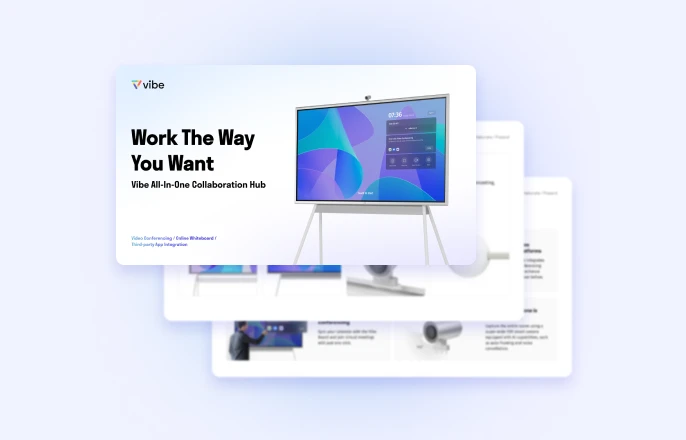
Vibe Board is an interactive whiteboard that supports real-time collaboration, so your team members can simultaneously work on the same buyer persona template. Within Vibe Canvas — the infinite digital workspace built into Vibe Board — you can embed persona documents, sketch empathy maps, and iterate freely alongside your team. Also, it’s easy for team members to draw, write, and refine the document the way they want. You can also use Vibe’s pre-built Empathy Map Template to get started right away.
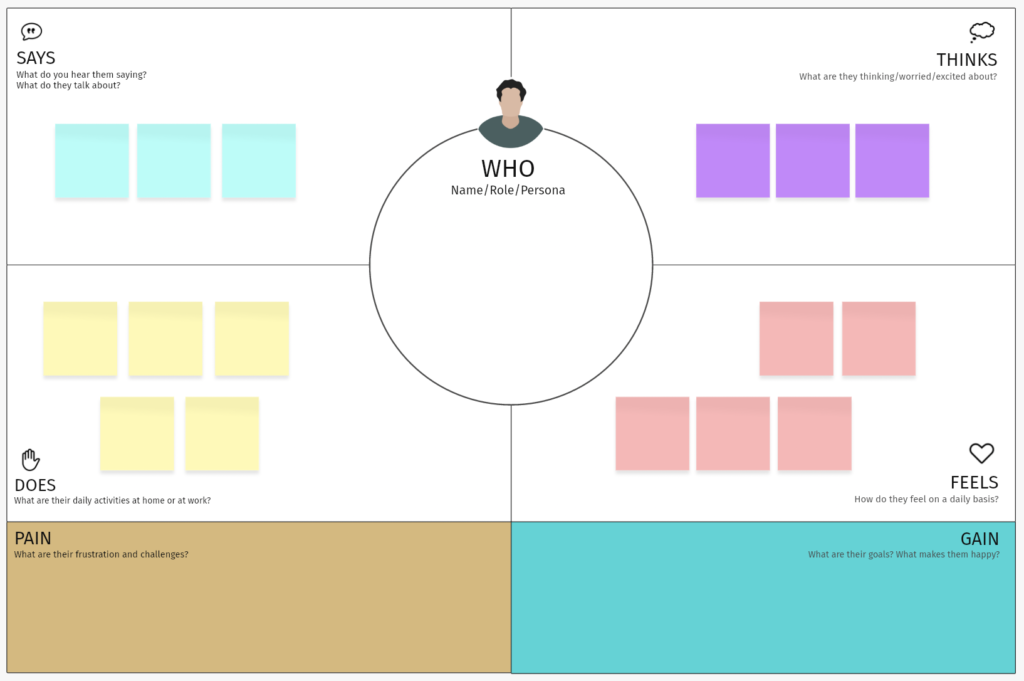 Vibe board helps teams build and maintain personas
Most importantly, you can map a customer journey in the Vibe Board through an illustration, infographic, diagram, or excel sheet. By visualizing the emotions, actions, and thoughts customers experience, you can get insightful information about their needs, pain points, and purchasing behavior.
Want to learn more about how you can create buyer personas using Vibe Board? Watch a demo here.
FAQ
What is the difference between a buyer persona and a target audience?
A target audience is a broad demographic group—"B2B SaaS marketers at mid-market companies." A buyer persona is a specific, named profile within that audience, built from real research, that describes a single archetypal individual’s goals, frustrations, and buying behavior. A target audience tells you who to reach; a buyer persona tells you what to say to them.
How long does it take to create a buyer persona?
A credible persona built on 8–10 customer interviews, a survey, and CRM data typically takes 2–4 weeks including scheduling, interviews, synthesis, and review. Shortcuts that skip the interview phase usually produce personas that underperform because they reflect internal assumptions, not real buyer behavior.
How many buyer personas should a company have?
Most businesses work best with 3–5 personas covering their highest-value customer segments. Start with 2–3, validate them in real campaigns, and add more only when you have evidence that an important segment is being meaningfully under-served by your existing personas.
What should a buyer persona include?
At minimum: a name and role, professional context and daily responsibilities, primary goals, specific pain points, buying behavior and decision criteria, and preferred information channels. The more directly each element maps to a real purchase decision, the more useful the persona will be.
How often should buyer personas be updated?
At least annually, and whenever you notice messaging underperforming with a segment that previously responded well. Markets shift, products change, and buyer priorities evolve—a persona built three years ago may be structurally sound but factually outdated in ways that quietly hurt performance.