IndustryCommercial & Industrial Construction
HeadquartersAustin, TX
Phase 1: Winning the work
For Sundt's analytics team focused on business development and pursuits, the Vibe Board isn't just a tool for collaboration. It's often the thing that wins the job.
Sundt's BD analytics team covers a focused subset of the company's total pursuits—which, for a company of their size, amounts to many opportunities every year. But when they're involved, the numbers tell the story. Pursuits supported by the analytics team, with Vibe Boards integrated into the interview process, close at a meaningfully higher win rate than Sundt’s corporate average. And they're not winning on price.
"We are not the cheapest," says Hayden Kalianov, who oversees the company’s pursuit analytics team.
But we will give you the best value, and this is kind of how we show that.
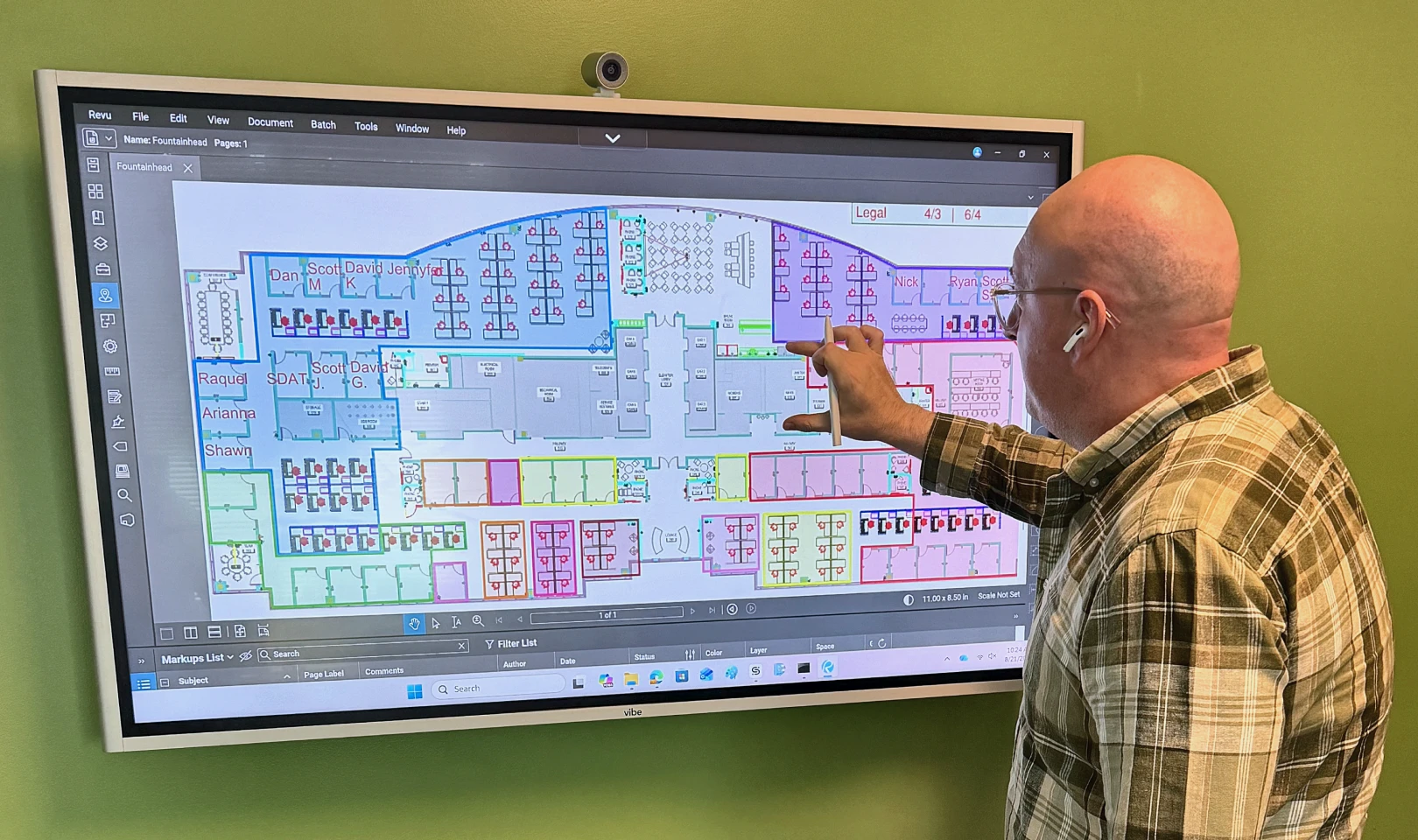
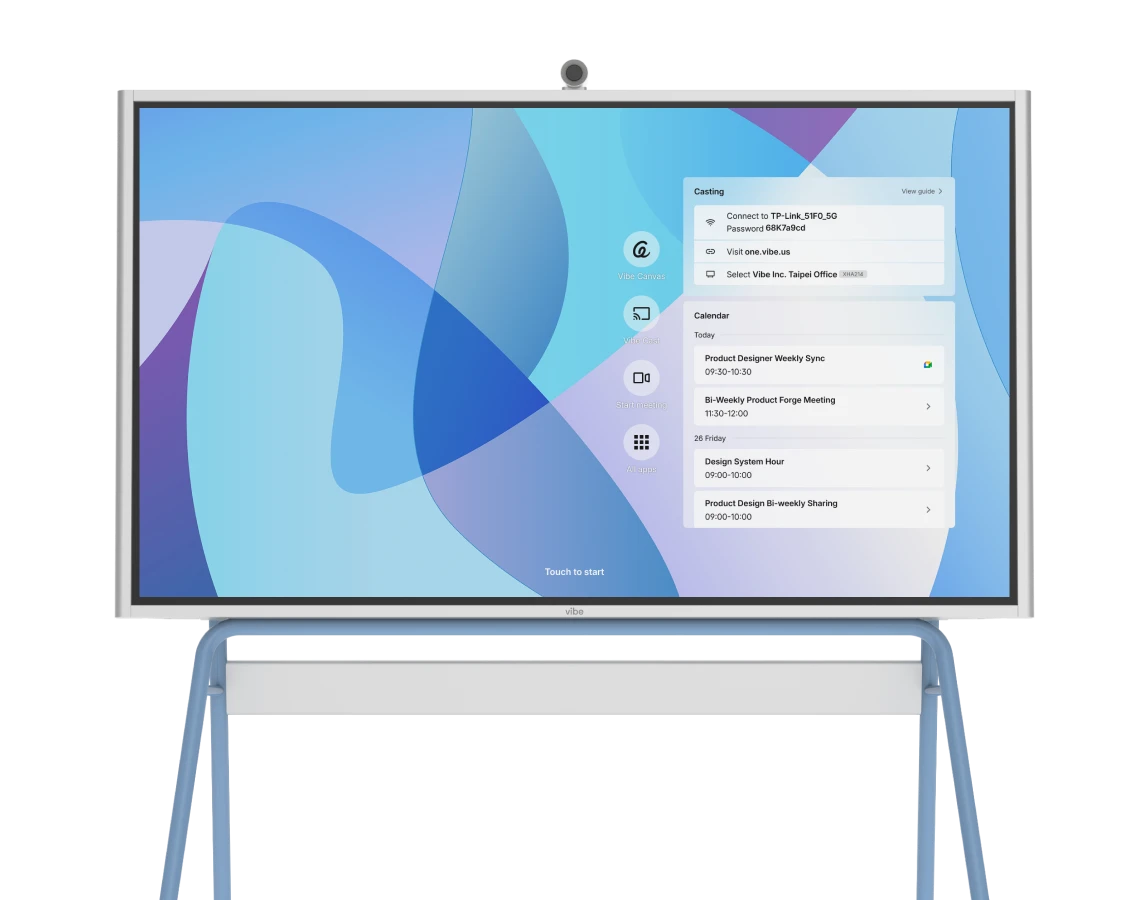
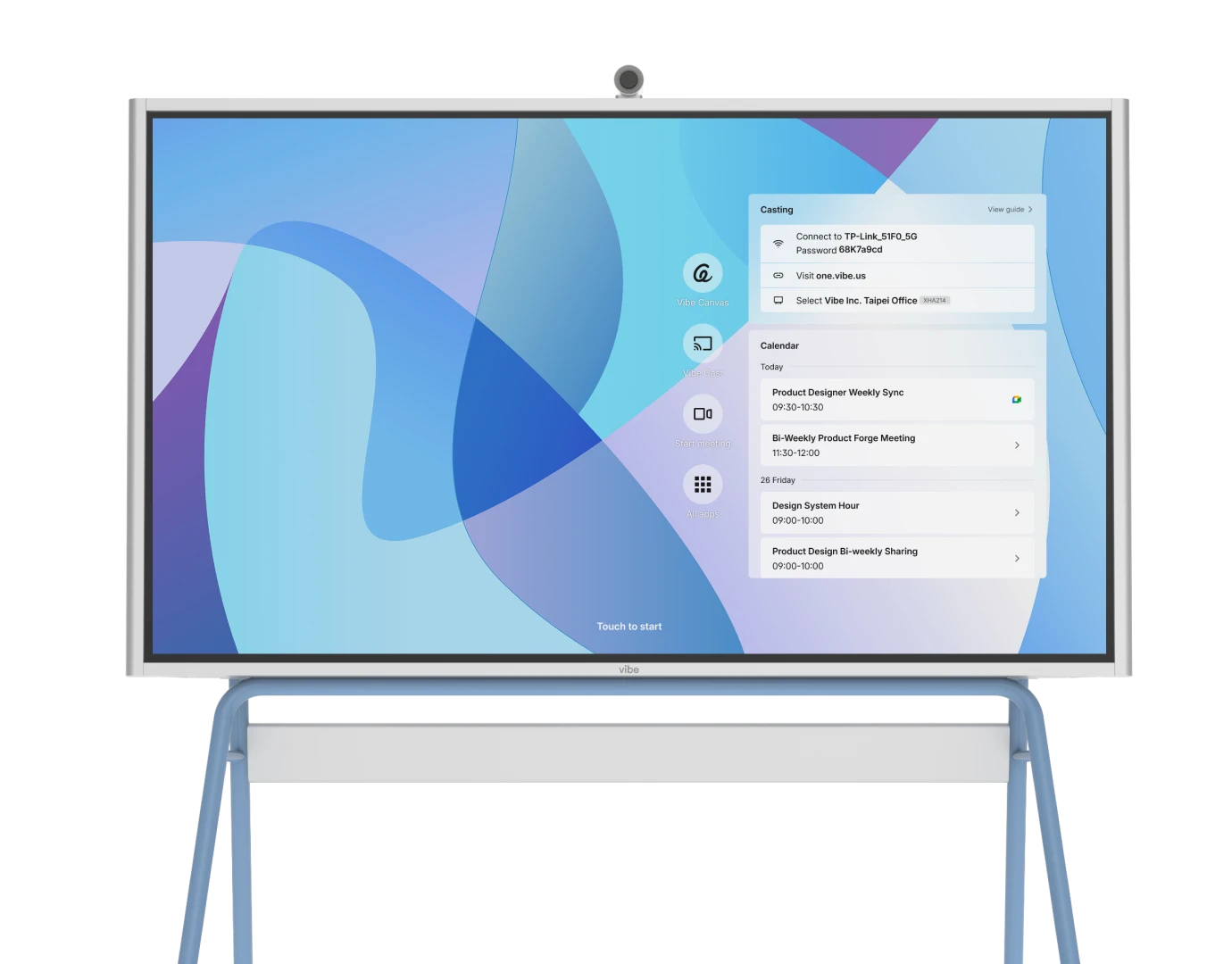
Before Vibe, client interviews meant walking into a room with a static PowerPoint. Teams talked through cost estimates and timelines and relied on the client trusting the numbers. Today, Sundt's BD team arrives with a Vibe Pro loaded with a fully interactive Power BI dashboard that’s built specifically for that client's project, often before the contract is even signed.
The dashboard shows the client their own project data: cost curves, workforce projections by month, procurement risk timelines, schedule overlays. Everything is live and filterable, not frozen in a slide deck. During a particularly large pursuit, Sundt's team set the board up in a hallway, powered it with a generator, and velcroed a mobile hotspot to the back so that if the building lost power mid-presentation, the team wouldn't miss a beat.
"This has been something that a lot of our competitors have tried to duplicate just off a TV," Kalianov notes. "It doesn't work quite the same."
The interactivity is the point. When a panel of reviewers includes a municipal executive, an operations engineer, and an electrical specialist, a static presentation can't speak to all of them at once. With the Vibe Board, Kalianov’s team can slice the data live, pulling up workforce curves, electrical scope timelines, or procurement risk by facility in direct response to questions their prospects may have.Phase 2: Before breaking ground
Once Sundt wins the work, the project moves into preconstruction: the months-long process of constructibility reviews, value engineering, and guaranteed maximum price (GMP) contracting. It's a phase defined by constant scope change and iterative cost estimates. Historically, it’s also been a phase defined by a lot of spreadsheet chasing.
"Instead of having to search through two Excel spreadsheets, go line by line, and try to figure out why the concrete scope changed from X to Y—is the fee changing? Are materials going up?—the board gives you a visual way to see all of that," Kalianov explains.
Sundt's project controls dashboards track every GMP iteration, letting clients see how the budget has moved between phases and why. A large municipal project, for example, had a hard constraint on monthly spend. Sundt used the Vibe Board to model schedule extension scenarios in real time during the meeting. The team pulled commodity data, labor cost trends, and tariff factors across many cost categories per work type, and showed the client exactly how different schedule scenarios would play out, month by month.
You are going to have a much closer cost estimate with Sundt, and with these tools, than with your competitors just saying, ‘on average, it’s 5% escalation year over year. Don't ask us anymore about it because we don't know.
The board also carries Sundt's value engineering work into these conversations. On one recent project, Sundt brought dozens of value engineering ideas to the table, categorized by approval status and impact area. Clients were able to interact with those options directly on the board, seeing the tradeoffs of accepting or rejecting each item in real time.
This process has replaced a process that required multiple follow-up meetings, now happening in one room, around one screen, with the ability to bring in remote attendees who get a near-identical experience.
Phase 4: Safety, where the stakes are highest
No metric on a Sundt job site carries more weight than safety.
Construction fatality rates in the U.S. have remained stubbornly high, even as overall injury rates have declined. It’s a gap that Sundt's STCKY program (an open-source initiative that stands for "Stuff That Can Kill You") was designed to close. The program tracks safety walks, near-miss reporting, and hazard recognition at the project level, with accountability that runs from the craft level all the way to the executive team. Safety walk completion is owned and tracked across the entire company.
The STCKY dashboard lives on the Vibe Board in every job trailer. Craft workers, HSE managers, and executives all see the same numbers when they walk through the door.
"The biggest reason safeguards aren't in place is, we just didn't do it," Kalianov explains, pointing to the dashboard's root-cause breakdown. When that's visible every day, in front of everyone, it creates a different kind of accountability.
This kind of proactive approach to safety is reflected in their EMR, which sits healthily below 1.0, a clear signal of how seriously the company takes getting every employee-owner home safely.
Targeted walks versus completed walks. Near-miss categories. Safeguard gaps by reason. It's all there, updated from source systems with zero manual entry from the HSE team. The Vibe Board makes Sundt’s safety culture visible to everyone who walks through the trailer.
Doing this kind of work saves lives. For Sundt, that is the entire point: making sure every employee-owner gets home safely to the people who are counting on them.Phase 5: Running the job site
Once construction is underway, a Vibe Board goes into the job trailer and it stays on.
Sundt uses the board as the always-on window into their project controls platform: a suite of Power BI dashboards showing safety metrics, quality pass rates, RFI statuses, and schedule look-aheads at one-, three- and six-week intervals. Every data point pulls directly from Sundt's source systems into their data warehouse, so there's no duplicate entry, no manual updates, and no stale reports.
If you have a quality manager walk in, they just glance at the pass-inspection rate… and they walk back out. They don't have to log in. If they see that that's a problem, then they can dive into it in our quality page.
The board also tracks RFIs and submittals at a glance: which are open, which are closed, how long each has been outstanding. That enables project managers to rely on a single place to spot issues that might be falling through the cracks.
On one project involving a high-value tunnel boring machine, Sundt used their dashboard to keep the schedule tightly controlled. “We actually were 70 days compressed on our schedule because we were tracking all of this so closely,” Kalianov says.
For a project of that scale, the operational value of staying ahead of schedule dwarfs the cost of the board. The math, as Kalianov puts it, isn’t really a conversation.
These aren’t cheap by any means. However, like, this is really, really a drop in the bucket. On a project of that scale, the cost of the board is not even really a conversation. It’s more so, how much are we paying for my time?