
Distance learning was once seen as a workaround — a stopgap for students who couldn’t make it to a physical classroom. That perception has shifted dramatically. Today, nearly 3.7 million four-year undergraduates studied exclusively online in 2024–25, according to the U.S. Department of Education’s National Center for Education Statistics — a figure that reflects not crisis-era necessity, but genuine, long-term preference.
Distance learning has earned its place as a permanent fixture in modern education. Whether you’re a student weighing your options, a parent trying to understand what your child’s school is offering, or an educator looking to make the most of a hybrid classroom, the benefits are real and well-documented. Here are 10 positive aspects of distance learning that continue to shape how students learn today.
1. Flexible Scheduling That Works Around Real Life
One of the most practical advantages of distance learning is that it works around a student’s actual life — not the other way around. Part-time jobs, family obligations, health needs, and time zone differences can all make a rigid school schedule difficult to maintain.
With online coursework, students can often complete assignments at the hours when they’re most focused, review recorded lectures as many times as needed, and better balance competing demands. For working students especially, this flexibility is the difference between staying enrolled and dropping out. It’s also one reason why graduate enrollment in fully online programs reached 45% in 2024–25, outpacing traditional classroom formats at the graduate level for the first time.
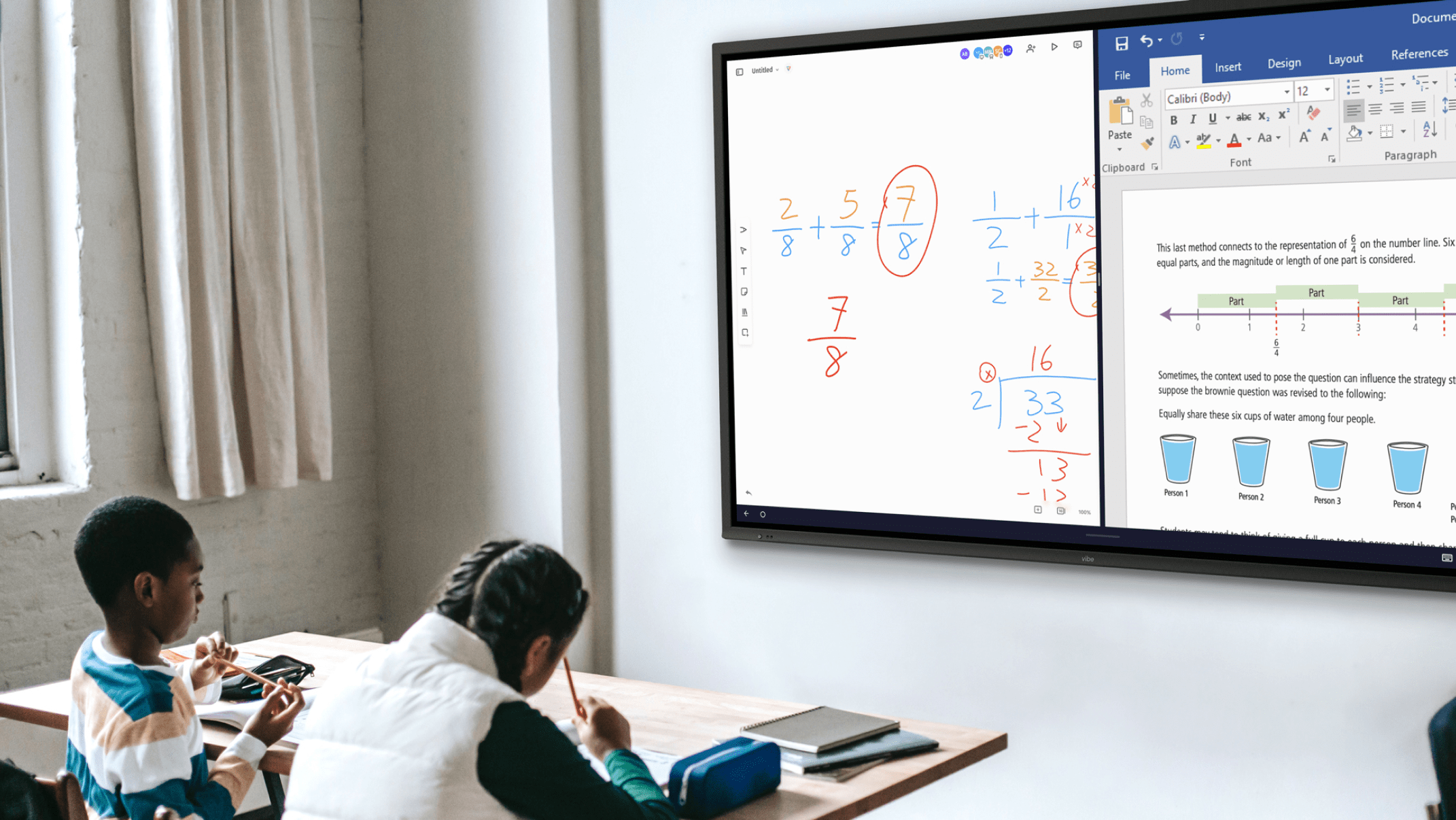 children are learning remotely
2. Greater Accessibility for More Learners
Physical classrooms create physical barriers — geography, mobility challenges, transportation costs, and even anxiety about in-person environments can all limit a student’s ability to participate. Distance learning removes many of those barriers.
Students in rural areas gain access to courses that wouldn’t exist locally. Students managing chronic illness or disability can engage at the pace and in the environment that works for them. Students dealing with social anxiety — which affects an estimated 15 million Americans — often find that virtual participation lowers the social pressure that comes with a traditional classroom setting, allowing them to engage more fully with course material.
Accessibility is not just a talking point. It’s a core structural advantage that makes quality education available to learners who would otherwise be left out.
3. Self-Paced Learning Leads to Better Retention
In a traditional classroom, the lesson moves on whether or not every student has absorbed the material. Distance learning flips that dynamic. When students control the pace — pausing, rewinding, and revisiting lessons — they demonstrate meaningfully stronger retention. Research consistently shows that learners retain significantly more material when given control over the speed and repetition of their learning experience compared to traditional lecture formats.
For students who struggle to keep up in a fast-paced classroom, or who want to accelerate through topics they already understand, self-paced delivery is more than convenient — it’s pedagogically effective.
4. Reduced Social Anxiety and a More Comfortable Learning Environment
The social dynamics of a traditional school — group presentations, cold-calling in class, navigating cafeteria politics — can be genuinely distressing for many students. For those managing social anxiety or other challenges, these stressors can interfere with learning itself.
Distance learning doesn’t eliminate social interaction, but it changes its form. Students can participate in discussions at their own pace, contribute to group projects through written collaboration, and engage with classmates in ways that feel more manageable. Many find they’re better able to express themselves and demonstrate what they know when the pressure of an in-person audience is removed.
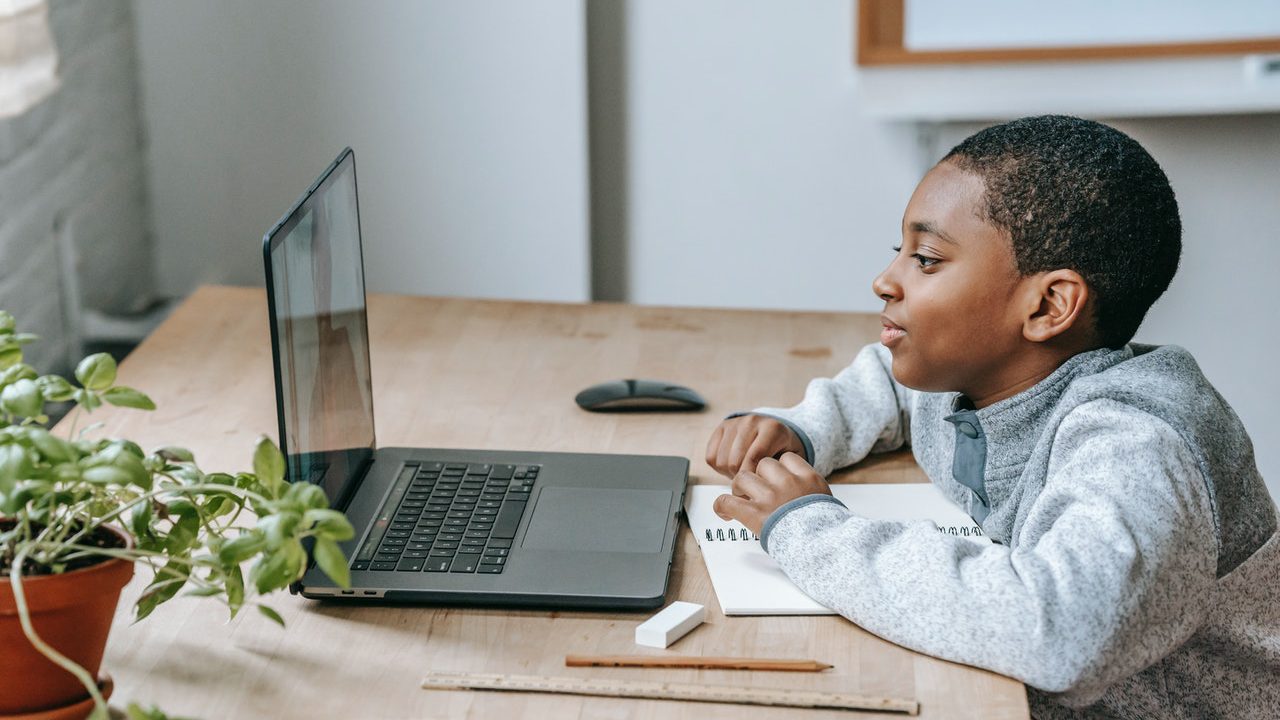 A young boy watches an online math lesson as part of his distance learning curriculum.
5. Real Digital Skills for a Real-World Workforce
Remote work is no longer an exception. The ability to collaborate asynchronously, manage tasks across digital platforms, communicate clearly through video and written channels, and stay organized without in-person oversight are skills employers now expect — across industries, at every level.
Distance learning builds those skills from the inside out. Students who navigate online coursework, participate in virtual study groups, and manage their own deadlines are developing habits of self-direction that translate directly to professional success. Starting this early — even at the K–12 level — gives students a meaningful advantage as they enter the workforce.
6. Parents Stay More Connected to Their Child’s Education
Distance learning changes the parent’s role in a meaningful way. When coursework is digital and learning happens at home (or a nearby location), parents have a natural window into what their child is studying, how they’re engaging with material, and where they might be struggling.
That visibility matters. Parents who are active participants in their child’s education — even informally, by sitting in on a virtual lesson or reviewing what was covered that day — reinforce learning outside the classroom. Distance learning makes those moments of connection easier and more frequent, without requiring a formal parent-teacher conference to stay informed.
7. Interactive Whiteboard Technology Bridges the Distance
One of the more persistent concerns about distance learning is that it strips away the collaborative, hands-on energy of a physical classroom. Modern classroom technology has addressed this directly.
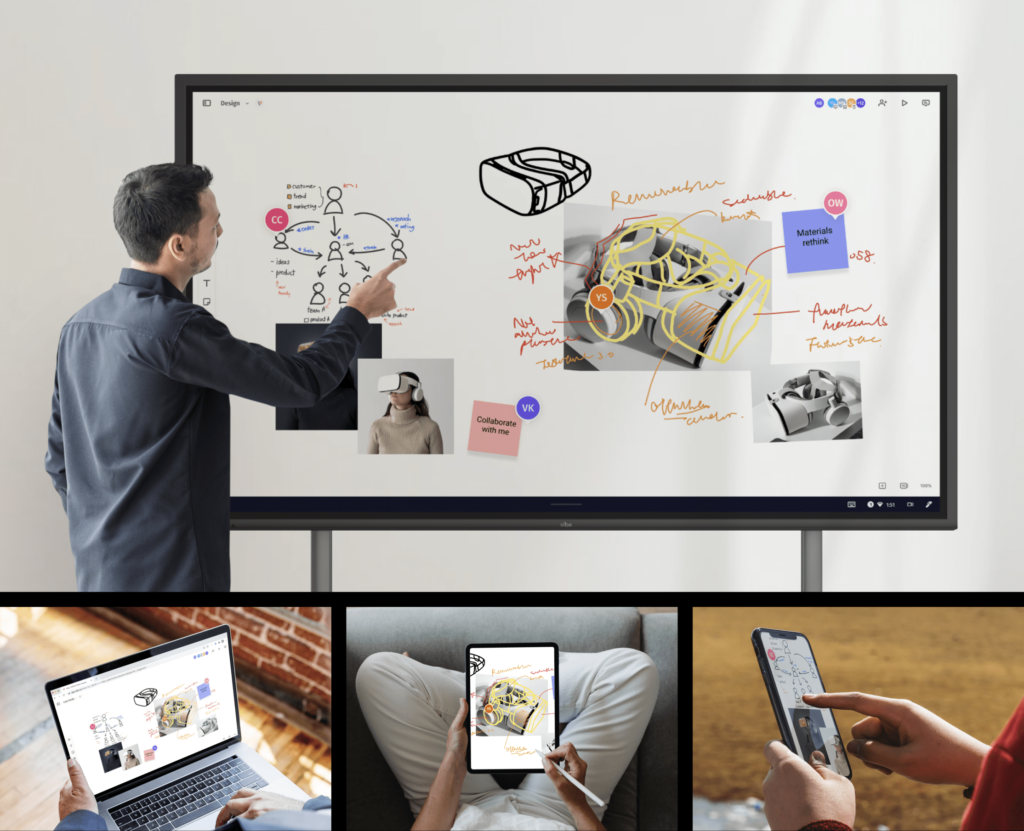 A teacher is collaborating with students in class
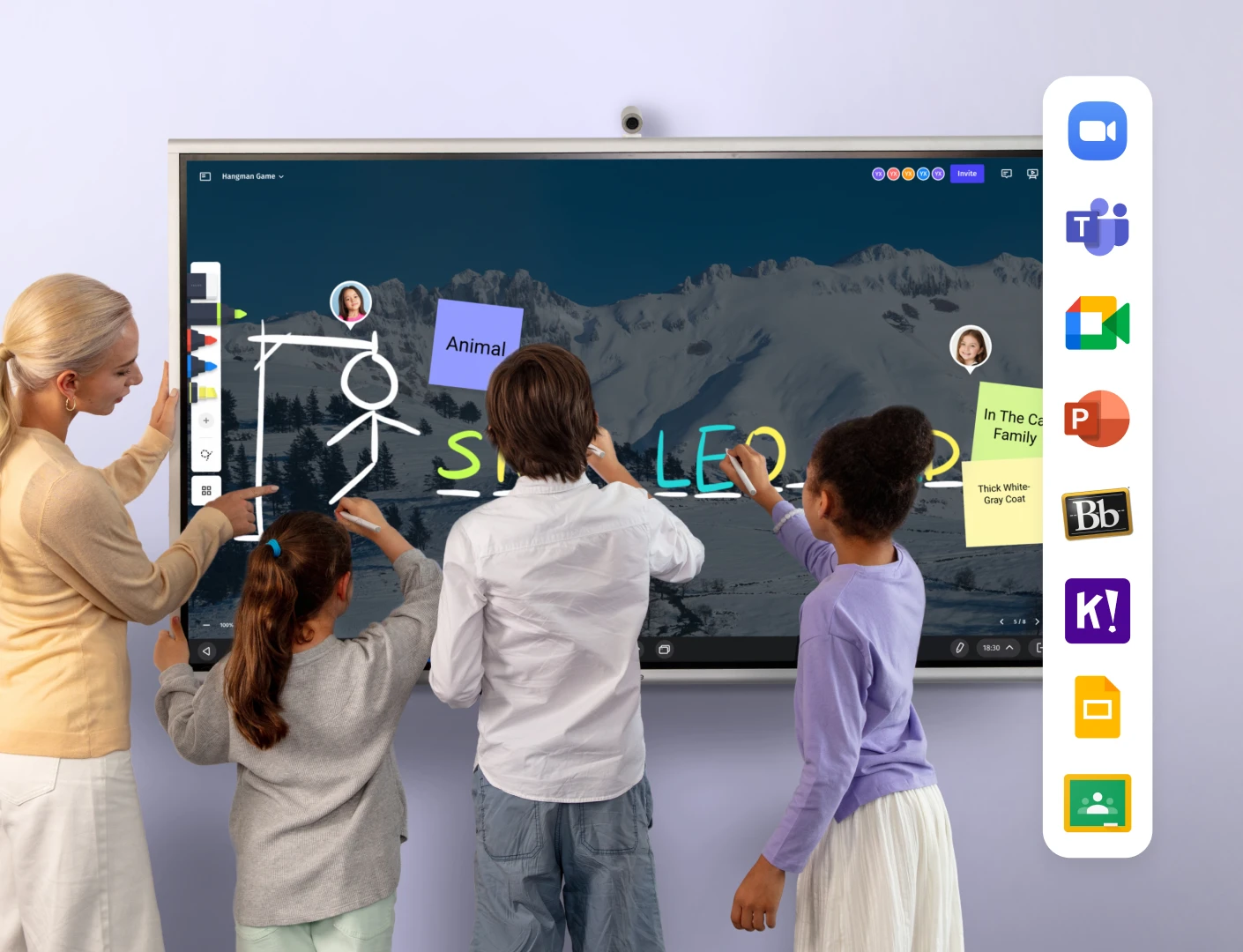
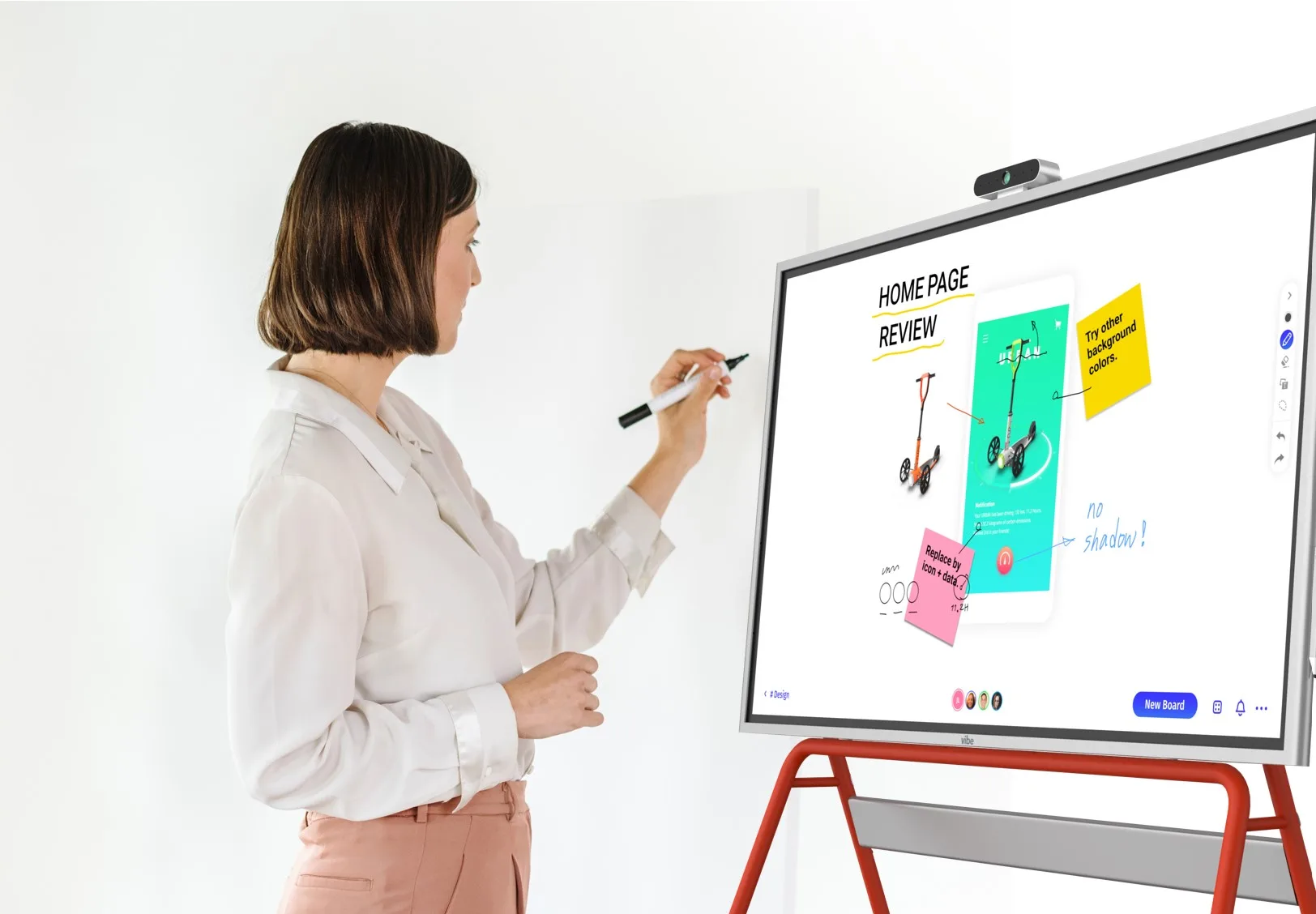
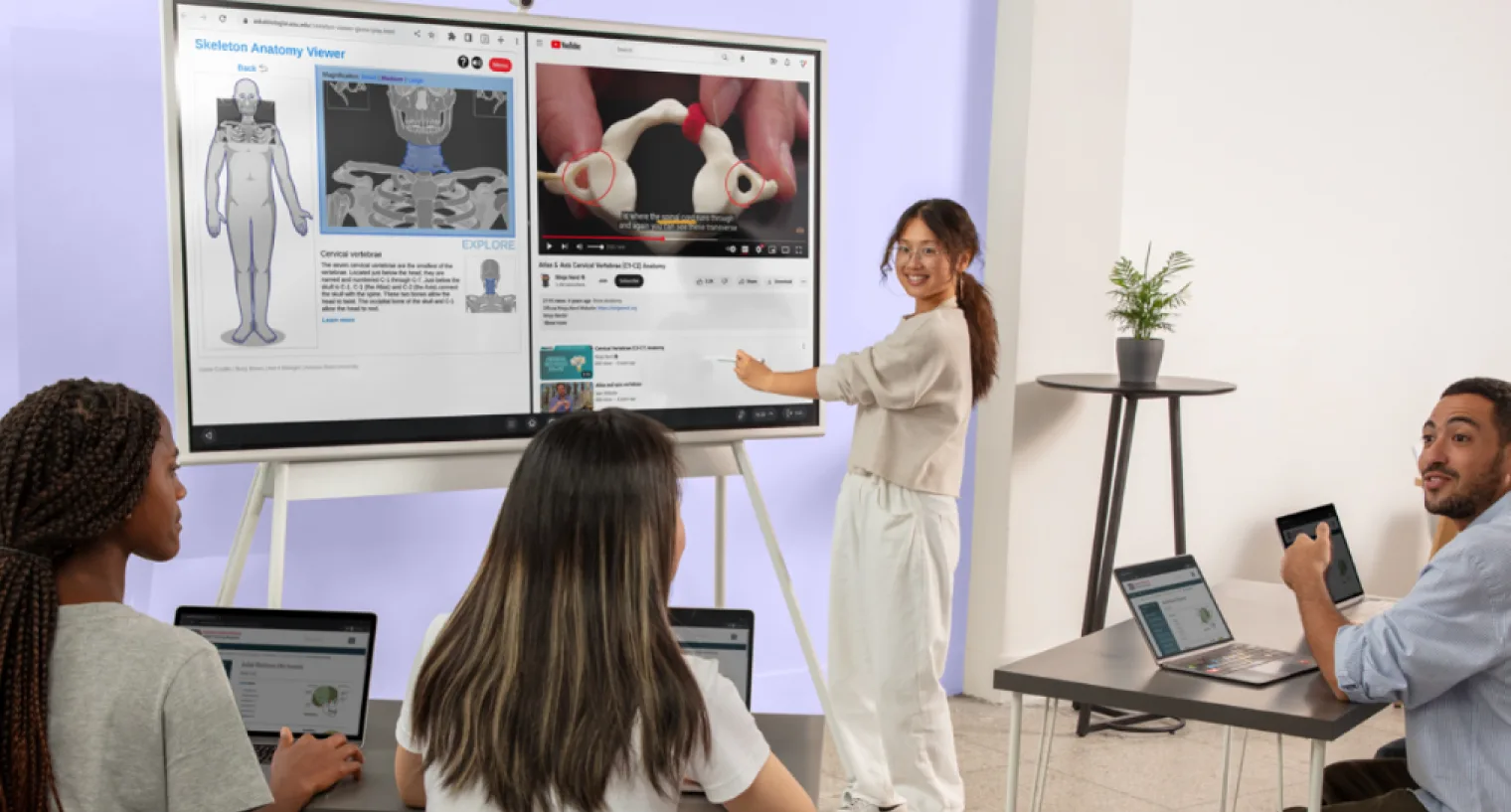
Smart whiteboards like the Vibe Board S1 allow teachers to run live, interactive lessons that students can participate in from any device — whether they’re in the room or joining remotely. Teachers can annotate, share documents, run video, and collaborate on a shared digital canvas in real time. Students can contribute directly to the board from their own laptops, tablets, or phones, making the experience genuinely participatory rather than passive. It’s one of the most practical tools available for educators who want to close the engagement gap in hybrid and remote classrooms.
For K–12 classrooms specifically, the Vibe Board S1 is designed to be intuitive from day one — no complex setup, no recurring software fees, and compatibility across Chromebooks, iPads, Macs, and Windows devices. If you’re evaluating classroom technology for your school, see how schools are using Vibe Board S1 in real hybrid and remote classrooms — and request a demo to see it in action.
8. Lower Overall Costs Without Sacrificing Quality
Education is expensive, and distance learning meaningfully reduces the costs that stack up around traditional schooling — commuting, on-campus housing, printed materials, and in some cases, out-of-state tuition premiums. For families managing tight budgets, those savings are not trivial.
For school districts and institutions, the financial case is also clear. Reducing reliance on physical infrastructure — fewer buildings to heat, maintain, and staff — frees up resources that can go directly toward instruction. And for students who are working to pay their way through school, not commuting can mean the difference between finishing a degree and dropping out.
 A girl completes schoolwork on her laptop at her own pace, one of the benefits of distance learning.
9. Time Management Skills That Outlast the Degree
Distance learning doesn’t manage your time for you. That’s a feature, not a flaw. Without a bell schedule to structure the day, students have to develop their own systems — blocking time for study, meeting deadlines without reminders, and balancing coursework against other commitments.
These habits, once built, carry forward into every aspect of adult life. Research on professional competencies consistently ranks self-management and time management among the most valued skills employers look for — and they’re skills that distance learners build by necessity. Students who succeed in online programs have, almost by definition, demonstrated they can get things done independently.
10. A Wider Network and a Bigger World
Traditional schooling limits your network to who lives nearby. Distance learning removes that constraint entirely. Students can take courses from institutions and instructors anywhere in the world, collaborate on projects with peers from different countries and backgrounds, and build professional connections that a single geographic location would never make possible.
For students who know what they want to study or where they want to work, this access is transformative. Specialized programs that don’t exist locally, niche subjects that require a particular expert, international perspectives that enrich learning — distance education makes all of it reachable from wherever a student happens to be.
The Honest Tradeoffs
Distance learning works best when students come prepared for what it requires. Self-motivation is non-negotiable — without the structure of a physical classroom and the immediate presence of classmates, some students struggle to stay on track. Strong digital communication skills matter, too: the ability to ask clear questions in writing, participate meaningfully in virtual discussions, and collaborate without real-time verbal cues are all learned habits.
And some skills simply require hands-on practice that a screen can’t replicate. Vet techs, nurses, culinary students, and others in applied fields still need physical labs and live supervision. Knowing where the limits are helps students and educators make the most of distance learning where it genuinely excels — and supplement it where it falls short.
For a full breakdown of how to navigate these tradeoffs, see our guide on distance learning best practices, or explore how blended and hybrid models combine the best of both formats.
Distance Learning in 2026: Here to Stay
Distance learning started as an alternative. It has become, for millions of students, the primary way they access education. Graduate enrollment in fully online study reached 45% in 2024–25, and projections suggest that number will continue to climb. This isn’t a trend — it’s a structural shift in how education is delivered and consumed.
The 10 positive aspects outlined here aren’t theoretical. They’re the reasons students choose distance learning deliberately, the reasons parents support it, and the reasons educators continue to invest in making it better. Understanding those benefits clearly — and understanding the conditions under which they hold — is the first step toward making distance learning work as well as it possibly can.
For more on making the most of your distance or hybrid learning environment, explore Vibe’s full collection of education resources.
FAQs About Distance Learning
Is distance learning as effective as in-person education?
Research consistently shows that distance learning can match or exceed in-person outcomes when students have adequate support and self-motivation. The U.S. Department of Education has found no significant difference in learning outcomes between online and face-to-face instruction across comparable courses. Effectiveness depends less on the format and more on course design, instructor engagement, and the student’s own habits.
What age groups benefit most from distance learning?
Distance learning works across all age groups, but it tends to be most effective for older students — high schoolers, college students, and adult learners — who have developed the self-regulation skills that online coursework requires. Younger K–12 students often benefit from hybrid models that combine the flexibility of online learning with structured in-person time, particularly for hands-on subjects.
How do students stay engaged without a physical classroom?
Engagement in distance learning depends heavily on the tools and structure in place. Interactive technologies — like smart whiteboards that allow students to participate from any device — make virtual lessons genuinely collaborative rather than passive. Regular check-ins, discussion-based assignments, and project work with peers all help maintain the social dimension that keeps students invested in their coursework.
Does distance learning work for students with learning differences?
For many students with learning differences, distance learning offers distinct advantages: a quieter, lower-pressure environment; the ability to pause and replay lessons; more flexible pacing; and reduced sensory overload from a busy classroom. That said, some students with learning differences benefit from the routine and in-person support of a physical school. The right fit depends on the individual student and the support systems available in the online program.
What technology does a student need for distance learning?
At a minimum, students need a reliable internet connection and a device — a laptop, tablet, or desktop computer. Most online coursework runs through standard web browsers, so specialized hardware is rarely required. For households managing multiple students or limited bandwidth, schools and districts often offer equipment lending programs and subsidized internet access. Checking your institution’s specific requirements before enrollment is the best way to identify any gaps.
What tools help teachers run interactive lessons in hybrid classrooms?
The biggest challenge in hybrid teaching is making sure students in the room and students joining remotely have an equally participatory experience. Smart whiteboards designed for education — like the Vibe Board S1 — let teachers annotate, share content, and collaborate on a shared canvas that every student can access from their own device, regardless of where they’re sitting. It removes the passive-viewer problem that makes hybrid lessons feel uneven. See how K–12 schools are using Vibe Board in hybrid classrooms.
How can parents support a child in a distance learning program?
The most effective thing parents can do is help create structure at home: a consistent schedule, a quiet workspace, and regular check-ins on assignments and deadlines. Reviewing what their child is studying — even briefly — reinforces material and keeps parents informed about where their child might need extra support. Distance learning gives parents more visibility into daily coursework than a traditional classroom, and that visibility is most valuable when it’s used actively.