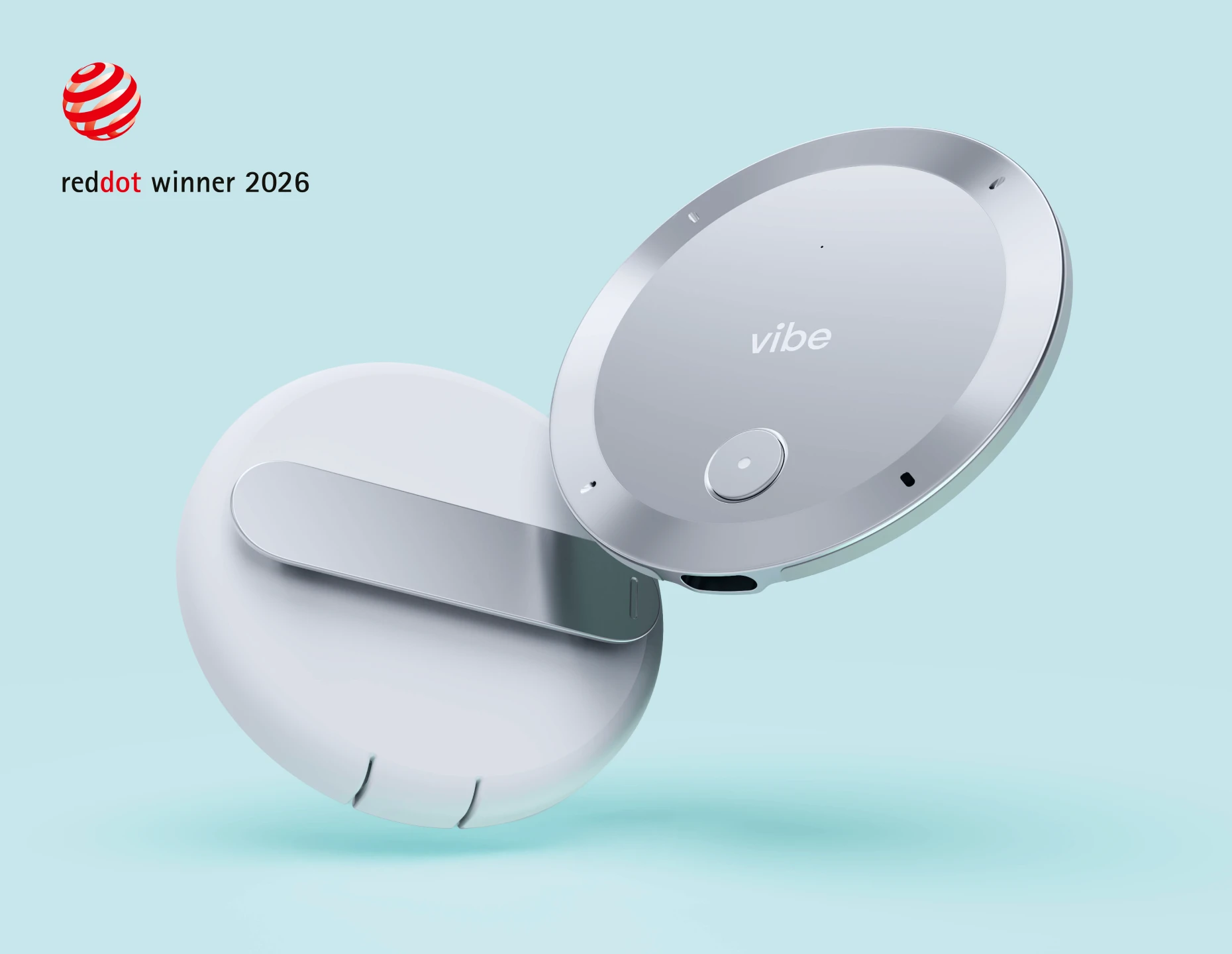

Meetings move fast, side comments get missed, and laptop notes rarely capture who promised what. This guide compares the wearable recorders that can capture a conversation without opening another app or putting a phone on the table — and, more importantly, weighs them the way a professional buyer should: on microphone quality, full-day battery, transcript reliability, security posture, and how each one actually fits a working day.
A note on scope and method up front, because it shapes every ranking below. We did NOT run controlled lab word-error-rate (WER) testing. This comparison draws on published specifications, official compliance disclosures, hands-on form-factor checks, and the current market status of each device. Where a claim depends on a vendor’s own marketing, we say so. The goal is a buyer’s filter you can trust, not a spec sheet dressed up as a lab report.
- This guide compares the 10 leading wearable AI recorders of 2026: Vibe Dot, Plaud Note Pro, Soundcore Work, Omi, Bee AI, HiDock P1, BOYA Notra, Pocket AI, iFLYTEK SR702, and the now-discontinued Limitless Pendant.
- Vibe Dot is the strongest all-around pick at $199: a 5-mic array (4 MEMS + 1 VPU), 30+ hours of continuous recording, 64GB of onboard storage, and the broadest compliance stack in this comparison — SOC 2, HIPAA, NDAA, FERPA, and TPM 2.0.
- Omi has no onboard storage. It streams audio to your phone over Bluetooth. If your connection drops, you can lose the recording. Battery is 10–14 hours, not "3 days."
- Compliance is a first-pass filter for regulated teams. Only four devices here carry public HIPAA claims: Vibe Dot, Plaud Note Pro, Omi, and Soundcore Work.
- One device is gone. The Limitless Pendant stopped new sales December 5, 2025 after Meta's acquisition.
What is a wearable AI recorder?
A wearable AI recorder is a compact, body-worn or clip-on device that captures speech through an onboard microphone array, then uses on-device or cloud AI to generate verbatim transcripts, structured summaries, and action items — automatically, and without requiring a laptop or phone on the table. The best ones combine professional-grade audio hardware with a compliance posture that lets regulated teams actually deploy them.
How We Evaluated
We scored each device on six criteria:
-
Microphone system — array design, mic types, and expected real-world pickup;
-
Battery life — continuous recording runtime under realistic use;
-
Transcript reliability — informed by hardware specs and independent research;
-
Security and compliance — certifications by vertical;
-
Workflow fit — integrations with tools teams already use;
-
Product maturity — is the company still selling and actively developing?
On transcript accuracy: A 2025 PubMed systematic review (Ng et al., BMC Medical Informatics and Decision Making) found word error rates spanning 0.087 in controlled single-speaker dictation to above 50% in conversational, multi-speaker environments. Wearable recorders operate in the harder end of that range.
On meeting cost: The 2025 Owl Labs State of Hybrid Work report found 77% of workers have lost time to technical difficulties in hybrid meetings, and the average team loses over six minutes just getting a hybrid meeting started.
Before You Buy: Consent, Compliance & Data Governance
In the United States, federal law (18 U.S.C. § 2511) requires one-party consent for recording — but 11 states require all-party consent, including California, Florida, and Illinois. EU law generally requires explicit consent under GDPR. Always notify participants that recording is active and verify the applicable law in your jurisdiction before deployment.
2026 Market Status
|
Device |
Status |
Notes |
|---|---|---|
|
Vibe Dot |
✅ Shipping |
$199; professional wearable AI recorder |
|
Plaud Note Pro |
✅ Shipping |
$189; mature ecosystem, 2M+ users |
|
Soundcore Work |
✅ Shipping |
$159; first-gen, software maturing |
|
Omi |
✅ Shipping |
$89; open-source dev kit |
|
Bee AI |
✅ Shipping |
$49.99; Amazon-owned, active |
|
HiDock P1 |
✅ Shipping |
$169; desk-optimized |
|
BOYA Notra |
✅ Shipping |
Price varies by region |
|
Pocket AI |
✅ Shipping |
~$99; verify current pricing |
|
iFLYTEK SR702 |
✅ Shipping |
Limited Western availability |
|
Limitless Pendant |
❌ Discontinued |
Meta acquisition, Dec 2025 |
The 10 Best Wearable AI Recorders of 2026
1. Vibe Dot — Best All-Around Wearable AI Recorder
|
Specification |
Value |
|---|---|
|
Price |
$199 (20% off launch price of $249) |
|
AI Subscription |
Starter free (300 min/mo); Pro $9/seat/mo (1,200 min); Max $29/seat/mo (unlimited) |
|
Battery |
30+ hours continuous recording |
|
Storage |
64GB onboard |
|
Weight |
0.83 oz (0.17″ thin) |
|
Certifications |
SOC 2, HIPAA, NDAA, FERPA, TPM 2.0 |
|
Microphones |
5-mic — 4 MEMS air mics + 1 VPU bone-conduction mic |
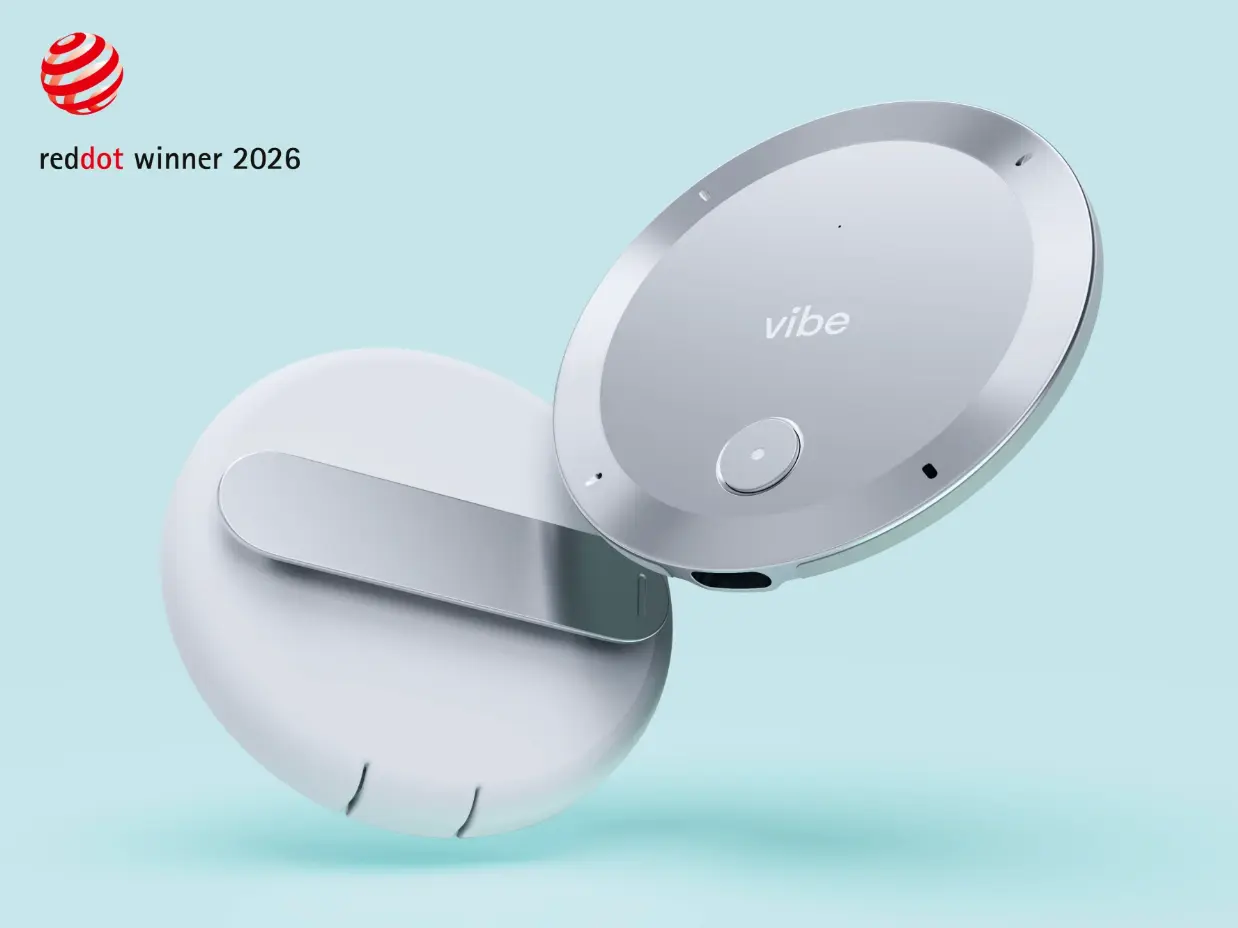
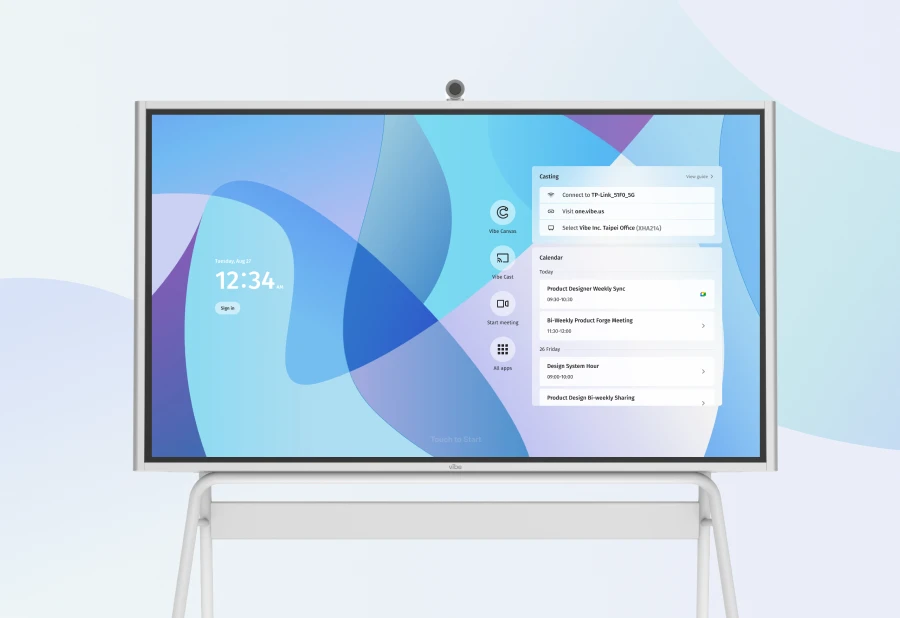
Vibe Dot earns the top position by covering more of a professional buyer’s checklist than any other device here. The 5-mic array (4 MEMS + 1 VPU bone-conduction) delivers strong pickup across recording modes. At 0.17 inches thin and 0.83 ounces, it genuinely disappears into a workday.
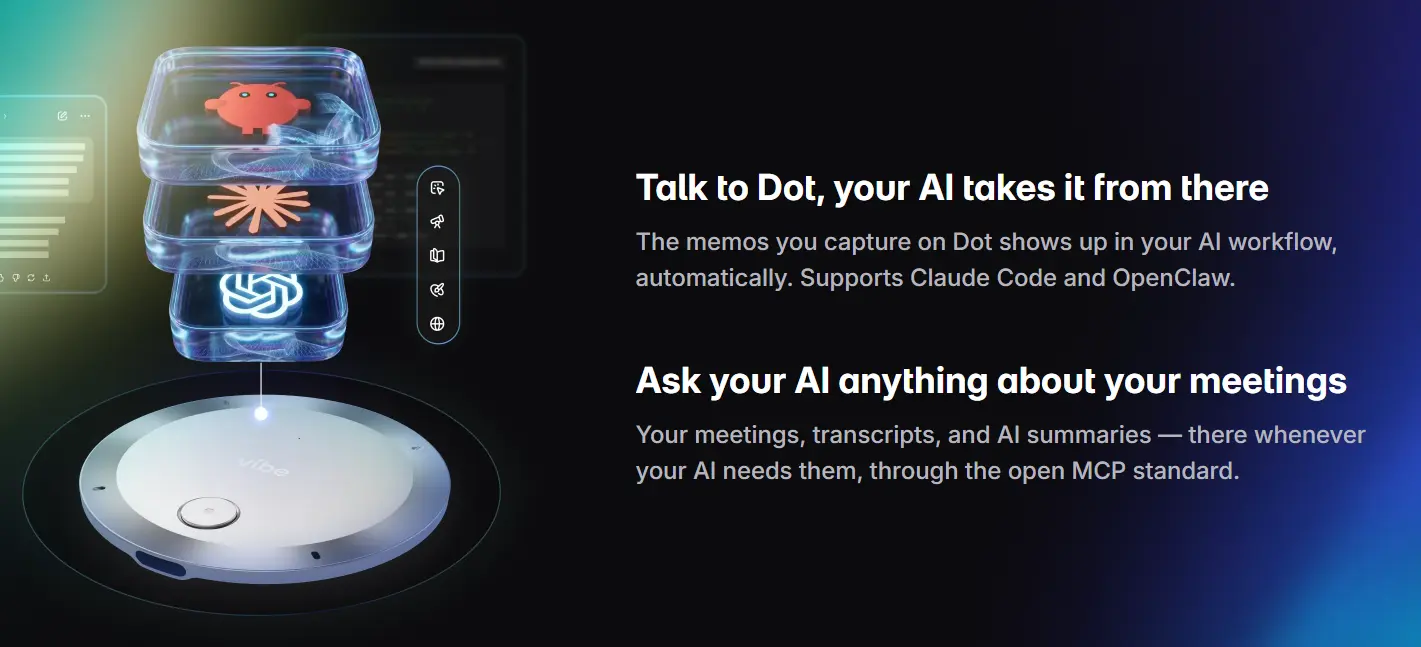 Vibe Dot AI voice recorder product page showing device design, AI features, and certifications
The compliance profile is what separates Vibe Dot from most competitors. SOC 2 covers enterprise data security. HIPAA covers healthcare. NDAA compliance means the device meets US government procurement requirements — a filter that eliminates most Chinese-manufactured devices for federal and defense-adjacent work. FERPA covers student data privacy. TPM 2.0 is a hardware-level tamper-prevention chip, not a software claim.
Pros
-
Broadest compliance stack of any device here (SOC 2 + HIPAA + NDAA + FERPA + TPM 2.0)
-
64GB onboard storage — works fully offline during recording
-
Three purpose-built recording modes cover memos, meetings, and ambient capture
-
True wearable at 0.83 oz; genuinely unobtrusive through a full day
Cons
-
AI features beyond the free tier (300 min/month) require a Vibe AI subscription
-
As a newer product, not enough long-term independent reviews
Best for
Working professionals who need pro-grade meeting recording and strong data security day-to-day, as well as enterprise and regulated teams (healthcare, legal, government, defense) that need a compliance-verified wearable AI recorder deployable on day one.
2. Plaud Note Pro — Best for Language Coverage and Room Range
|
Specification |
Value |
|---|---|
|
Price |
$189 |
|
AI Subscription |
Starter free (300 min/mo); Pro $17.99/mo or $8.33/mo billed annually (1,200 min); Unlimited $29.99/mo or $19.99/mo billed annually |
|
Battery |
30 hours continuous (NOT 50 — commonly misreported) |
|
Storage |
64GB |
|
Weight |
1.06 oz (0.12″ thin) |
|
Certifications |
ISO 27001, ISO 27701, GDPR, SOC II, HIPAA, EN 18031 |
|
Microphones |
4 MEMS + 1 VPU |
|
Capture range |
16.4 feet (5 meters) |
|
Languages |
112 |
A correction from other reviews: multiple publications cite 50 hours of battery for the Plaud Note Pro. The official Plaud product page states 30 hours of continuous recording. That is still excellent — it just isn’t 50.
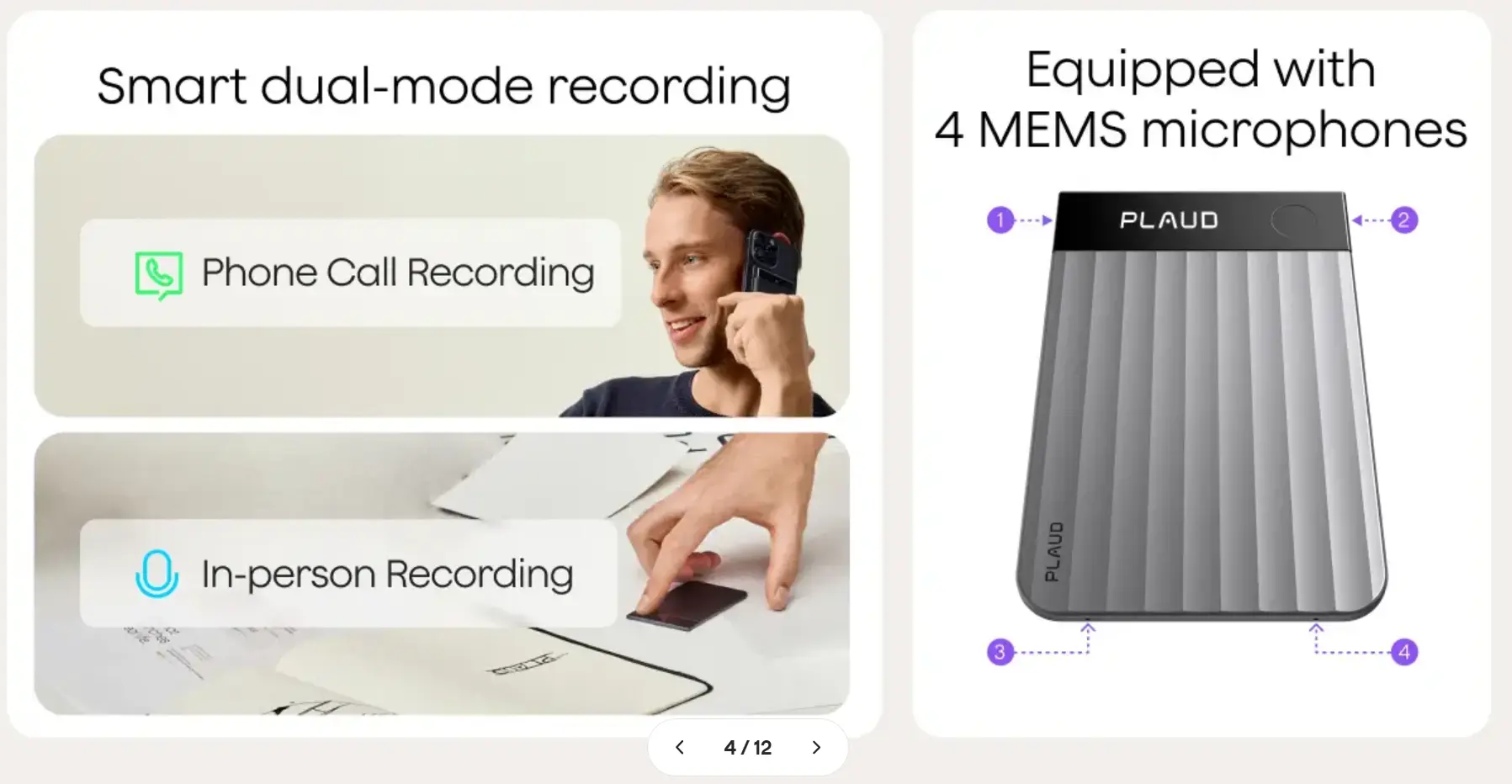 PLAUD recorder with dual-mode recording features—phone call and in-person—and 4 MEMS microphone array diagram
Plaud is the most established brand in this category by user base, with over 2 million professionals using its devices. The Note Pro features a 16.4-foot ambient capture range and a compliance stack broader than most: ISO 27001 + ISO 27701 + HIPAA + SOC II + GDPR + EN 18031.
The 112-language support is the widest in this comparison. Note that the card-style form factor is not a clip-on wearable — the Note Pro typically slides into a pocket, attaches magnetically to a phone back, or sits on a table. If clip-on wearability is a core requirement, the Plaud NotePin S may be more relevant.
Pros
-
112-language transcription — widest coverage in this comparison
-
16.4-foot ambient range handles larger conference rooms
-
Mature app ecosystem; 2M+ user base
-
ISO 27001 + ISO 27701 + HIPAA + SOC II — strong regulated-industry posture
Cons
-
30-hour battery (not 50, as commonly misreported)
-
Card-style form; not a true clip-on wearable
-
Subscription required once free monthly minutes are used
Best for
Professionals in multilingual or international environments, and anyone running meetings in larger rooms where a 16-foot pickup radius matters.
3. Soundcore Work — Best for Multilingual Travel
|
Specification |
Value |
|---|---|
|
Price |
$159 |
|
AI Subscription |
Basic free (1,200 min/mo); Unlimited $19/month |
|
Battery |
8 hours (pin alone); ~32 hours with charging case |
|
Certifications |
AES-256, SOC 2 Type I (app), NIST IR 8425 alignment, HIPAA standards |
|
Languages |
150+ |
|
Subscription |
300 free min/month; Pro ~$15.99/month |
Soundcore Work (Anker) earns its place on two criteria: the broadest language support at 150+ languages, and better security fundamentals than most consumer-grade AI wearables. AES-256 local encryption, SOC 2 Type I certification for the app layer, and NIST IR 8425 alignment give it a credible security posture.
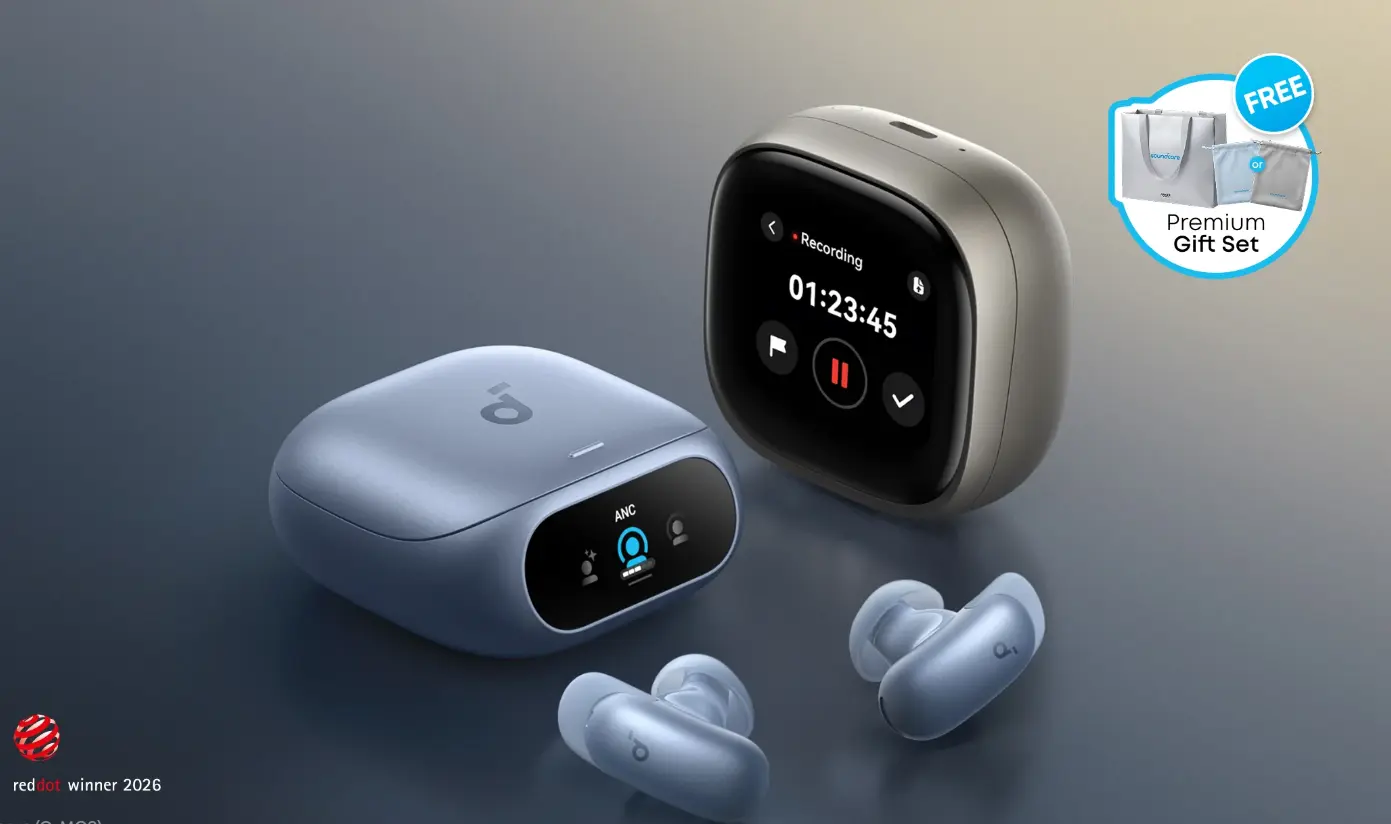 Soundcore Work AI wireless earbuds and charging case with recording interface
The 8-hour single-charge battery is the weakest spec in this category — back-to-back meetings will exceed it. The charging case extends total runtime to ~32 hours. Its best use case is the frequent traveler who works across multiple languages.
Pros
-
150+ languages — widest coverage in this comparison
-
AES-256 encryption and SOC 2 Type I — above average for the price
-
Big-brand build quality (Anker/Soundcore); MFi Apple certified
Cons
-
8-hour single-charge battery requires the case for all-day use
-
2-mic system may struggle in rooms with 4+ talkers
-
SOC 2 Type I covers app layer only (not full organizational certification)
Best for
Travelers and multilingual professionals who work across diverse language settings.
4. Omi — Best Open-Source AI Recorder
|
Specification |
Value |
|---|---|
|
Price |
$89 hardware; free plan 1,200 min/month |
|
AI Subscription |
Basic free (1,200 min/mo); Unlimited $19/month |
|
Battery |
10–14 hours (NOT "3 days" as commonly reported) |
|
Storage |
None onboard — streams to phone via Bluetooth 5.1 |
|
Certifications |
SOC 2, HIPAA; TLS in transit; AES-256-GCM at rest |
|
Microphones |
2 |
|
Connectivity |
Bluetooth 5.1, Wi-Fi 2.4/5 GHz |
Two corrections from other reviews: Omi’s battery is 10–14 hours, not "3 days." And Omi has NO onboard storage — audio streams to your phone or cloud in real time. If Bluetooth drops during a meeting, you can lose the recording.
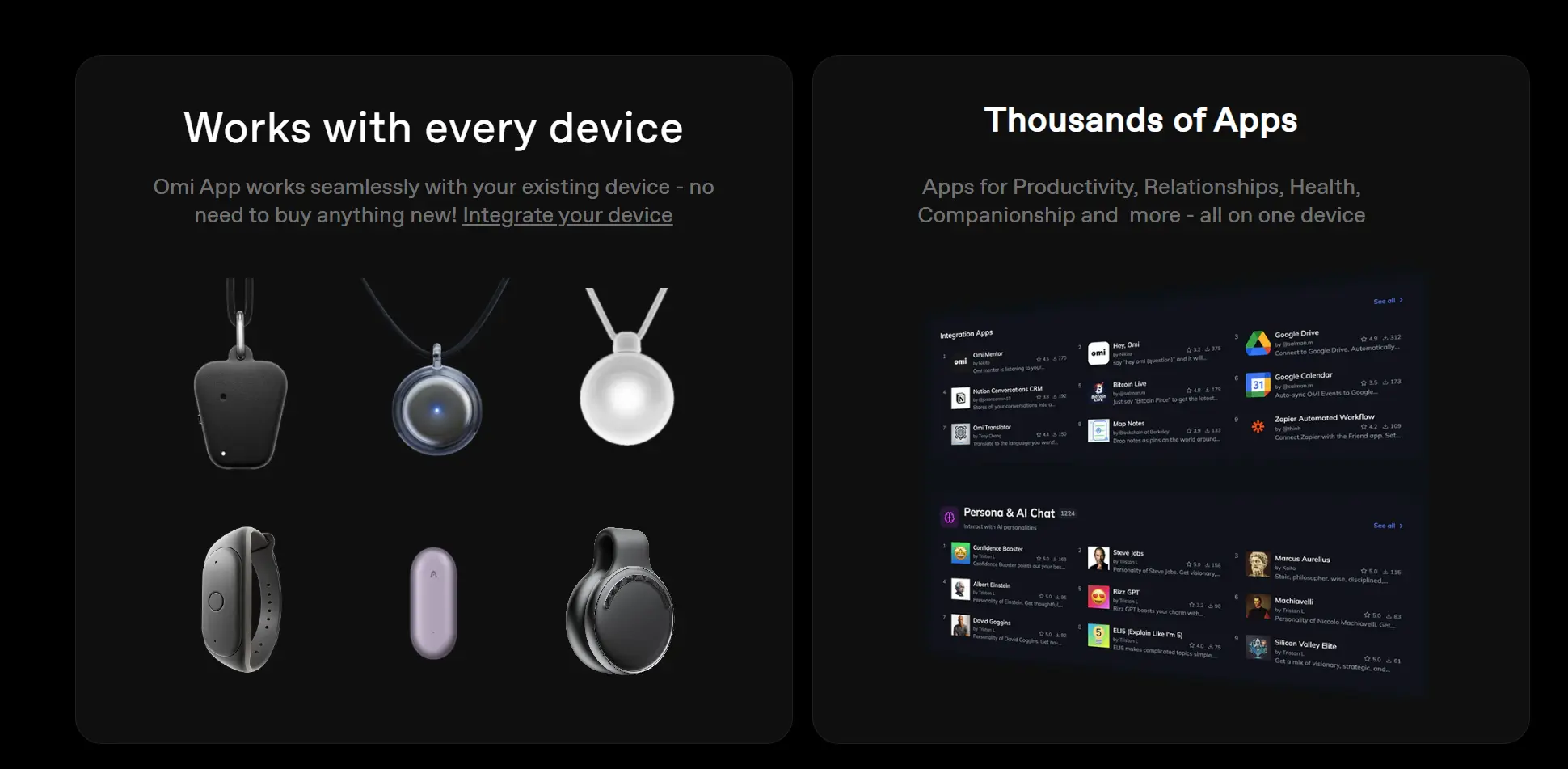 Omi AI wearable device lineup with pendant, necklace, and earbud styles, plus app integration screenshot
Omi is an open-source project with an unusually strong security posture for its price. SOC 2, HIPAA, AES-256-GCM at rest, and TLS in transit — credentials that many devices costing two or three times as much don’t match. Full local-run processing is supported for teams that want complete data control.
The streaming-only architecture means you need stable connectivity throughout recording. For a fixed-desk setup with reliable Wi-Fi/BT, this is manageable. For field work or any environment with unreliable connectivity, the lack of a local buffer is a real risk. The 2-mic system is the most modest here; speaker separation in rooms with 4+ talkers may suffer.
Pros
-
SOC 2 + HIPAA at $89 — best compliance-per-dollar ratio in this list
-
Open-source codebase; full local-run option for maximum data control
-
Compatible with iOS 15+ and Android 7+
Cons
-
No onboard storage — connection drop during recording can mean lost audio
-
10–14 hour battery (not "3 days" as some reviews claim)
-
2-mic system is the most limited array here
Best for
Technical teams and privacy-first buyers who want open-source architecture, data sovereignty, and compliance credentials — with reliable connectivity during sessions.
5. Bee AI — Best Battery Life and Best Budget Entry
|
Specification |
Value |
|---|---|
|
Price |
$49.99 (Pioneer Edition) |
|
AI Subscription |
$19/month — required to unlock AI summaries, reminders, and insights |
|
Battery |
Up to 160 hours / 7 days standby |
|
Microphones |
Dual + advanced noise filtering |
|
Languages |
40 |
|
Platform |
iOS primary; Android available |
|
Certifications |
None publicly disclosed |
|
Status |
Active; acquired by Amazon in 2025 |
Bee AI stands alone on battery life. The 160-hour / 7-day claim is a standby figure — real-world active-listening runtime is shorter — but even at a significant discount, it leads this category by a wide margin. At $49.99, it also has the lowest hardware price here.
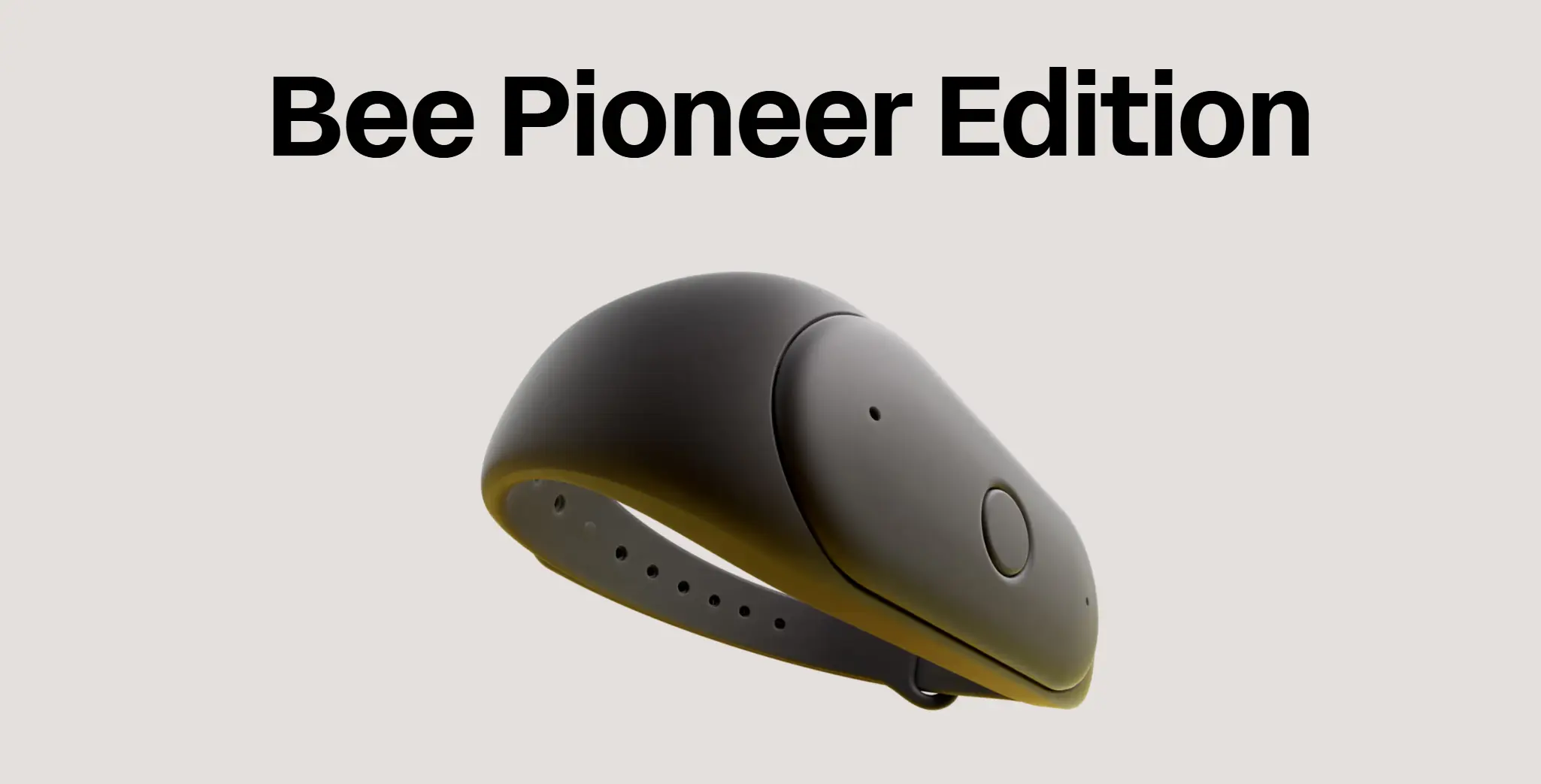 Bee Pioneer Edition AI wearable band with curved teardrop-shaped body
Bee takes a privacy-first design stance: rather than storing raw audio, it processes audio in real time and discards it, retaining only derived outputs (summaries, reminders, stored "memories"). This is a dealbreaker for anyone who needs verbatim transcripts or raw audio for compliance or legal hold.
Amazon’s 2025 acquisition has raised questions about the platform’s independence. Bee remains actively sold and updated as of mid-2026, but users should review Amazon’s current data-sharing terms before deploying in sensitive environments.
Pros
-
160-hour standby / 7-day battery — longest of any device in this comparison
-
$49.99 — most accessible hardware price
-
Privacy-first design: no raw audio stored
Cons
-
No raw audio or verbatim transcript — unsuitable for compliance or legal use
-
No publicly disclosed SOC 2 or HIPAA certification
-
Amazon ownership introduces data-use policy uncertainty
Best for
Individuals who want lightweight AI assistance for personal notes and summaries — and who don’t need verbatim transcripts or compliance coverage.
6. HiDock P1 — Best for Desk-Based Call Recording
|
Specification |
Value |
|---|---|
|
Price |
$169 |
|
AI Subscription |
Free, unlimited basic transcription with device purchase; optional Pro Membership (~$12.99/month) unlocks speaker ID and advanced summaries |
|
Battery |
600mAh lithium polymer |
|
Storage |
64GB onboard |
|
Weight |
72g (0.16 lbs) |
|
Dimensions |
5.0 × 1.5 × 0.6 inches |
|
Languages |
75+ |
|
Certifications |
GDPR; Microsoft Azure cloud |
|
Connectivity |
Bluetooth 5.3 |
HiDock P1 is optimized for desk-based call recording. Its signature feature is BlueCatch™ — a Bluetooth bridge that captures audio from your earphones during a call, meaning it records what you hear through your earbuds as well as what the room mic picks up from your end. For remote workers on Zoom/Teams calls through earphones, this two-path capture solves a problem that room-facing recorders don’t address.
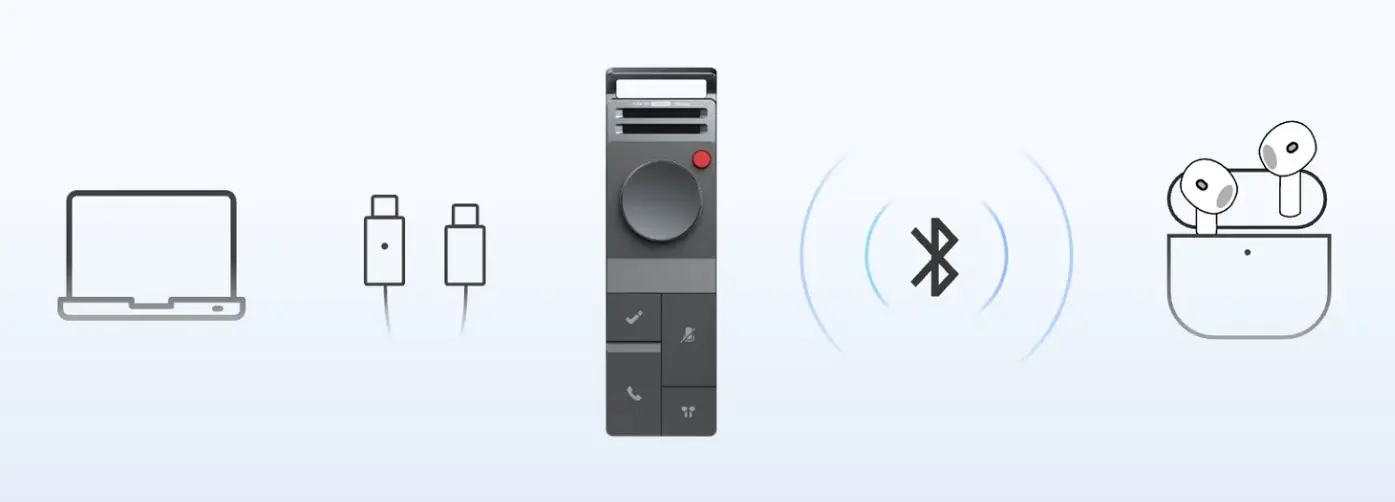 HiDock P1 desk recorder support cable connection to laptop / bluetooth connection to earbuds
Three modes: Room Mode (group meetings), Call Mode (Bluetooth earphone calls, BlueCatch active), and Whisper Mode (personal notes). At 5 × 1.5 × 0.6 inches and 72g, it is the largest device here — closer to a desktop dock than a lapel clip. Connects via Bluetooth 5.3 and USB-C; compatible with macOS, Windows, iPhone 15+, and Android with OTG.
Pros
-
BlueCatch captures two-way call audio through Bluetooth earphones
-
64GB onboard storage; fast transfer (~1-hr recording in ~1 min)
-
Bluetooth 5.3 + USB-C; wide platform compatibility
Cons
-
Designed for desk use — not a portable wearable
-
Battery capacity listed as 600mAh without specified active-recording hours
-
No SOC 2 or HIPAA certification
Best for
Remote workers at a fixed desk who primarily record via Zoom/Teams through Bluetooth earphones.
7. BOYA Notra — Best Multi-Mode Capture
|
Specification |
Value |
|---|---|
|
Price |
Verify at boyamic.com — varies by region |
|
AI Subscription |
Starter free (320–600 min/mo); Pro $17.99/mo (1,200–1,400 min); Ultimate $29.99/mo (unlimited) |
|
Battery |
~20 hours estimated |
|
Storage |
64GB |
|
Capture range |
Up to 33 feet (10 meters) ambient mode |
|
Languages |
140+ |
|
Noise cancellation |
AI noise cancellation rated to -30dB |
|
Modes |
Ambient, Phone Call, Bluetooth Earbud |
|
Certifications |
None publicly disclosed |
BOYA is a professional audio brand with decades in studio and broadcast microphones. The Notra’s three-mode architecture is its standout feature: Ambient Mode uses the onboard array to capture a room; Phone Call Mode magnetically attaches to a phone back to capture both sides of a call; Bluetooth Earbud Mode captures audio directly from connected earphones. No other device in this comparison covers all three scenarios in one unit.
 BOYA wireless microphone lineup: Magic, mini 2, MIC 2, and LINK 3 AI-powered mini mic product grid
The -30dB AI noise cancellation and 33-foot ambient range are ambitious specifications. The absence of any public security certifications limits it to non-regulated use cases.
Pros
-
Three capture modes (ambient, phone call, Bluetooth earbud) — most versatile here
-
33-foot ambient range; -30dB noise cancellation from an experienced audio brand
-
140+ languages; 64GB storage
Cons
-
No public SOC 2 or HIPAA certification
-
Official pricing inconsistent across regions
-
Newer product; app maturity still developing
Best for
Professionals who move between room meetings, phone calls, and earphone-based calls and want one device for all three.
8. Pocket AI — Best Value for Large-Room Capture
|
Specification |
Value |
|---|---|
|
Price |
~$99 (verify — pricing inconsistent) |
|
AI Subscription |
Free tier covers core features; premium AI tier reported around $18–19/month equivalent |
|
Battery |
~4 days |
|
Storage |
64GB onboard + cloud |
|
Microphones |
3-mic (2 studio mics + 1 contact mic) |
|
Capture range |
Up to 49 feet (15 meters) |
|
Features |
Offline transcription; encrypted onboard storage |
Pocket AI’s 49-foot capture range is the widest in this comparison. For large boardrooms, lecture halls, or training sessions with dispersed participants, that range matters. The 4-day battery and offline transcription make it an offline-first option well-suited for field use or environments with unreliable connectivity.
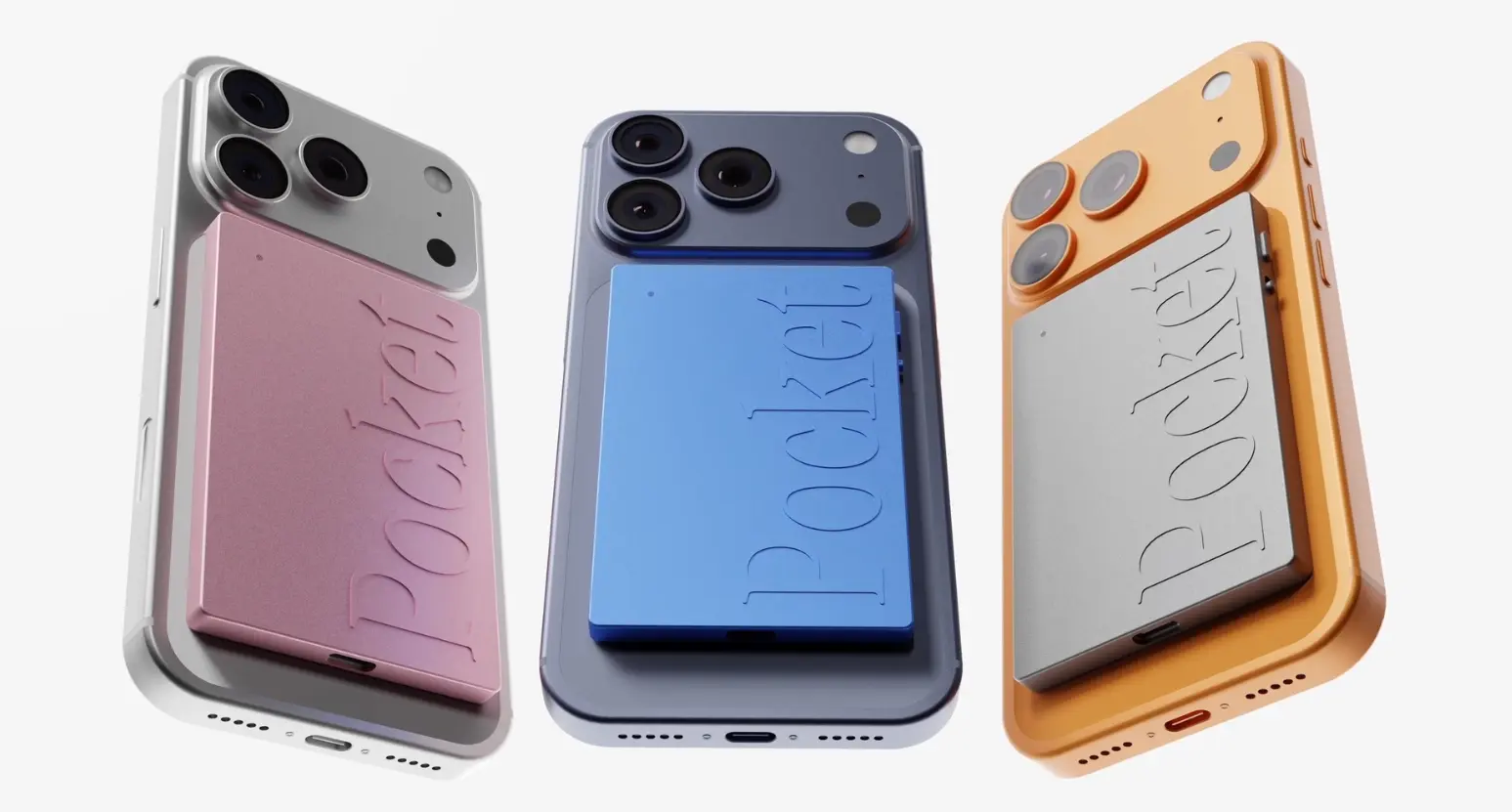 Pocket AI phone-attached recording device in pink, blue, and orange colors on smartphones
The 3-mic array (2 studio mics + 1 contact mic) is unconventional: the contact mic adds a secondary near-field acoustic path while the studio mics handle room pickup.
Pros
-
49-foot capture range — widest in this comparison
-
Offline transcription; 64GB onboard + cloud backup
-
~4-day battery for extended field use
Cons
-
No publicly disclosed security certifications
-
Pricing inconsistent across official channels
-
Less established brand and ecosystem
Best for
Large-room capture, field use, and offline-first workflows on a midrange budget.
9. iFLYTEK SR702 — Best for Chinese-Language and APAC Use
|
Specification |
Value |
|---|---|
|
Price |
Limited Western pricing — verify at iflytek.com |
|
AI Subscription |
Not publicly disclosed |
|
Battery |
12 hours |
|
Storage |
32GB (~175 hours of audio) |
|
Languages |
8 international + 12 Chinese dialects |
|
Certification |
CCRC (China Compulsory Certification) |
|
Features |
Offline local transcription; conference noise reduction |
iFLYTEK is China’s leading AI speech recognition company. The SR702 offers 12 Chinese dialect variants — Mandarin, Cantonese, Sichuanese, and others — plus offline local transcription. No other device in this comparison matches that Chinese-language depth.
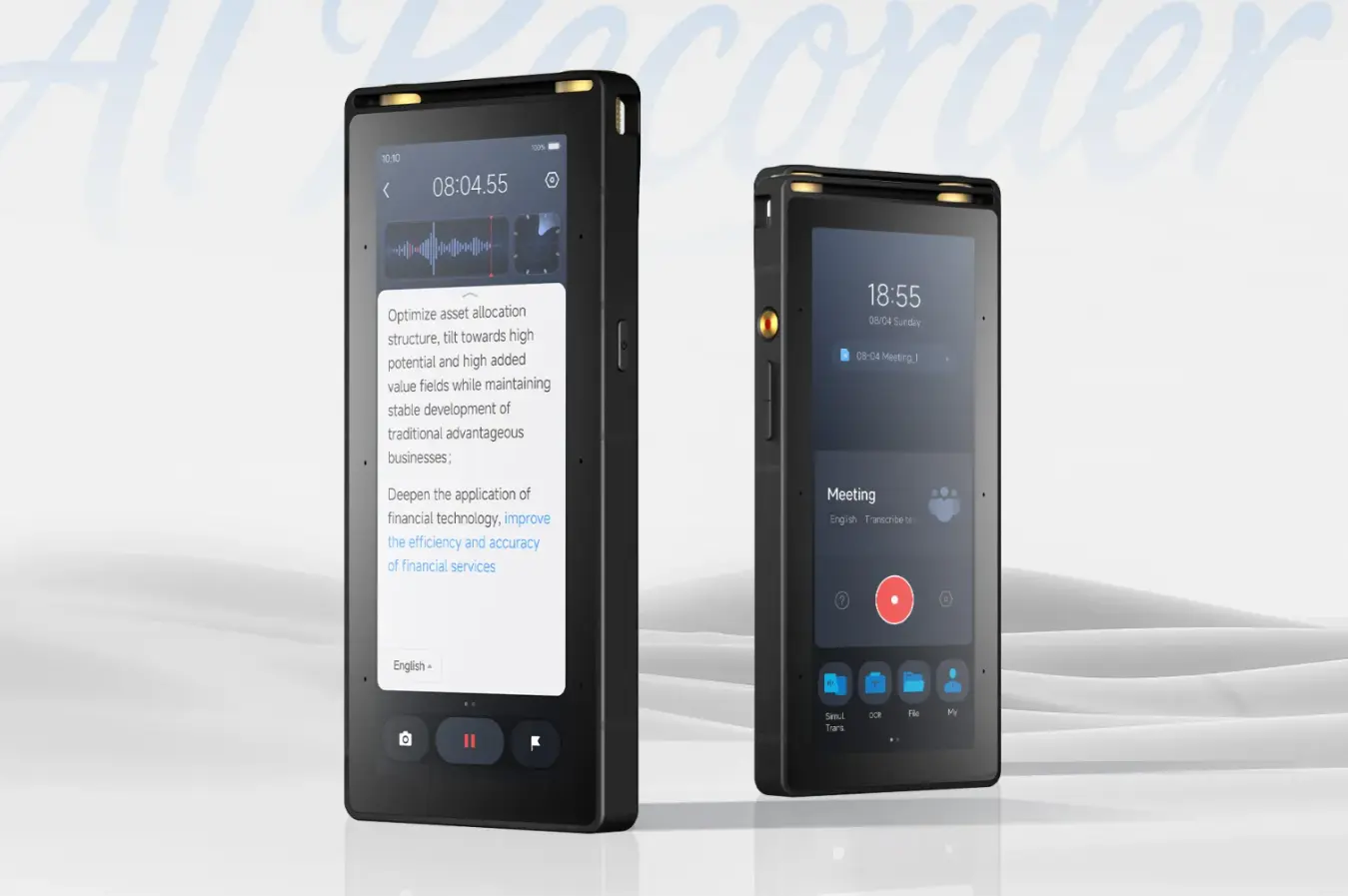 iFLYTEK SR702 handheld AI recorder with touchscreen showing transcription and meeting interface
The SR702 is a handheld recorder, not a clip-on wearable. Its conference-tuned noise reduction and 12-hour battery are adequate for a professional workday. The 32GB storage holds roughly 175 hours of audio. Practical limitation outside APAC: limited Western availability and customer support infrastructure.
Pros
-
Unmatched Chinese-language support: 8 international + 12 Chinese dialects
-
Offline local transcription — no internet required
-
From an established, well-resourced AI speech company
Cons
-
Handheld design, not a clip-on wearable
-
Limited Western availability and pricing transparency
-
No SOC 2, HIPAA, or ISO equivalents disclosed for Western markets
Best for
APAC-based professionals, Mandarin-primary teams, and offline-first transcription across Chinese dialects.
10. Limitless Pendant — Category Pioneer, Now Discontinued
|
Specification |
Value |
|---|---|
|
Status |
❌ Discontinued for new customers as of December 5, 2025 |
|
AI Subscription |
Free unlimited service for existing users through 2026; not available for new customers |
|
Reason |
Acquired by Meta; new sales stopped immediately |
|
Existing users |
Supported through 2026 with free unlimited service |
|
HIPAA status |
Not reasserted under Meta ownership |
The Limitless Pendant helped define what a wearable AI recorder could be: 100+ hour battery, always-on ambient capture, speaker recognition, AI summaries, multi-language support at an accessible price. At its peak, it was the category benchmark.
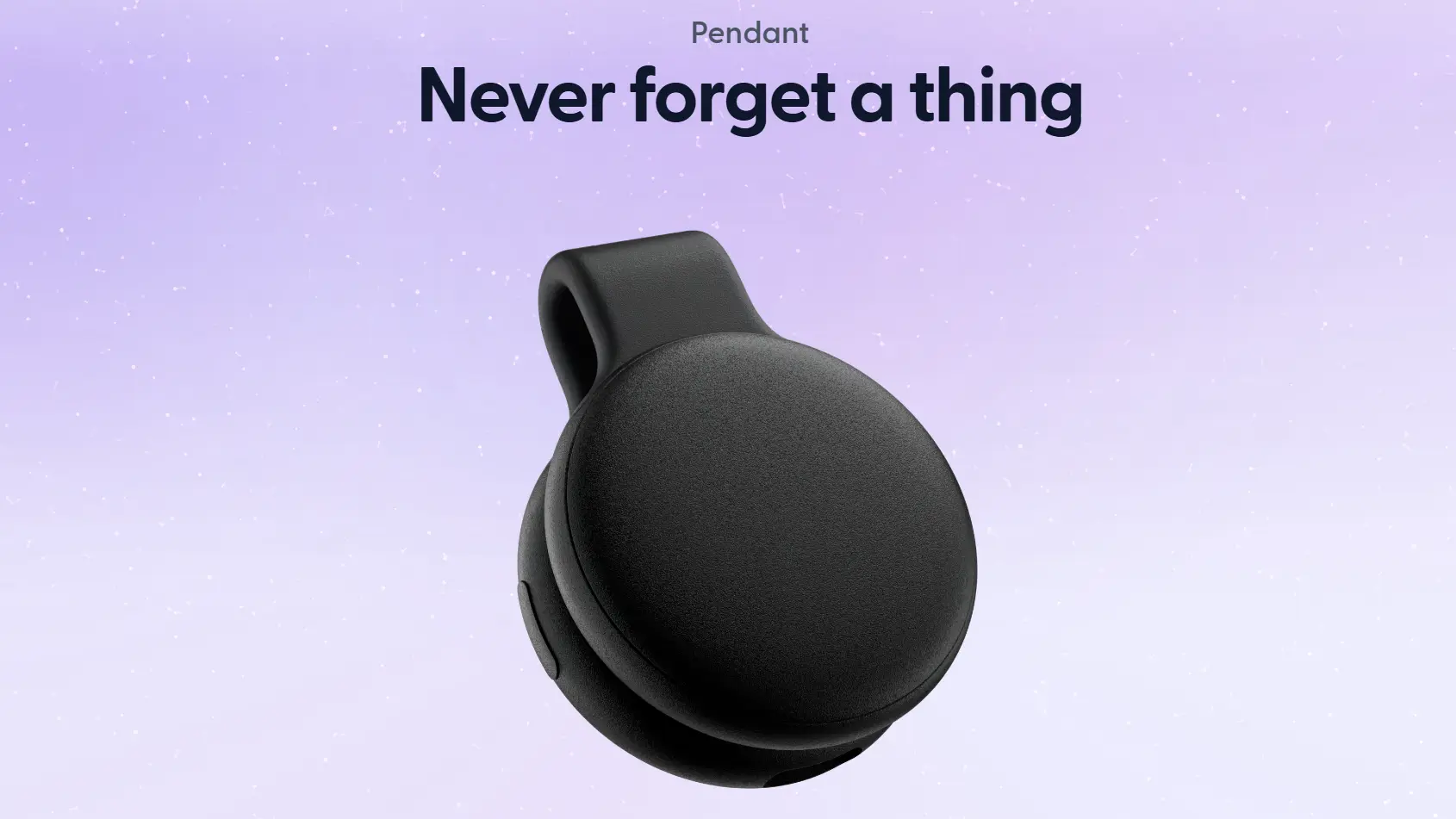 Limitless Pendant black wearable AI recorder with clip attachment
It is no longer available to new customers. Meta acquired Limitless in December 2025 and stopped new Pendant sales on December 5th. Existing users receive continued support through 2026, but the hardware is on a path to obsolescence.
This entry is included for three reasons: many buyers will encounter Limitless reviews that predate the acquisition; some professionals are still using the device and deciding whether to continue; and the story is the most instructive cautionary tale in the category. Buy from a company whose balance sheet you can assess.
Pros
-
Defined the category; historically strong feature set
-
Existing users receive continued support through 2026
Cons
-
No longer available to new customers
-
HIPAA compliance posture not reasserted under Meta ownership
-
Hardware on a path to obsolescence
Best for
Existing Limitless users deciding whether to transition — and anyone researching the category’s history.
Side-by-Side Comparison
|
Device |
Price |
Subscription |
Battery |
Mics |
Certifications |
Best for |
|---|---|---|---|---|---|---|
|
Vibe Dot |
$199 |
Free 300min; $9–29/seat/mo |
30+ hrs continuous |
5 (4 MEMS+1 VPU) |
SOC 2, HIPAA, NDAA, FERPA, TPM 2.0 |
Best overall |
|
Plaud Note Pro |
$189 |
Free 300min; $17.99–29.99/mo |
30 hrs continuous |
4 MEMS+1 VPU |
ISO 27001, SOC II, HIPAA |
Language + range |
|
Soundcore Work |
$159 |
Free 300min; Pro ~$15.99/mo |
8 hr / 32 hr w/case |
2 |
AES-256, SOC 2 Type I |
Multilingual travel |
|
Omi |
$89 |
Free 1,200min; $19/mo |
10–14 hrs |
2 |
SOC 2, HIPAA |
Open-source |
|
Bee AI |
$49.99 |
$19/mo (required) |
160 hrs standby |
2 |
None public |
Battery + budget |
|
HiDock P1 |
$169 |
Free unlimited; ~$12.99/mo |
600mAh |
2 ECM |
GDPR / Azure |
Desk call recording |
|
BOYA Notra |
Varies |
Free 320–600min; $17.99–29.99/mo |
~20 hrs |
AI array |
None public |
Multi-mode capture |
|
Pocket AI |
~$99 |
Free tier; ~$18/mo |
~4 days |
3 |
None public |
Large-room / offline |
|
iFLYTEK SR702 |
Verify |
Not disclosed |
12 hrs |
Conference |
CCRC |
APAC / Chinese |
|
Limitless Pendant |
Discontinued |
Free (existing users only) |
100+ hrs (legacy) |
— |
Discontinued |
Existing users only |
Buyer’s Guide
Microphone system
The single most important hardware specification. More microphones help — but array design, mic type (MEMS vs. ECM), the presence of a bone-conduction VPU, and noise filtering matter at least as much as mic count. MEMS mics are compact and consistent. ECM mics offer high sensitivity but are susceptible to humidity and mechanical noise. VPU bone-conduction mics add a secondary acoustic path through physical vibration — useful in noisy environments.
The research context: A 2025 BMC Medical Informatics systematic review found AI speech recognition WERs exceed 50% in conversational, multi-speaker settings. Mic array quality is your best proxy for expected real-world accuracy.
Battery life
Read battery claims carefully. "Up to 160 hours" (Bee AI) is a standby figure. "30 hours continuous recording" (Vibe Dot, Plaud Note Pro) means actively recording. Standby draw is a fraction of active recording draw — these are not comparable numbers.
Knowledge workers typically spend 4–7 hours per day in meetings. A recorder with 8 hours continuous (Soundcore Work) covers that with a margin. A recorder with 30+ hours (Vibe Dot, Plaud Note Pro) covers two full days without charging.
Security and compliance
For regulated industries, this is the first filter. Relevant certifications by vertical:
• Healthcare: HIPAA BAA, SOC 2
• Government / Defense: NDAA, FedRAMP (if cloud-based)
• Education: FERPA
• Finance (EU): GDPR, ISO 27001
• International enterprise: ISO 27001, SOC 2 Type II
Ask vendors for the scope of certification — not just whether they have it. SOC 2 Type I covers a point-in-time review; Type II covers an audit period. ‘HIPAA-compliant’ may mean a BAA is available, or it may mean only that the privacy policy aligns with HIPAA principles.
Onboard storage vs. streaming
Devices with onboard storage (Vibe Dot, Plaud Note Pro, HiDock P1, Pocket AI — all 64GB) record locally and sync later. Recordings are safe if connectivity is lost during a session.
Omi streams audio to your phone over Bluetooth 5.1 with no onboard buffer. If the Bluetooth connection drops, the recording in progress is lost. This is a meaningful risk in environments with uncertain connectivity.
Ecosystem and data portability
Where do transcripts land? Can you search them? Can they export to existing tools (Microsoft 365, Google Workspace, Slack, CRM)? What is your data-recovery plan if the company is acquired or shuts down?
The Limitless Pendant and Humane AI Pin both had active user bases when their companies sold or shut down in 2025. Prioritize vendors with clear data-export capabilities and financial stability over feature-forward startups.
Final Verdict
The right wearable AI recorder is the one that matches your microphone needs, compliance requirements, and daily carry habit — and comes from a company that will still be selling and supporting it a year from now.
Vibe Dot ranks first because it covers the broadest set of professional requirements without compromise: strong microphone hardware, all-day battery, 64GB of local storage, the most complete compliance stack in this comparison, and integration with a persistent AI memory layer that goes beyond per-session transcription. If you’re weighing it against Plaud specifically, there’s a closer side-by-side comparison here.
FAQ
What is the best wearable AI recorder in 2026?
Vibe Dot is the best wearable AI recorder for most professional use cases in 2026. Its 5-mic array (4 MEMS + 1 VPU), 30+ hours of continuous recording, 64GB of onboard storage, and compliance stack (SOC 2, HIPAA, NDAA, FERPA, TPM 2.0) make it the most deployable option across enterprise, healthcare, legal, and government contexts. Plaud Note Pro is the best alternative for buyers who prioritize language coverage (112 languages) or wider room range (16.4 feet).
How accurate are wearable AI recorders?
Accuracy varies significantly by environment. A 2025 systematic review in BMC Medical Informatics (Ng et al.) found AI speech recognition WERs ranging from 0.087 in controlled single-speaker dictation to above 50% in conversational, multi-speaker settings. Wearable recorders operate closer to the harder end: clothing noise, distance from speaker, background noise, and overlapping speech all increase error rates. Microphone array quality is the strongest hardware predictor of accuracy.
Which wearable AI recorders are HIPAA compliant?
Four devices in this comparison carry public HIPAA claims: Vibe Dot, Plaud Note Pro, Omi, and Soundcore Work. Scope and phrasing differ by vendor — always request specific compliance documentation and verify whether a Business Associate Agreement (BAA) is available before any healthcare deployment. The average US healthcare data breach cost $7.42 million in 2025 (IBM Cost of a Data Breach Report, 2025) — the highest of any sector for the 14th consecutive year.
Is Limitless Pendant still available?
No. Limitless stopped selling the Pendant to new customers on December 5, 2025, following its acquisition by Meta. Existing users are receiving continued support and free unlimited service through 2026, but the device is no longer available for new purchase.
Do wearable AI recorders work without internet?
Some do. Vibe Dot, Plaud Note Pro, HiDock P1, and Pocket AI all have onboard storage and can record without connectivity — syncing to cloud later. Pocket AI and iFLYTEK SR702 support fully offline transcription. Omi has no onboard storage and requires a live Bluetooth connection; a connection drop during a session can mean lost audio.
Is it legal to record meetings with a wearable AI recorder?
In the United States, federal law requires only one-party consent, but 11 states require all-party consent — including California, Florida, and Illinois. EU law generally requires explicit consent under GDPR. Always notify participants that recording is active, follow your employer’s recording policy, and verify applicable law in your jurisdiction before deployment.
What should I look for when buying a wearable AI recorder for work?
Prioritize in this order: (1) microphone array quality for your typical recording environment, (2) continuous-recording battery life that covers your actual workday, (3) compliance certifications matched to your industry, (4) onboard storage vs. streaming-only architecture, (5) genuine wearability at your expected carry weight, and (6) company stability and data-portability options. Language count matters mainly for multilingual teams.