
Scrum meetings — also called scrum ceremonies — are the engine of any agile team. Done well, they keep everyone aligned, surface blockers early, and drive continuous improvement. Done poorly, they become the meetings everyone dreads: overlong, unfocused, and easy to skip.
This guide covers what scrum meetings are, the five core ceremony types, the roles involved, and — most importantly — what separates teams that run them well from teams that don’t.

What Is a Scrum Meeting?
A scrum meeting is a structured, time-boxed gathering within the Scrum framework — an agile methodology built around short work cycles called sprints. Each type of scrum meeting (or ceremony) serves a specific purpose: planning what to build, tracking daily progress, reviewing completed work, or improving how the team operates.
Scrum meetings are not status updates for management. They exist to help the team itself stay coordinated, identify obstacles, and adapt quickly. That distinction matters: when scrum meetings start functioning like reporting sessions, they lose their value.
Key term — Sprint: A fixed, time-boxed work cycle, typically one to four weeks, during which a scrum team builds and delivers a defined set of work. Every scrum ceremony maps to a point in the sprint cycle.
The 3 Scrum Roles (and Why They Matter in Meetings)
Every scrum meeting involves the same three roles. Understanding what each person is responsible for prevents meetings from drifting off track.
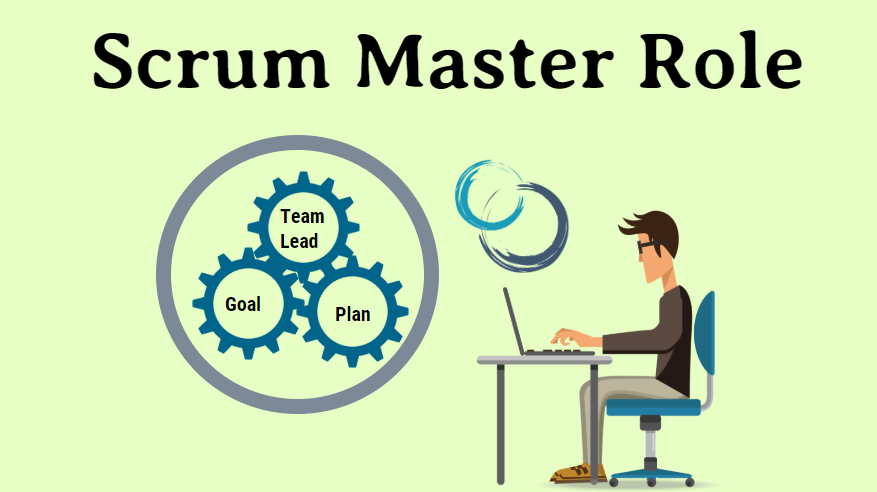
Scrum Master — Facilitates all ceremonies, enforces timeboxes, and removes impediments that block developers. The Scrum Master is responsible for the meeting starting on time, staying on topic, and ending on time. They do not assign work or make product decisions.
Product Owner — Represents stakeholder and customer priorities. In planning and refinement meetings, the Product Owner brings context about what to build and why. In reviews, they assess whether completed work meets expectations and adjusts the backlog accordingly.
Developers — The cross-functional practitioners doing the work: engineers, designers, writers, analysts, or any role executing sprint tasks. Developers own their estimates, flag blockers honestly, and self-organize to get work done. In scrum, "developer" is a role title, not a job description — it applies to anyone delivering sprint output.
The 5 Types of Scrum Meetings
1. Sprint Planning
|
Frequency |
Once per sprint, at the start |
|---|---|
|
Attendees |
Full scrum team |
|
Timebox |
~2 hours per week of sprint length (e.g., 4 hours for a 2-week sprint) |
Sprint planning sets the direction for the entire sprint. The Product Owner opens by presenting the highest-priority backlog items and explaining the business context behind them. Developers ask clarifying questions, estimate effort, and agree on how much work they can realistically complete. The output is a sprint goal — a shared, one-sentence summary of what the team is committing to — and a sprint backlog of specific tasks.
What makes sprint planning fail: Backlog items that arrive unrefined, without clear acceptance criteria. Teams spend planning time debating requirements instead of committing to work. Solving this belongs in backlog refinement (see below), not in planning.
For a detailed breakdown of how to structure this meeting, see Vibe’s sprint planning guide.
2. Daily Scrum (Daily Standup)
|
Frequency |
Every working day |
|---|---|
|
Attendees |
Developers (Scrum Master and Product Owner may attend; stakeholders listen only) |
|
Timebox |
15 minutes maximum |
The daily scrum is the most frequent — and most commonly misrun — scrum ceremony. Its purpose is not to report to a manager. It is for developers to coordinate with each other: what’s moving forward, what’s stuck, and what needs to shift today.

The 2020 Scrum Guide deliberately moved away from the classic three-question format ("What did I do yesterday? What will I do today? Any blockers?") to give teams more flexibility. The only requirement is that developers inspect progress toward the sprint goal and create a plan for the next 24 hours. The format can vary as long as those two things happen.
What makes daily standups fail:
-
Turning them into detailed problem-solving sessions. Blockers get named in the standup; they get solved in a follow-up conversation with the right people.
-
Letting them run over 15 minutes. When standups drift, attendance drops.
-
Running them as a reporting chain to the Scrum Master or manager rather than a peer-to-peer sync.
For hybrid and remote teams, running an effective daily standup requires a reliable shared surface. See how to run remote stand-up meetings and the 10 rules for efficient daily standups.
3. Sprint Review
|
Frequency |
Once per sprint, at the end |
|---|---|
|
Attendees |
Full scrum team + invited stakeholders |
|
Timebox |
~1 hour per week of sprint length (e.g., 2 hours for a 2-week sprint) |
The sprint review is a working session, not a presentation. The team demonstrates what was completed during the sprint, stakeholders respond with feedback, and the Product Owner updates the backlog based on what was learned. The goal is inspection and adaptation — not approval-seeking.
A common mistake is treating the sprint review as a success/failure assessment. Incomplete work is not a failure; it’s information. The question the meeting answers is: given what we built and the feedback we received, what should we prioritize next?
4. Sprint Retrospective
|
Frequency |
Once per sprint, after the sprint review |
|---|---|
|
Attendees |
Scrum team only (no external stakeholders) |
|
Timebox |
Up to 45 minutes per week of sprint length (max 3 hours for a 4-week sprint) |
The retrospective focuses on the team’s process, not the product. The team discusses what went well, what didn’t, and commits to one or two specific, actionable improvements for the next sprint. Keeping stakeholders out of this meeting is intentional — the team needs psychological safety to speak honestly about process failures.
Retrospectives work best with a consistent structure. Common formats include Start/Stop/Continue, 4Ls (Liked, Learned, Lacked, Longed For), and Mad/Sad/Glad. Rotating formats occasionally keeps the conversation fresh.
For a full breakdown of retrospective techniques and facilitation, see the sprint retrospective guide.
5. Backlog Refinement
|
Frequency |
Regularly throughout the sprint; typically once or twice per week |
|---|---|
|
Attendees |
Product Owner, Scrum Master, and relevant developers |
|
Timebox |
30–60 minutes per session; no more than 10% of the team’s total sprint capacity |
Backlog refinement (sometimes called backlog grooming) is the least ceremonially defined of the five meetings — the Scrum Guide treats it as an ongoing activity rather than a formal event. Its purpose is to ensure that upcoming sprint backlog items are clearly written, appropriately sized, and prioritized before planning begins.
When refinement is skipped or rushed, sprint planning breaks down. Items arrive in planning without acceptance criteria, estimates are guesswork, and the team spends the first two days of a sprint re-doing work that should have happened beforehand.
Good refinement produces backlog items that are: small enough to complete in one sprint, described from the user’s perspective, and understood well enough that any developer on the team could pick them up independently.
6 Practical Tips for Running Better Scrum Meetings

1. Protect the timebox — without exception
Every scrum ceremony has a defined maximum length. The Scrum Master’s most important facilitation job is ending on time, even if the conversation isn’t finished. Meetings that run over signal that the team hasn’t yet learned to prioritize. A conversation that needs more time gets scheduled separately, not absorbed into the ceremony.
2. Separate problem identification from problem solving
The daily standup is for surfacing blockers, not resolving them. When a blocker is raised, the Scrum Master notes it and schedules a follow-up with the people who can actually fix it. Solving in the standup means everyone waits while two people talk.
3. Prepare the Product Owner before planning and refinement
Sprint planning only works when backlog items arrive ready: written clearly, sized reasonably, and prioritized. The Product Owner should walk into planning having already done the refinement work — not discovering ambiguities in real time. If items consistently aren’t ready, the team needs more frequent or more structured refinement sessions.
4. Make blockers visible, not just verbal
Teams that visualize their sprint board — whether on a physical wall or a digital whiteboard — surface blockers faster than teams working from a list in a project management tool. When work items are visible to the whole team, patterns emerge: the same person is consistently blocked, or one category of task is always delayed. Visual boards make these patterns impossible to ignore.
5. Run retrospectives like you mean them
A retrospective that produces no action items is not a retrospective — it’s a venting session. Every retro should end with at least one concrete commitment: something the team will do differently next sprint, owned by a specific person. Teams that skip this step tend to have the same retrospective conversation sprint after sprint.
6. Track patterns across meetings, not just within them
The most valuable signal in scrum often comes from noticing what keeps coming up. If the same blocker appears in three consecutive daily standups, that’s a process problem, not a one-off. If sprint review feedback consistently points in the same direction, the backlog prioritization needs to change. Scrum Masters who track these patterns and bring them to retrospectives are far more effective than those who facilitate meetings in isolation.
Common Scrum Meeting Mistakes (and How to Fix Them)
|
Mistake |
Why it happens |
Fix |
|---|---|---|
|
Standups run 30+ minutes |
Developers solve problems instead of naming them |
Name the blocker, schedule a follow-up immediately after |
|
Sprint planning takes all day |
Backlog items arrive unrefined |
Invest in weekly refinement; nothing enters planning ungroomed |
|
Retrospectives produce no change |
Action items aren’t tracked |
Assign each action item an owner; open next retro by reviewing last sprint’s commitments |
|
Sprint reviews become demos, not conversations |
Stakeholders aren’t invited or engaged |
Frame the review as a question session: "Does this meet what you needed?" |
|
Backlog refinement is skipped |
Team treats it as optional overhead |
Make it non-negotiable; missing refinement costs more time in planning than it saves |
How Vibe Board Supports Scrum Ceremonies
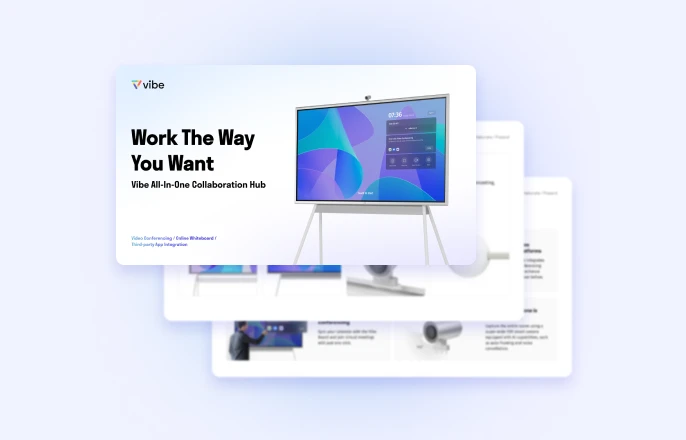
Scrum meetings depend on shared visibility — sprint boards, backlog items, blockers, and retrospective feedback all benefit from a surface the whole team can see and interact with simultaneously.

The Vibe Board S1 is a 55″ or 75″ 4K touchscreen that integrates with the tools scrum teams already use — Google Workspace, Microsoft 365, Zoom, Jira, and over 250 applications. Teams can run sprint planning on a shared canvas, update the sprint board during standups, and run retrospectives with sticky-note frameworks — all without switching between tools or losing context between sessions. Remote and hybrid participants connect through built-in video conferencing, contributing to the same canvas in real time.
See how Vibe supports hybrid team collaboration →
Scrum Meeting FAQs
What is the difference between a scrum meeting and a standup?
"Scrum meeting" is a general term for any of the five scrum ceremonies. A standup (or daily scrum) is specifically the 15-minute daily sync — just one of the five. People often use "scrum meeting" to mean the daily standup colloquially, but in scrum practice, the two terms aren’t interchangeable.
What does "scrum" mean in a work context?
Scrum is an agile framework for managing complex work in short, iterative cycles. The name comes from rugby — a scrum is when the team huddles together to restart play. In work contexts, it refers to the framework itself, not any single meeting. A "scrum call" or "scrum session" typically refers to the daily standup.
How long should a scrum meeting be?
It depends on the ceremony. Daily standups are capped at 15 minutes. Sprint planning runs approximately 2 hours per week of sprint length. Sprint reviews run approximately 1 hour per week of sprint length. Retrospectives run up to 45 minutes per week of sprint length. Backlog refinement sessions are typically 30–60 minutes. All of these are maximums — teams should end early when the work is done.
What do you discuss in a scrum meeting (daily standup)?
The Scrum Guide’s current guidance is that developers inspect progress toward the sprint goal and plan the next 24 hours. In practice, most teams cover: what was completed since yesterday, what’s planned for today, and any blockers. The conversation should stay at the team level — not be a one-by-one status report to the Scrum Master.
What meetings does a Product Owner run?
The Product Owner doesn’t formally "run" any scrum ceremonies — the Scrum Master facilitates all of them. However, the Product Owner plays a leading role in sprint planning (presenting priorities and the sprint goal) and sprint review (gathering stakeholder feedback and updating the backlog). In backlog refinement, the Product Owner typically drives the agenda by identifying which items need clarification or re-prioritization.
What is a scrum of scrums meeting?
A scrum of scrums is a coordination ceremony used when multiple scrum teams are working on the same product. Representatives from each team (typically the Scrum Master or a designated developer) meet briefly — usually 15–30 minutes — to surface cross-team dependencies and blockers. It is not an official scrum ceremony defined in the Scrum Guide, but is widely used in scaled agile environments.
How is scrum different from agile?
Agile is a set of values and principles for software development, defined in the Agile Manifesto. Scrum is one specific framework for implementing those principles — it defines roles, events, and artifacts. All scrum teams practice agile, but not all agile teams use scrum. Other agile frameworks include Kanban, SAFe, and XP.