
Most teams don’t fail because their members lack skill. They fail because of how those members work together—or don’t. Miscommunication compounds into missed deadlines. Unclear ownership creates duplicated effort or gaps that fall through entirely. Context gets lost between meetings, and the next session starts from scratch. These aren’t talent problems. They’re team dynamics problems.
Understanding and actively shaping your team’s dynamics is one of the highest-leverage investments a leader can make. This guide covers what team dynamics actually are, the types that most commonly emerge in workplace teams, the warning signs that something is breaking down, and the practical strategies you can use to improve them.
- Team dynamics are the behavioral and social patterns that shape how your team communicates, decides, and performs
- Different teams develop different types of dynamics—understanding which type you have helps you lead more effectively
- Six core elements define high-performing teams: communication, defined roles, shared goals, trust, accountability, and conflict resolution
- Warning signs like blame culture, chronic indecision, and cliques signal dysfunction that needs to be addressed proactively
- Improving team dynamics requires deliberate habits, regular reflection, and infrastructure that keeps everyone working from the same information
What Are Team Dynamics?
Team dynamics are the behavioral, psychological, and social interactions that shape how a group of people works together. They’re the invisible forces that determine whether your team communicates openly or guardedly, whether conflict surfaces productively or goes underground, and whether individuals feel invested in collective success or just their own output.
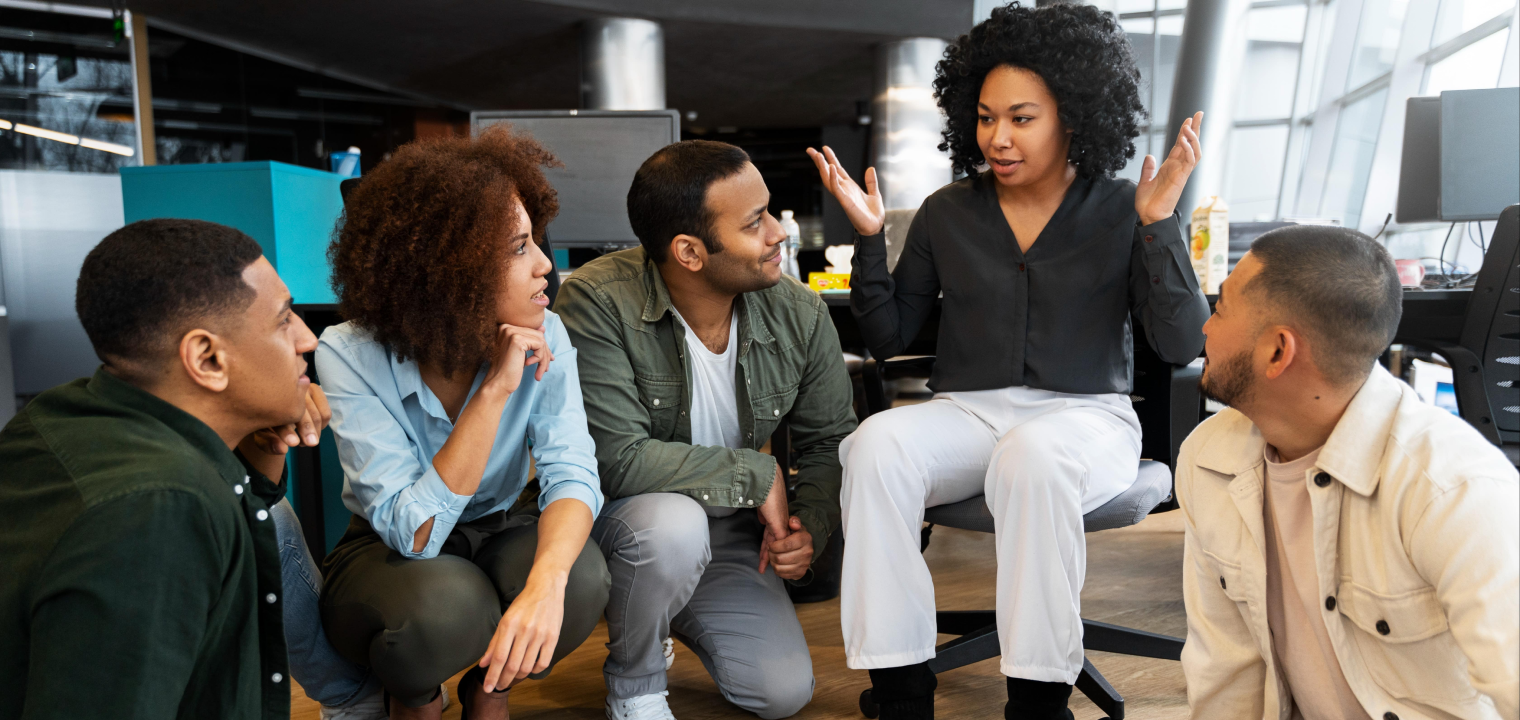
The term is sometimes confused with group dynamics, but the distinction matters. Group dynamics describe how any collection of people interact—a neighborhood association, a social circle, a crowd. Team dynamics are specific to groups working toward shared professional goals with defined roles and mutual accountability. That structure changes everything: team dynamics carry stakes that casual group dynamics don’t.
Strong team dynamics don’t guarantee that every project succeeds, but they create the conditions where success becomes more likely and repeatable. Weak dynamics don’t just slow teams down—they drain the energy and trust that skilled people need to do their best work.
Common Types of Team Dynamics
Every team develops its own distinct dynamic, shaped by the personalities involved, the leadership style in place, and the organizational environment it operates in. Recognizing which type of dynamic your team has—and whether it’s serving you—is the first step toward intentionally improving it.
Collaborative Dynamics
In teams with collaborative dynamics, members naturally share resources, surface blockers early, and default to collective problem-solving. No single person hoards context or credit. Knowledge flows freely and builds on itself, which tends to produce more creative and resilient outcomes than any individual could generate alone.
Collaborative dynamics thrive when leadership actively models the behavior—sharing credit, asking for input before deciding, and treating others’ ideas as resources rather than competition. They can break down when workloads become imbalanced and some team members feel they’re contributing more than they’re receiving in return.
Competitive Dynamics
Internal competition isn’t inherently destructive. When structured well, it raises the performance floor—people push each other toward higher standards and take pride in their work. The line gets crossed when competition becomes zero-sum: when one person’s recognition requires another’s failure, or when team members start withholding information to protect their own position.
Leaders managing competitive dynamics need to be deliberate about what they reward. Recognizing individual wins is fine; allowing individual wins to come at the expense of team outcomes is not. The most sustainable approach channels competitive energy outward—against market competitors, against previous performance benchmarks—rather than inward.
Hierarchical Dynamics
Clear power structures are a feature of most organizations, not a bug. Hierarchical dynamics become productive when the chain of authority provides direction, reduces decision paralysis, and gives team members clarity about who has final say on what. Problems emerge when hierarchy is used to shut down dissent, filter out inconvenient feedback, or signal that input from non-senior members isn’t welcome.
High-performing hierarchical teams maintain clear accountability structures while deliberately creating channels for ideas to travel upward. Leaders in these teams work harder to draw out perspectives from people who wouldn’t naturally speak up—not as theater, but because they’ve learned that the best information often comes from the people closest to the work.
Consensus-Driven Dynamics
Teams that prioritize alignment before action tend to produce decisions with stronger buy-in and fewer post-decision reversals. The tradeoff is speed. Consensus-driven dynamics can slow execution significantly, especially when the team hasn’t established clear criteria for what actually requires consensus versus what can be decided by one person and communicated to others.
The most effective consensus-driven teams have learned to make that distinction explicitly. Full agreement is reserved for decisions that are hard to reverse and affect everyone. For everything else, they’ve developed faster decision-making frameworks that capture input without requiring unanimous sign-off.
6 Key Elements of Effective Team Dynamics
Strong team dynamics don’t happen by accident. They’re built—deliberately, over time—by teams that develop specific habits and structures. These six elements consistently show up in high-performing teams across industries.

1. Open and Clear Communication
Communication is the foundation everything else rests on. But it’s not just about talking more or scheduling more meetings—it’s about creating conditions where information flows accurately, feedback lands constructively, and people feel safe raising concerns before they become problems.
Effective communication across a team requires multiple channels calibrated to different needs. Quick status updates belong in async tools. Complex problem-solving requires real-time discussion. Sensitive feedback happens one-on-one. Teams that route all communication through the same channel—or worse, through informal networks of who trusts whom—create distortion and exclusion that erodes dynamics over time.
2. Clearly Defined Roles and Responsibilities
When team members are uncertain about who owns what, two things happen: either work falls through the cracks because everyone assumed someone else was handling it, or it gets duplicated because multiple people are solving the same problem independently. Both outcomes generate friction.
Role clarity isn’t a one-time exercise. As projects evolve and teams grow, responsibilities shift. High-performing teams revisit role definitions regularly—not because things are broken, but because staying ahead of ambiguity is less costly than cleaning up the confusion it creates.
3. Shared Goals and Alignment
Individual effort disconnected from collective purpose is one of the fastest routes to disengagement. When team members understand not just what they’re doing but why it matters to the team’s overall success, they make better decisions independently—because they have a reference point for what "good" looks like beyond their immediate task.
Shared goals are most effective when the team participates in setting them, not just receiving them. Ownership changes behavior. People who helped define the goal are more likely to flag when progress is off track and more willing to adjust their own work to protect the shared outcome.
4. Trust and Psychological Safety
Trust enables the behaviors that high performance depends on: taking risks, surfacing bad news early, admitting when you don’t know something, and asking for help before a small problem becomes a large one. Without it, team members optimize for self-protection instead of collective success.
Psychological safety—the specific form of trust that makes people comfortable speaking up—is built through consistent leader behavior over time, not through a single team-building event. It requires leaders to respond to mistakes with curiosity rather than blame, to acknowledge their own uncertainties publicly, and to visibly reward the people who raise difficult issues rather than quietly hoping someone else will.
5. Healthy Accountability
Accountability in strong teams isn’t punitive—it’s supportive. Team members hold each other to their commitments not to assign blame when things go wrong, but because they’re invested in each other’s success and the team’s outcomes. This kind of accountability requires clear expectations, regular check-ins, and a culture where asking "are you on track?" is understood as help, not surveillance.
The distinction between accountability and blame culture matters enormously. Blame cultures make people defensive and risk-averse. Accountability cultures make people more honest, more proactive, and more willing to ask for help when they need it.
6. Constructive Conflict Resolution
Healthy teams don’t avoid conflict—they handle it well. Disagreement, when channeled productively, is one of the primary sources of innovation: it forces assumptions to be tested and alternatives to be considered. The teams that struggle aren’t the ones that have conflict; they’re the ones where conflict goes underground, turns personal, or never gets resolved.
Constructive conflict resolution requires separating ideas from identities—making it safe to challenge a position without it feeling like a personal attack. It also requires leaders who model the behavior, stepping into difficult conversations rather than deferring them indefinitely.
Top Warning Signs of Poor Team Dynamics
Recognizing dysfunction early is far less costly than addressing it after it becomes entrenched. These are the patterns most likely to signal that your team’s dynamics need attention.

Cliques or Exclusionary Behavior
When informal subgroups form within a team, they create information asymmetries and in-group / out-group dynamics that undermine trust across the whole. Decisions get made informally before they reach the official forum. Certain people are included in sidebar conversations that others aren’t. Over time, people outside the inner circle disengage—not from lack of skill or motivation, but because they’ve learned their input doesn’t fully count.
What to do: Rotate working partnerships deliberately. Use shared, transparent communication channels for substantive discussions. Address exclusion directly when you see it rather than hoping it self-corrects.
Chronic Indecision or Stagnation
When teams get stuck in endless deliberation or repeatedly revisit decisions they’ve already made, it usually signals one of three problems: unclear decision rights (nobody knows who actually gets to decide), lack of psychological safety (people are afraid of being wrong), or misaligned criteria (the team is optimizing for different things without realizing it).
What to do: Define decision frameworks before you need them. Establish who has final authority on what categories of decisions. Time-box discussions and create explicit moments to close the loop.
Passive-Aggressive Communication
Sarcasm, deliberate silence, complaints routed through third parties instead of directly to the person involved—these are all signs that team members don’t feel safe addressing issues openly. Passive-aggression is a communication failure with a trust problem underneath it. The surface behavior is annoying; the root cause is what needs addressing.
What to do: Model direct, constructive communication at the leadership level. Establish explicit norms for how disagreements get raised. Make one-on-ones a regular space where team members can surface concerns before they calcify.
Blame Culture or Finger-Pointing
When something goes wrong and the team’s first instinct is to identify who’s responsible rather than what happened and how to prevent it, you have a blame culture. Blame cultures make people defensive, secretive about problems, and risk-averse in ways that directly limit performance and innovation.
What to do: Shift post-mortems from "who caused this" to "what in our system allowed this to happen." Reward the people who surface problems early. Lead by example—acknowledge your own role in failures publicly and without excessive self-flagellation.
How to Improve Team Dynamics
Strong team dynamics don’t self-install. They’re built through deliberate habits, honest reflection, and the right infrastructure. Whether you’re managing a newly formed team or trying to repair something that’s broken down, these strategies give you a practical starting point.
1. Run a Team Dynamics Audit
Before you can improve team dynamics, you need an accurate picture of where things actually stand—not where you hope they stand. Survey your team with specific questions about communication clarity, role alignment, psychological safety, and how conflict gets handled. Anonymous responses surface more honest feedback than attributed ones. Use the results to prioritize two or three high-impact gaps rather than trying to fix everything at once.
2. Establish Communication Norms Together
"Communicate better" is too vague to act on. What actually changes behavior is specificity: which decisions get made in meetings versus async, how feedback is delivered, what response time is expected on different channels, and how disagreements get escalated when they can’t be resolved at the team level. When the team builds these norms together rather than receiving them from above, they’re far more likely to hold each other to them.
3. Clarify Roles and Decision Rights
Conduct a role clarity exercise where each team member articulates their primary responsibilities and the decisions they’re empowered to make without escalation. Surface the gaps and overlaps explicitly—don’t assume everyone has the same mental model. Revisit this regularly, especially after team changes or project scope shifts.
4. Create Space for Low-Stakes Failure
Psychological safety is built through small, repeated moments—not declarations. Every time a leader responds to a mistake with curiosity instead of blame, every time someone acknowledges an error publicly without spiraling, every time a bad idea gets challenged respectfully rather than dismissed, you’re incrementally building the trust that makes high performance possible. Blameless post-mortems are one of the most practical tools for institutionalizing this behavior.
5. Build a Retrospective Cadence
Teams that never stop to evaluate how they’re working together tend to repeat their dynamics, good and bad. Monthly or post-project retrospectives—focused on patterns rather than one-off incidents—create the feedback loops that allow teams to evolve. Keep them time-boxed, close each one with specific commitments for the next cycle, and rotate who facilitates.
6. Align Around Shared Milestones
Make collective progress visible. When team members can see in real time how their individual work connects to shared goals, it reduces the territorial behavior that emerges when people feel their contributions might go unrecognized. Celebrate team milestones, not just individual achievements—it reinforces that success is a collective effort.
7. Invest in Collaboration Infrastructure
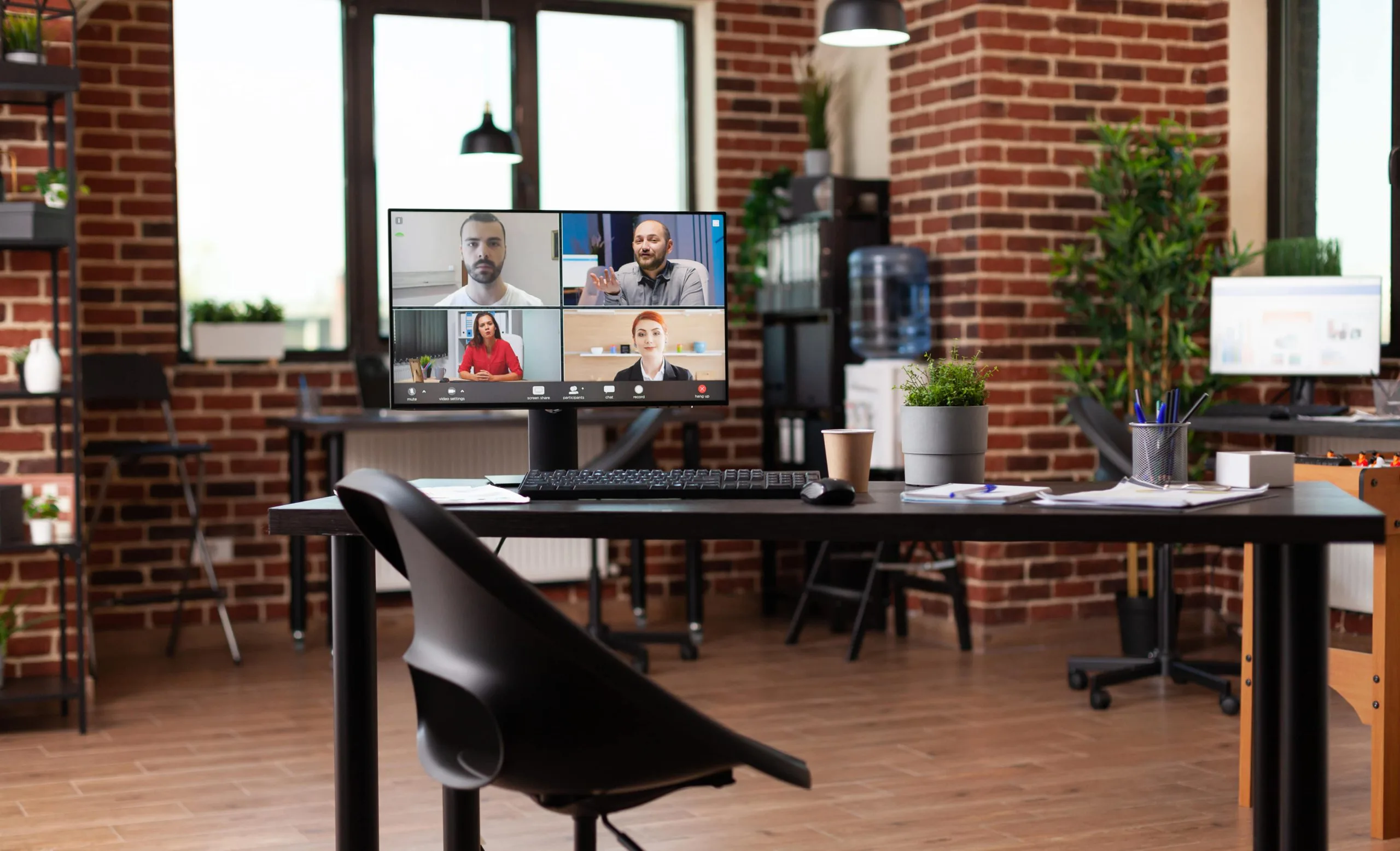
The tools your team uses shape how they interact, often more than any culture initiative does. When meeting notes live in one person’s inbox, context is lost and information asymmetry breeds friction. When action items aren’t captured and assigned, accountability erodes. When remote team members don’t have access to the same information as those in the room, an in-group / out-group dynamic forms by default.
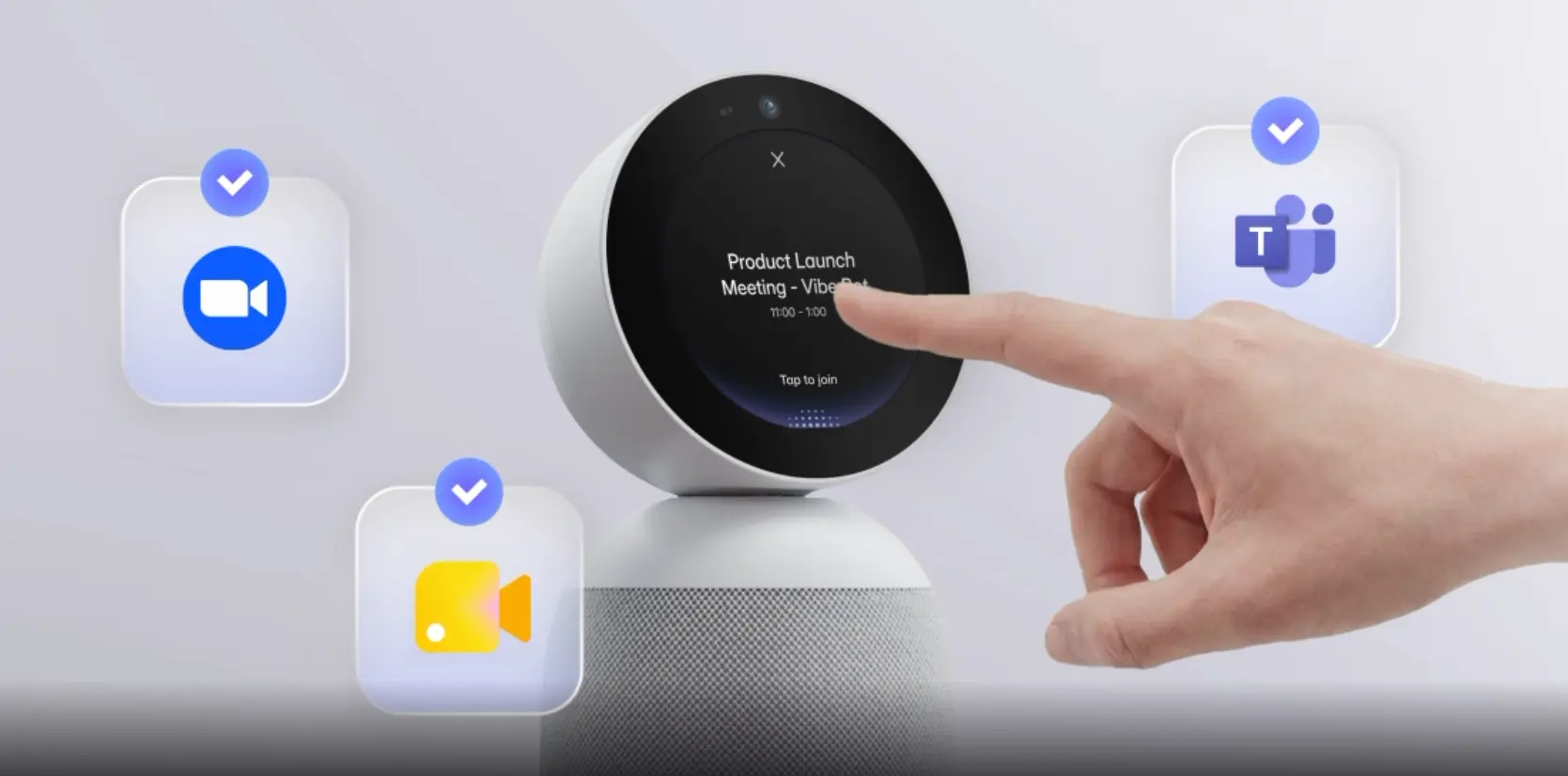
Teams with strong dynamics typically have shared infrastructure where decisions, context, and next steps are visible to everyone—not just those who happened to be in the right meeting. Vibe Bot, an AI-powered in-room device, addresses this directly: it automatically captures everything said in a meeting—decisions made, action items assigned, open questions—and surfaces it as structured, searchable memory. When your team’s next discussion picks up exactly where the last one left off, the context gaps that fuel miscommunication and repeated debates disappear.
Questions to Ask Your Team
Regularly assessing your team’s health surfaces issues before they become entrenched. These questions are designed to prompt honest reflection—use them in one-on-ones, retrospectives, or anonymous surveys.
-
How comfortable do you feel raising concerns or disagreeing with the team’s direction?
-
Do you have a clear understanding of your role and how it connects to the team’s shared goals?
-
When conflicts arise, how effectively does the team address and resolve them?
-
Do you feel you have access to the information you need to do your work well?
-
How well does the team hold itself accountable to commitments and deadlines?
-
Do you feel your contributions are recognized and valued by the rest of the team?
-
What’s the single biggest obstacle to you doing your best work right now?
-
How could we make our decision-making process faster or more effective?
-
What’s a recent team success you’re proud of—and what made it possible?
-
If you could change one thing about how we work together, what would it be?
Build Strong Team Dynamics with Vibe
The right collaboration tools don’t just support strong team dynamics—they actively shape them. When your team has infrastructure that captures context, surfaces shared information, and keeps everyone aligned regardless of where they’re working from, the communication breakdowns and accountability gaps that erode dynamics become far less frequent.
Vibe Bot is built for exactly this layer. As an AI-powered in-room device, it functions as a persistent team memory: capturing everything that happens in a meeting—decisions made, action items assigned, open questions tabled for later—and storing it as structured, searchable context that carries forward into every subsequent session. For teams whose dynamics are breaking down around miscommunication or information asymmetry, Vibe Bot closes the gap between what was said in the room and what actually gets acted on. Remote participants stay as informed as those physically present, which directly addresses one of the most common sources of hybrid team friction.
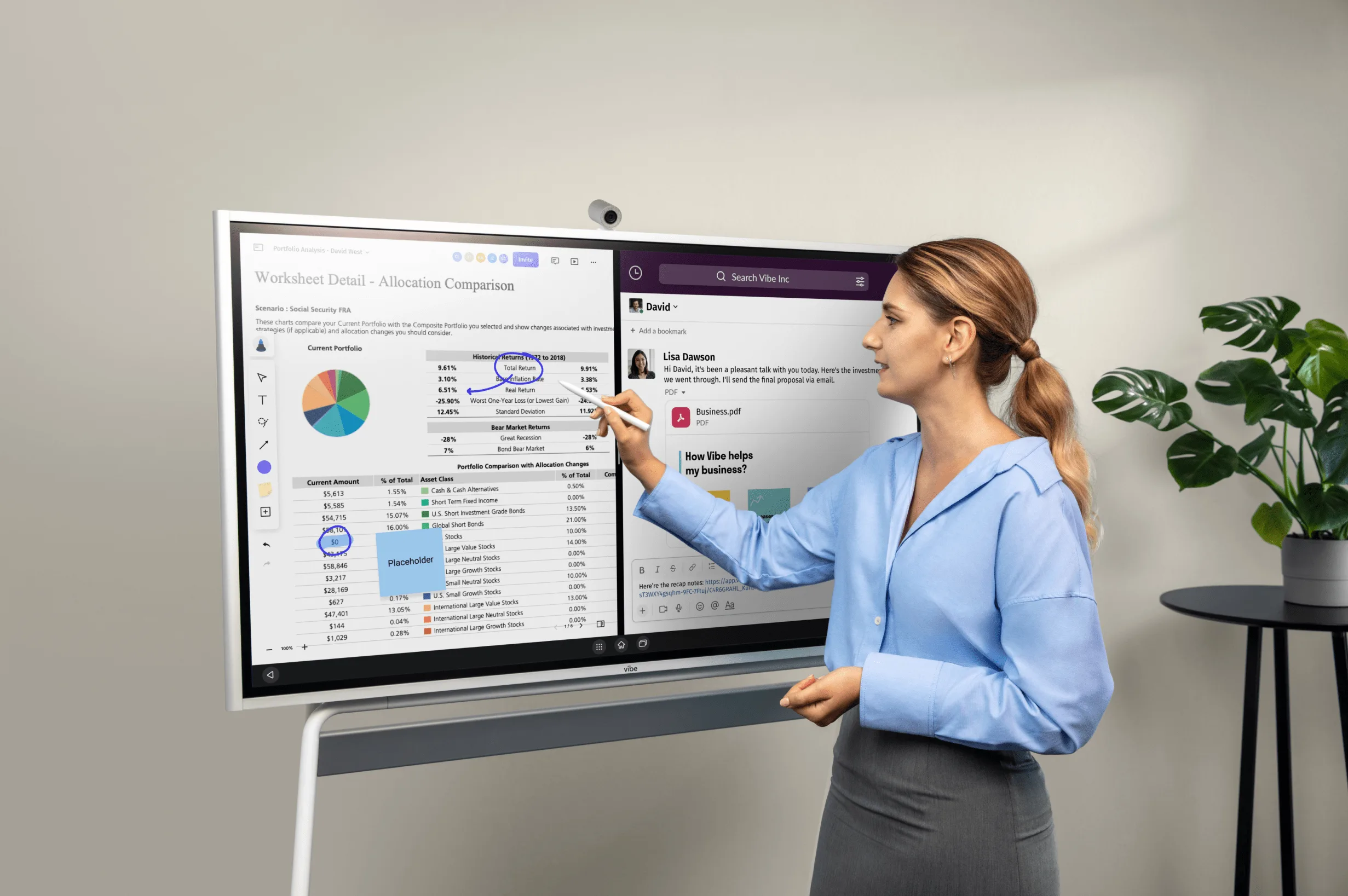
But capturing what happened is only half the equation. Teams also need a shared space to think visually, develop ideas together, and align in real time. That’s where Vibe Board S1 comes in. As an interactive smart whiteboard with an infinite canvas, it gives teams a live shared workspace—whether everyone is in the same room or distributed across locations. Brainstorming, project planning, retrospectives, and decision frameworks all happen in a space where every participant can contribute equally, not just the person controlling the screen.
Together, Vibe Bot and Vibe Board S1 address the two layers where team dynamics most often break down: the memory layer—what was decided, why, and what comes next—and the collaboration layer—how ideas get developed and aligned on in real time. Teams that invest in both stop losing context between sessions and start building on each meeting rather than relitigating it.
Team Dynamics FAQs
What are team dynamics?
Team dynamics are the behavioral, psychological, and social patterns that shape how a group of people works together. They influence how a team communicates, makes decisions, handles conflict, and performs over time. Unlike group dynamics—which describe social interactions in any collective—team dynamics are specific to groups working toward shared professional goals with defined roles and mutual accountability.
What are the main types of team dynamics?
The four most common types are collaborative (shared resources, collective problem-solving), competitive (internal competition that can motivate or divide), hierarchical (clear authority structures with varying degrees of openness), and consensus-driven (prioritizing alignment before action). Most teams exhibit a mix, and the same dynamic that works in one context may create friction in another.
What are the key elements of effective team dynamics?
Six elements consistently define high-performing teams: open and clear communication, clearly defined roles and responsibilities, shared goals and alignment, trust and psychological safety, healthy accountability, and constructive conflict resolution. Teams that deliberately build all six create an environment where individuals can do their best work and the collective output exceeds what any one person could produce alone.
What causes poor team dynamics?
The most common causes are unclear roles, inconsistent communication habits, lack of psychological safety, and information asymmetry—where some team members have context that others don’t. Leadership behavior is also a significant factor: teams tend to mirror how their leaders handle conflict, feedback, and failure. Poor dynamics rarely stem from a single issue; they’re usually several unaddressed problems compounding over time.
How do you improve poor team dynamics?
Start with a structured audit to identify where dynamics are actually breaking down. Then prioritize one or two specific changes—establishing communication norms, running retrospectives, clarifying decision rights—rather than trying to overhaul everything at once. Sustainable improvement also requires the right infrastructure: tools that capture meeting context, make information accessible to everyone, and reduce the ambiguity that generates friction. Dynamics built on shared information and clear accountability tend to self-reinforce over time.
How long does it take to improve team dynamics?
Most teams see meaningful change within 60 to 90 days when they make consistent, targeted adjustments. Quick wins—clarifying roles, establishing communication norms, running a first retrospective—can shift the atmosphere within weeks. Deeper changes, like rebuilding trust after a significant conflict or restructuring how decisions get made, take longer and require sustained leadership attention.
How do leadership styles influence team dynamics?
Leadership style is one of the most direct inputs into team dynamics. Collaborative leaders build teams that share information and surface problems early. Autocratic leaders may create efficient short-term execution at the cost of innovation and engagement. The most effective leaders adapt their style based on what the team needs at a given stage—more directive during uncertainty or ramp-up, more facilitative as the team matures and trust develops.