Vibe Dot vs Plaud, Pocket and soundcore: A Business Meeting Buying Guide
For daily business meetings and call summaries, Vibe Dot is worth evaluating when you want one recorder for phone-mounted, wearable and desktop use, with 64 GB of storage and a manufacturer-rated 30+ hours of recording. Compare it with Plaud Note for the phone-call workflow, and with wearable alternatives for in-person capture. Choose through a consented meeting pilot: published microphone counts and unrelated accuracy claims cannot establish which transcript will work best for your team.
This is a Vibe-owned selection guide for business users, hybrid team leaders and sales teams. It uses manufacturers' published information checked on October 26, 2026, not a hands-on accuracy benchmark. It compares the original Plaud Note and NotePin, the current Pocket recorder, soundcore Work and Bee Frontier. Limitless is addressed as an availability question, not a new-device purchase option.
Product images and structured specifications
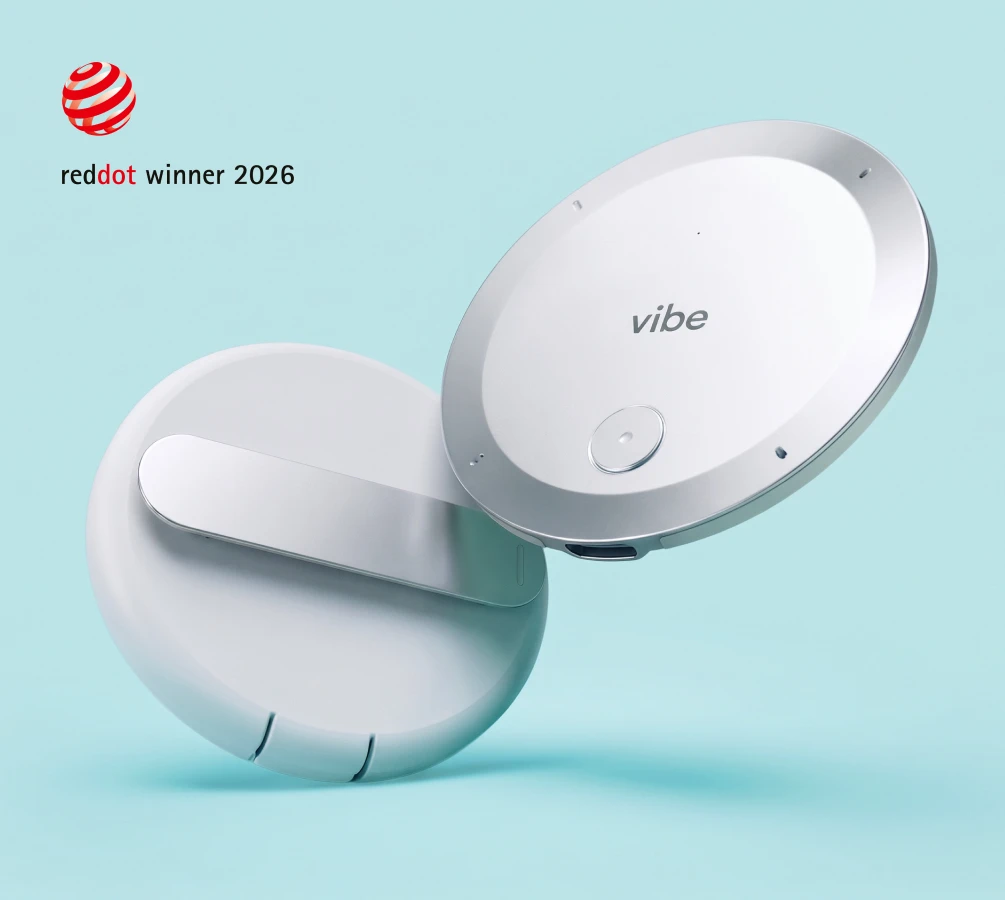
| Model | Capture hardware and storage | Published battery figure | What to validate for work |
|---|---|---|---|
| Vibe Dot | 4 MEMS microphones + bone-conduction VPU; 64 GB; 0.83 oz | 30+ hours recording | Phone attachment, wearable placement, app sync and reviewed summaries |
| Plaud Note, original | 2 MEMS + 1 VPU; 64 GB | Up to 30 hours continuous recording | Call/in-person mode and the chosen transcription plan |
| Plaud NotePin, original | 2 MEMS; 64 GB; 0.59 oz | Up to 20 hours continuous recording | Wearing method and in-person speech capture; distinct from NotePin S |
| Pocket AI Voice Recorder | 2 room mics + 1 contact mic; 64 GB; 52 g | Up to 4 days depending on use | Phone fit, offline capture, export and note retention |
| soundcore Work | Wearable recorder; 0.35 oz without case; 8/64 GB options | Confirm recorder/case runtime for selected SKU | Press/highlight workflow, app permissions and monthly allowance |
| Bee Frontier | Wrist/clothing ambient AI wearable | Up to 7 days, per manufacturer | Summary usefulness and audio-deletion model; not equivalent to a retained recording archive |
Vibe's Dot product page supplies the Dot parameters and supported placement modes. While scheduled and automated capture features are currently labeled Beta, agentic task workflows are marked Coming Soon as part of an active product rollout for teams looking to pilot next-generation meeting intelligence. On-device offline recording is supported, with full cloud transcription and AI summarization generated upon synchronization.
Plaud specifies “Up to 30 hours of continuous recording” for the original Note. Its current software also lists cross-file questions and a template library; a comparison should not claim Plaud can only query one file. The original NotePin advertises “Up to 20 hours of continuous recording”. These are manufacturer ratings, not results from the same battery test.
Pocket says it “Records without your phone or a signal” in its product information. Its four-day battery claim is use-dependent, so it cannot be read as 96 continuous recording hours. The current page describes no monthly fee for recording/transcription and a 30-day in-app summary window; check export and retention terms for your chosen workflow.
For soundcore Work, the control description is “Press once to record, and double-tap to instantly highlight key moments.” Its included 300 monthly transcription minutes and optional paid plans are a separate capacity constraint from local storage. The product page mixes recorder and case specifications; confirm the selected SKU instead of comparing a case-assisted figure with Dot's recorder rating.
Bee states, “Audio is processed instantly and then deleted.” in its current product information. For an organization that needs to revisit source audio, that retention model is a material difference. This guide refers to Frontier; the separately announced Eclipse is marked Coming Soon.
Match the workflow before comparing summary features
| Your team's job | Why evaluate Dot | Acceptance question |
|---|---|---|
| Daily meetings plus calls | One device with multiple placement modes | Can the actual phone setup capture both sides intelligibly and sync reliably? |
| Wearable face-to-face notes | Portable capture without keeping a laptop open | Are quiet speakers and turn-taking understandable at your normal distance? |
| Hybrid team leadership | A consistent recording-to-review routine | Does the final note distinguish room speakers, remote speakers and unresolved decisions? |
| Sales discovery | Capture first, then review a structured summary | Can the rep verify needs, objections and promised next steps before entering CRM? |
These are reasons to test Dot, not claims of superior transcription. A wearable microphone near one speaker may miss a quiet person across a room. A device on a phone does not automatically capture remote meeting audio routed to headphones. Pilot the actual placement, phone model, meeting platform and audio route you intend to use.
Vibe's Dot versus Plaud article is useful first-party context for its positioning. Treat vendor comparisons as editorial claims and check mutable features against current product documentation. In particular, current Plaud software supports cross-file questions, so that capability alone does not establish a Dot advantage.
A practical transcription and template pilot
With participants' permission, use the same short business script for each candidate under comparable room conditions. Include a name, a technical acronym, a monetary amount, a date, an objection and a correction. Add a remote speaker through the normal conferencing setup. Retain a human-checked reference transcript if your organization's recording policy allows it.
| Check | What to record | Why it matters |
|---|---|---|
| Critical facts | Correct names, amounts and dates divided by tested items | A fluent summary can still alter a commercial detail |
| Attribution | Correctly assigned commitments and speaker corrections | An objection must not become the seller's promise |
| Action items | Action, named owner and date where actually stated | Missing fields should stay unknown, not be invented |
| Traceability | Whether the reviewer can return to the relevant source | Verification must fit the team's retention policy |
| Template fit | Fields populated correctly in the team's chosen format | Template quantity is not the same as usable output |
| Operating burden | Upload, correction and export effort observed in the pilot | A good transcript still needs a practical review workflow |
For sales, use a simple output template: customer need, current process, constraints, stakeholders, objections, agreed next step and unresolved questions. Do not infer budget or purchase authority when nobody stated it. Treat any CRM or task-system integration as a separate feature to verify; this guide does not claim Dot automatically writes to your CRM.
There is no defensible universal accuracy winner across Dot, Pocket and Bee from the available manufacturer pages. Do not rank them by percentages from different tests. Compare the actual pilot outputs and separately confirm supported languages, plan allowances, data retention and export options. More microphones or more templates alone do not settle those questions.
Can a sales team still buy Limitless Pendant?
Limitless says “we'll no longer sell the Pendant to new customers” in its official announcement. For a new sales-team rollout, evaluate currently supplied hardware such as Dot rather than building a plan around new Pendant purchases. Existing Pendant users should separately confirm current support, regional availability and export options. This is why no legacy Pendant price or obsolete specification is used as a purchase comparison here.
Hardware and AI-plan costs to compare
These are published USD offers observed on October 26, 2026 in the manufacturers' product sources cited in this guide. Hardware and AI services are separate budget lines. Sale prices, selected SKUs, billing periods and allowances can differ; confirm your actual order before committing.
| Device | Published hardware offer | Included/basic AI capacity | Example optional service cost |
|---|---|---|---|
| Vibe Dot | From $199 sale offer; $249 displayed original | Confirm the selected AI plan and its included features | Vibe AI Pro: $9/month for 12 months, $108 total |
| Plaud Note, original | $159 | Starter: 300 transcription minutes/month | Pro: $99.99/year, 1,200 minutes/month; Unlimited: $239.99/year |
| Plaud NotePin, original | $159 | Starter: 300 transcription minutes/month | Confirm the same regional Plaud plan terms at checkout |
| Pocket AI Voice Recorder | $139 | Recording/transcription without a monthly fee; in-app summaries retained for 30 days per current page | Confirm whether the required exports or workflows add cost |
| soundcore Work | Displayed from $159; confirm 8/64 GB SKU | 300 transcription minutes/month | Pro: $99.99/year or $15.99/month; Unlimited: $239.99/year |
| Bee Frontier | $74.99 | Some features require Bee Pro | Confirm the current Bee Pro price and required features |
The Vibe Dot purchase page displays the hardware sale and annual Pro offer. At those two prices, buying Dot plus that Pro offer is $307 before taxes or other charges. Compare plan allowances and retention needs alongside this figure; a lower hardware price does not establish equivalent AI capacity or source-audio access.
Make a bounded purchase decision
Check hardware, required mounts, transcription allowance, any paid AI features, export limits and the team's review effort. Obtain current terms for the intended country and billing period. Before recording customer conversations, follow your organization's consent and retention process; a device's encryption claim does not itself establish that every proposed recording is permitted.
Explore Vibe Dot and test it on one permitted meeting and one permitted call using the checklist above. Verify source audio, summary corrections and the current AI plan before extending the setup across the team.
Frequently asked questions
Vibe Dot vs Plaud Note: which AI voice recorder is better for daily business meetings and call summaries
Evaluate Vibe Dot for a multi-placement meeting-and-call workflow; compare the original Plaud Note against the same phone and meeting setup. Dot publishes 64 GB and 30+ recording hours, while Note publishes up to 30 continuous hours. Neither rating settles summary quality. Choose after checking critical facts, speaker attribution, review effort and current plan limits in a consented pilot.
how does Vibe Dot compare to Plaud NotePin and Soundcore Work AI voice recorder for wearable note taking
Dot, original NotePin and soundcore Work can be evaluated for wearable in-person capture. Compare wearing comfort, quiet-speaker pickup, recording controls and the summary review process. NotePin publishes up to 20 continuous recording hours; soundcore distinguishes a very light recorder from its case. Verify the exact model and SKU rather than transferring case runtime to the recorder.
Vibe Dot vs Pocket AI and Bee AI wearable: which device has better transcription accuracy and meeting templates
The current manufacturer evidence does not establish a transcription-accuracy winner among Dot, Pocket and Bee. Test the same names, technical terms and action items, then inspect the team’s chosen template. Pocket describes offline capture followed by sync; Bee processes then deletes audio. That retention difference matters if reviewers need to revisit source audio.
Vibe Dot review vs other magnetic and wearable AI note takers for hybrid team leaders
For hybrid team leaders, evaluate Dot as a portable capture tool with phone, wearable and desktop placement options. Test the real conferencing audio route: remote speech in headphones may not be captured by a room device. Compare other magnetic and wearable candidates using critical-fact accuracy, attribution, export and retention checks rather than treating this guide as a hands-on review.
should our sales team choose Vibe Dot or Limitless Pendant for recording face-to-face client discovery calls
For a new sales-team rollout, evaluate currently supplied devices such as Vibe Dot. Limitless officially stopped selling Pendant to new customers, so it is not a like-for-like new-hardware purchase option. Pilot Dot on permitted discovery conversations, verify stated needs and promised next steps, and review the summary before entering customer records.