

The Hidden Cost of Classroom Technology Fragmentation: Why Districts Are Standardizing Now
Most districts are running 3–5 different classroom technology systems across their schools — the result of years of piecemeal purchasing. This fragmentation drives up support costs, slows teacher onboarding, and creates unequal learning experiences across campuses. Forward-thinking districts are shifting from "replace old tech" to "standardize collaboration infrastructure," treating classroom technology the way they already treat networking and student information systems: as district-wide platforms, not building-by-building decisions.
- Most K-12 districts operate 3-5 different classroom technology systems, creating hidden costs in training, support, and equity
- Fragmented technology environments cost districts millions annually through duplicate training programs, multiple vendor contracts, and lost instructional time
- Standardization reduces IT support tickets by 30-50% and ensures consistent learning experiences across all campuses
- Successful standardization requires a five-phase approach: audit, define standards, pilot, phased rollout, and centralized management
- Districts treating classroom displays as infrastructure rather than equipment build more sustainable and equitable technology ecosystems
The Fragmentation Problem No One Planned For
No superintendent woke up one morning and decided to run four different interactive display brands across twelve schools. No IT director chose to maintain separate training programs, support contracts, and software ecosystems for each campus. Yet that is exactly where most districts find themselves today.
The pattern is predictable:
-
A Title I grant funds smartboards at one elementary school in 2016
-
A bond measure equips a new middle school with a different vendor's panels in 2019
-
A pandemic-era ESSER allocation puts yet another brand of displays into high school classrooms in 2021
Each purchase made sense in isolation. Together, they created a classroom technology environment that is expensive to support, difficult to train on, and impossible to manage centrally.
This is not an edge case. According to the 2025 LearnPlatform by Instructure report, K-12 districts accessed an average of 2,982 distinct edtech tools annually — a nearly 9 percent year-over-year increase. While that figure includes software, the hardware layer tells a similar story. Walk through any mid-sized district and you will likely find interactive whiteboards from one era, flat-panel displays from another, and a smattering of TV-and-laptop setups filling the gaps.

What Fragmentation Actually Costs
District leaders often underestimate the true cost of a fragmented classroom technology environment because the expenses are distributed and indirect. They show up in places that rarely appear on a single line item.
Training Overhead: The Most Visible Cost
When a district operates three different display platforms, every new-teacher orientation must cover three different workflows. Substitute teachers — who rotate between buildings — face a different interface in every classroom. According to ISTE research on educator technology standards, consistent technology environments are a prerequisite for effective instructional integration. When the environment changes from room to room, teachers default to the lowest common denominator: the document camera, or nothing at all.
 Teacher and students using an interactive display for a Wheel of Fortune educational game, demonstrating classroom technology engagement
Support Burden Compounds the Problem
IT teams must maintain expertise across multiple vendors, stock different replacement parts, and manage separate warranty and service agreements. A 🚨 [PENDING LINK: Michigan statewide study on educational technology interoperability] found that the cost of maintaining non-interoperable systems exceeded $64 million per year across the state's districts — a figure that includes both direct expenses and lost instructional time.
Budget Inefficiency: The Third Hidden Cost
Districts purchasing from multiple vendors lose volume pricing leverage. They cannot negotiate district-wide service agreements. And when it comes time to refresh aging equipment, the lack of a standard makes it nearly impossible to phase upgrades strategically. With 24 percent of districts expecting cuts to software licenses in 2025 according to the CoSN State of EdTech Leadership report, the financial pressure to consolidate is intensifying.
The deepest cost, however, is equity. When one school has modern interactive classroom tools with built-in collaboration capabilities and another has decade-old projector-based boards, students in the same district receive materially different learning experiences. Standardization is not just an IT initiative — it is an equity initiative.
The Shift: From Replacement Cycles to Standardization Strategy
The traditional approach to classroom technology has been replacement-driven: wait until equipment fails or becomes obsolete, then purchase whatever fits the current budget. This reactive model is what created the fragmentation problem in the first place.
A growing number of districts are adopting a fundamentally different approach. Instead of asking "what should we buy to replace this?", they are asking "what platform should every classroom in our district run on?" This reframing — from procurement to standardization — changes every downstream decision.
What standardization means in practice:
-
Selecting a single classroom collaboration platform and deploying it consistently across all schools over a defined timeline
-
Choosing hardware, software, and management tools that work as an integrated system rather than assembling components from different vendors
-
Treating classroom displays the way districts already treat networking infrastructure, student information systems, and learning management platforms: as district-wide standards, not school-by-school choices
This shift is not theoretical. Districts that have moved to a standardized classroom technology platform report measurable improvements in three areas:
|
Improvement Area |
Typical Results |
|---|---|
|
IT Support Efficiency |
Reduced support tickets per device |
|
Teacher Onboarding |
Faster adoption of new technology |
|
Budget Planning |
Simplified forecasting for refresh cycles |
A Framework for District-Wide Classroom Technology Standardization
Based on patterns observed across districts that have successfully standardized, the following framework outlines the key phases of a classroom technology standardization initiative.
Phase 1: Audit and Inventory
Before selecting a platform, districts must understand what they currently have. This means cataloging every interactive display, projector, and classroom collaboration device across all buildings — including age, condition, vendor, and current software dependencies. Many districts discover during this phase that they have more variation than anyone realized.
Phase 2: Define the Standard
With a complete inventory, district leadership and IT can define what the standard classroom technology environment should include. This is not just a hardware decision. The standard should specify:
-
The display platform
-
Built-in collaboration and whiteboarding capabilities
-
Device management approach
-
Integration requirements with existing systems like the LMS and video conferencing tools
The goal is a single, repeatable classroom configuration that works for elementary, middle, and high school contexts.
Phase 3: Pilot and Validate
Select two to three schools representing different grade levels, building ages, and teacher populations for a pilot deployment. The pilot should run for at least one semester and measure specific outcomes:
-
Teacher adoption rate
-
IT support ticket volume
-
Student engagement indicators
-
Total deployment time per classroom
Pilot data becomes the evidence base for board approval of the district-wide rollout.
Phase 4: Phased Rollout
Full standardization rarely happens in a single budget year. Most districts plan a three- to five-year rollout, prioritizing schools with the oldest equipment or the greatest need. The phased approach allows IT teams to:
-
Refine their deployment process
-
Build internal expertise
-
Demonstrate results to stakeholders incrementally
Each phase should align with the district's existing technology refresh cycle and capital budget planning.
 District stakeholders reviewing feedback data and satisfaction ratings during a classroom technology standardization planning session
Phase 5: Centralized Management and Continuous Improvement
Once deployed, the standardized platform must be centrally managed. This means remote device management, centralized content deployment, and a single support workflow. It also means establishing a regular review cadence — annually at minimum — to assess whether the standard is meeting instructional needs and where adjustments are warranted.
What This Looks Like in Practice: A District's Journey
Consider a composite example drawn from common district experiences. A suburban district with 14 schools and 8,500 students completed a technology audit and discovered five different interactive display brands across its campuses, with equipment ages ranging from two to eleven years.
Initial Assessment:
Teacher surveys revealed that fewer than 40 percent of educators used their classroom displays for anything beyond basic projection. IT was fielding an average of 47 display-related support tickets per month across the district.
Defining the Standard:
The district defined a standard based on three criteria:
-
The display must include built-in whiteboarding and annotation
-
It must support wireless screen sharing from any device
-
It must offer centralized cloud-based management
Results After Pilot:
After a one-semester pilot at two schools, the district found measurable improvements:
|
Metric |
Before |
After |
Change |
|---|---|---|---|
|
Teacher utilization of interactive features |
38% |
71% |
+87% |
|
Display-related support tickets |
47/month |
22/month |
-54% |
The district approved a four-year rollout plan, replacing equipment in three to four schools per year, starting with the buildings that had the oldest hardware. By year two, substitute teachers reported that they could walk into any classroom in the district and begin teaching immediately — something that had been impossible under the fragmented model.
 Student raising hand to participate in a technology-equipped classroom, illustrating active engagement with standardized educational technology
Where Vibe Fits
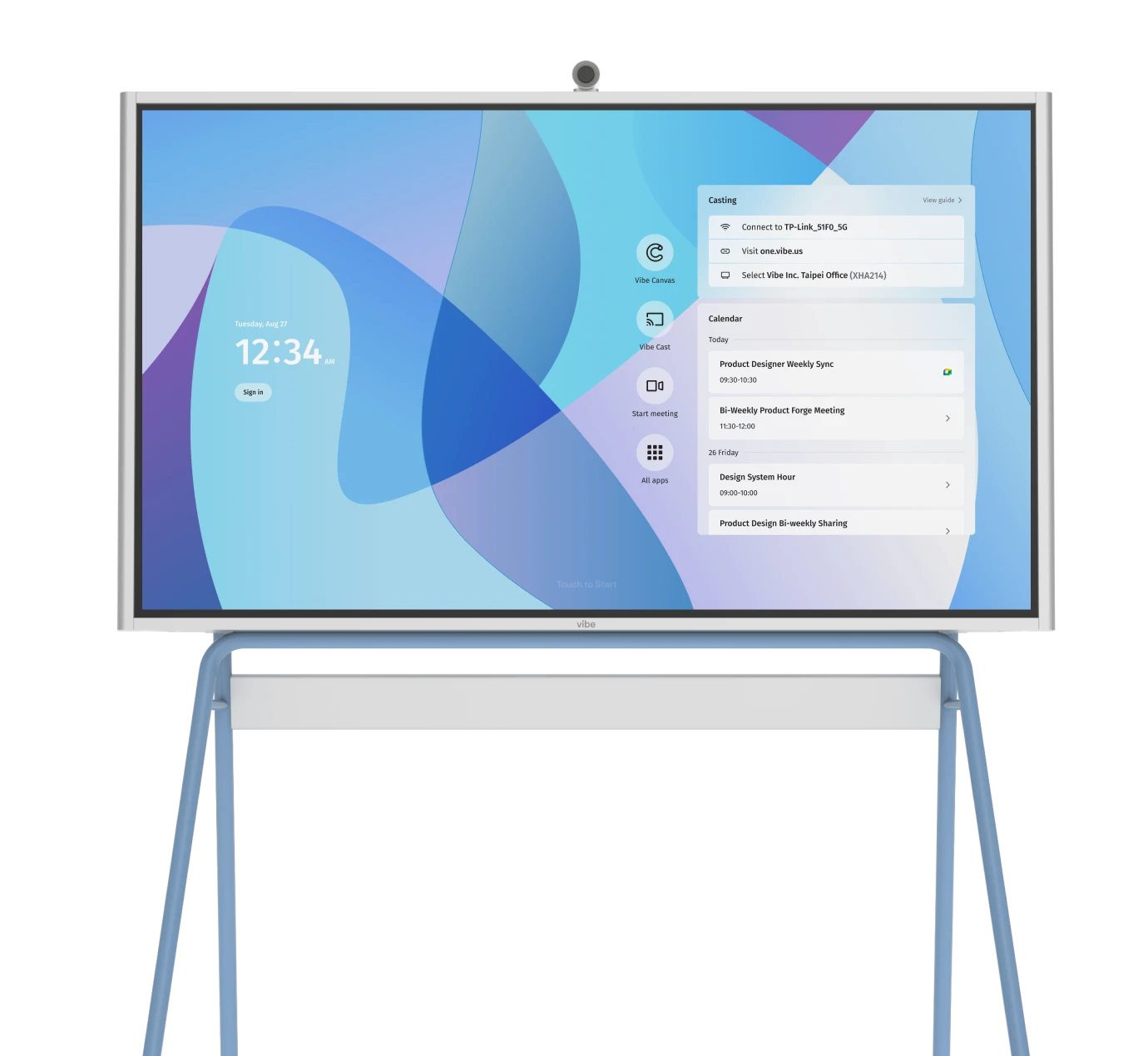
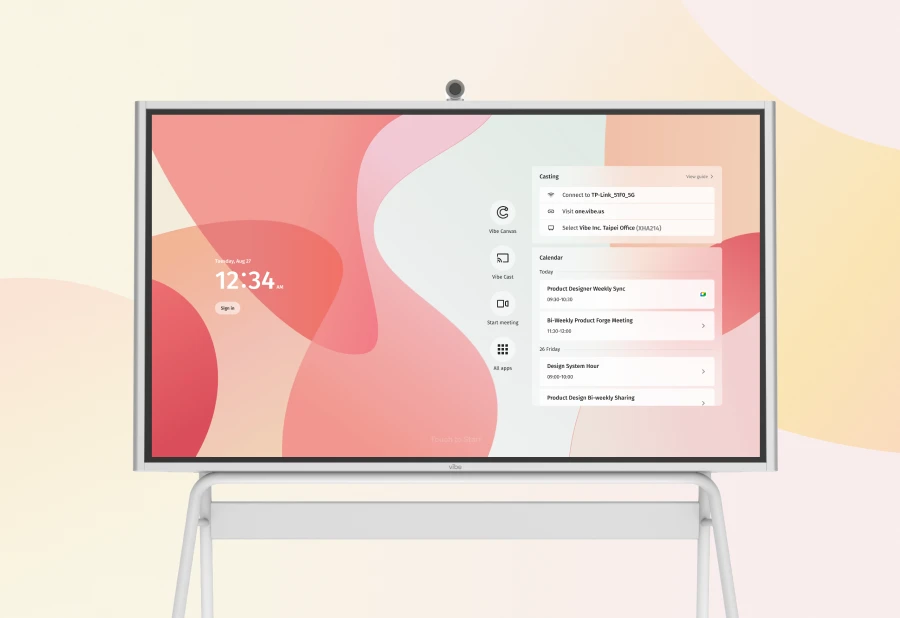
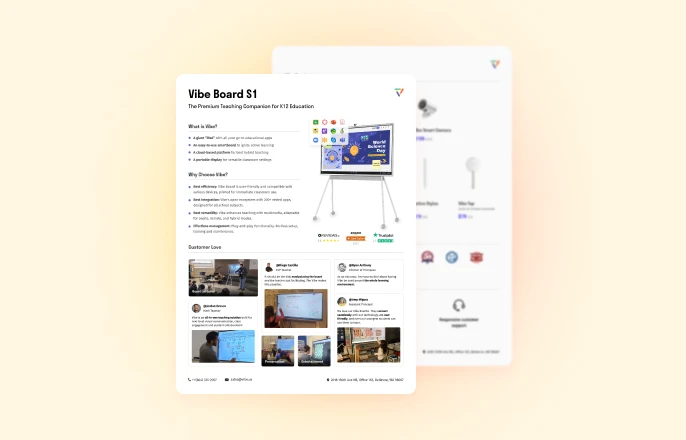
Vibe designed its interactive display platform around the exact problem districts face when standardizing. The Vibe Board provides built-in whiteboarding, wireless screen sharing, and integration with the tools districts already use — Google Workspace, Microsoft 365, Zoom, and major LMS platforms.
Key advantages for district standardization:
-
Centralized device management: IT teams can configure, update, and monitor every display from a single dashboard
-
Simplified infrastructure: A single Vibe Board replaces the projector, the standalone whiteboard, the wireless presentation dongle, and the display-mounted PC
-
Reduced support burden: Fewer devices per classroom means fewer potential points of failure
For districts evaluating display vendors for standardization, Vibe eliminates the tradeoff between capability and simplicity.
This is not about selling hardware. It is about providing the standardized collaboration infrastructure that districts need to deliver consistent, equitable learning experiences across every school. Learn more about Vibe for Education or explore our comprehensive classroom technology guide for additional planning resources.
Looking Ahead
The post-ESSER funding environment is forcing difficult conversations in every district. With federal emergency dollars expiring and 74 percent of districts reporting that E-Rate disruptions would be severely damaging, according to the 2025 CoSN survey, the pressure to spend technology budgets more strategically has never been higher.
Classroom technology standardization is one of the highest-leverage decisions a district can make. It reduces operational costs, improves teacher effectiveness, and ensures that every student — regardless of which school they attend — has access to the same quality of instructional technology.
Districts that treat their classroom displays as infrastructure rather than equipment are the ones building sustainable, equitable technology ecosystems for the next decade.
If your district is ready to explore what standardization could look like in practice, schedule a demo to see how Vibe supports district-wide deployment and centralized management.
Frequently Asked Questions: Classroom Technology Standardization
Q1: How long does a typical district-wide classroom technology standardization take?
Most districts plan a three- to five-year rollout aligned with their existing technology refresh cycle. The timeline depends on district size, current equipment age distribution, and budget availability. A phased approach — standardizing three to four schools per year — is the most common and least disruptive strategy. The planning and pilot phase typically adds one to two semesters before the first full deployment year.
Q2: What is the cost difference between maintaining fragmented systems and standardizing?
Direct cost comparisons vary by district size, but fragmentation typically increases total cost of ownership through:
-
Duplicate training programs
-
Multiple vendor service contracts
-
Higher per-unit pricing without volume discounts
-
Increased IT support hours
A Michigan statewide study estimated that non-interoperable education technology systems cost the state's districts over $64 million annually. Districts that standardize typically see 30–50 percent reductions in display-related IT support tickets within the first year.
Q3: How do we get teacher buy-in for a new classroom technology standard?
Teacher buy-in starts with the pilot phase. Select early-adopter teachers for the initial deployment, let them become peer trainers, and use their feedback to refine the rollout. The strongest argument for teachers is consistency: once standardized, a teacher who transfers between buildings or a substitute who rotates across schools encounters the same interface everywhere. Training investment compounds rather than fragments.
Q4: Should we standardize hardware and software together, or can we do them separately?
Standardizing hardware and software together yields significantly better results. When the display, the whiteboarding software, the device management platform, and the integration layer are designed to work as a system, districts avoid the interoperability issues that plague mix-and-match approaches.
Benefits of integrated standardization:
-
Simplified procurement
-
Reduced number of vendor relationships to manage
-
Ensured compatibility between software updates and hardware functionality
-
Lower total cost of ownership
Q5: How does classroom technology standardization impact equity across schools?
Standardization is one of the most direct ways to address technology equity within a district. When every classroom runs the same platform with the same capabilities, the quality of instructional technology a student accesses is determined by the district standard — not by which school they happen to attend. This is particularly important for districts with Title I schools, where technology investments have historically been driven by grant availability rather than strategic planning. When choosing displays for district-wide rollout, equity considerations should be a primary decision factor alongside technical specifications and total cost of ownership.