
What Is a High Performance Team?
A high performance team is a group of people who consistently meet or exceed expectations over time—not just on a good quarter, but reliably, across changing conditions and challenges.
You know one when you see it. Deadlines are met without last-minute scrambles. Team members actively pull each other into decisions rather than working in silos. When something goes wrong, the response is "how do we fix it?" not "whose fault is it?" And when goals shift—as they always do—the team adapts without losing momentum.
Deloitte's January 2026 study of 1,394 professionals defined high-performing teams precisely this way: groups that consistently meet or exceed expectations over time. The word "consistently" is load-bearing. Any team can have a strong sprint. High-performing teams make it a pattern.
What separates them is not just talent. According to the same Deloitte research, the differentiating factor in the AI era is a set of enduring human capabilities: curiosity, resilience, divergent thinking, informed agility, connected teaming, and emotional and social intelligence. These traits can't be automated—and they're the ones that compound over time.

Why High Performance Teams Are Essential in 2026
The stakes for building high performance teams have never been higher—and the cost of not doing so has never been more visible.
Gallup's 2026 State of the Global Workplace report found that global employee engagement fell to just 20% in 2025, its lowest level since 2020, costing the world economy an estimated $10 trillion in lost productivity. The sharpest declines were among managers: between 2024 and 2025, manager engagement dropped five points to just 22%. Since managers account for 70% of the variance in team engagement, disengaged managers create a cascading effect felt at every level.
This is the context in which your team operates. Most employees around them are disengaged. Most teams are underperforming. High-performing teams don't just outperform—they stand out.
The business case is concrete:
-
Engaged employees deliver 14% higher productivity and 23% higher profitability (Gallup)
-
Teams that build and use collective knowledge are 5.4x more likely to produce high-quality work (Atlassian State of Teams 2025)
-
Companies with strong collaborative cultures are 5x more likely to be high-performing (McKinsey)
-
Investment in team-building yields an average $4 return for every $1 spent in the US (Gallup State of the Global Workplace 2025)
The Atlassian State of Teams 2025 report—drawing on surveys of 12,000 knowledge workers and 200 Fortune 1000 executives—found that teams still waste roughly 25% of their work time just searching for information and navigating misalignment. High-performing teams solve this with systems, not heroics.

7 Characteristics of High Performance Teams
Deloitte's 2026 research identified six enduring human capabilities at the heart of high-performing teams. Layered with Atlassian's State of Teams 2025 findings, these translate into seven observable characteristics that distinguish exceptional teams from average ones.
1. Shared Purpose and Goal Alignment
Every member can articulate not just what they're working on, but why it matters and how it connects to the team's larger mission. This isn't a poster on the wall—it's a lived reference point for daily decisions.
Atlassian's research found that only 7% of executives feel confident they know exactly how each team's work supports the company's biggest goals. High-performing teams close this gap deliberately. They set 3–5 prioritized goals with measurable success criteria, break them into milestones, and review them monthly.
Practical signal: In your next meeting, ask three team members to describe the team's top priority without prompting each other. If the answers diverge significantly, alignment needs work.
2. Psychological Safety and Trust
Deloitte's study found that high-performing teams take time to help each other learn and grow at a rate of 68%. More telling: fewer than a third of respondents on high-performing teams said their team engages in exploratory behavior—meaning even high performers leave psychological safety underutilized. Without it, teams can't develop the adaptive capabilities needed in an AI-driven environment.
Trust means team members admit mistakes without fear, ask for help without embarrassment, and give credit freely. It creates the conditions where the best ideas surface—not just the safest ones.
3. Curiosity and Continuous Learning
One of Deloitte's six Enduring Human Capabilities, curiosity shows up in high-performing teams as a habit: sharing new insights unprompted, experimenting with approaches, and conducting honest retrospectives after projects close.
Crucially, Deloitte found that only 42% of high-performing team members report receiving equal training on both technical and human skills, compared to just 15% for other teams. The gap is real—and closing it is a meaningful lever.
4. Defined Roles and Clear Communication
Role clarity prevents the invisible tax of confusion: duplicated work, dropped handoffs, and the time spent figuring out who owns what. High-performing teams use structured communication systems—dedicated channels by topic type, project tools for task tracking, and regular rhythms that don't require chasing people down.
Atlassian's research found that 72% of knowledge workers say the only way to get information they need is to ask someone directly or schedule a meeting. High-performing teams make information findable by default.
5. Connected Teaming and Cross-Functional Collaboration
Atlassian's State of Teams 2025 found that 40% of knowledge workers' direct collaborators sit in a different job function. High-performing teams treat this as an asset, not a friction point. They build intentional bridges across functions rather than waiting for coordination to happen organically.
6. Resilience and Informed Agility
Resilience is the capacity to absorb disruption and keep moving—not just bounce back, but adapt forward. Informed agility is the ability to make good decisions quickly under uncertainty, using available data rather than waiting for perfect information.
Together, these capabilities explain why high-performing teams don't freeze during reorganizations, product pivots, or leadership changes. They recalibrate and execute.
7. Results Orientation and Mutual Accountability
High-performing teams track progress in real time, celebrate milestones, and pivot quickly when targets aren't being met. They hold each other accountable—not through blame, but through shared ownership of outcomes. Everyone knows the scoreboard, and everyone cares about it.

8 Steps to Building a High Performance Team
Step 1: Define Goals Collaboratively, Not Top-Down
Collaborative goal-setting creates the shared ownership that sustains performance. Rather than cascading objectives from above, effective leaders facilitate discussions where team members contribute to defining priorities, success metrics, and sequencing.
Use OKRs (Objectives and Key Results) or SMART goal frameworks to make goals specific and time-bound. Set 3–5 goals ranked by priority, each with clear success criteria. Schedule monthly goal reviews—not as checkboxes, but as genuine recalibration sessions.
Step 2: Build Communication Systems That Reduce Information Friction
Effective team communication is less about choosing the right tool and more about establishing protocols so information doesn't get lost between meetings, inboxes, and project boards.
Define which channels serve which purposes: async updates vs. quick decisions vs. complex problem-solving. Establish documentation standards so decisions are findable later. High-performing teams treat undocumented decisions as a form of technical debt.
The Microsoft Work Trend Index 2025 found that the average knowledge worker spends 15.4 hours per week in meetings but only 12.1 hours in uninterrupted focus work. High-performing teams maintain a meeting-to-focus ratio below 0.8—meaning more time in deep work than in coordination.
Step 3: Delegate Decision-Making Authority Deliberately
Centralized decision-making is a performance bottleneck. High-performing teams map decisions by type and push authority to the person with the most relevant expertise and accountability—not always the most senior person in the room.
Create a simple decision matrix: what can individuals decide alone, what requires consultation, what requires consensus? Then train team members on when to escalate and when to act. This reduces bottlenecks, builds ownership, and develops leadership capability at every level.
Step 4: Design for Cross-Functional Collaboration
Breaking down functional silos produces solutions that single-function teams miss. Create structured opportunities for cross-functional input: project teams that deliberately mix disciplines, knowledge-sharing sessions between departments, and joint problem-solving on challenges that span team boundaries.
Physical and virtual meeting spaces matter here. Spaces designed for collaboration—whether a shared digital canvas or a reconfigurable meeting room—signal that cross-functional work is expected and valued, not exceptional.
Step 5: Invest in Both Technical and Human Skill Development
Deloitte's 2026 research identified a stark gap: only 42% of high-performing team members receive equal training on technical and human skills, versus 15% for other teams. Most organizations over-invest in technical training and under-invest in the capabilities—communication, feedback, resilience—that determine whether technical skills are actually applied well.
Conduct skills assessments to identify gaps, and create personalized development plans that address both dimensions. Offer diverse formats: formal training, mentoring, job rotations, and peer learning. Critically, allocate dedicated time for development—it won't happen in the margins of an already full calendar.
Step 6: Create a Recognition and Feedback System That Works
The 2025 PerformYard State of Performance Management Report found that only 12% of leaders are highly effective at providing high-quality coaching and feedback, and just 23% excel at setting challenging goals. These are the two highest-leverage management behaviors—and most organizations are leaving them on the table.
Effective recognition is specific, timely, and tied to the behavior you want to see more of. Effective feedback is equally specific, delivered frequently (not just annually), and framed around growth rather than judgment. Train team members on giving and receiving feedback—it's a skill, not an instinct.
Recognition should acknowledge multiple types of contribution: exceptional output, creative problem-solving, collaborative behavior, and learning from failure.
Step 7: Set Individual Development Objectives Linked to Team Goals
Individual development objectives work when they sit at the intersection of personal ambition and team need. Work with each team member to identify objectives that stretch their capabilities while remaining relevant to the work the team needs to do.
Link development progress to regular one-on-ones—not performance reviews alone. Quarterly check-ins give leaders and team members the chance to adjust, celebrate progress, and address obstacles before they compound.
Step 8: Build Mutual Accountability Practices
Accountability in high-performing teams is not about blame—it's about shared ownership of commitments. When everyone understands the team's standards and has agreed to uphold them, accountability becomes a team behavior, not a management intervention.
Establish peer accountability structures: buddy partnerships, small accountability groups, or regular retrospectives where commitments are reviewed openly. Create norms around follow-through—what happens when someone is struggling to meet a commitment, and how the team responds.
 Team using a Vibe Board to collaborate in a hybrid meeting.
How to Manage a High-Performance Team Day to Day
Building a high-performance team is one challenge. Managing it once it exists is another—and the research suggests most managers underestimate the difference.
Gallup's data is clear: 70% of team engagement is driven by the manager. That's not a figure about charisma or vision—it's about the daily behaviors that create or erode the conditions for performance.
Maintain Visibility Without Micromanaging
High-performing teams need to see how their work connects to organizational goals, not just be told it does. Build visibility into your operating rhythm: shared dashboards, weekly progress reviews, and transparent communication about priorities and trade-offs.
The distinction between visibility and micromanagement is intent and frequency. Visibility is giving the team access to the scoreboard. Micromanagement is demanding commentary on every play.
Give Feedback Continuously, Not Annually
The traditional annual performance review is structurally misaligned with how high-performing teams operate. By the time a year has passed, feedback is too late to change behavior on the work it refers to.
Replace or supplement annual reviews with a continuous feedback rhythm: brief weekly check-ins, project retrospectives, and bi-monthly one-on-ones that address development explicitly. Research from PerformYard's 2025 report found that 72% of employees say their performance would improve with more frequent corrective feedback.
Protect Focus Time
The Microsoft Work Trend Index 2025 finding that average knowledge workers spend more time in meetings than in focused work is not a coincidence—it reflects poorly designed operating rhythms. As a manager, one of your highest-leverage interventions is protecting your team's time for deep work.
Audit your team's meeting load quarterly. Cancel meetings that have outlived their purpose. Batch synchronous time where possible to create longer uninterrupted focus blocks.
Model the Human Capabilities You Want to See
Deloitte's research found that the six enduring human capabilities—curiosity, resilience, divergent thinking, informed agility, connected teaming, and emotional and social intelligence—are observable in daily behavior. Leaders who demonstrate these visibly create permission for team members to do the same.
If you want a team that admits mistakes, admit yours first. If you want a team that asks questions, ask them openly in meetings. Culture follows behavior, not statements.
Address Performance Issues Early
Low performance left unaddressed drags on the whole team. High-performing teams are clear about standards, and managers in those teams address gaps quickly—not punitively, but specifically. Name the issue, understand its source, and agree on a path forward with a clear timeline for reassessment.
High Performance Team Meetings: Making Every Session Count
High-performing teams don't just have fewer bad meetings—they have fundamentally different ones. Research published in late 2025 found that the average professional attends at least 11 meetings per week, with executives spending up to 23 hours weekly in meetings. Around 35% of those meetings are considered a waste of time.
The difference between meetings that drain energy and meetings that drive results comes down to structure, purpose, and discipline.
The 4 Meeting Types High-Performing Teams Use
1. Weekly team sync (30–45 minutes) Purpose: alignment on priorities, blockers, and decisions. Not a status report. Every participant should arrive having reviewed relevant updates async, so the meeting focuses on what requires live discussion. End with three clear outputs: decisions made, actions assigned, open questions parked for follow-up.
2. One-on-one (30–60 minutes, bi-weekly) Purpose: individual development, feedback exchange, and early identification of issues. Quantum Workplace research identifies one-on-ones as a cornerstone of high-performing team management—not because managers direct work in them, but because they create the psychological safety and clarity that makes everything else work better.
3. Project retrospective (60–90 minutes, end of project or sprint) Purpose: honest assessment of what worked, what didn't, and what the team will do differently. High-performing teams treat retrospectives as learning infrastructure, not blame sessions. Document the insights and review them before the next similar project starts.
4. Quarterly goal review (90 minutes) Purpose: reassess priorities, celebrate progress, and adjust course based on what's changed. Atlassian's State of Teams 2025 recommends structured monthly reviews at minimum—quarterly reviews at a strategic level allow teams to recalibrate their goals against organizational shifts.
High Performance Meeting Principles
Every meeting needs a stated purpose and a decision to make. If the outcome is "updates shared," it's probably better handled async. Reserve synchronous time for situations where real-time dialogue changes outcomes: complex decisions, conflict resolution, creative problem-solving.
Share agendas at least 24 hours in advance. This isn't just courtesy—it's what allows participants to come prepared, which is what allows the meeting itself to go deeper.
Keep attendee lists tight. The larger the group, the harder it is to have productive dialogue. Invite only people who are essential to the decision being made. Others can receive a summary.
End every meeting with clear next steps. Assigned owner, specific action, explicit deadline. Distribute notes within 24 hours. Actions left undocumented are actions that don't happen.
Evaluate meeting ROI. The Work Trend Index 2025 recommends tracking your team's meeting-to-focus ratio. If meetings are consistently consuming more time than focused work, the cadence needs redesigning.
Enable High Team Performance with Vibe Board S1
Building the habits and systems described above requires the right tools—especially for teams working across hybrid and remote environments, where shared context is harder to maintain.

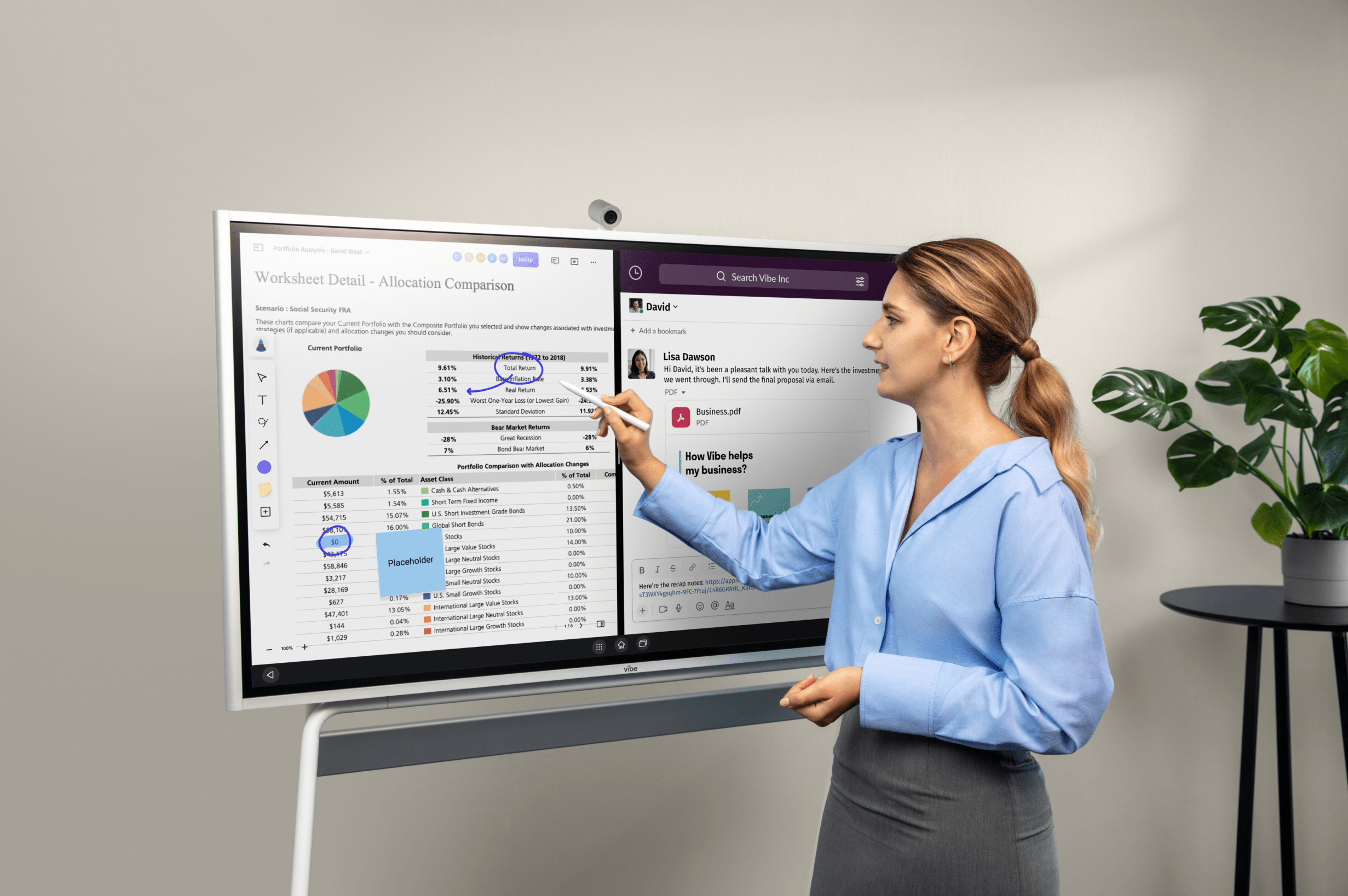
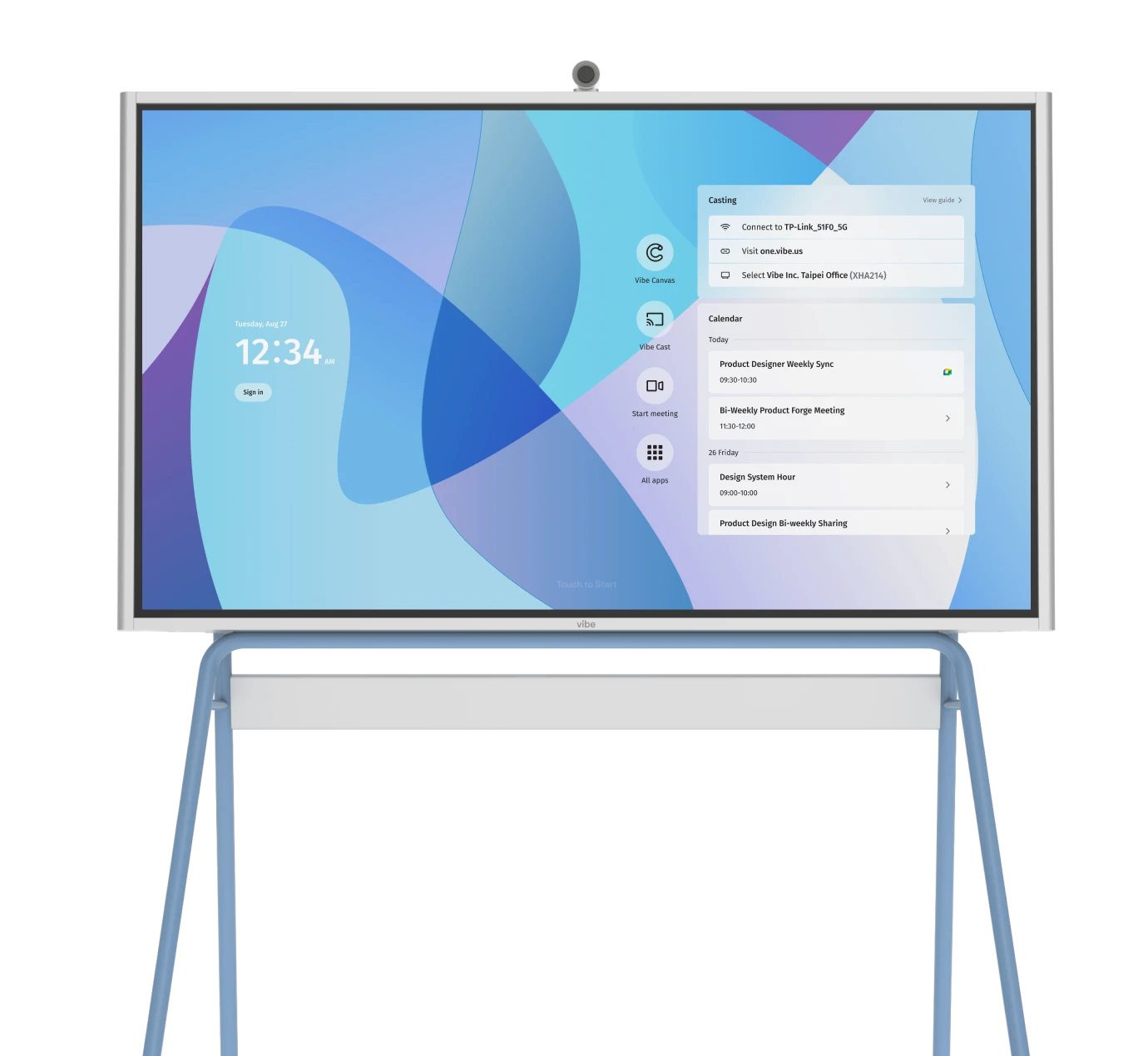
The Vibe Board S1 supports high-performing team practices through its infinite canvas and real-time multi-user collaboration. Teams can visualize goals and OKRs, run structured retrospectives, and maintain shared dashboards—making the work visible in the way that high-performing teams depend on.
Its integration with over 250 applications means project management tools, communication platforms, and documents are accessible in the same collaborative workspace, reducing the information fragmentation that Atlassian identified as the #1 barrier to team performance in 2025.
For hybrid and distributed teams specifically, the Vibe Board S1 bridges the collaboration gap that contributes to the engagement decline Gallup has documented. When distributed team members can work on the same canvas in real time, the conditions for psychological safety and connected teaming become easier to create—regardless of geography.
Ready to give your team the tools it needs? Request a demo today.
High Performance Teams FAQs
What are the 7 characteristics of a high performance team?
Based on Deloitte's January 2026 research and Atlassian's State of Teams 2025, the seven characteristics are: shared purpose and goal alignment, psychological safety and trust, curiosity and continuous learning, defined roles and clear communication, connected teaming and cross-functional collaboration, resilience and informed agility, and results orientation with mutual accountability.
What are the 4 stages of high performing teams?
High-performing teams typically progress through Forming (team assembly), Storming (working through conflict and establishing norms), Norming (developing cohesive working relationships), and Performing (achieving consistent high output). Teams may cycle back through earlier stages when membership changes or significant challenges emerge.
What is a high performance team model?
A high performance team model is a framework for understanding what makes teams consistently excellent. Contemporary models—including Deloitte's 2026 Enduring Human Capabilities framework—emphasize human skills (curiosity, resilience, emotional intelligence) alongside structural elements (clear goals, defined roles, transparent communication). Modern models also address how teams integrate AI tools while maintaining the human-centric capabilities that technology can't replicate.
How do you manage a high-performing team without micromanaging?
Effective management of high-performing teams centers on three practices: maintaining shared visibility into goals and progress (so the team can self-direct), providing continuous feedback rather than waiting for formal reviews, and protecting focused work time from unnecessary meetings. Gallup's research shows that 70% of team engagement is determined by the manager—but the behaviors that matter most are creating conditions for performance, not controlling it.
What makes team meetings high-performing?
High-performance team meetings have a stated purpose tied to a decision or alignment need, an agenda shared at least 24 hours in advance, a tight attendee list, and documented action items distributed within 24 hours. Research from 2025 found that about 35% of meetings are considered a waste of time—the difference is almost always structure and intent, not duration.
How does AI affect high-performing teams in 2026?
Deloitte's 2026 research found that 78% of high-performing teams use AI tools in their work, compared to 54% of other teams—and 36% rate their AI experience as "very high quality," versus 18% of others. Critically, the research also found that AI adoption amplifies human capabilities rather than replacing them. Teams that invest equally in human skills and AI tools outperform those that invest only in technology.
Invest in Your Team’s Success
Building high performing teams requires intentional investment in people, processes, and tools that support excellence. This investment pays dividends through increased productivity, higher employee satisfaction, reduced turnover, and improved business performance. Organizations that prioritize team development create competitive advantages that are difficult for competitors to replicate.
The most successful organizations understand that team development is an ongoing process rather than a one-time initiative. They allocate resources for continuous learning, provide tools that facilitate collaboration, and create cultures that support both individual growth and collective achievement. This investment approach recognizes that high performing teams are built through consistent effort over time, requiring sustained commitment from leadership and team members alike.
Enable High Team Performance with Vibe Board S1
Empowering teams to reach their highest potential requires more than just strong leadership and clear strategies; it demands the right tools that seamlessly support collaboration, communication, and accountability. The Vibe Board S1 is designed to be that catalyst, elevating team performance by integrating advanced technology with the proven practices that drive exceptional results.
Its infinite canvas and intuitive multi-user interface transform how teams brainstorm, set objectives, and track progress. Visualizing goals and project plans becomes effortless, allowing every team member to see how their contributions align with the broader mission. The board’s real-time collaboration features break down barriers for remote and hybrid teams, making it easy to share ideas, provide feedback, and maintain clarity no matter where team members are located. Access to over 250 applications and cloud saving capabilities ensures that important documents, workflows, and learning resources are always accessible, fostering continuous development and adaptability.
Vibe also enhances team dynamics by supporting transparent communication and recognition. Teams can visualize responsibilities, track milestones, and maintain shared accountability through dynamic dashboards and project management tools built right into the platform. By weaving these features naturally into daily workflows, you will not only streamline operations but also nurture the trust, clarity, and engagement that define high performing teams.
Ready to give your team the tools it needs to succeed and perform at a higher level? Request a demo today and see firsthand how the Vibe Board S1 will change the way your teams operate.
Watch the video to see how the Vibe Board powers next-level collaboration and productivity:
High Performing Teams FAQs
What are the 7 traits of high performing teams?
The seven key traits include strong leadership, clear communication, trust and collaboration, diversity and inclusion, defined roles and responsibilities, shared goals and purpose, and continuous learning mindset. These traits work together to create environments where teams can consistently deliver exceptional results while maintaining high levels of engagement and satisfaction.
What are the 4 stages of high performing teams?
High performing teams progress through four distinct stages: Forming (initial team assembly), Storming (working through conflicts and establishing norms), Norming (developing cohesive working relationships), and Performing (achieving high levels of effectiveness and results). Teams may cycle through these stages as membership changes or new challenges emerge.
What is the high performing team model?
The high performing team model encompasses participative leadership, effective decision-making, open communication, valued diversity, mutual trust, conflict management, clear goals, defined roles, coordinative relationships, and positive team dynamics. This model provides a comprehensive framework for understanding and developing the elements that contribute to sustained team excellence.