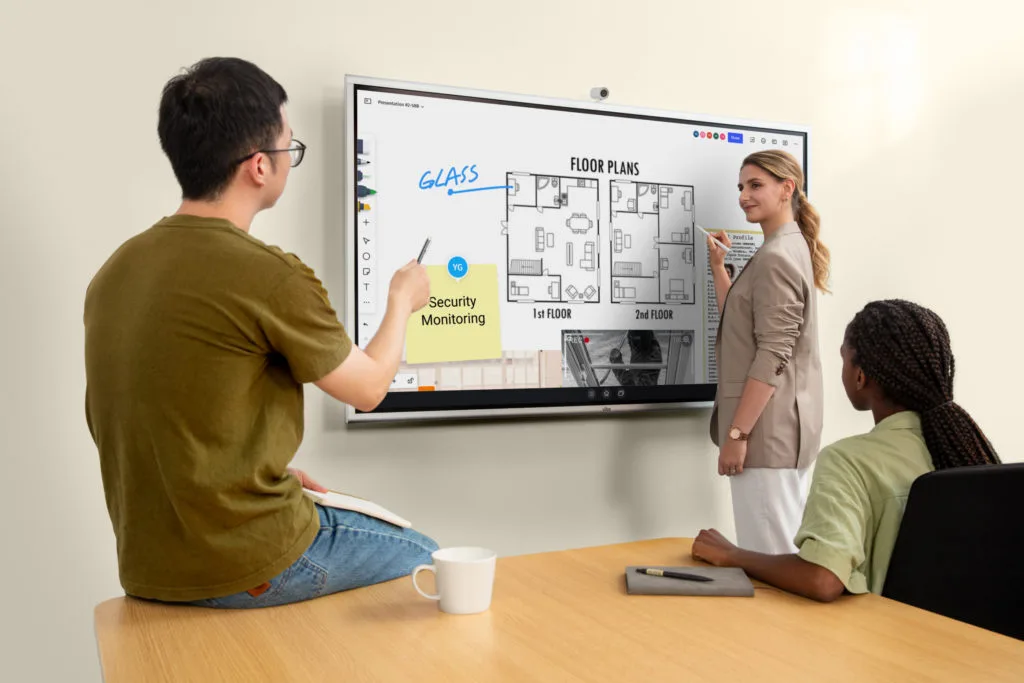

An innovation workshop is a structured, facilitated session where teams move from a defined challenge to concrete, prioritized actions — in hours, not months. Done right, it converts creative energy into decisions that stick.
Quick Answer: An innovation workshop is a time-boxed, facilitated session designed to generate, evaluate, and prioritize ideas that address a specific challenge. Unlike open-ended brainstorming, it uses structured methods — divergent ideation, synthesis, and rapid prototyping — to move participants from problem to action within a single session or series of sessions.
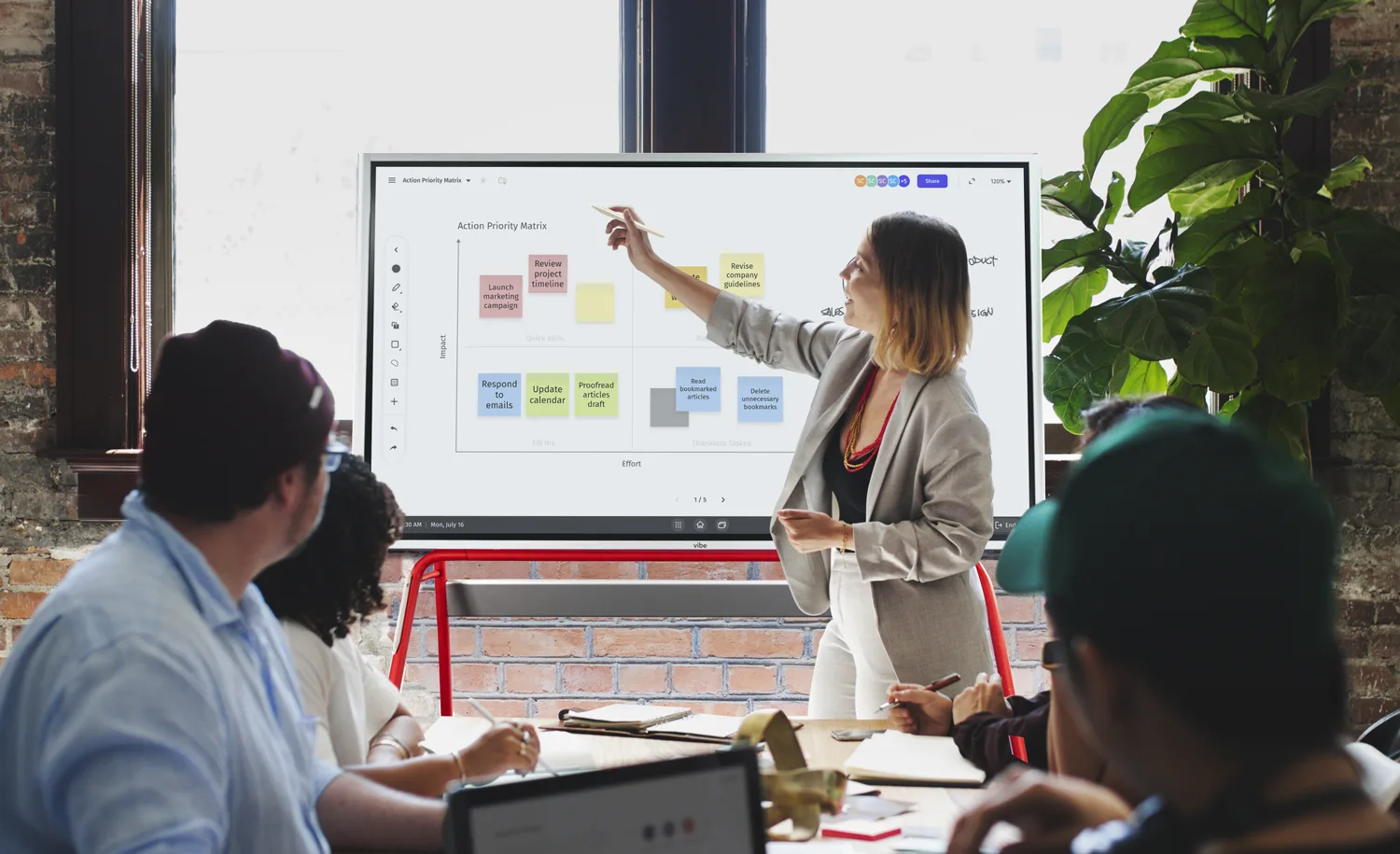
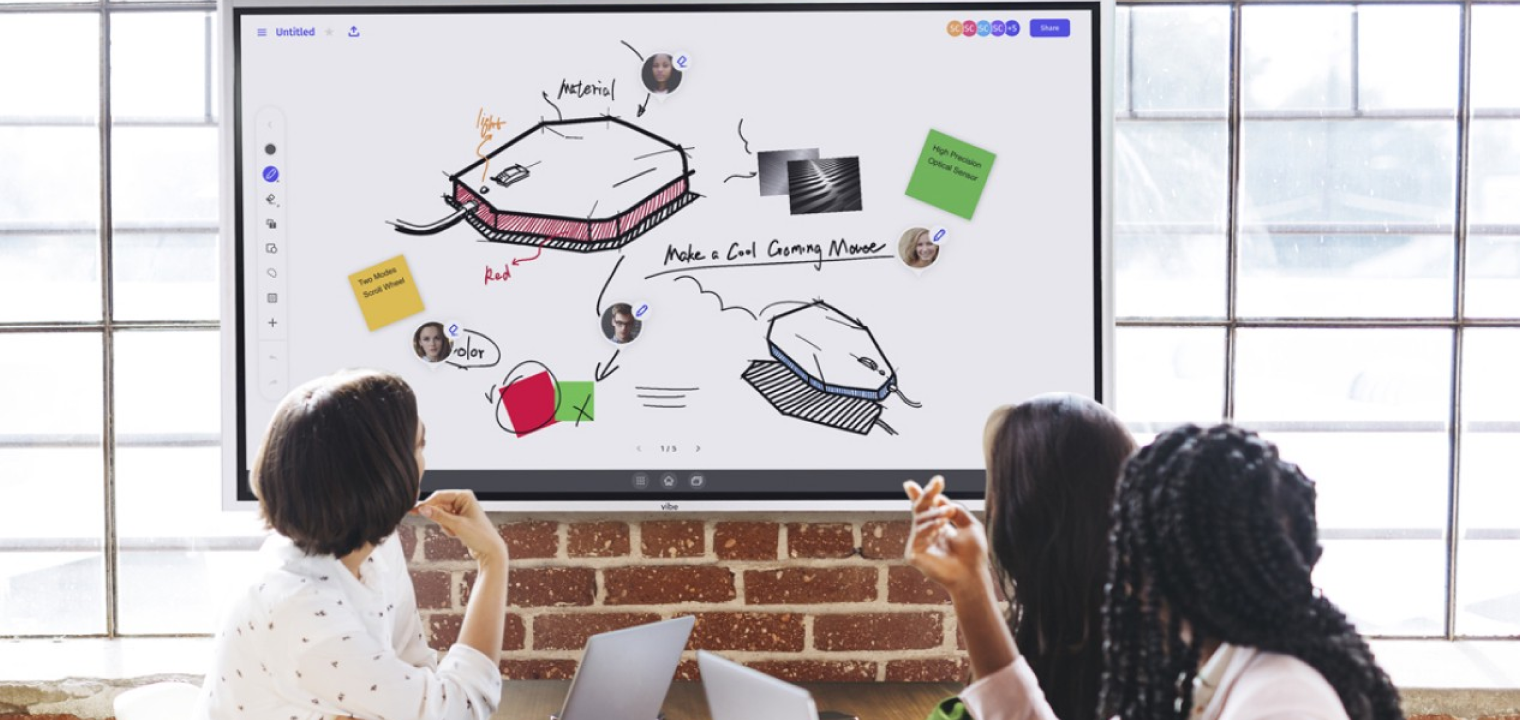 Team using a Vibe Board to brainstorm and capture ideas collaboratively in one space.
- Define one sharp problem statement before the session starts; vague challenges produce vague outputs.
- A proven 6-step flow — define, frame, ideate, prioritize, prototype, commit — builds momentum and accountability.
- The right mix of activities (warm-ups, ideation games, synthesis exercises) keeps energy high and outputs concrete.
- A written agenda with timed blocks prevents drift and helps facilitators manage the room.
- Shared visual workspaces keep every idea visible and accessible long after the session ends.
What Is an Innovation Workshop?
An innovation workshop is a structured, collaborative session that uses facilitation techniques and defined methods to take teams from a specific challenge to tangible, actionable outcomes. It differs from standard brainstorming in three ways: it has a fixed facilitator, a defined sequence of activities, and a built-in mechanism for evaluating and prioritizing ideas rather than just generating them.
Workshops range from a focused 90-minute sprint to multi-day design intensives. The format depends on the complexity of the challenge and the maturity of the team. What stays consistent is the intent: leave with named owners, clear next steps, and decisions documented before anyone walks out the door.
In a peer-reviewed study of a structured innovation workshop, participants’ self-efficacy significantly increased six months after the session and engagement barriers declined — evidence that the right format converts ideas into lasting behavioral change, not just post-it notes.
Why Innovation Workshops Work
Free-form brainstorming tends to favor the loudest voices and the most familiar ideas. Innovation workshops address both problems through structure and facilitation.

Structure creates clarity. A defined sequence — problem framing, divergent ideation, convergent evaluation, action planning — ensures the team is always working on the right thing. Participants know where they are in the process, which reduces anxiety and increases output quality.
Facilitation unlocks quieter voices. Techniques like silent individual ideation before group sharing, small-group breakouts, and anonymous dot voting give every participant equal weight, regardless of seniority or personality.
Action orientation separates workshops from meetings. A workshop that ends without named owners and a follow-up date is just a long meeting. The best sessions build accountability into the final 15 minutes: decisions get documented, owners raise their hands, and the next checkpoint lands on the calendar before the room clears.
Key Elements of a Successful Innovation Workshop
Regardless of format or length, effective innovation workshops share five structural elements:
-
A precise problem statement. One sentence. Everyone is solving the same challenge.
-
A diverse participant mix. Include people from different roles, departments, and levels of seniority. Teams that have already worked on improving cross-team collaboration bring sharper instincts for building on each other’s ideas.
-
Structured creativity. Methods like "How Might We" framing, role-storming, and SCAMPER give creative energy a productive channel without constraining it.
-
Time-boxed activities. Short, timed rounds sustain energy and force prioritization. A ticking clock is a feature, not a limitation.
-
A trained or prepared facilitator. The facilitator’s job is to protect the process, manage time, and ensure ideas are evaluated on merit — not by hierarchy.
Innovation Workshop Activities and Exercises
The activities you choose shape what kind of thinking the room produces. A well-sequenced workshop moves through three phases: opening, ideation, and synthesis.
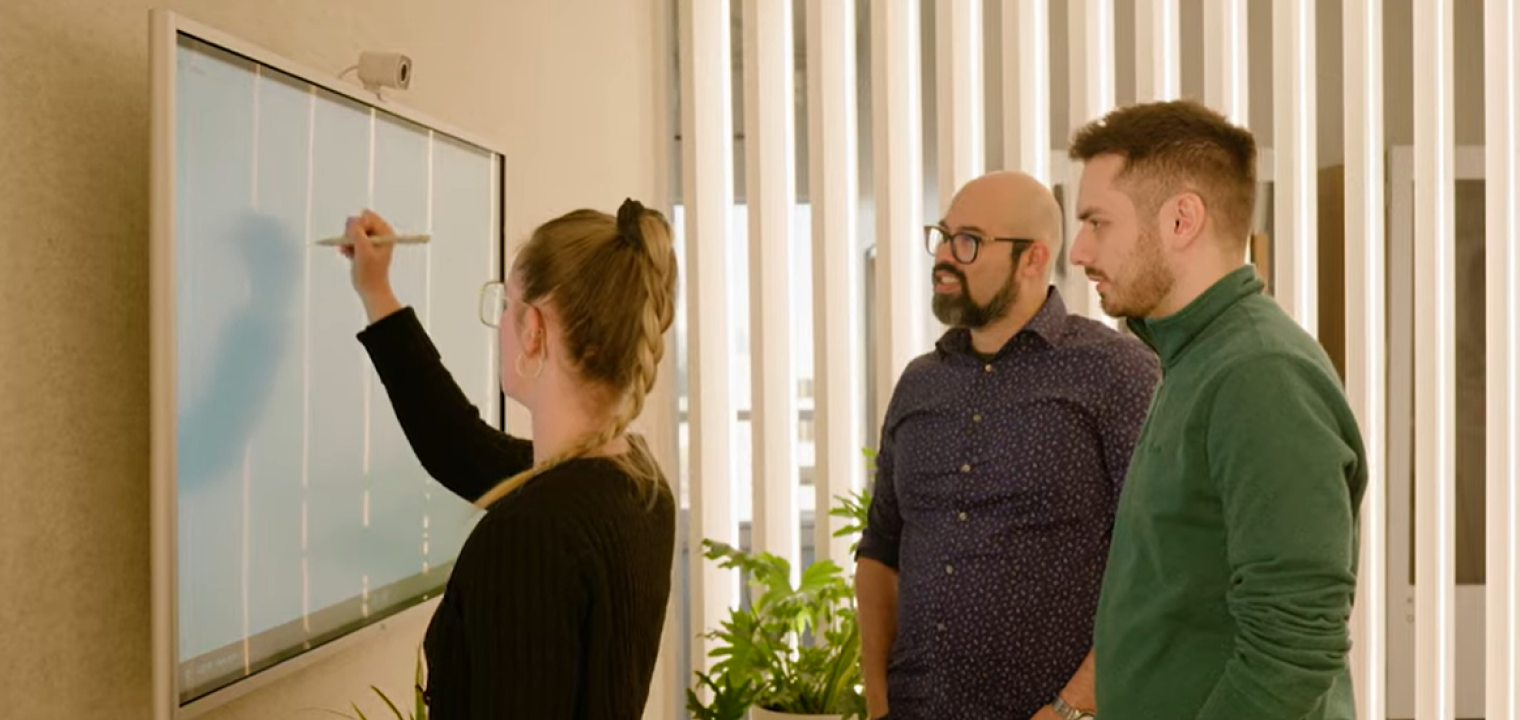 Team using a Vibe Board to conduct a successful innovation workshop.
Warm-Up and Opening Activities
Warm-ups prime creative thinking and level the social playing field before the real work begins. Keep them under 15 minutes.
-
Two Truths and a Wild Idea. Each participant shares two facts about the problem space and one speculative, unconventional idea. Surfaces assumptions and opens minds to unorthodox directions.
-
Worst Possible Idea. The group intentionally generates the worst solutions to the problem. Then they flip each one. This bypasses the inner critic and often surfaces real insights through inversion.
-
30 Circles. Participants have 3 minutes to turn 30 blank circles into recognizable drawings. The goal is fluency — training the brain to generate quantity before quality.
Core Ideation Exercises
These are the primary innovation workshop exercises that drive insight generation:
-
Brainwriting (6-3-5 method). Six participants each write three ideas in five minutes, then pass their sheet to the next person to build on. Produces 108 ideas in 30 minutes with no groupthink.
-
SCAMPER. A structured checklist (Substitute, Combine, Adapt, Modify, Put to other uses, Eliminate, Reverse) applied to existing products, processes, or services to force novel combinations.
-
"How Might We" prompts. Reframe problem statements as opportunity questions. "Customers abandon checkout" becomes "How might we make checkout feel effortless?" This reframe unlocks more actionable ideation.
-
Reverse brainstorming. Ask "How could we make this problem worse?" Invert the results. Consistently surfaces non-obvious solutions.
-
Perspective shift. Participants ideate as a specific persona — a competitor, a child, a first-time user, a regulator. Forces the team outside its default assumptions.
Innovation Workshop Games
Games reduce the social pressure of ideation and help teams take creative risks. These are particularly effective for groups that have worked together long enough to fall into predictable thinking patterns.
-
Idea poker. Each participant pitches an idea in 60 seconds. Others "bet" on its potential using value cards. Quickly surfaces which ideas generate genuine excitement vs. polite interest.
-
Yes, And… Borrowed from improv: one person states an idea, the next must accept it ("yes") and build on it ("and…"). Eliminates idea-killing and builds collaborative momentum fast.
-
The Newspaper Test. Teams imagine their solution on a newspaper front page — both as a "breakthrough success" story and as a "disaster" story. Forces explicit risk thinking while keeping energy playful.
-
Constraint cards. Draw a random constraint ("must cost under $10," "must work offline," "must be explained in one sentence"). Apply it to ideas in progress. Constraints often unlock more creative solutions than total freedom.
Prioritization and Synthesis Exercises
Once ideas are generated, these exercises help teams decide what to do next without losing momentum:
-
Dot voting. Each participant receives 5–7 votes (dots) to distribute across ideas however they choose. Fast, visual, democratic.
-
Impact/effort matrix. Map ideas on a 2×2 grid (high/low impact vs. high/low effort). Quick wins (high impact, low effort) become immediate priorities; long bets go to the backlog.
-
Affinity mapping. Group ideas into thematic clusters, then label each cluster. Reveals patterns and reduces 50 ideas to 5–7 actionable directions.
Sample Innovation Workshop Agenda
This agenda works for a 3-hour in-person or hybrid session with 6–12 participants. Adjust time blocks based on problem complexity.
|
Time |
Block |
Activity |
|---|---|---|
|
0:00–0:10 |
Open |
Context, goals, ground rules, agenda walkthrough |
|
0:10–0:20 |
Warm-up |
Worst Possible Idea or 30 Circles |
|
0:20–0:40 |
Problem framing |
"How Might We" prompt generation + alignment |
|
0:40–1:10 |
Divergent ideation |
Brainwriting (6-3-5) + individual sketching |
|
1:10–1:25 |
Share + build |
Gallery walk, "Yes, And…" round |
|
1:25–1:40 |
Synthesize |
Affinity mapping |
|
1:40–1:55 |
Prioritize |
Dot voting + impact/effort sort |
|
1:55–2:30 |
Prototype |
Low-fi storyboard or concept sketch for top idea |
|
2:30–2:50 |
Test + feedback |
Quick critique from 2–3 observers |
|
2:50–3:00 |
Commit |
Owners, metrics, next steps, checkpoint date |
For a full-day session, expand the prototype block into two rounds and add a 30-minute user-research debrief between framing and ideation.
Innovation Workshop Techniques That Actually Work
Technique selection depends on where a team is in its thinking. Use this guide:
For early-stage challenges (exploring the problem space):
-
Jobs-to-be-done interviews with 2–3 stakeholders before the session
-
Journey mapping of the current-state experience
-
"Five Whys" to find root causes before generating solutions
For mid-stage challenges (generating and evaluating options):
-
SCAMPER for incremental innovation
-
Analogous inspiration (how does a hospital solve queue management? How can we apply that?)
-
Concept car thinking (design the ideal version with no constraints, then work backward to what’s feasible now)
For mature challenges (moving from decision to execution):
-
Pre-mortem analysis (imagine it’s one year from now and the initiative failed — why?)
-
Assumption testing map (list the riskiest assumptions, design the cheapest test for each)
-
RACI assignment directly in the session, not after
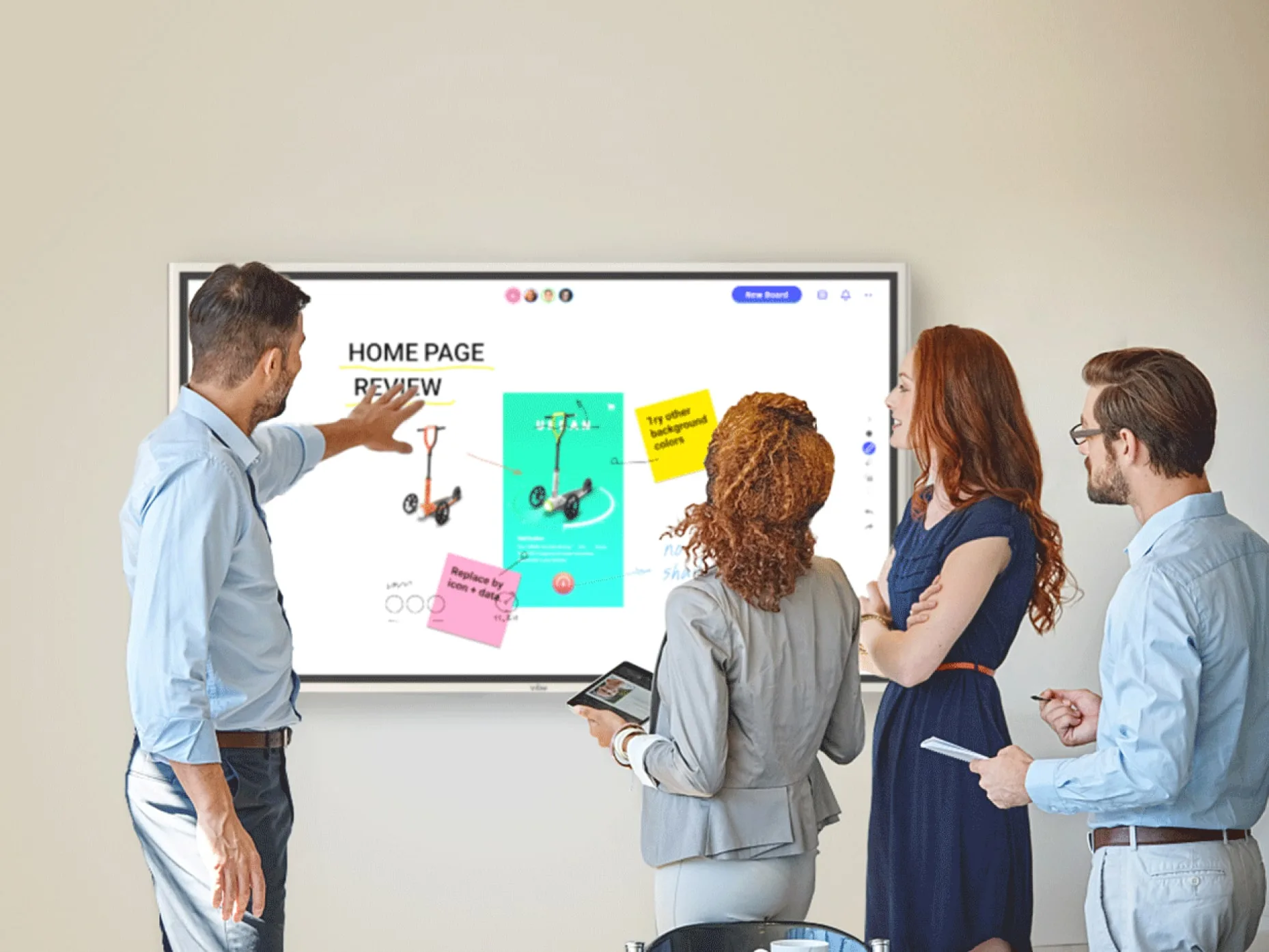
Tools for Running Innovation Workshops
The right tools reduce friction and keep focus on the problem, not the logistics.
For in-room facilitation:
-
A large-format interactive whiteboard for shared ideation and annotation
-
Physical or digital sticky notes for individual idea capture
-
A visible timer (projected or physical) for time-boxed activities
-
Printed or projected agenda for all participants
For hybrid and remote workshops
-
A video conferencing platform with breakout room support (Zoom, Google Meet, Teams)
-
A collaborative digital whiteboard for shared canvas work, plus supporting remote collaboration tools for video and async coordination (Vibe Canvas, Miro, FigJam, Zoom with breakout rooms)
-
A shared document for real-time decisions and action logging
For documentation and follow-through:
-
A central workspace where session artifacts — canvases, photos, decisions — are stored and accessible after the session
-
An action tracker with owners and due dates, accessible to all participants
Vibe Board S1: Built for Innovation Workshops
The Vibe Board S1 is a 55″ or 75″ multi-touch interactive whiteboard designed for exactly the kind of collaborative, visual work that innovation workshops require. Its 20-point simultaneous touch support and 130Hz refresh rate make group annotation fluid — multiple participants can sketch, cluster, and vote directly on the board at the same time without lag.
Vibe Canvas provides the infinite digital workspace where ideas captured during a session remain organized, searchable, and editable after the room clears — eliminating the all-too-common problem of whiteboard photos that no one follows up on.
For hybrid sessions, the optional Smart Camera accessory adds 4K auto-framing, a 6-mic beamforming array, and AI-powered noise and echo cancellation, so remote participants can see the board and hear the room clearly without a separate conferencing setup.
Making Innovation Stick After the Session
A workshop that ends with ideas on a whiteboard and no named owners is a well-facilitated meeting, not a change catalyst. The difference between inspiration and implementation is what happens in the 48 hours after the room clears.
Before closing any session, confirm three things in writing: who owns each next step, what success looks like at the first checkpoint, and when that checkpoint is scheduled. Use a collaborative workspace — not an email thread — to store the session’s decisions and artifacts so the team can return to them without hunting.
Early prototypes and short feedback loops turn the session’s best ideas into evidence rather than assumptions. The goal is not a perfect solution on day one — it is the fastest possible test of the riskiest assumption in the concept.
Request a demo to see how teams use Vibe Board S1 and Vibe Canvas to run workshops that generate better ideas and follow through on them.
Frequently Asked Questions About Innovation Workshops
What is an innovation workshop?
An innovation workshop is a structured, time-boxed session where a team uses facilitated methods — ideation exercises, synthesis techniques, and rapid prototyping — to move from a defined problem to prioritized, actionable solutions. Unlike unstructured brainstorming, it has a facilitator, a sequenced agenda, and a built-in process for evaluating ideas, not just generating them.
How do you run an innovation workshop?
Start by writing a single, specific problem statement and selecting 6–12 participants with diverse perspectives. Build an agenda with timed blocks: warm-up, problem framing, divergent ideation, synthesis, prioritization, and action planning. Assign a facilitator to manage time and participation. End every session with named owners and a documented next step before the room disperses.
What are good innovation workshop activities?
Effective activities depend on the session’s phase. For warm-ups: Worst Possible Idea or 30 Circles. For ideation: Brainwriting (6-3-5), SCAMPER, or "How Might We" prompts. For synthesis: affinity mapping and dot voting. For prioritization: an impact/effort matrix. Each activity should have a clear time limit and a defined output.
What are innovation workshop exercises for teams?
The most reliably productive exercises for teams are brainwriting (which eliminates groupthink), reverse brainstorming (which bypasses the inner critic), and perspective-shift ideation (which forces the team outside its default assumptions). All three require no special materials and work equally well in-person and remotely.
What are innovation workshop games?
Innovation games are structured activities that use playful constraints to reduce social pressure and generate bolder ideas. Effective examples include Idea Poker (pitching and "betting" on concepts), Yes-And (improv-style idea building), the Newspaper Test (imagining success and failure headlines), and Constraint Cards (applying random limitations to force creative problem-solving).
What are the best innovation workshop techniques?
Technique selection depends on the maturity of the challenge. Early-stage problems benefit from Jobs-to-be-done framing and Five Whys root-cause analysis. Mid-stage challenges respond well to SCAMPER and analogous inspiration. Late-stage decisions benefit from pre-mortem analysis and assumption testing maps. The key is matching the technique to where the team actually is — not defaulting to the same method every time.
What tools do you need for an innovation workshop?
At minimum: a shared writing surface (physical or digital), a visible timer, sticky notes or their digital equivalent, and a simple prioritization tool (dot stickers or a 2×2 matrix). For hybrid sessions, add a video conferencing platform with breakout rooms and a collaborative digital whiteboard. For post-session follow-through, a central shared workspace to store session artifacts and track action items is critical.
How do you facilitate an innovation workshop?
A facilitator’s job is to protect the process, not contribute ideas. Before the session: align with stakeholders on the problem statement and success criteria. During: manage time boxes, ensure equal participation, and prevent premature convergence. After: document decisions, distribute artifacts, and schedule the first follow-up checkpoint. The facilitator should intervene when hierarchy starts overriding good ideas or when the group skips synthesis and jumps straight to execution.
How do you structure an innovation workshop agenda?
A strong agenda follows the diverge-converge pattern: open with alignment on the problem (15–20 minutes), expand the idea space with timed ideation (30–45 minutes), cluster and evaluate what emerged (20–30 minutes), prototype the most promising concept (30–45 minutes), and close with committed owners and next steps (10–15 minutes). For a 3-hour session, that’s achievable with time to spare. Add user-research review or stakeholder debrief blocks for full-day formats.
What is a corporate innovation workshop?
A corporate innovation workshop applies the same facilitated, structured methodology to business challenges — new product development, operational improvement, customer experience design, or cross-functional problem-solving. Corporate formats often include additional framing work (market analysis, customer research) before the ideation phase and more rigorous prioritization against budget and feasibility constraints.
How long should an innovation workshop last?
Most innovation workshops run 3 hours to 2 days, depending on challenge complexity. A focused 3-hour session works well for a defined, bounded problem with a clear decision-maker in the room. A full day accommodates deeper research review, multiple ideation rounds, and richer prototyping. Multi-day formats suit strategic or cross-functional challenges where relationship-building and iterative refinement matter as much as the ideas themselves.