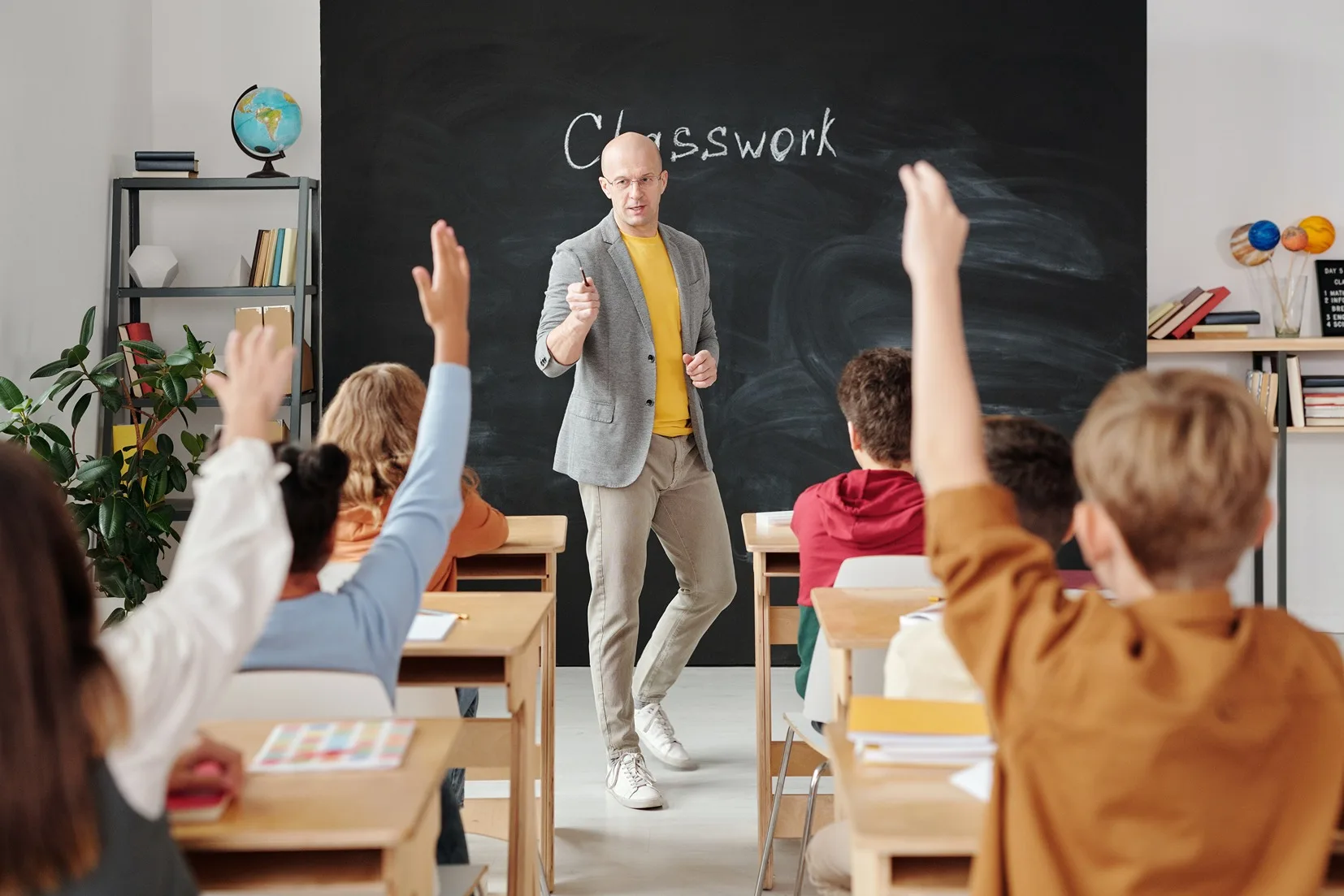

Modern classrooms are changing fast, yet capturing and holding student attention remains one of education’s most stubborn challenges. The latest national data tell a hopeful but unfinished story: in the 2025 Voices of Gen Z study from Gallup and the Walton Family Foundation, all eight measures of classroom engagement reached their highest levels yet — and yet more than one in three students still say they haven’t learned anything interesting in the past week.
The encouraging part is what’s driving the gains: students consistently report that they engage most when a teacher makes the material exciting and relevant. The share of students who say they have a teacher who makes them excited about the future climbed from 70% in 2023 to 78% in 2025. Engagement, in other words, is something teachers can actively design for. The sixteen strategies below are organized around that idea — each one is a practical, research-backed way to move students from passive absorption to active participation.
What are the most effective student engagement strategies?
If you only remember a few, the highest-impact moves cluster into seven themes:
-
Make it active — replace passive listening with doing (inquiry, group work, peer teaching).
-
Make it relevant — connect lessons to students’ lives, interests, and the real world.
-
Give students choice — autonomy over how they learn and demonstrate mastery.
-
Build relationships — students engage for teachers who know and believe in them.
-
Vary the format — rotate methods, add movement, and schedule brain breaks.
-
Feedback that informs — specific, actionable feedback, not generic praise.
-
Use the right tools — technology that supports the six themes above, not technology for its own sake.
The full list expands each of these into concrete classroom practices.
Top strategies for increasing student engagement
1. Gamification for motivated learning
Turn your classroom into a space where progress feels like a quest. Gamification taps students’ natural drive for challenge and mastery, reframing routine assignments as goals worth pursuing with points, badges, levels, and team challenges. When an algebra unit becomes a problem-solving quest or a history lesson becomes a role-play, students stop thinking about "studying" and start thinking about progress.
The effect is strongest when achievement is visible and tied to real learning. Badges for mastering a concept, points for collaborative problem-solving, or class-wide goals that unlock a privilege give students momentum to push through difficult material — as long as the game rewards genuine understanding rather than just speed or compliance.
2. Thoughtful questioning techniques
Questions are the keys to a classroom’s thinking. But not all questions do the same work. Recall questions ("What year did World War II end?") confirm memorization; open-ended questions ("Which decisions most shaped how World War II ended, and why?") demand analysis, synthesis, and judgment.
A simple shift — asking why and how instead of what and when, then waiting several seconds before taking answers — pushes more students into deeper cognitive work and signals that you expect thinking, not just the right word.
3. Inquiry-based student exploration
Hand students some of the responsibility for their own learning. Inquiry flips the teacher-as-dispenser model: the teacher becomes a guide while students investigate, test ideas, and reach conclusions themselves. People remember what they discover far better than what they are simply told.
Whether students are designing an experiment, researching a local issue, or finding a pattern through hands-on materials, inquiry creates ownership — and ownership is what makes engagement self-sustaining rather than something you have to manufacture every day.
4. Real-world lesson connections
Bridge the gap between abstract content and lived experience. Students who can’t see why a concept matters often re-engage the moment it appears in a context they care about: fractions through a favorite recipe, the scientific method through a neighborhood environmental question, narrative technique through the films and music they already love.
This is exactly what students report wanting — and what they say is missing. In the 2025 Voices of Gen Z study, just 37% of students felt their teachers connect coursework to the real world. Relevance answers the perennial question — "When will I ever use this?" — before it becomes a reason to tune out.
5. Interest-based lesson personalization
Every student arrives with a different set of interests and strengths. Effective engagement strategies build multiple pathways to the same objective: a sports fan explores statistics through game data; a visual learner demonstrates a science concept through design. Student engagement rises when the route is personally meaningful.
This doesn’t mean writing thirty lesson plans a day. Choice boards, project menus, and differentiated tasks give students room to pursue a shared goal in their own way while you keep one set of standards.
6. Collaborative group work structures
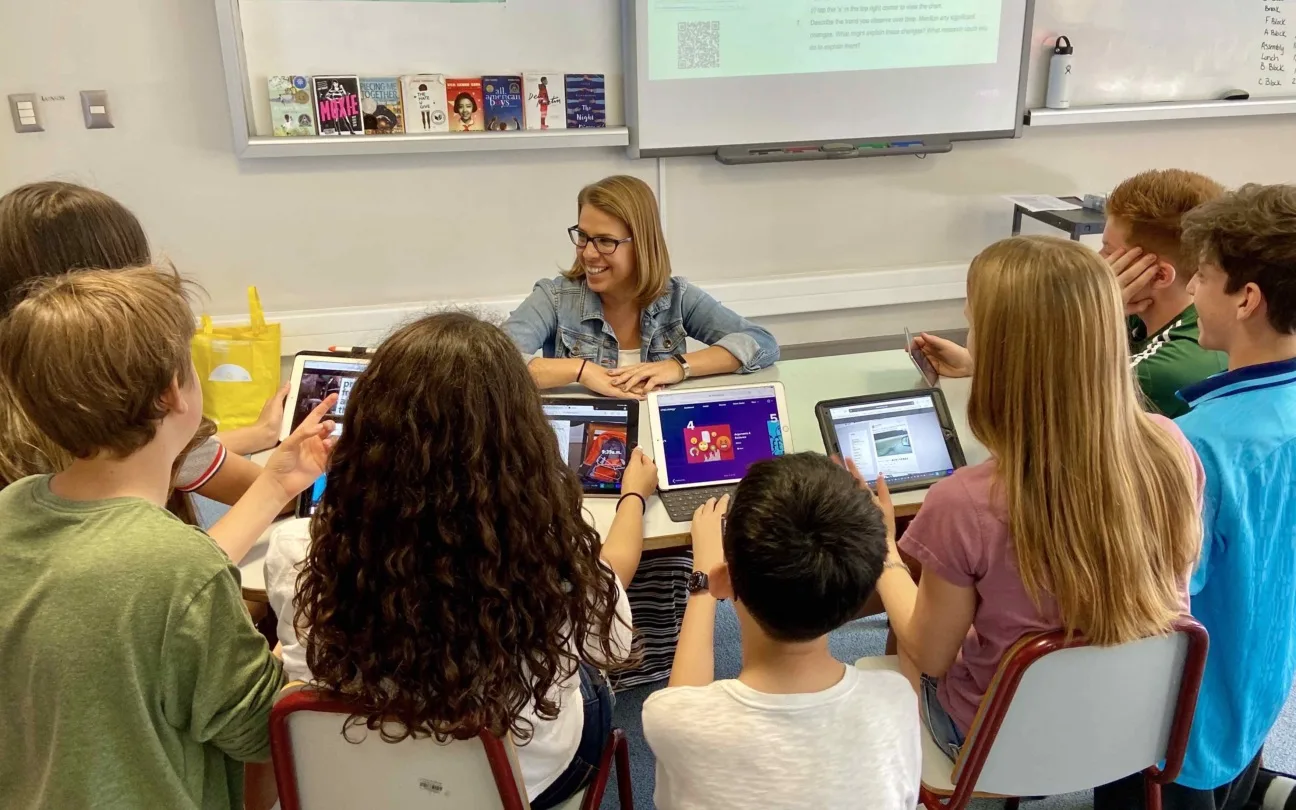
Most students are social learners, yet traditional classrooms often isolate them. Well-designed collaboration turns that social energy into a learning engine — but design is the operative word. Clear roles, shared accountability, and structured protocols are what separate productive group work from a few students carrying the rest.
When students are responsible both for their own learning and for a teammate’s success, engagement deepens and communication skills grow alongside the academic content.
7. Student presentations and peer teaching
The fastest way to turn a passive learner into an active one is to ask them to teach. When students know they’ll explain a concept to peers, their preparation changes: they have to organize, anticipate questions, and find the simplest accurate explanation. This is the principle behind the Feynman Technique — you understand something only as well as you can teach it.
Peer teaching helps both sides. Presenters consolidate their own understanding and build confidence; audience members often grasp an idea more readily from a classmate than from an adult.
8. Choice in learning activities
Autonomy fuels engagement. When students have a voice in how they learn and how they show what they know, ownership rises — without sacrificing rigor. Some students write best, others build, others present. Offering a few structured ways to demonstrate mastery lets every student lead with a strength while still meeting the same standard.
9. Scaffolded step-by-step assignments
Ambitious projects can overwhelm even motivated students. Scaffolding breaks a large task into clear milestones — the educational equivalent of training wheels — so students build confidence and skill before tackling the whole thing independently. Rubrics, checkpoint conferences, and peer-feedback rounds create natural moments to course-correct before a final submission.
10. Kinesthetic and movement learning
Bodies — especially young ones — aren’t built to sit still for hours. Movement-based activities such as gallery walks, human timelines, gesture-based vocabulary, and standing discussions re-energize a room and engage more senses. There’s a health-and-learning link here too: the CDC notes that students who are more physically active are more likely to earn higher grades, even though the relationship is correlational rather than proven cause-and-effect.
11. Regular brain break scheduling
Attention is finite, and pretending otherwise helps no one. Short, intentional brain breaks — a movement burst, a minute of mindfulness, a quick creative task — give students a reset that protects focus for the next stretch of work. The goal is to choose breaks that refresh rather than overstimulate, so students return ready to re-engage.
12. Adaptive instructional adjustments
Responsive teaching means reading the room in real time — watching faces, noticing energy, and adjusting before a lesson stalls. When an explanation isn’t landing, skilled teachers pivot: lecture to discussion, words to visuals, or solo work to collaboration. That same flexibility applies across classroom types, whether in-person, hybrid, or remote.
13. Varied teaching methods
Monotony disengages students faster than difficult content does. The case for variety isn’t just intuition: a landmark meta-analysis of 225 studies found that students in traditional lecture-only classes were about 1.5 times more likely to fail than peers in classes using active-learning methods. Rotating through discussion, hands-on work, visuals, and short direct instruction ensures more students hit their best learning conditions regularly rather than occasionally.
14. Strong teacher–student relationships
Behind most engaged students is a teacher who clearly believes in them. Relationships are the foundation the other strategies rest on: when students feel known and supported, they’re willing to take risks, persist, and invest effort. Learning names quickly, showing interest in students’ lives, and pairing high expectations with warm support steadily builds that trust.
See how Sonny G Academy builds stronger teacher–student connections with Vibe →
15. Constructive feedback systems
Feedback drives growth — but only the right kind. A 2020 meta-analysis of 435 studies found that feedback has a meaningful effect on learning, and that its impact depends far more on the specific information it carries than on praise or grades alone. In practice, that means naming a specific strength, pinpointing one area to improve, and suggesting a concrete next step — then leaving room for students to respond and ask questions, so feedback becomes a dialogue rather than a verdict.
16. Effective use of EdTech
Educational technology doesn’t replace good teaching — it amplifies it. Used with intent, the right tools personalize learning, deliver immediate feedback, enable creation, and connect a classroom to the wider world. Interactive whiteboards, collaborative platforms, and multimedia tools can turn a static lesson into a dynamic one — but the gains come when technology serves a clear learning goal rather than driving the lesson.
Choosing tools and technology to support engagement
Most of the strategies above get easier with the right hardware behind them — and harder with the wrong one. Before adding a device or platform, it’s worth asking three questions:
-
Does it support active participation, not just display? A tool that only projects slides reinforces passive learning; one that lets students touch, annotate, and contribute supports it.
-
Does it work across in-person, hybrid, and remote settings? Engagement strategies shouldn’t break the moment a few students join from home.
-
Is it simple enough that it disappears? The best classroom technology takes seconds to start so the focus stays on learning, not troubleshooting.
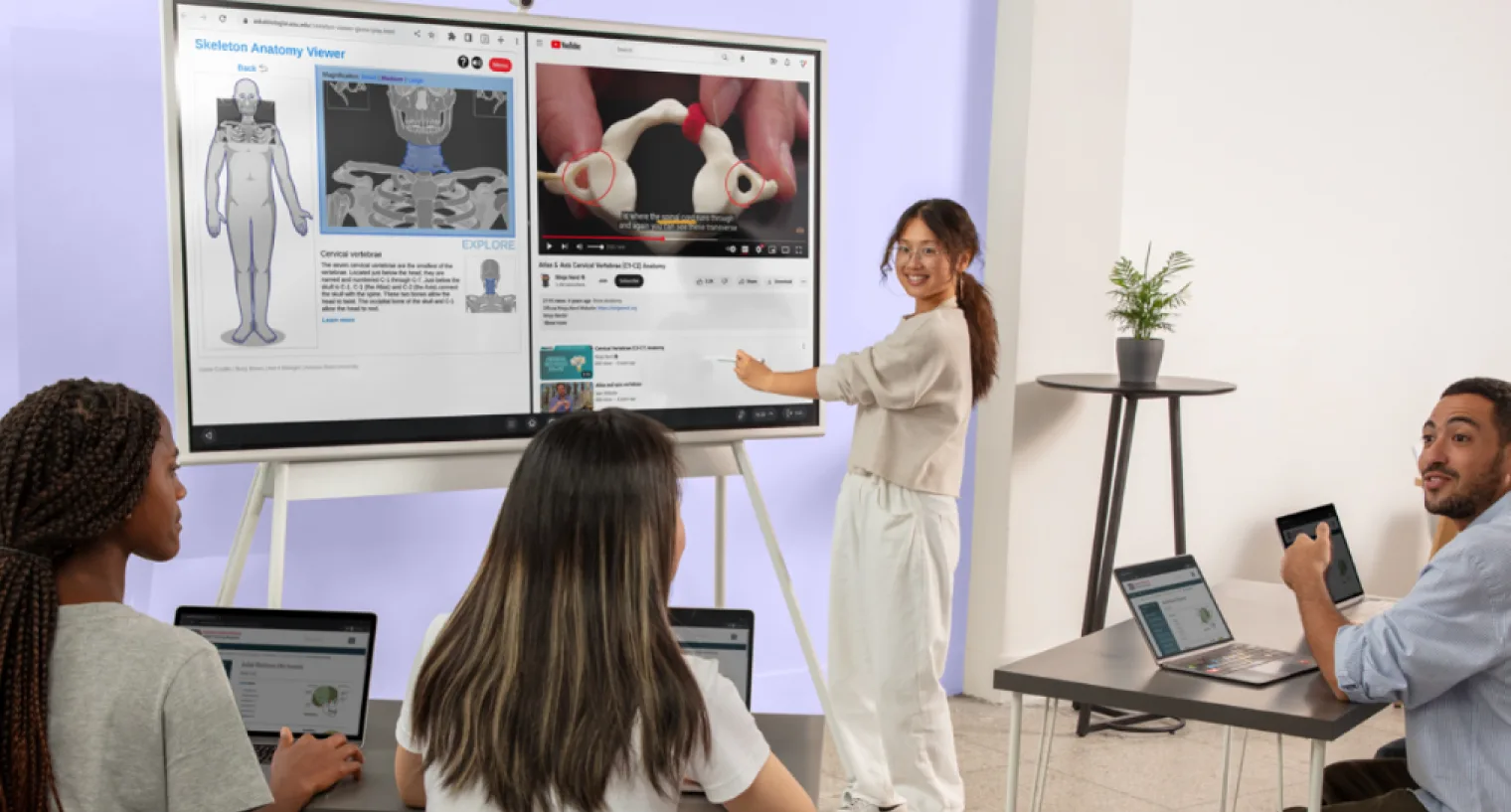
This is where an all-in-one interactive display earns its place. The Vibe Board S1 — available in 55″ and 75″ sizes — is built around exactly these criteria. Its 20-point multi-touch screen lets a whole group annotate, sort, and build together, so gamified challenges, collaborative group work, and student presentations happen on the board rather than in front of it. Because it runs on ChromeOS and supports 250+ apps — including Google Classroom, Google Meet, Zoom, and Figma — teachers can pull inquiry resources, run a virtual field trip, or invite a remote student into the same lesson without switching devices.
Vibe’s cloud whiteboard, Canvas, keeps that work alive after class: anyone can contribute from a board, laptop, tablet, or phone, and everything saves to the cloud automatically. For IT, the S1 is classroom-ready out of the box with SOC 2 certification and policy-based management. The result is a single surface flexible enough to support nearly every strategy on this list.
Ready to see it in your room? Explore how the Vibe Board S1 supports K-12 classrooms, or request a demo.
FAQ
What are the 7 key student engagement strategies?
The most effective approaches group into seven themes: make learning active, make it relevant, give students choice, build strong relationships, vary the format (including movement and brain breaks), give specific and actionable feedback, and use technology that supports those goals.
How do you increase student engagement in the classroom?
Start by replacing passive listening with active participation — questioning, inquiry, group work, and peer teaching — then connect lessons to students’ interests and the real world. National data show students engage most when a teacher makes the material genuinely interesting, so relevance and relationship are high-leverage places to begin.
What tools help improve student engagement?
Look for tools that enable participation rather than passive viewing, work across in-person and remote settings, and start in seconds. Interactive displays such as the Vibe Board S1, collaborative whiteboards, and platforms that give immediate feedback tend to support engagement best when they’re tied to a clear learning goal.
Why does student engagement change as students get older?
Historically, Gallup found engagement was highest in elementary school and dropped through middle and high school. The 2025 data complicate that picture: engagement rose to record levels, with high schoolers showing the largest gains and, for the first time, matching or exceeding their middle-school peers. Relevance, autonomy, and strong relationships remain the levers most consistently linked to keeping older students engaged.