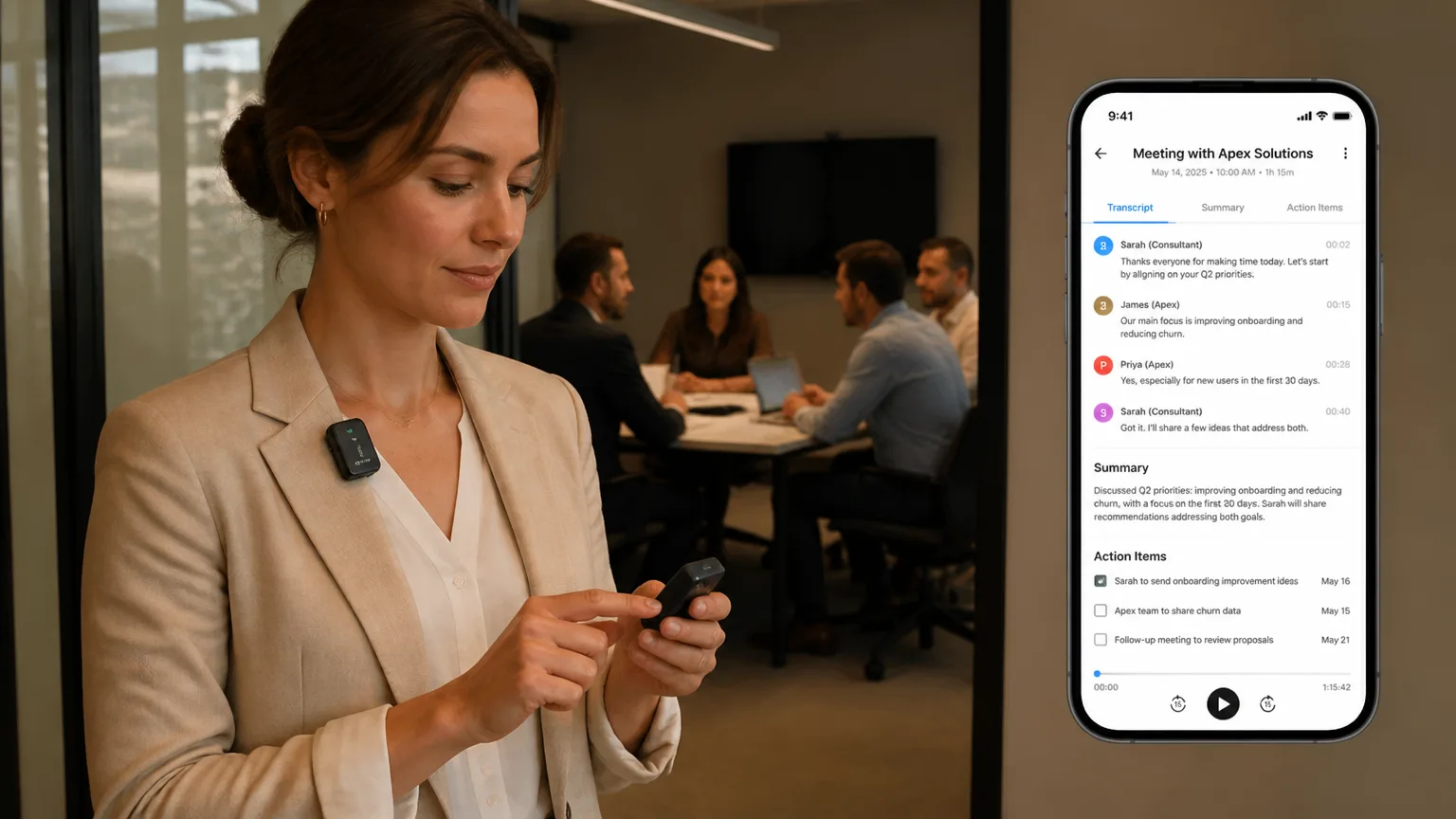

Every therapist knows the feeling: a client shares something important in the final minutes of a session, and by the time you sit down to write your notes an hour later, the exact words are gone. You have the gist — but clinical documentation lives in the details.
The best AI wearable devices for therapy sessions are designed to close that gap. Some capture and transcribe conversations so clinicians can focus entirely on the therapeutic relationship. Others provide real-time biofeedback to support mindfulness and self-regulation — for clients as much as clinicians. This guide covers both categories: the tools therapists wear to do their job better, and the tools clients wear to deepen therapeutic work between sessions.
Quick answer: The best AI wearable for therapy session documentation is Vibe Dot — a HIPAA-compliant, hardware-encrypted AI recorder with a 5-mic array, 30+ hours of battery, and a cross-session Memory Graph that connects context across your entire caseload. For biofeedback-supported therapy, Muse S Athena remains the clinical standard for EEG-based mindfulness tracking.
Why Therapists Are Turning to AI Wearables
Documentation is the invisible second job that defines clinical work. Research from Eleos Health found that therapists spend approximately 35% of their working hours on documentation — roughly 16 minutes of paperwork per client encounter, separate from direct therapy time. In a 30-client week, that adds up to more than eight hours of notes alone.
The consequences extend beyond inconvenience. Tebra’s 2025 Physician Burnout Survey found that 77% of mental health clinicians meet criteria for significant mental exhaustion, with documentation cited as the primary driver by 23% of respondents — tied only with general administrative overload. Therapist burnout, in turn, is linked to reduced therapeutic alliance, decreased empathy during sessions, and higher rates of clinical errors.
AI wearables address this in two distinct ways:
-
Session-capture devices — worn by the clinician, these record and transcribe the session, then generate structured clinical notes (SOAP, DAP, or narrative format) for review and sign-off
-
Biofeedback devices — worn by the client or clinician, these measure physiological signals (brainwaves, heart rate variability, breathing) and provide real-time feedback to support mindfulness, anxiety regulation, and therapeutic presence
If you’re new to this product category, our guide to what is a wearable AI recorder explains how these devices work, what the AI actually does well, and where it falls short. The market has matured enough in 2026 that both categories contain genuinely excellent options. Here is how the leading devices compare.
At a Glance: Best AI Wearables for Therapy Sessions
|
Device |
Category |
Key strength |
HIPAA compliant |
Price |
|---|---|---|---|---|
|
Vibe Dot |
Ambient AI Scribe |
Cross-session clinical memory |
✅ |
$199 |
|
Plaud NotePin S |
Session recorder |
Versatile wearing options, 20-hr battery |
✅ |
$179 |
|
Muse S Athena |
Biofeedback |
EEG + fNIRS, 200+ peer-reviewed studies |
❌ (wellness device) |
~$400 |
|
Muse 2 |
Biofeedback |
EEG + HRV + breathing, meditation coaching |
❌ (wellness device) |
~$250 |
1. Vibe Dot — Best AI Wearable for Therapy Session Documentation
If you see 20+ clients a week and your documentation backlog is a persistent source of stress, Vibe Dot is the device built for your workflow.
Vibe Dot is an AI wearable recorder made by Vibe Inc., the company behind the Vibe Board S1 Pro and Vibe Bot. Where those products serve conference rooms and collaborative workspaces, Vibe Dot is designed for the kinds of conversations that happen away from a desk — including the 50-minute therapeutic conversation that is the core unit of clinical work.
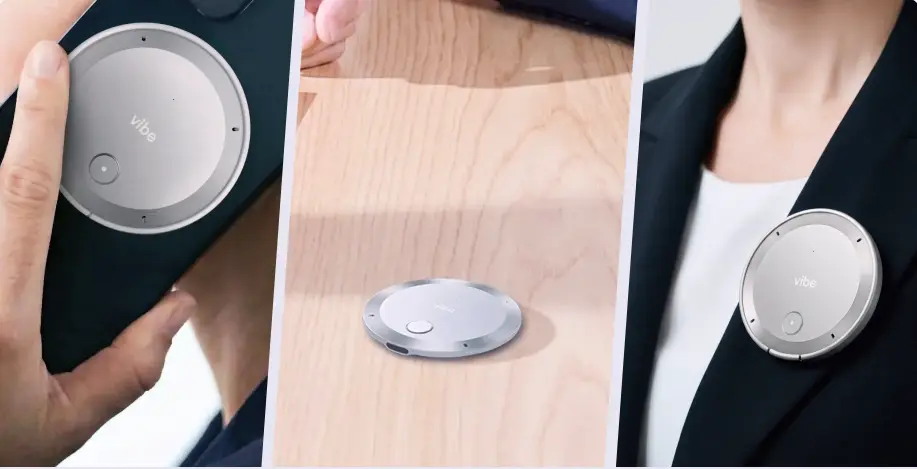 Vibe Dot portable AI meeting recorder shown held in hand, placed on desk, and clipped to jacket as a wearable device
Cross-session clinical memory: what longitudinal therapy actually needs
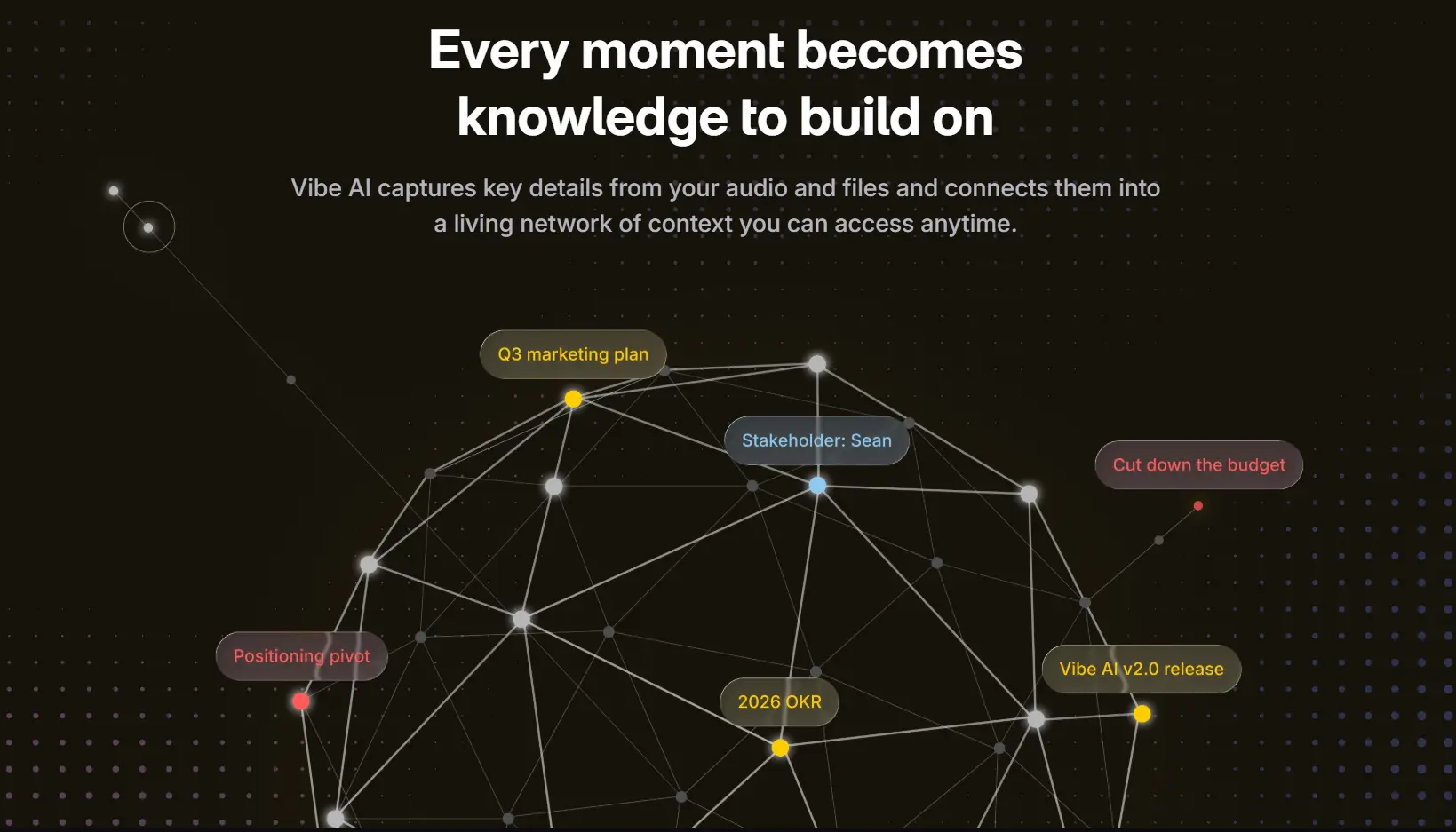
Most AI note takers generate a transcript and summary, then stop. Vibe Dot connects every session to Vibe AI’s Memory Graph — a persistent, cross-session knowledge layer that indexes your recordings over time.
In practice, this means you can ask questions like "What were the three main themes this client raised about their relationship with their sister over the last six sessions?" or "When did this client first mention feeling unsafe at work?" — and Vibe AI surfaces the answer from your full recording history, not just the most recent session. For longitudinal therapeutic work, this capability is qualitatively different from anything a session-scoped note-taker provides.
Coming soon: Vibe is building therapy-specific note templates — including SOAP, DAP, and psychotherapy progress note formats — designed to generate clinical documentation directly from Vibe Dot recordings. This will be updated when the feature launches.
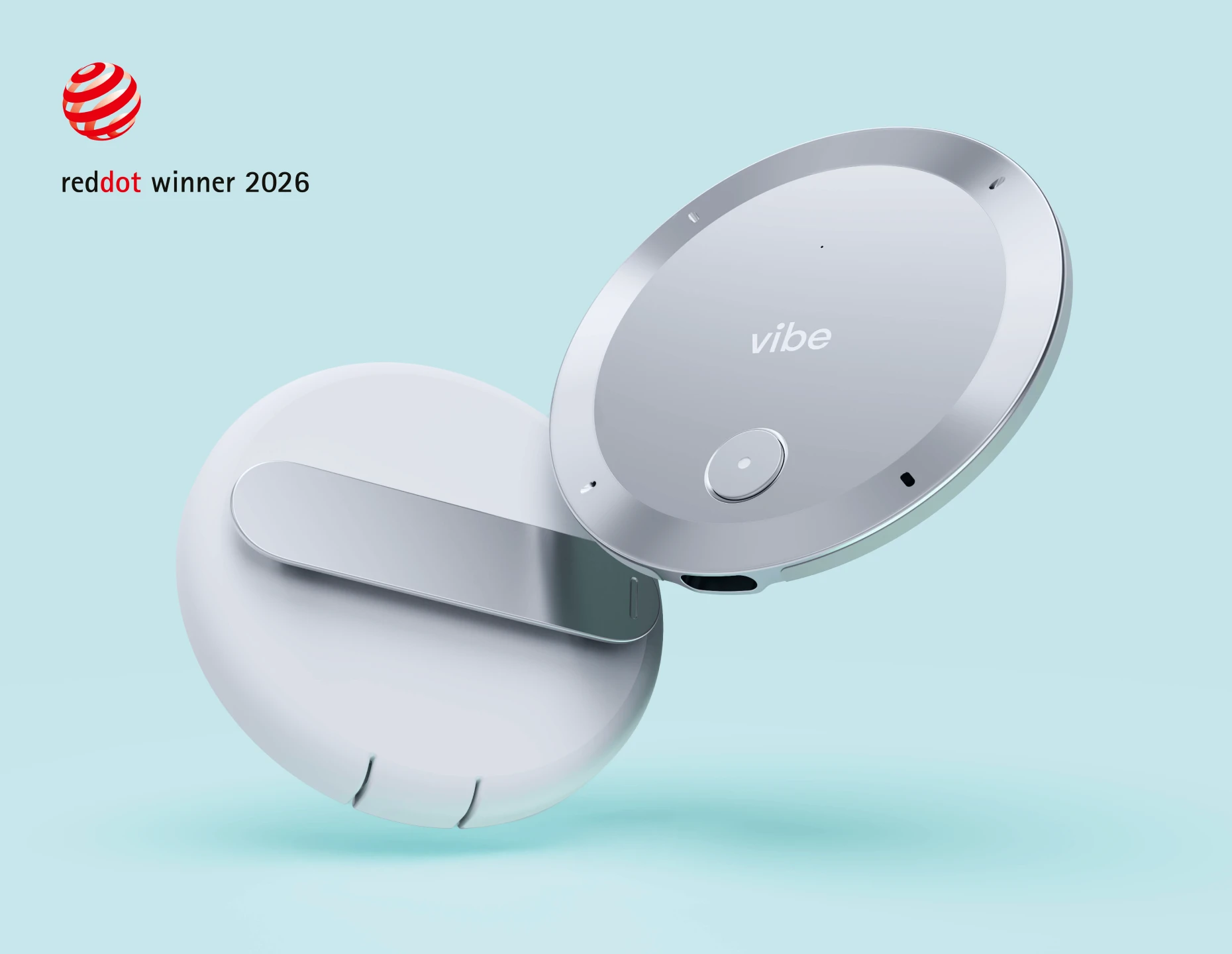
Hardware built for the therapy room
The microphone array is where Vibe Dot earns the accuracy its clinical memory layer depends on. It uses a 5-microphone system — four high-fidelity air microphones and one bone-conduction microphone — with a 16-foot capture range. In a standard therapy office, that means clear, accurate transcription of both therapist and client speech, even at conversational volume. The bone-conduction mic specifically helps separate the wearer’s voice from ambient room sound, reducing the noise floor that causes word errors in conversational multi-speaker transcription.
A 2025 systematic review in BMC Medical Informatics and Decision Making found AI speech recognition word error rates ranging from 8.7% in controlled single-speaker dictation to above 50% in noisy conversational settings — which is why microphone quality is the single most consequential hardware variable for clinical transcription accuracy.
Battery life is 30+ hours on a single charge — covering a full clinical week between charges for most practitioners. Onboard storage is 64GB, and recordings are protected by a dedicated hardware encryption chip. Unlike software-only encryption, this chip ensures recordings are unreadable even if the physical device is accessed by an unauthorized computer.
The compliance layer matters in clinical settings
Vibe Dot holds SOC 2, HIPAA, FERPA, and NDAA certifications — a compliance stack that covers most regulated clinical environments, including outpatient behavioral health, school counseling, and federally funded programs. HIPAA compliance for a device that records protected health information is not optional; it determines whether you can legally use the tool in your practice.
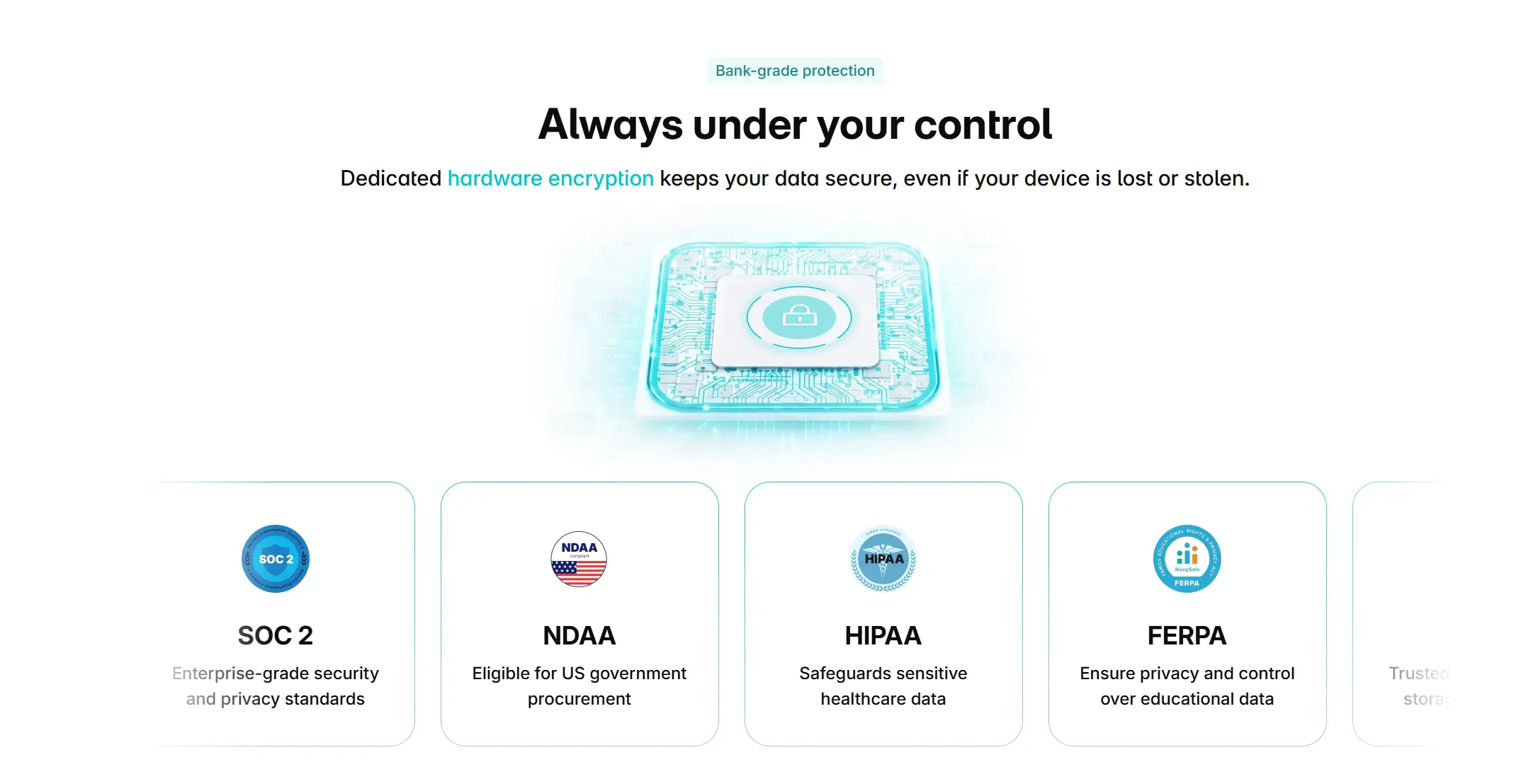 Vibe Dot security certifications including SOC 2, NDAA, HIPAA, and FERPA, with dedicated hardware encryption chip for data protection
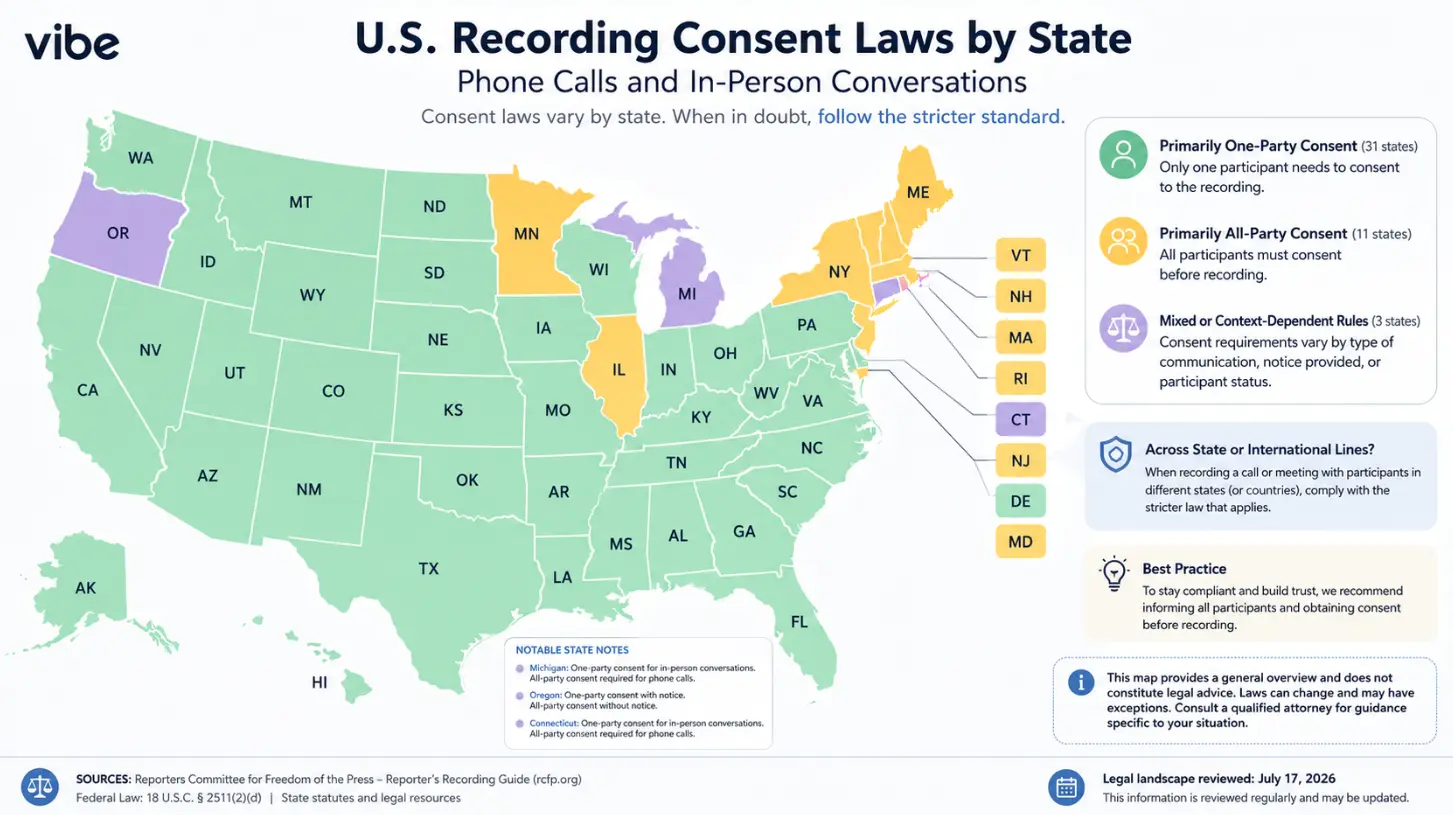
A physical LED indicator shows when recording is active — a design decision with genuine clinical significance. Informed consent for session recording is both an ethical and legal requirement in most jurisdictions. A visible recording indicator supports that consent process in a way that software-only tools cannot replicate. For a breakdown of recording consent laws by state, see our one-party and two-party consent state guide.
Who it’s for: Individual practitioners and group practices who want to reduce documentation time while building a searchable, longitudinal clinical record. Especially strong for therapists in school, federal, or healthcare settings where FERPA and NDAA compliance are required alongside HIPAA.
Pricing: $199 device. Core features — recording, transcription, and basic AI summaries — are free. A Vibe AI Pro subscription is required only for high-volume AI processing or advanced agentic actions.
2. Plaud NotePin S — Versatile Wearable Recorder for In-Person Sessions
The Plaud NotePin S is the closest competitor to Vibe Dot for in-person session capture, and it earns serious consideration from clinicians who prioritize wearing flexibility.
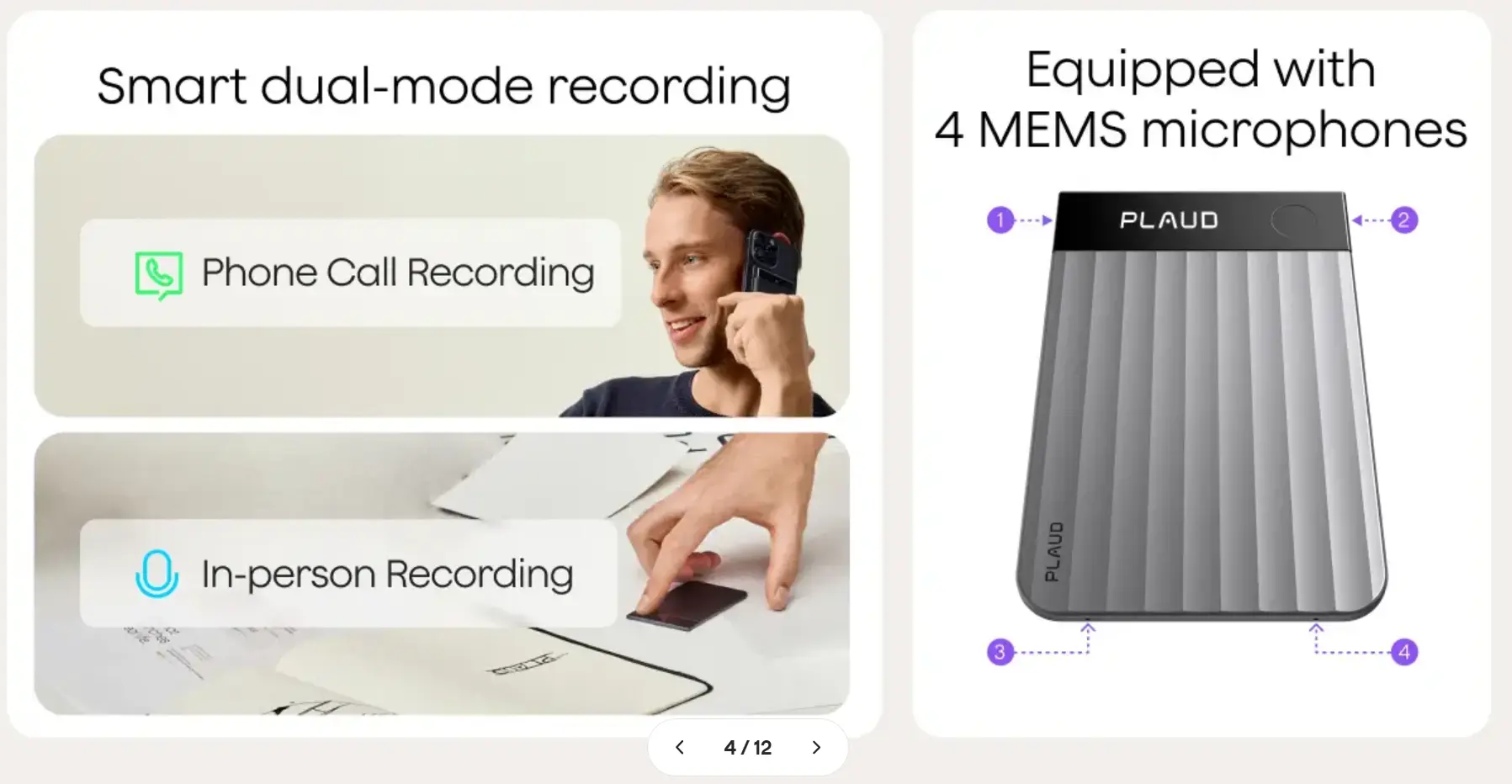
Launched at CES 2026, the NotePin S includes a clip, lanyard, wristband, and magnetic pin in the box — more wearing configurations than any comparable device. The upgrade over the original NotePin that matters most for clinical use is the tactile physical button: one firm press starts recording, and you can feel the confirmation click without looking at the device or your phone. During a session, that tactile certainty removes a small but real cognitive distraction.
 PLAUD AI recorder dual-mode recording with 4 MEMS microphones
The NotePin S records for up to 20 hours on a single charge and stores recordings on 64GB of local storage. Plaud holds SOC 2 Type II, HIPAA, GDPR, ISO 27001/27701, and EN 18031 certifications, offers a Business Associate Agreement, and does not use patient data for AI model training — a non-negotiable requirement for clinical use.
AI summaries are generated from 10,000+ professional templates, including therapy-specific formats such as SOAP notes and psychotherapy progress note structures. A "Press to Highlight" feature lets clinicians bookmark key moments in the transcript during a session, reducing post-session review time.
Where it falls short compared to Vibe Dot: The NotePin S operates at a session level — each recording generates its own transcript and summary. There is no cross-session memory layer that connects context across a client’s history. For clinicians managing ongoing caseloads where longitudinal pattern recognition matters, this is a meaningful gap. The NotePin S also uses four MEMS microphones without a bone-conduction element, which can affect voice separation in rooms with moderate background noise.
Who it’s for: Therapists who want maximum wearing flexibility and straightforward per-session note generation, without the need for cross-session memory.
Pricing: $179 device. Free plan includes 300 transcription minutes per month; paid AI Membership required for heavier use.
3. Muse S Athena — Best Biofeedback Wearable for Mindfulness-Based Therapy
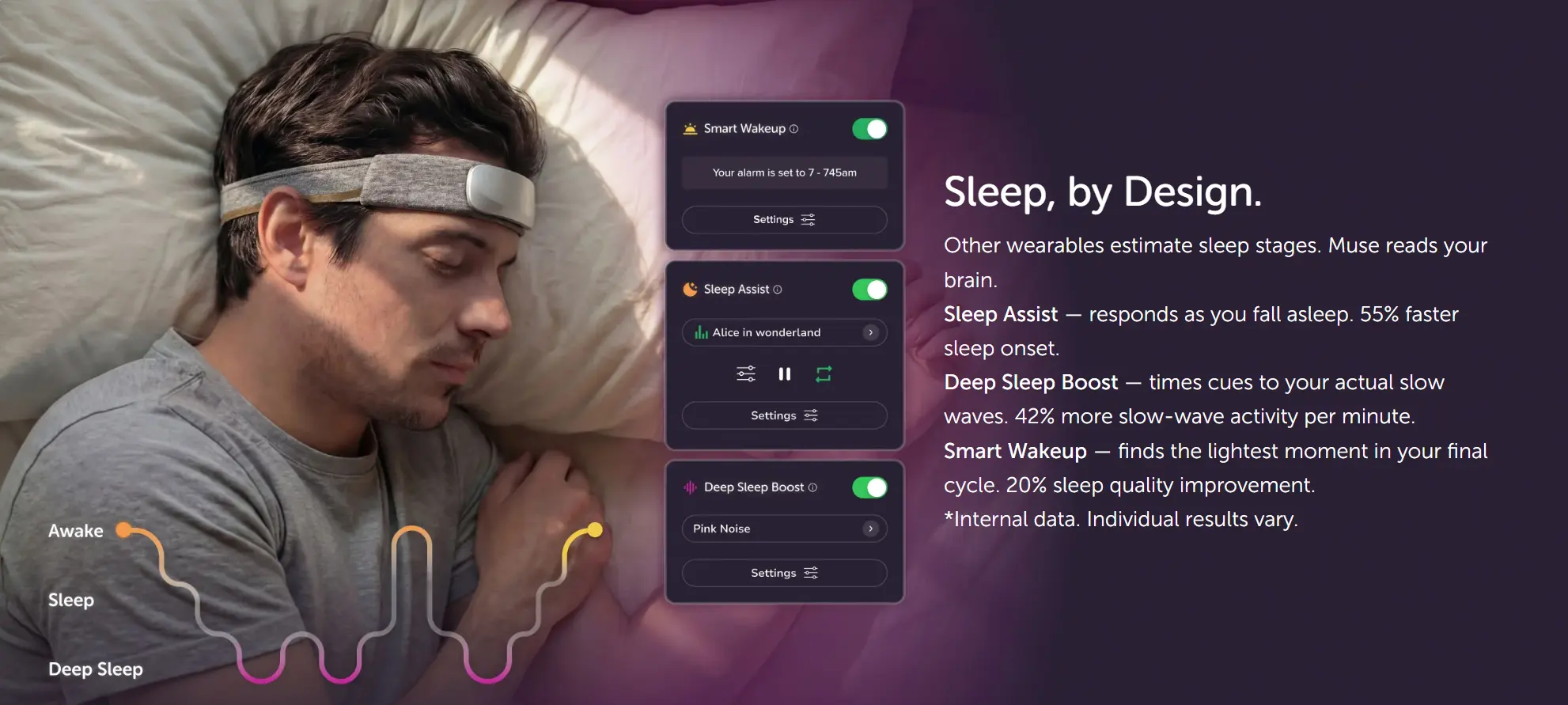
The Muse S Athena sits in a different product category from Vibe Dot and NotePin S. It does not record or transcribe sessions. Instead, it measures brainwave activity and physiological signals in real time and provides feedback that clients — or therapists — can use to develop mindfulness, manage anxiety, and improve sleep.
 Muse S sleep and brain-sensing headband with Sleep Assist and Deep Sleep Boost features
For therapists who practice mindfulness-based cognitive therapy (MBCT), acceptance and commitment therapy (ACT), or biofeedback-integrated approaches, the Muse S Athena is the most clinically studied consumer device in the category.
The technology stack
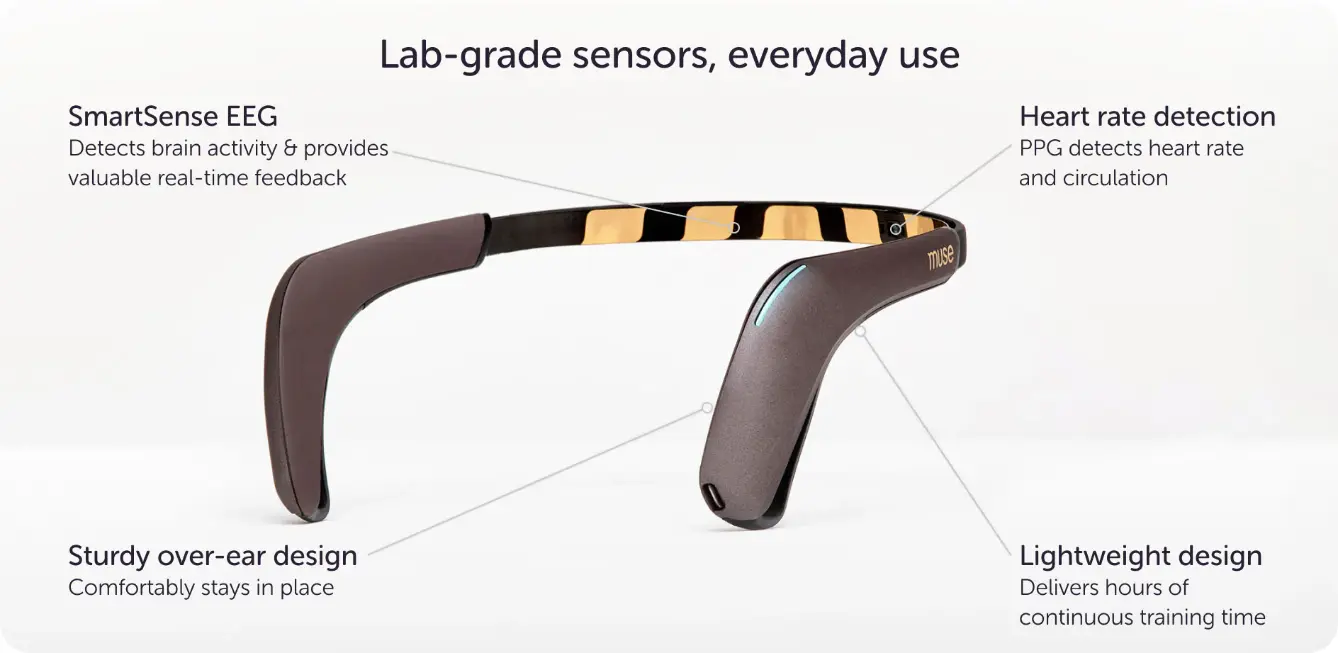
The Athena is the first consumer device to combine EEG and fNIRS — functional near-infrared spectroscopy — in a single wearable. Seven EEG sensors detect brainwave patterns across the frontal and temporal regions; PPG sensors measure heart rate; an accelerometer tracks breathing rhythms; and the fNIRS layer measures oxygen flow to the prefrontal cortex, providing a proxy for cognitive effort and mental load.
In practice, the device converts this data into real-time audio feedback: soundscapes that respond to the user’s mental state during meditation or therapeutic breathing exercises. When the mind is calm, the sounds are quiet and peaceful; when attention wanders or physiological stress increases, the feedback changes to prompt a return to focus.
Clinical research backing
The Muse device family is used in research at over 1,000 labs worldwide and backed by 200+ peer-reviewed studies, including research at NASA, Harvard, MIT, and Yale. A 2025 open-label clinical trial published in PMC had 45 Long COVID patients use Muse S daily for 90 days. Participants reported improvements in sleep, fatigue, mood, and cognitive function, with benefits observed even during a 90-day post-treatment observation period.
For OCD-specific applications, a registered clinical trial at ClinicalTrials.gov evaluated EEG biofeedback-guided mindfulness meditation using the Muse device as an adjunct treatment — an indication of the growing clinical interest in consumer biofeedback devices as therapy-adjacent tools.
Important caveats
The Muse S Athena is a wellness device, not a medical device. It is not HIPAA-certified, and its data is not intended for integration into clinical records. It works best as a between-session tool that clients use at home to practice skills developed in therapy, or as a real-time resource during sessions that incorporate mindfulness or biofeedback protocols. Clinicians should not position it as a diagnostic or treatment tool.
Who it’s for: Therapists using MBCT, ACT, mindfulness-based stress reduction (MBSR), or biofeedback protocols who want a research-backed device to assign as between-session homework or to use in session as a mindfulness aid.
Pricing: Starting at approximately $400; optional Premium subscription adds AI coaching, additional guided sessions, and deeper brain insights.
4. Muse 2 — Accessible Biofeedback for Everyday Therapeutic Support
The Muse 2 offers the core Muse experience — EEG-based brainwave tracking, real-time audio feedback, heart rate monitoring, and breathing guidance — at a lower entry price than the Athena.
 Muse EEG headband with SmartSense EEG, PPG heart rate detection, and lightweight over-ear design
It lacks the fNIRS technology of the Athena, which means it does not track cognitive effort at the same granularity. But for clients who are new to mindfulness practice or for practices that want to integrate biofeedback without a high device cost, the Muse 2 covers the most common clinical use cases: meditation training, anxiety self-monitoring, and sleep quality tracking.
The AI coach feature (Enso) translates EEG data into plain language recommendations and adapts weekly based on the client’s practice history — useful for therapists who want clients to receive personalized feedback between sessions without requiring clinical interpretation of raw data.
Who it’s for: Therapists looking for an affordable biofeedback-adjacent tool to recommend to clients practicing mindfulness between sessions. Not a replacement for clinical neurofeedback systems used in ADHD or trauma treatment.
Pricing: Starting at approximately $250.
How to Choose the Right AI Wearable for Your Practice
The right device depends on what problem you are actually trying to solve. The guidance below focuses on the clinical context specifically.
If your primary need is documentation: Start with a session-capture wearable. The case for Vibe Dot over competitors comes down to three things that matter specifically in clinical contexts — the 5-mic array with bone conduction for accurate multi-speaker transcription, the HIPAA/FERPA/NDAA compliance stack for regulated settings, and the cross-session Memory Graph for practitioners managing ongoing caseloads. If you primarily need per-session note generation at a slightly lower device cost, the Plaud NotePin S is the strongest alternative.
If your primary need is client support between sessions: A biofeedback wearable like the Muse S Athena or Muse 2 directly supports the therapeutic work — particularly for anxiety disorders, stress-related presentations, sleep difficulties, and mindfulness-based modalities. These devices are best positioned as client-facing tools, not clinical documentation tools.
Compliance is non-negotiable: Any device that captures audio of therapy sessions records protected health information under HIPAA. Verify that your chosen device offers a Business Associate Agreement and that its data handling practices (storage, retention, access control) align with your jurisdiction’s requirements. For a comprehensive overview of device types and compliance requirements across industries, see our listening devices guide.
California’s CPRA and Washington’s My Health My Data Act impose consent requirements that go beyond federal HIPAA minimums — check local law before deploying any recording device in clinical settings.
Informed consent: Recording a therapy session without client consent is an ethical violation in virtually every clinical framework and a legal violation in many states. The American Psychological Association’s Ethics Code (Section 4.02) requires that psychologists obtain informed consent for recording. Establish a clear consent protocol, document it in writing, and ensure the recording indicator on your device is visible when sessions begin. For a full breakdown of state-by-state recording laws, see our one-party and two-party consent state guide.
The Bottom Line
AI wearable devices are not replacing therapists — they are removing the administrative friction that gets in the way of good clinical work. The best AI wearable for your therapy practice depends on where that friction is greatest.
For documentation-heavy practices, Vibe Dot’s combination of professional microphone hardware, verified HIPAA compliance, and cross-session Memory Graph makes it the most complete clinical wearable in the category. It is the one device that grows more valuable the longer you use it, because every session adds to a searchable, longitudinal record that can support treatment planning, supervision, and continuity of care.
For practices integrating mindfulness-based approaches, the Muse S Athena brings research-grade EEG and fNIRS technology into a device clients can use at home — extending the therapeutic work beyond the 50-minute session.
The documentation burden is real, and the tools to address it are mature enough to trust. The right wearable, deployed with appropriate consent and compliance practices, gives you your attention back — and that is what your clients came for.
FAQs
Are AI wearable recorders legal to use in therapy sessions?
Yes, with the appropriate consent framework in place. Most jurisdictions require that clients be informed that sessions are being recorded and that they provide explicit consent before recording begins. Laws vary by state — some require all-party consent, others require only one-party consent. The therapist remains the legal author and must review every AI-generated note before sign-off. Consult your state licensing board and a healthcare attorney if you are uncertain about your specific jurisdiction. See our full state-by-state recording consent guide for details.
Which AI wearable for therapy has the best HIPAA compliance?
Both Vibe Dot and Plaud NotePin S carry HIPAA certifications and offer Business Associate Agreements — both minimum requirements for clinical use. Vibe Dot additionally holds FERPA and NDAA certifications, making it the stronger choice for school-based counseling and federally funded programs. Neither Muse device is HIPAA-certified; they are designed as wellness tools, not clinical documentation systems.
Can AI wearables replace therapy notes?
No. AI-generated transcripts and summaries are drafts that require clinician review, editing, and sign-off before they become part of the clinical record. The clinician remains the legal author of every note. Most practicing therapists report that AI drafts are most useful as a structural scaffold — ensuring all required elements are present — rather than as a final document. Clinical interpretation, nuance, and professional judgment remain the therapist’s responsibility.
How accurate is AI transcription in therapy sessions?
Accuracy varies by environment and device. A 2025 systematic review in BMC Medical Informatics and Decision Making found AI speech recognition word error rates ranging from 8.7% in controlled single-speaker dictation to above 50% in noisy multi-speaker settings. Wearable recorders with higher-quality microphone arrays — particularly those using bone-conduction mics — perform better in real-world conversational settings. Always review transcripts before finalizing notes.
What is the difference between a session-capture wearable and a biofeedback wearable for therapy?
Session-capture wearables (Vibe Dot, Plaud NotePin S) record audio and generate clinical documentation. They reduce documentation burden and support longitudinal record-keeping. Biofeedback wearables (Muse S Athena, Muse 2) measure physiological signals like brainwaves and heart rate and provide real-time feedback to support mindfulness and self-regulation. They are client-facing therapeutic tools, not documentation tools. Many practices benefit from both categories serving different roles.
Can clients use AI wearables between therapy sessions?
Yes — biofeedback devices like the Muse 2 are designed precisely for this use case. Assigning structured mindfulness practice with a biofeedback device gives clients a between-session skill-building tool and provides data that therapists can review. Session-capture wearables are generally not appropriate for unsupervised client use, as recording outside clinical supervision raises consent and legal questions.