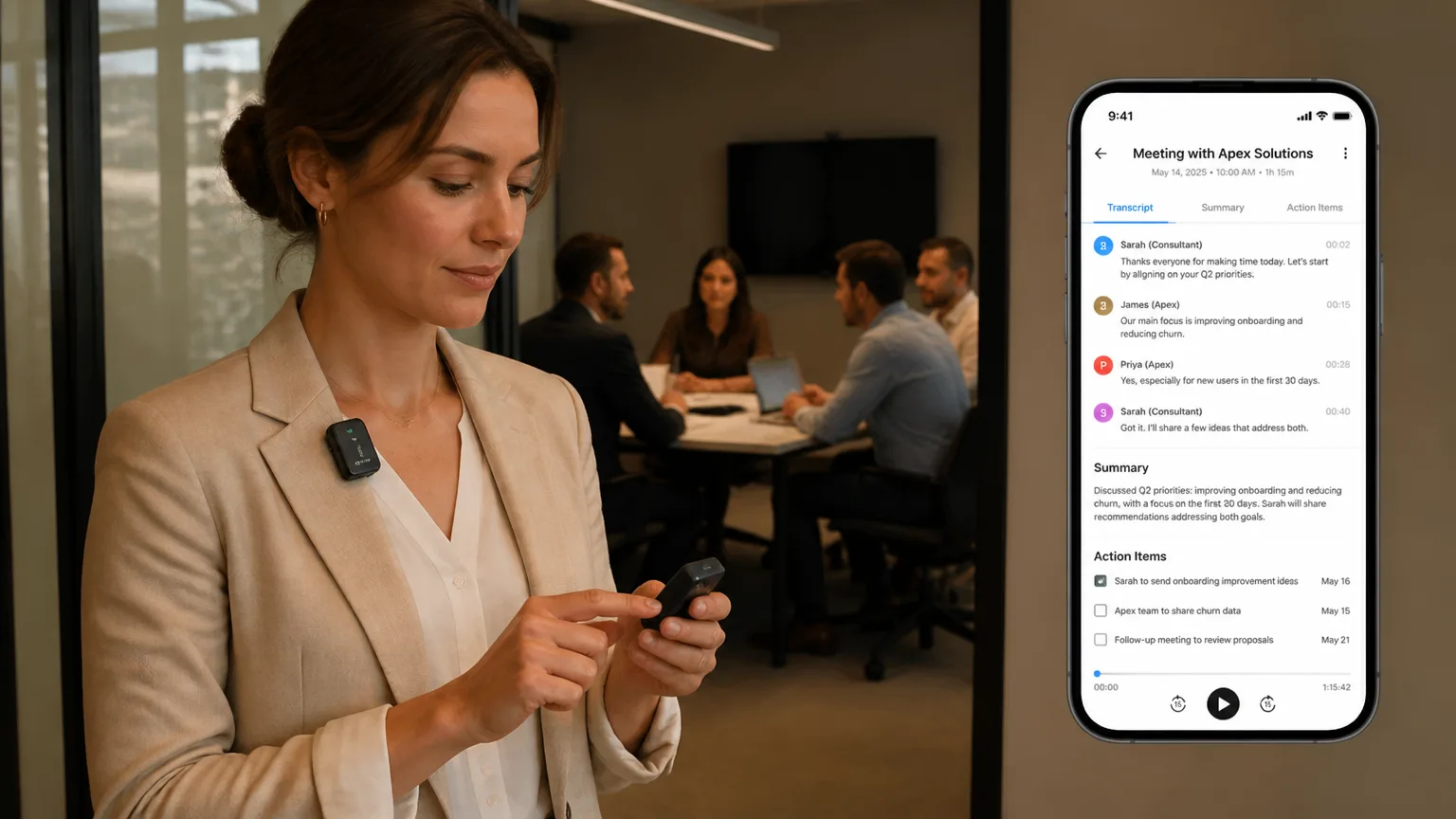

A client meeting ends. The commitment, $47,000 over six months, landed somewhere around minute 23. The follow-up detail, the conditional clause, the exact phrasing: all lost in the 47-minute audio file now sitting on a dictaphone.
The device worked perfectly. The audio is there. The problem is what happens next: nothing.
Memory research going back to Ebbinghaus’s forgetting curve shows the human brain retains only about 10–20% of information after one week without structured review. Applied to meetings, that retention gap is a documentation problem: knowledge workers spend 15–17 hours per week in meetings, per Microsoft Work Trend Index 2025, yet most devices capture audio and stop there.
The choice between a dictaphone and an AI recorder is not really about audio quality. It is about whether the device treats a recording as a finished product or as raw material.
This guide covers both hardware AI recorders and software note-takers, with decision criteria for choosing between them.
What a Dictaphone Does, and Where It Stops
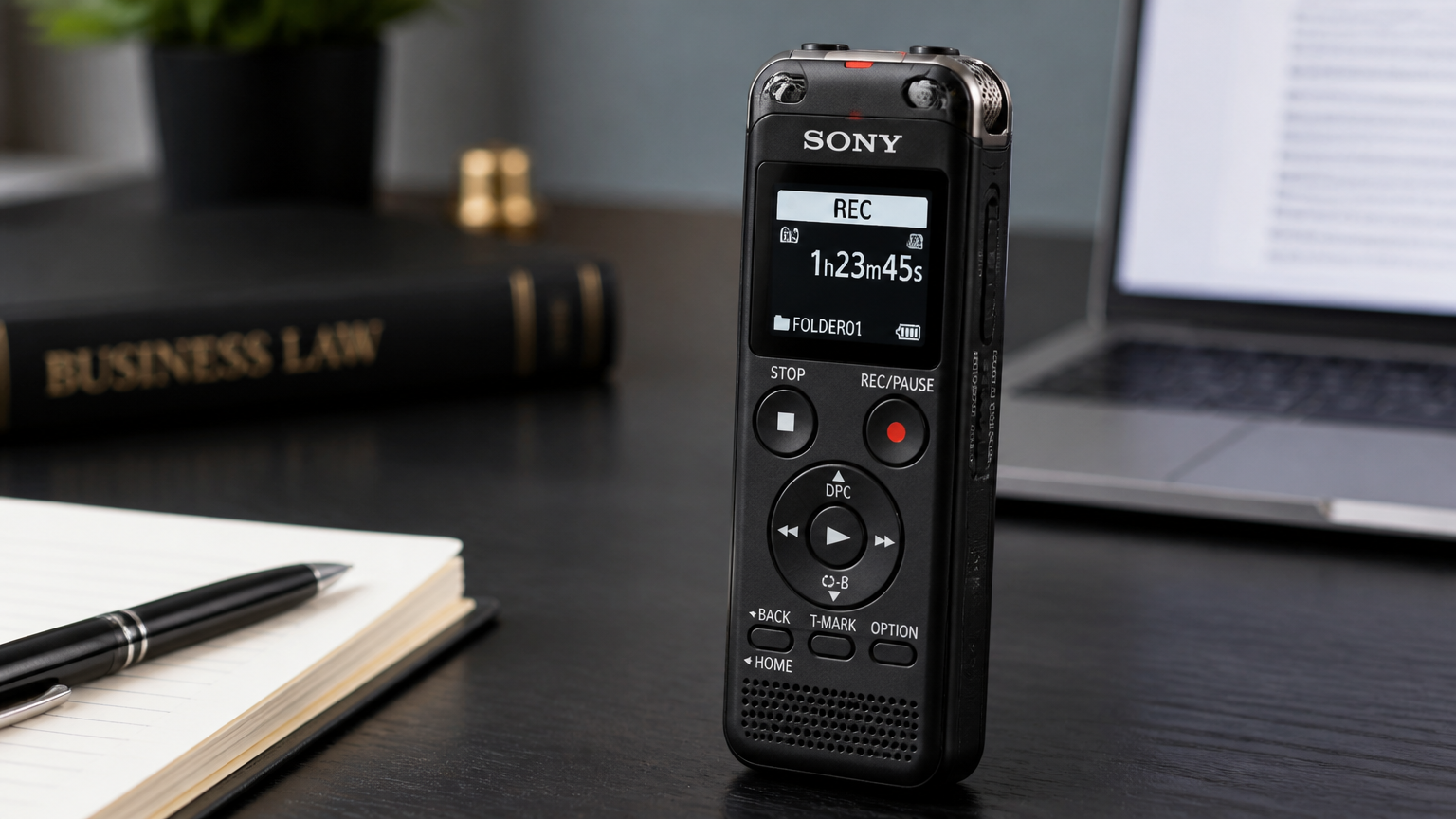 A traditional Sony or Olympus digital voice recorder on a professional desk, handheld form factor with physical buttons
A dictaphone is a compact audio recorder built for one purpose: capture sound. Devices like the Olympus WS-882 and Sony ICD series defined the category for decades, offering long battery life, simple physical controls, and reliable audio quality.
The output is an audio file (WAV, MP3, or a proprietary format) saved to internal storage or a removable card. That is where the device stops. There is no automatic transcription, no summary generation, no search across past recordings. The user must listen back, scrub through audio, and manually type notes or send the file to a transcription service.
Manual transcription is slow. Verbit’s 2026 transcription guide reports that human transcription takes 4–6 hours per hour of audio. By contrast, AI systems complete the same task in 12–20 minutes. That 15-to-20x time difference is the core reason knowledge workers are reconsidering their recording tools.
For users who only need playback and do not require written output, a traditional dictaphone remains a valid tool. The device captures audio accurately. Entry-level models cost $50–120 and carry no subscription fees. The ceiling, however, is the audio file itself.
What an AI Recorder Does Differently
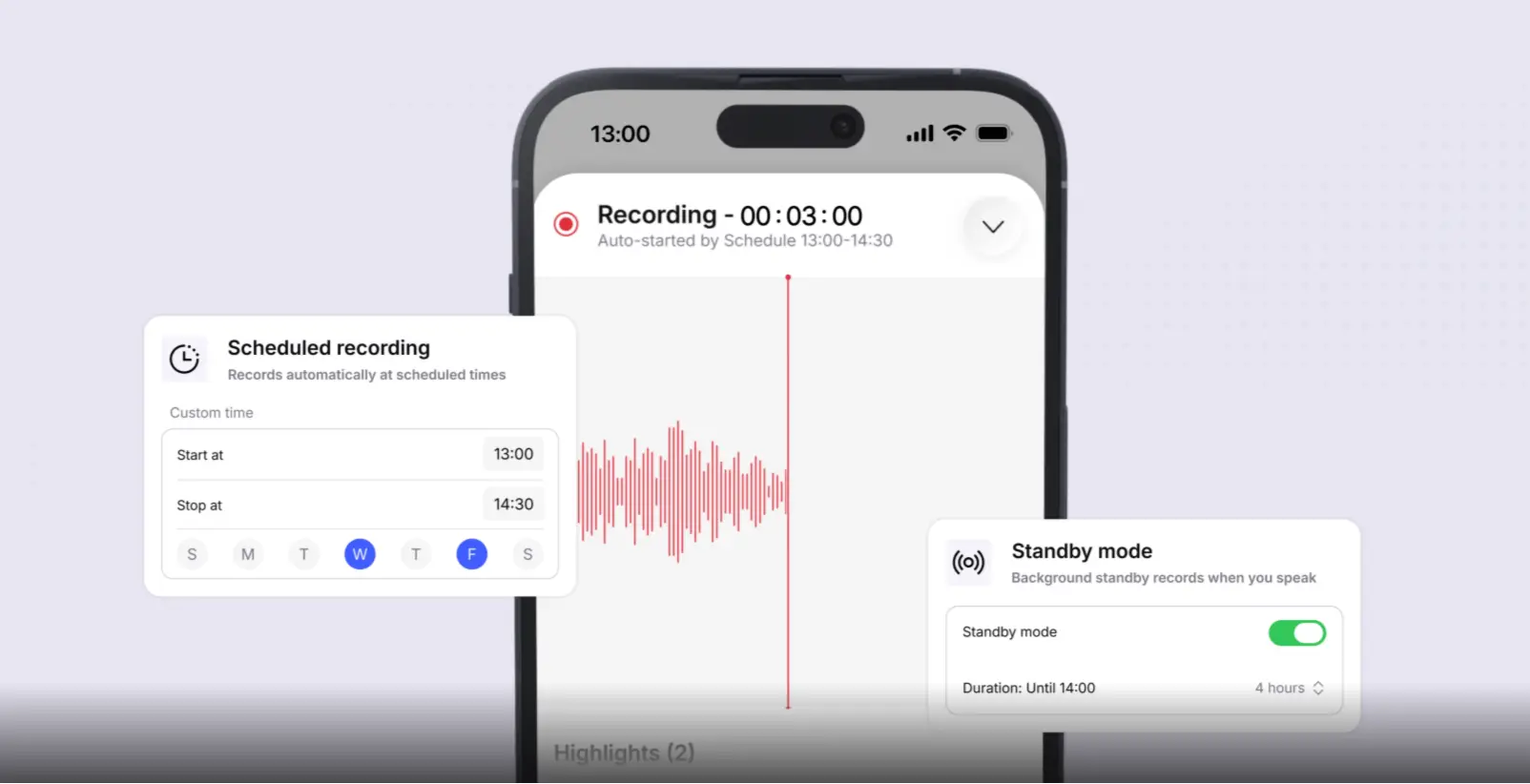
An AI recorder adds a processing layer above audio capture. The term is sometimes used interchangeably with "AI note-taker": software tools like Otter.ai and Fireflies.ai are AI note-takers that process audio through a phone or computer, while dedicated hardware devices like Vibe Dot are AI recorders with built-in microphone arrays and onboard storage. Both categories produce transcripts, summaries, and action items. The hardware distinction matters for battery, audio quality, and compliance. The accuracy range reaches 90–96% for clear audio, according to AssemblyAI, 2026, with top models achieving word error rates around 7.7%.
By 2026, 75% of professionals report using an AI note-taker in work meetings, per Laxis’s State of Meeting Note-Taking 2026. Moreover, AI adoption in professional services nearly doubled in a single year, rising from 22% in 2025 to 40% in 2026, according to the Thomson Reuters Institute, 2026.
AI recorders come in two hardware form factors: clip-on wearables (designed to attach to a lapel or collar) and card-style devices (slim enough to slip into a pocket). Software-only services like Otter.ai ($8.33–30/seat/month) and Fireflies.ai ($10–39/seat/month) offer similar AI processing but rely on a phone or computer microphone rather than dedicated recording hardware. For a broader look at how these tools fit into professional workflows, see AI productivity tools for modern teams.
The practical difference is how the device treats the recording after capture ends. A dictaphone hands you an audio file. An AI recorder hands you organized information.
Dictaphone vs AI Recorder: Head-to-Head Comparison
The digital voice recorder market reached $1.94 billion in 2025, projected to reach $3.18 billion by 2030 at a 10.3% compound annual growth rate, according to The Business Research Company. Both traditional recorders and AI recorders sit inside this market. However, they serve different workflows.
|
Feature |
Traditional Dictaphone |
Plaud Note Pro |
Soundcore Work |
Vibe Dot |
Otter.ai (Software) |
|---|---|---|---|---|---|
|
Hardware cost |
$50–120 |
$189 |
$159 |
$199 |
$0 |
|
Battery (continuous recording) |
30–50+ hrs |
30+ hrs |
8 hrs |
30+ hrs |
N/A (uses phone) |
|
Onboard storage |
4–8GB typical |
64GB |
8GB |
64GB |
Cloud-based |
|
AI transcription |
No (manual only) |
Yes (subscription) |
Yes (subscription) |
Yes (300 min/mo free) |
Yes (included) |
|
Summaries & action items |
No |
Yes |
Yes |
Yes |
Yes |
|
SOC 2 compliant |
Varies |
Yes |
Yes |
Yes |
Yes |
|
HIPAA compliant |
Rarely |
Yes |
Yes |
Yes |
Yes |
|
NDAA compliant |
Rarely |
No |
No |
Yes |
No |
|
2-year TCO (typical) |
$50–120 |
$429 ($189 + $240 sub) |
$554 ($170 + $384 sub) |
$199 (free tier) or $419+ |
$200–720 (sub only) |
The upgrade question is not "which device records better." Both capture audio reliably. Rather, the real question is what happens after recording stops. Traditional dictaphones output an audio file. AI recorders output organized meaning.
Battery life varies significantly across AI hardware. Vibe Dot offers 30+ hours of continuous recording, matching traditional dictaphones. Soundcore Work, however, caps at 8 hours per charge, limiting all-day field use. Meanwhile, software-only options depend on phone battery, which competes with other apps.
Total cost of ownership depends on transcription volume. For occasional recording, hardware devices with free transcription tiers may cost less over two years than a standalone software subscription. Vibe Dot, for example, includes 300 minutes per month at no extra charge. For high-volume transcription, subscription costs become the dominant factor.
Which Type Should You Choose?
The right choice depends on what happens after the recording ends.
Dictation-only user. For workflows built around recording for playback and manual transcription, or sending files to a third-party service, a traditional digital recorder remains a sound choice. The U.S. transcription market reached $30.42 billion in 2024, projected to hit $41.93 billion by 2030 at 5.2% annual growth, per Grand View Research. Many professionals already have a transcription workflow, no need for an AI device to change it. A $50–120 recorder with no subscription is the rational fit.
Meeting-capture professional. If the workflow involves off-calendar client conversations, site visits, or workshops where a laptop on the table signals the wrong tone, an AI recorder with onboard storage is the practical upgrade. For a client-facing professional, the consequence is more immediate: the follow-up email drafted from memory, the commitment misremembered, the action item that never reached the right person. The device captures the conversation and produces structured output automatically: who said what, what was decided, what actions follow.
Regulated-industry buyer. Healthcare, legal, and government environments require compliance certification before a device enters the procurement pipeline. The certifications that matter: HIPAA for healthcare, SOC 2 for enterprise security, NDAA for government and defense work. The medical transcription services market reached $58.3 billion in 2025, projected to hit $106.4 billion by 2035, per Fact.MR. In these verticals, compliance is not optional, it is the gating requirement.
Vibe Dot is the only AI recorder in the category carrying NDAA compliance. That certification eliminates most Chinese-manufactured competitors for US government and defense-adjacent work at the procurement stage.
For a deeper look at wearable form factors and how they fit different workflows, see the 10 Best Wearable AI Recorders of 2026.
What to Look for in a Compliance-Ready AI Recorder
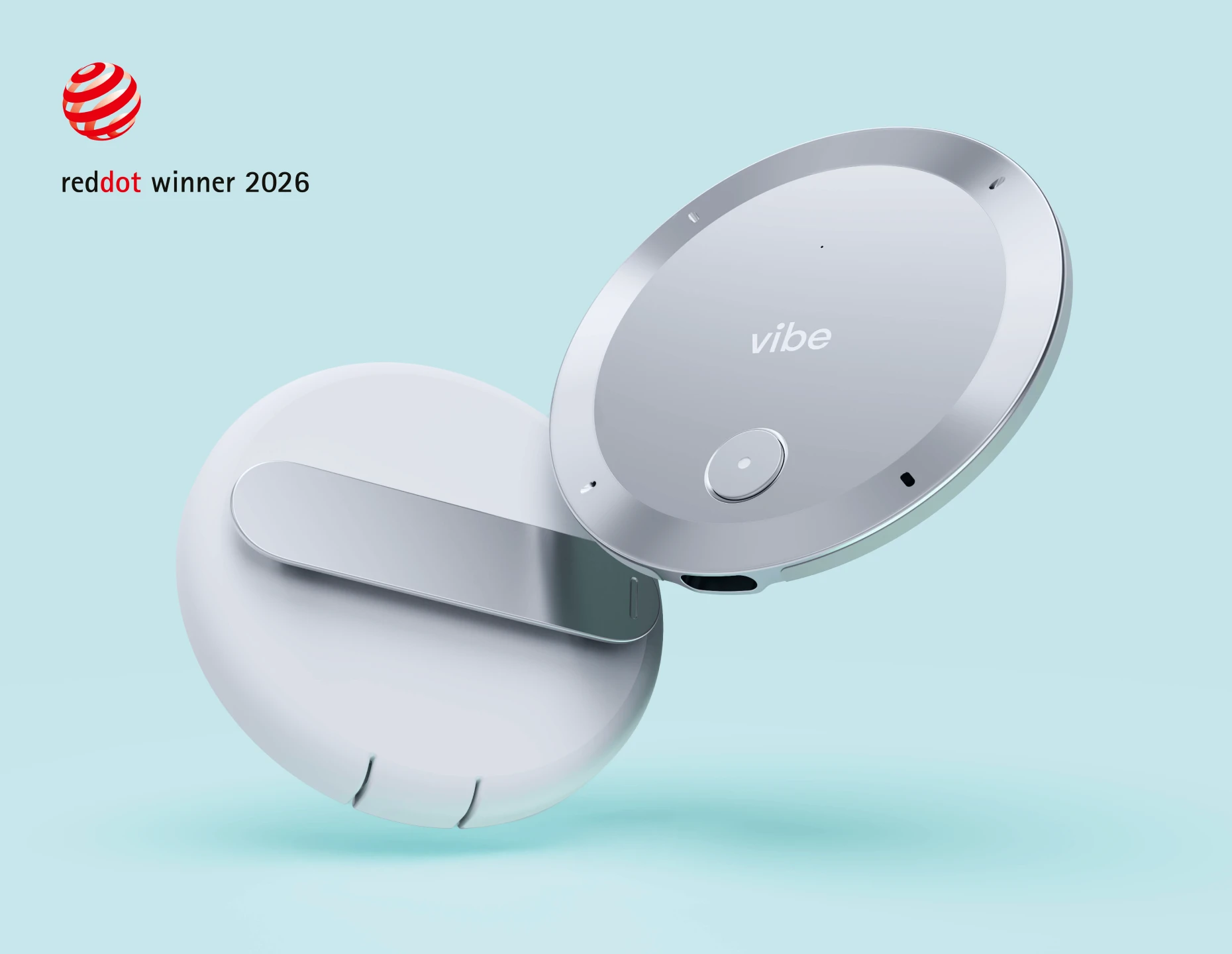
Vibe Dot is designed for conversations that happen off the calendar: client meetings, site visits, workshops, and spontaneous discussions. The hardware weighs 0.83 ounces and measures 0.17 inches thick.
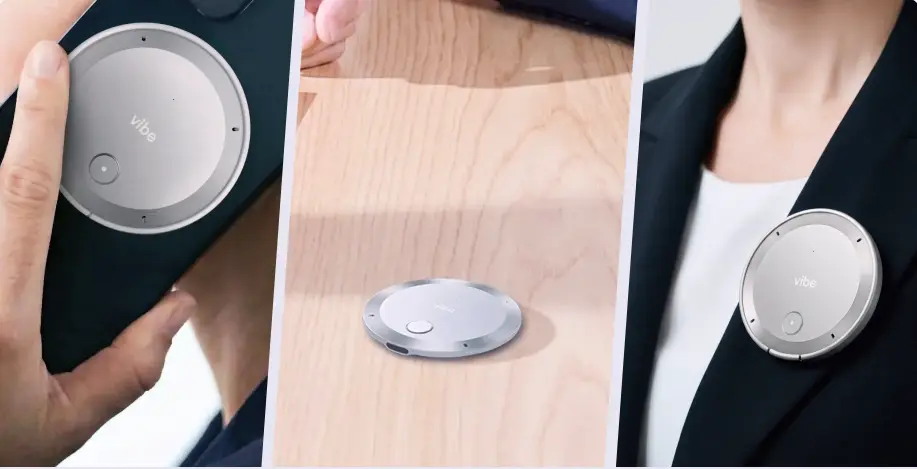 Vibe Dot AI meeting recorder shown handheld, flat on a desk, and clipped to a jacket lapel
A 5-microphone array (4 MEMS plus 1 VPU) captures clear audio in varied environments. Battery life is 30+ hours of continuous recording. Onboard storage is 64GB, enough for days of recordings without syncing.
The compliance stack is the widest in the category: SOC 2, HIPAA, NDAA, FERPA, and TPM 2.0 hardware encryption. NDAA eligibility matters for US government procurement and defense-adjacent work. It removes most Chinese-manufactured hardware from consideration. FERPA applies to educational settings. TPM 2.0 prevents physical data extraction if the device is lost or stolen.
Pricing starts at $199 with 300 minutes of AI transcription per month included. Additional transcription and advanced AI features require a Vibe AI subscription ($9–29 per seat per month). Users with high transcription volume should factor that cost into total ownership.
For dictation-only users, a traditional recorder at $100 to $200 with zero subscription cost may be the rational choice. Forcing an AI subscription on a workflow that does not need summaries adds cost without value.
For a feature-by-feature comparison with the Plaud Note Pro, see the following guide.
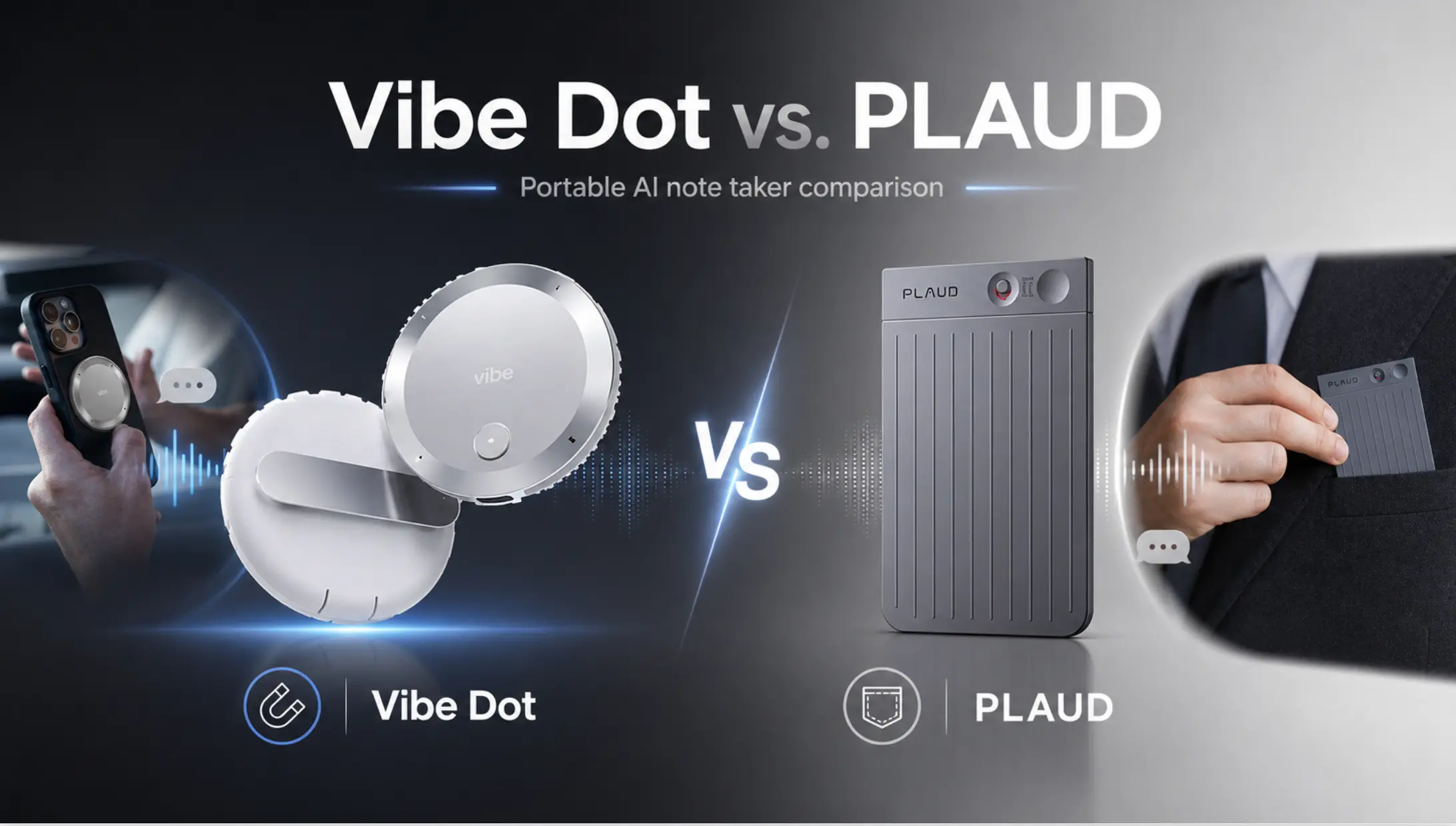
For a broader comparison of all wearable AI recorders in the category, see the full guide.
For specifications and current pricing, see the product page directly.
Conclusion
The choice between a dictaphone and an AI recorder comes down to one question: what happens after the recording stops? A traditional dictaphone captures audio reliably and costs $50–120 with no subscription. For dictation-only workflows, it remains a practical tool. An AI recorder adds transcription, summaries, and action items, turning raw audio into organized output. For meeting-capture and compliance-sensitive work, that processing layer is the upgrade. Vibe Dot offers the broadest compliance coverage in the category (SOC 2, HIPAA, NDAA, FERPA, TPM 2.0) at $199 with 300 minutes of transcription per month included.
For pure dictation, a traditional recorder is still the right choice. For meetings and compliance-sensitive work, the AI recorder is the next step.
FAQs
Is a dictaphone still worth buying in 2026?
Yes, for workflows that require only audio capture and playback. A traditional dictaphone costs $50–120, offers 30–50+ hours of battery life, and carries no subscription fees. If the user transcribes manually or sends files to an external service, there is no need to pay for AI features that won’t be used. The U.S. transcription market reached $30.42 billion in 2024 and continues to grow, per Grand View Research. This indicates that many professionals still operate this way.
What is the best AI replacement for a dictaphone?
The best AI recorder depends on the workflow. Vibe Dot ($199) offers the widest compliance coverage (SOC 2, HIPAA, NDAA, FERPA) and 30+ hours of battery. This makes it suitable for regulated industries and government work. Plaud Note Pro ($189) and Soundcore Work ($159) are alternatives with different form factors and subscription structures. Software-only options like Otter.ai and Fireflies.ai work well when phone recording is acceptable. Industry surveys suggest a majority of knowledge workers now use some form of AI note-taking in meetings.
Do AI recorders work without internet?
Most AI recorders can capture audio offline. However, transcription and summary generation require cloud processing after the recording syncs. Devices like Vibe Dot and Plaud Note Pro store up to 64GB locally, allowing days of recording without connectivity. The AI features activate once the device connects to the companion app and uploads the audio. This differs from software-only services like Otter.ai, which require live internet for real-time transcription.
How accurate is AI transcription compared to manual?
AI transcription accuracy reaches 90–96% for clear audio, with top models achieving around 7.7% word error rate, per AssemblyAI, 2026. Human transcription typically achieves 99%+ accuracy but takes 4–6 hours per audio hour. AI completes the task in 12–20 minutes, per Verbit. For most business meetings, AI accuracy is sufficient. For legal depositions or medical records, human review may still be required.
Which AI recorders are HIPAA compliant?
Four AI recorder devices publicly claim HIPAA compliance as of 2026: Vibe Dot, Plaud Note Pro, Soundcore Work, and Omi. Software services like Otter.ai and Fireflies.ai also offer HIPAA-compliant plans at higher tiers. Only Vibe Dot additionally holds NDAA compliance for US government and defense procurement. Healthcare buyers should verify the Business Associate Agreement (BAA) with any vendor before processing protected health information.