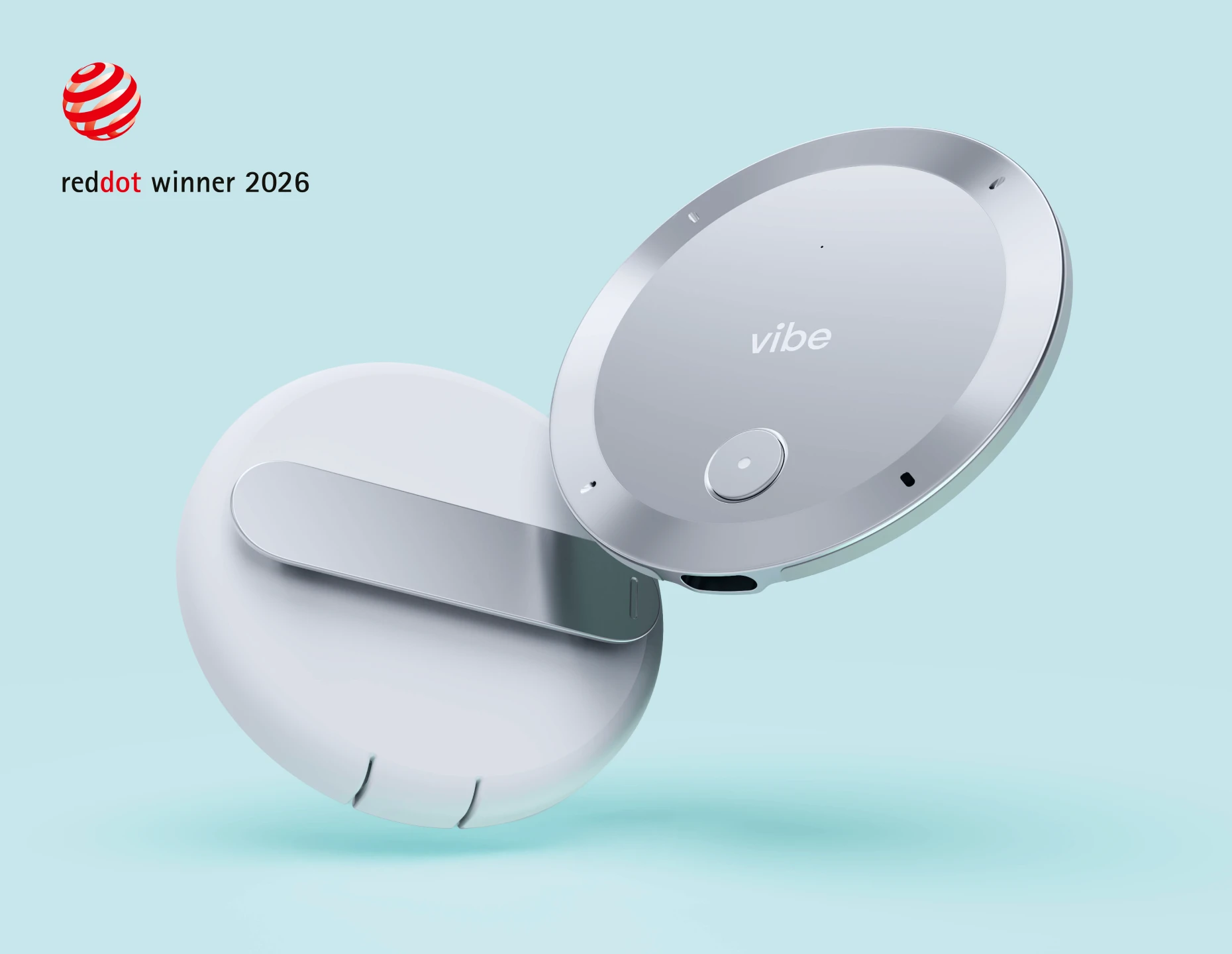

Both the Vibe Dot and the Soundcore Work promise to capture your in-person conversations and turn them into structured notes — no typing required. They’re both wearable, they both clip onto your clothing, and they both use AI to generate summaries and action items.
But they’re built for different users, and the differences matter more than the surface specs suggest.
This article gives you an honest, side-by-side comparison: hardware, AI features, privacy and compliance, pricing, and who each device actually suits best.
Quick Comparison: Vibe Dot vs. Soundcore Work
|
Vibe Dot |
Soundcore Work | |
|---|---|---|
|
Price |
$199 |
$159.99 |
|
Microphones |
5 (4 MEMS air + 1 bone-conduction) |
2 |
|
Capture range |
16 ft |
Not published |
|
Battery life |
30+ hours |
8 hours (32 hours with case) |
|
Onboard storage |
64 GB |
8 GB |
|
Wear modes |
MagSafe, clip, desk |
Clip, necklace, phone magnetic ring |
|
AI layer |
Vibe AI Memory Graph (cross-session) |
Session-scoped summarization (GPT-4.1) |
|
Offline recording |
Yes — stores locally, syncs via Bluetooth |
Yes — stores locally on device |
|
Compliance |
SOC 2, HIPAA, FERPA, NDAA |
SOC 2 Type I, NIST IR 8425, EN 18031 |
|
Subscription (base) |
Free Starter tier |
300 min/month free |
|
Subscription (paid) |
$9/mo (Pro, billed annually) |
$15.99/mo or $99.99/yr (Pro) |
|
Platform |
iOS + Android |
iOS + Android |
|
Design awards |
Red Dot Award 2026 |
— |
Hardware and Audio Quality
Soundcore Work: Small, Simple, Effective
Anker’s Soundcore Work is genuinely impressive hardware for its size. At just 10 grams — roughly the diameter of a coin — it’s one of the smallest wearable AI recorders on the market. You can clip it to a collar, wear it as a necklace, or attach it to your phone via a magnetic ring.
The dual-microphone setup, combined with AI noise reduction, handles most professional meeting environments well. Reviewers at How-To Geek and Cult of Mac have noted solid transcription accuracy in controlled settings, and SoundGuys reports Anker claims up to 97% transcription accuracy.
Battery life is 8 hours of continuous recording on a single charge, extending to 32 hours total with the included charging case — and the device continues recording while docked in the case, which is a practical design decision for all-day wear.
Vibe Dot: Built for Harder Environments
Vibe Dot takes a different approach to audio. Its five-microphone array — four high-fidelity MEMS air microphones plus a bone-conduction vibration sensor — is designed for environments where two microphones struggle: open-plan offices, busy cafés, larger conference rooms, and group conversations at a distance.
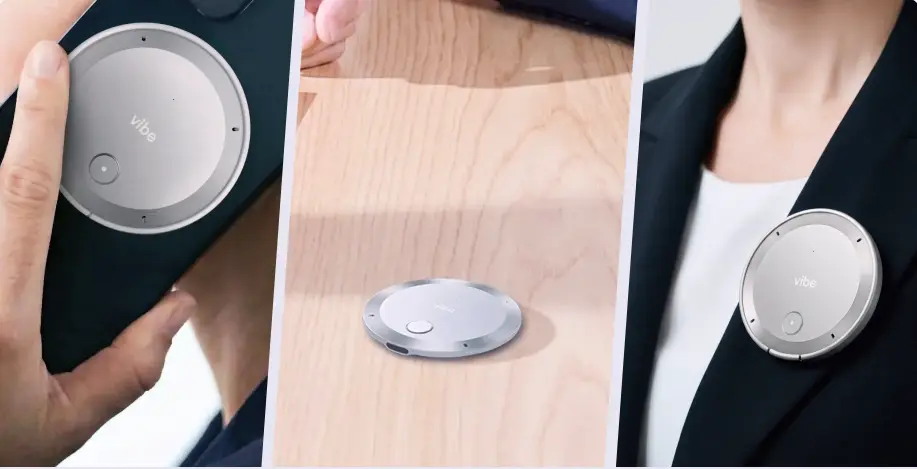 Vibe Dot AI recorder shown in three usage modes: held in hand, placed on a desk, and clipped to a jacket lapel
The bone-conduction microphone isolates your voice from ambient noise by sensing vibration directly, rather than relying on audio filtering alone. The array covers a 16-foot capture range, which means Vibe Dot can handle a full boardroom table, not just a one-on-one conversation across a desk.
Battery life is 30+ hours of continuous recording on a single charge — no case required to get through a full workday and beyond. With 64 GB of onboard storage (versus 8 GB on the Soundcore Work), you can record for days before needing to offload anything.
Bottom line on hardware: Soundcore Work is excellent for most professionals in typical meeting environments. Vibe Dot is the better choice for noisy environments, multi-speaker rooms, or anyone who needs their device to last more than one workday without recharging.
AI Intelligence: Session vs. Memory
This is where the two devices separate most clearly — and it’s the comparison that matters most for how useful each device actually is over time.
Soundcore Work: Smart Summaries, Session by Session
Soundcore Work’s AI layer, powered by GPT-4.1, is capable and well-executed. It transcribes your recording, identifies speakers, generates structured summaries with key points and action items, and even lets you export to PDF. AndroidHeadlines noted that a 44-minute recording produced a 12-page summary — detailed, not superficial.
What it doesn’t do is connect the dots between recordings. Each session is self-contained. The Soundcore Work won’t help you answer questions like "What did the client say about their budget concerns across our last four meetings?" because it has no persistent memory layer. It’s a very good session-level note taker.
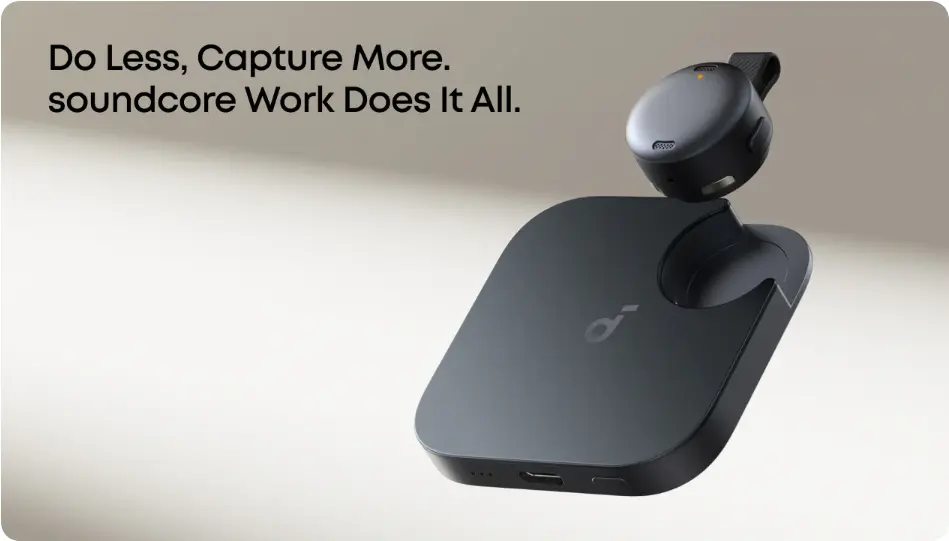 Soundcore Work AI recorder with clip attachment resting on its charging base
Vibe Dot: Persistent Memory Across Conversations
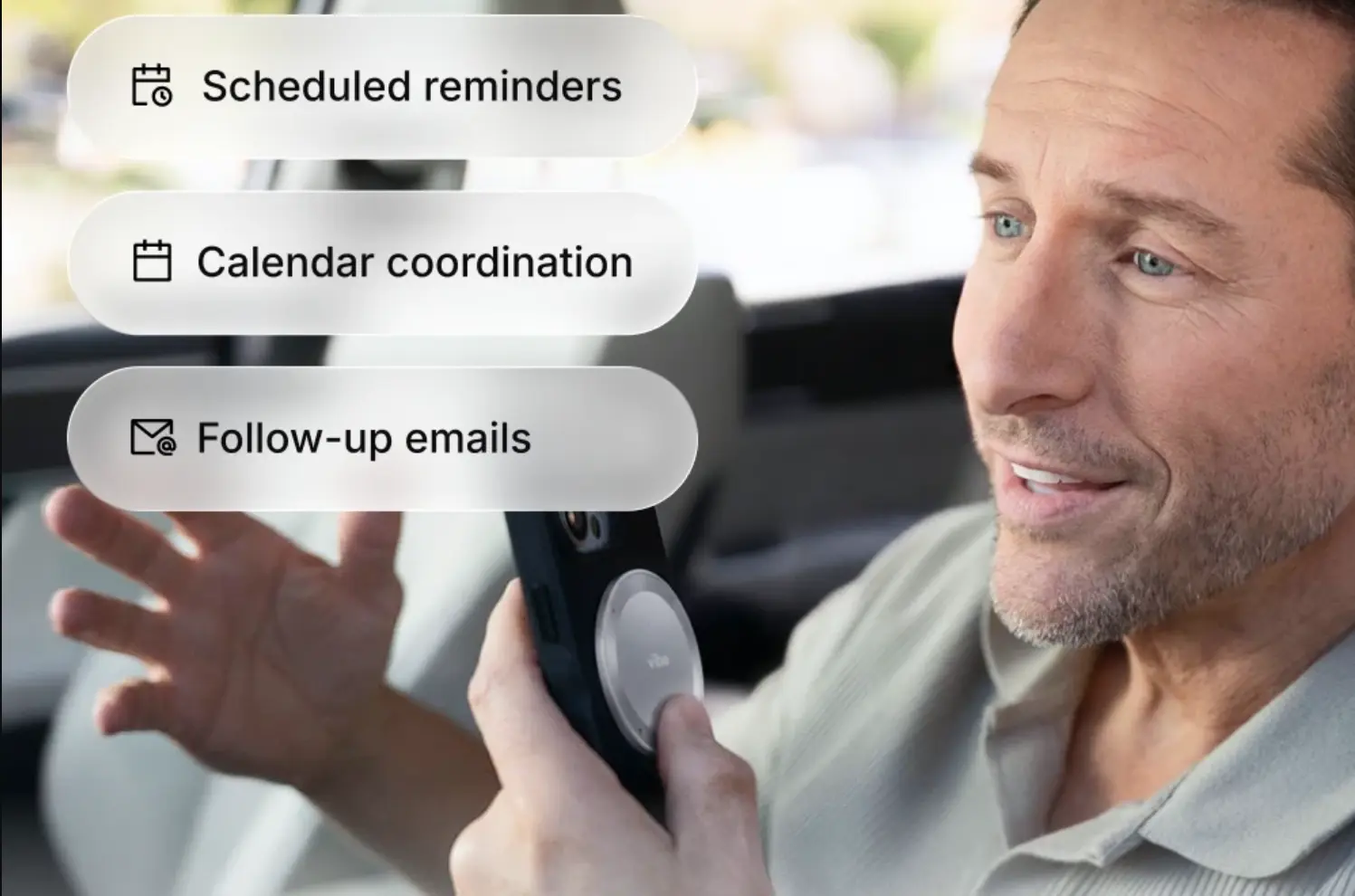
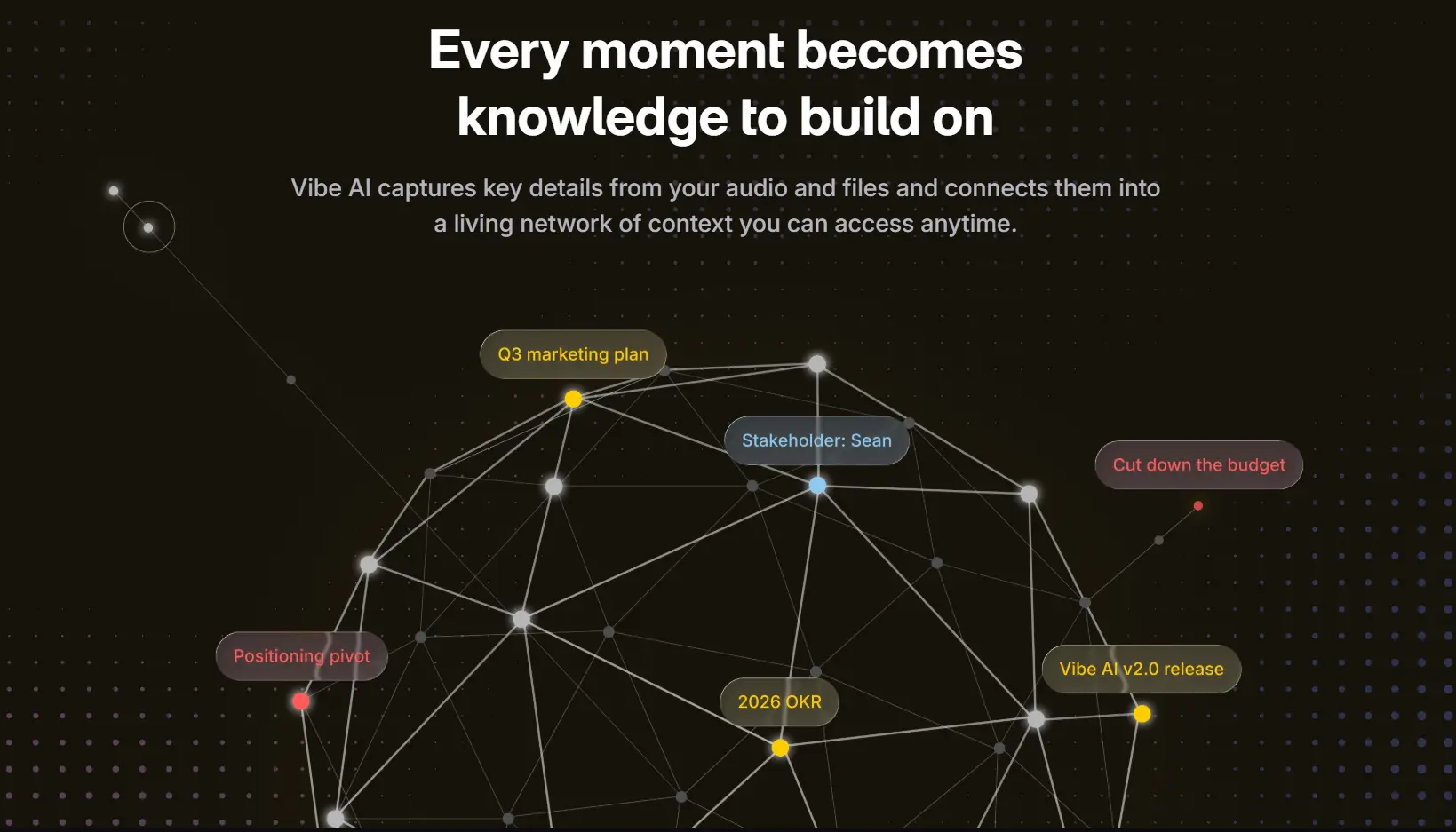
Vibe Dot is built around Vibe AI’s Memory Graph — a cross-session intelligence layer that treats every recording not as an isolated file, but as a node in an expanding map of your conversations, decisions, and relationships.
Every meeting you record with Vibe Dot feeds into the same workspace. Over time, you can search across weeks or months of context, ask follow-up questions that span multiple sessions, and surface decisions or commitments that would otherwise get buried in a folder of old recordings.
For professionals whose work is relationship-driven — sales, consulting, legal, healthcare, executive leadership — the Memory Graph changes what a wearable recorder is actually useful for. It’s not just recall. It’s institutional memory.
Bottom line on AI: Soundcore Work gives you excellent per-session intelligence. Vibe Dot gives you that plus cross-session memory that compounds in value the longer you use it.
Privacy and Compliance
Both devices take security seriously, but they’re certified for different requirements.
Soundcore Work
Soundcore Work uses AES-256 encryption at rest and TLS 1.3 in transit. By default, audio is processed temporarily in the cloud for transcription and deleted immediately upon delivery to your device. The Soundcore app is SOC 2 Type I certified, and the device is designed in alignment with NIST IR 8425 and EN 18031 standards — solid consumer-grade and SMB security.
Vibe Dot
Vibe Dot carries a more complete enterprise compliance stack:
-
SOC 2 — enterprise-grade security controls
-
HIPAA — required for healthcare environments and patient-adjacent conversations
-
FERPA — required for K-12 schools, universities, and any organization handling student education records
-
NDAA — eligible for US government procurement, which excludes devices manufactured in certain countries
-
FIPS 140-3 certified hardware encryption chip + TPM 2.0 secure enclave — hardware-level protection against physical tampering
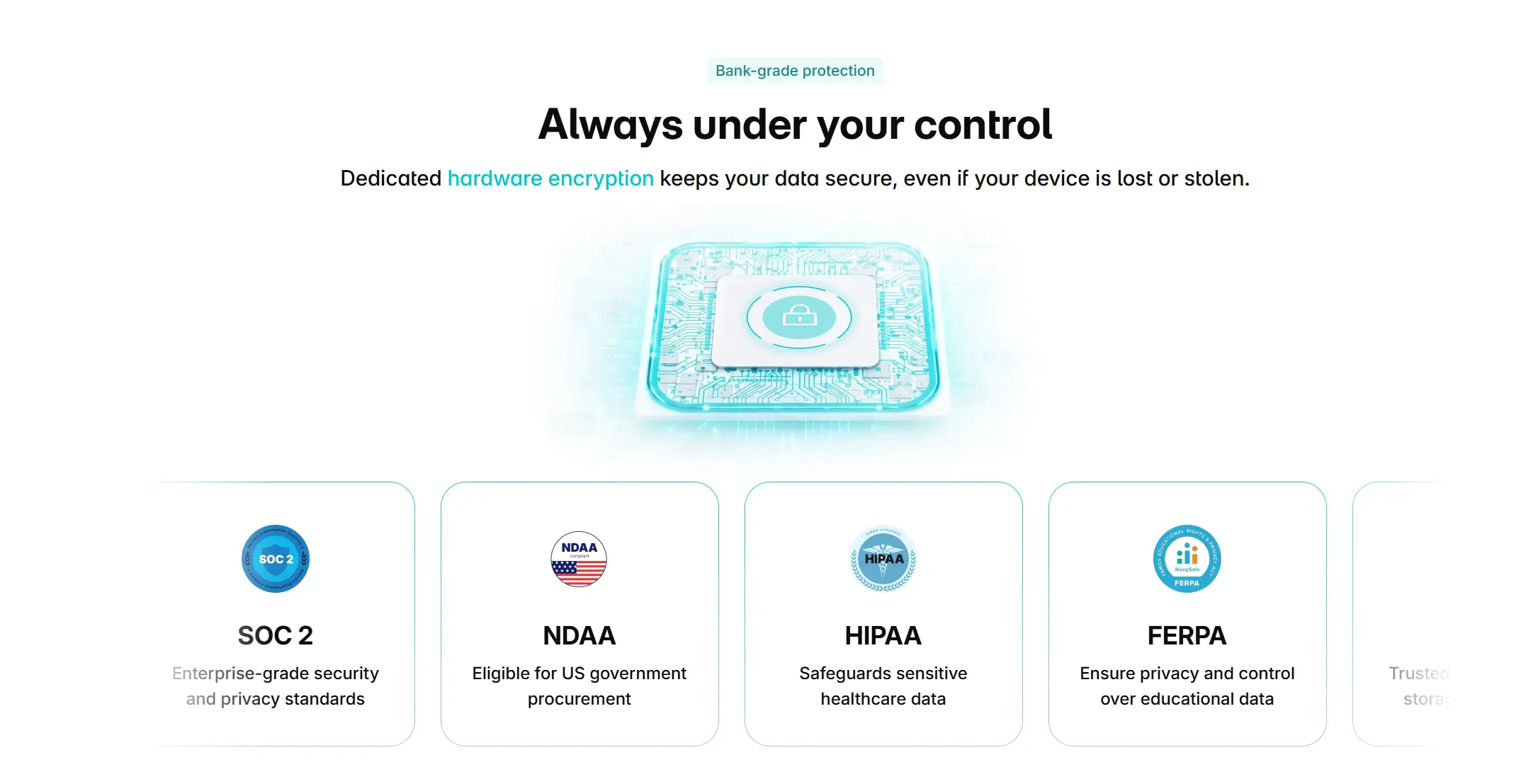 Vibe Dot security features showing hardware encryption chip illustration and SOC 2, NDAA, HIPAA, and FERPA compliance badges
If your work involves protected health information, student records, government contracts, or any regulated data category, the compliance question isn’t optional — and Soundcore Work isn’t certified for those requirements. Vibe Dot is.
For professionals without compliance requirements, both devices handle data responsibly. But the gap in formal certification matters the moment it matters.
Wearing and Form Factor
Neither device will turn heads, which is largely the point.
Soundcore Work is genuinely coin-sized and weighs 10 grams. It’s the smaller device by a significant margin, and that compactness makes it very easy to forget you’re wearing it. The clip, necklace, and phone-attachment options give you flexibility for different contexts.
Vibe Dot is slightly larger — described by The AI Journal as "palm-sized" — but still thin enough to sit flat against a lapel or the back of an iPhone without feeling bulky. SiliconANGLE notes the MagSafe attachment in particular works cleanly with the iPhone form factor. The Red Dot Award and iF Design Award recognitions in 2026 reflect the design quality Vibe put into the industrial design.
If ultra-minimal size is your top priority, Soundcore Work wins. If you want a device that integrates with your existing iPhone workflow (MagSafe) and handles more demanding audio environments, Vibe Dot’s slightly larger footprint is the trade-off worth making.
Pricing and Total Cost
Soundcore Work
-
Hardware: $159.99
-
Free tier: 300 minutes of transcription per month
-
Pro plan: $15.99/month or $99.99/year
-
Unlimited plan: $239.99/year
-
Note: At five hours of meetings per week, you’ll exhaust the free tier in roughly 15 days and need a paid plan. How-To Geek flagged this directly: anyone using the device more than an hour per week should budget for the Pro plan.
Vibe Dot
-
Hardware: $199
-
Starter tier: Free — recording, local storage, and basic AI summaries with no daily cap
-
Pro plan: $9/month (billed annually at $108/year) — 1,200 minutes of AI transcription, AI summaries, action items, 12-month memory retention
-
Max plan: $29/month (billed annually at $348/year) — unlimited AI transcription, 400 AI Credits/month, permanent memory retention, unlimited document imports, advanced recording access control, deep CRM integration
-
Enterprise plan: Custom pricing
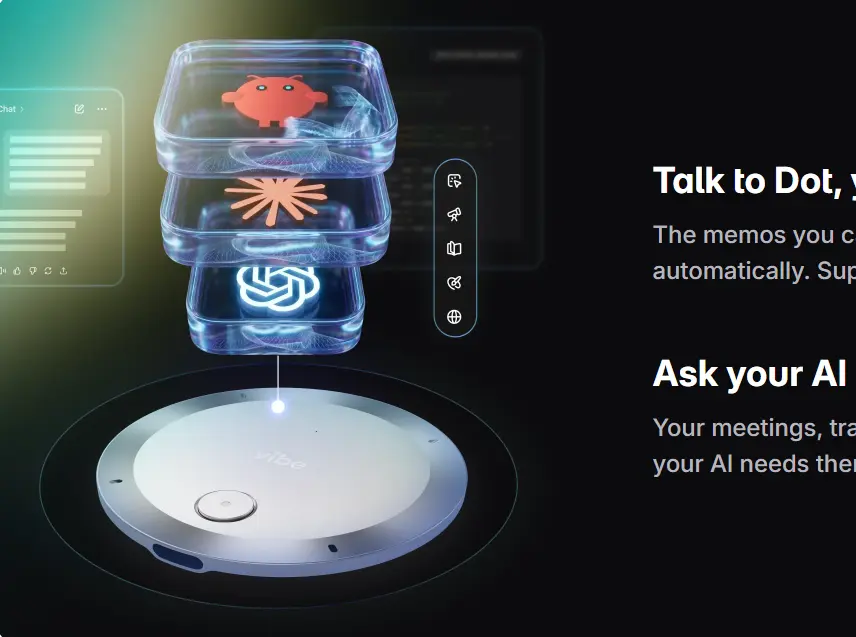
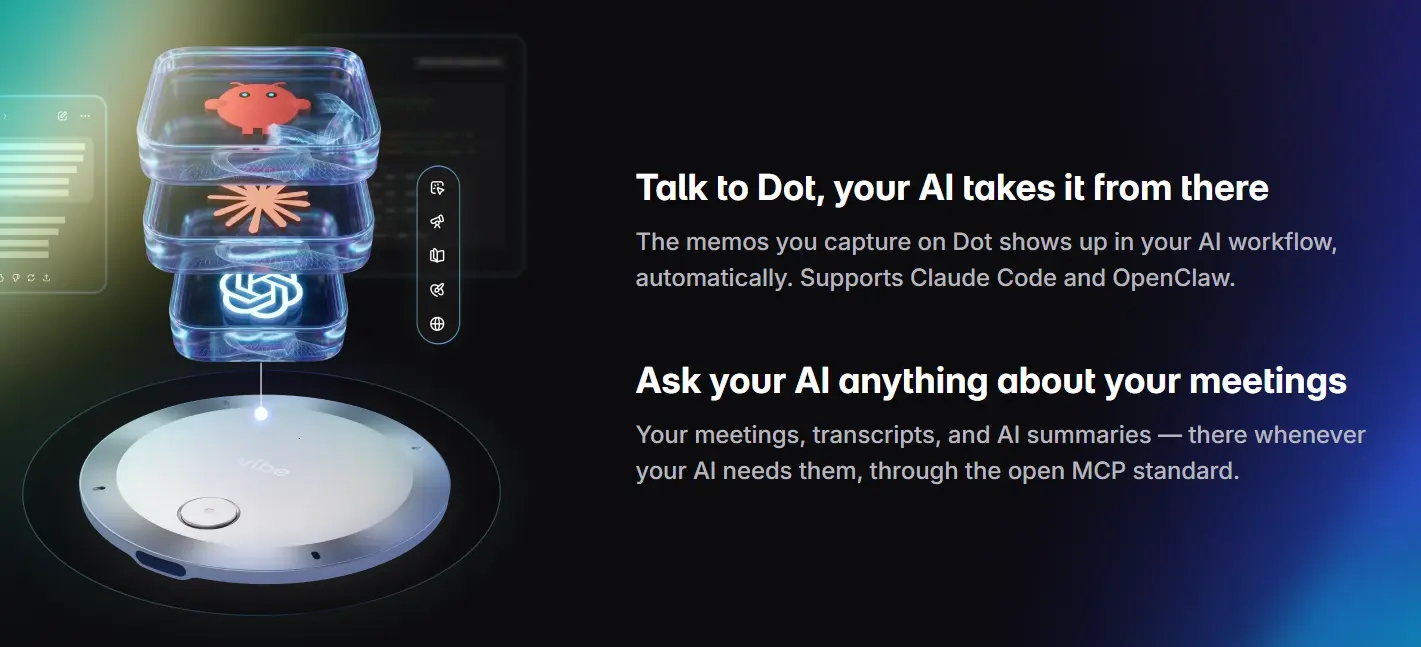 Vibe Dot AI recorder with layered illustration showing MCP-based integration with Claude, ChatGPT, and other AI workflows
Three-year total cost comparison (assuming Pro plan for both):
|
Vibe Dot |
Soundcore Work | |
|---|---|---|
|
Hardware |
$199 |
$159.99 |
|
3 years Pro (annual) |
$324 ($108 × 3) |
$299.97 ($99.99 × 3) |
|
Total |
$523 |
~$460 |
On paper, Soundcore Work comes out $63 cheaper over three years. But that number deserves context — because what that $63 buys with Vibe Dot is substantial:
-
22 more hours of battery per charge. Soundcore Work’s 8-hour single-charge life means daily recharging. Vibe Dot’s 30+ hours means you leave for a two-day off-site and come back without anxiety. That’s not a spec footnote — it’s a workflow difference.
-
56 GB more onboard storage. At 8 GB, Soundcore Work users in high-volume recording environments will hit the ceiling. Vibe Dot’s 64 GB stores weeks of recordings before you need to think about it.
-
Three more microphones, including bone-conduction. In a noisy boardroom or busy café, Vibe Dot’s 5-mic array with bone-conduction isolation produces cleaner audio. Fixing a bad transcript takes time; paying $63 more upfront doesn’t.
-
A compliance stack that Soundcore Work doesn’t have. If your work touches healthcare, education, or government procurement, Soundcore Work isn’t an option regardless of price. HIPAA, FERPA, and NDAA certification aren’t features you can add later — they either exist or they don’t.
-
Memory that compounds over time. Soundcore Work resets after every session. Vibe AI’s Memory Graph means every recording you make with Vibe Dot adds to a searchable workspace of your professional context. Six months in, the value of that accumulated memory is impossible to price at $63.
Vibe Dot‘s Starter tier also remains genuinely usable without a subscription — recording, local storage, and basic AI summaries with no hard daily cap. Soundcore Work’s 300-minute free tier runs out in roughly three hours of weekly meetings, pushing most professionals to a paid plan immediately. Factor that in, and the actual cost gap narrows further.
Who Should Buy the Soundcore Work?
Soundcore Work is a well-executed, consumer-friendly AI recorder that makes sense for:
-
Professionals in standard meeting environments who need reliable session-level transcription and summaries
-
Budget-conscious buyers who want solid AI note-taking hardware without the enterprise compliance overhead
-
Users who value ultra-compact size above extended battery life or multi-speaker audio capture
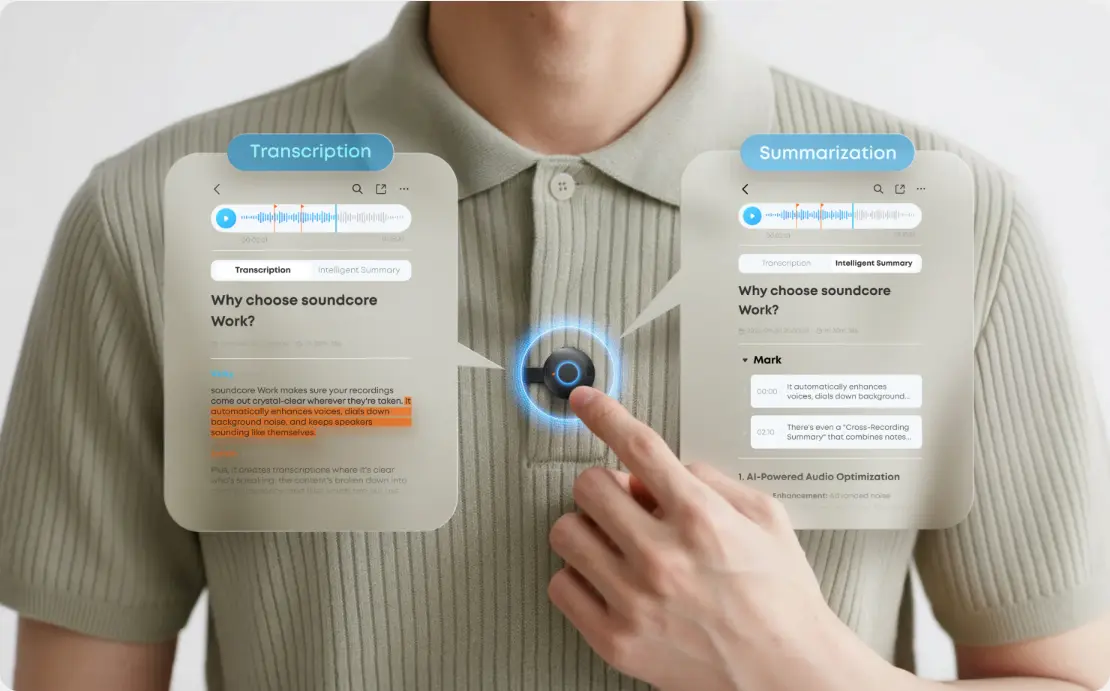 Soundcore Work AI recorder with transcription and summarization app screens
If your work doesn’t involve regulated data, your meetings are mostly one-on-one or small-group, and you want a simple device that does its job without complexity, Soundcore Work delivers that cleanly.
Who Should Buy Vibe Dot?
Vibe Dot makes more sense for professionals who need more than session-level recall:
-
Sales and consulting professionals who need cross-session memory to track what clients said across multiple touchpoints
-
Healthcare, education, legal, and government teams where HIPAA, FERPA, or NDAA compliance is required — not optional
-
Heavy meeting users who need 30+ hours of battery and enough storage to go days between syncs
-
Teams using Vibe Bot for conference room meetings, where a unified Memory Graph across devices creates genuine workflow integration
-
Noisy environment users where a five-mic array with bone-conduction isolation meaningfully outperforms two microphones
At $199 hardware plus $9/month for Pro, Vibe Dot is competitively priced for what it delivers — especially given the compliance certifications that would otherwise require enterprise contracts with separate providers.
The Bottom Line
Soundcore Work is a genuinely good product. It’s smaller, slightly cheaper, and delivers reliable session-level AI note-taking backed by Anker’s hardware reputation. For a solo professional with simple meeting capture needs and no compliance requirements, it’s a reasonable choice.
Vibe Dot is built for the professional who needs more: more audio range, more battery, more storage, a deeper compliance stack, and — most distinctively — an AI layer that builds persistent memory across your conversations rather than resetting after every session.
If you’re buying a voice recorder, Soundcore Work competes on hardware. If you’re buying a professional intelligence layer that happens to include hardware, Vibe Dot is the one.
Prices and specifications reflect vendor-published information as of August 2026. Confirm current pricing before purchasing.
FAQs
Can I use Vibe Dot without an internet connection?
Yes. Vibe Dot records and stores audio locally on the device. It syncs to the Vibe AI app via Bluetooth when you’re back in range, then uploads for AI processing. You don’t need connectivity during the recording.
Does Soundcore Work record offline?
Yes — the Soundcore Work stores recordings on its 8 GB onboard storage. Transcription requires a cloud connection, so AI-processed output isn’t available offline.
Is Vibe Dot HIPAA compliant?
Yes. Vibe Dot carries verified HIPAA compliance alongside SOC 2, FERPA, and NDAA certifications. Full compliance documentation is available on Vibe’s security page.
What’s the difference between the Soundcore Work’s SOC 2 and Vibe Dot’s SOC 2?
Soundcore Work holds SOC 2 Type I certification, which validates that security controls are properly designed at a point in time. Vibe Dot holds SOC 2 (Type II), which validates that those controls operate effectively over an extended period — generally considered the stronger standard.
Can Vibe Dot record phone calls?
Vibe Dot is optimized for in-person conversation capture. For phone call recording, Plaud Note Pro remains the strongest dedicated option in the category.
Which device has better speaker identification?
Both devices support multi-speaker diarization. Vibe Dot’s five-mic array — including the bone-conduction sensor — gives it an advantage in larger rooms or noisier environments where isolating individual speakers is harder.