
AI notes are the automated layer between a meeting recording and structured, searchable knowledge. Most teams leave meetings with a recording that sits unwatched in a shared drive. The problem isn’t meeting volume. Recordings don’t automatically become knowledge. In 2026, knowledge workers attend 21.7 meetings per week. They spend 11.3 hours, 28% of their workweek, in meetings, per Laxis, State of Meetings 2026. According to McKinsey Global Institute’s foundational knowledge-worker study, knowledge workers spend roughly 20% of their workweek searching for information, a baseline estimate that has held through successive workplace surveys.
- AI notes are not transcription — they extract structured decisions, action items, and context from the full spoken record
- 70% of meeting decisions are forgotten within 24 hours when no follow-up notes are shared
- The real value is compounding: AI notes linked across sessions become searchable organizational memory
- Enterprise adoption of AI meeting tools doubled from 27% to 54% in two years
- Teams using AI meeting tools save an average of 4.2 hours per week
The Recording-to-Remembering Gap
The problem runs deeper than calendar density. When a product decision surfaces three months later, teams typically rewatch segments, scan transcripts, or ask around in Slack. The knowledge exists. Retrieving it costs time.
AI notes operate in the gap between capture and comprehension. A meeting notes workflow typically requires a designated note taker, real-time attention, and follow-up discipline. When any of those break down, the meeting essentially never happened. The automated approach handles the entire chain, capturing, interpreting, and structuring, so decisions become memory.
What AI Notes Are
AI notes form the automated layer between a raw recording and structured, queryable knowledge. They sit between two older alternatives: full transcription captures everything but surfaces nothing; manual notes surface what one person caught but miss the rest. An AI meeting assistant processes the entire spoken record and extracts what matters, decisions, action items, owners, timelines, and context.
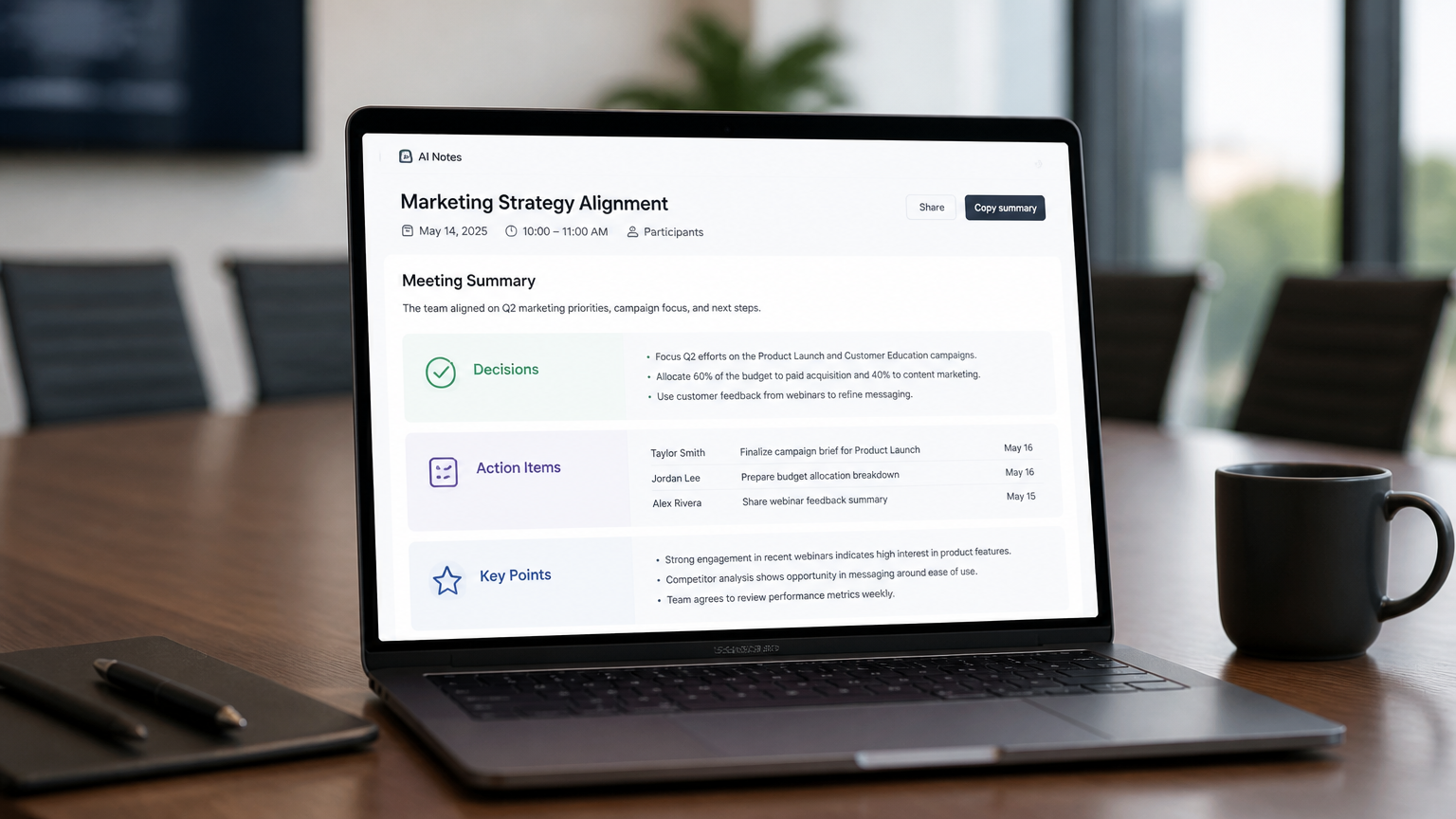 A laptop displaying a clean AI-generated meeting summary with labeled sections for Decisions, Action Items, and Key Points, on a desk in a modern conference room with soft background blur
Adoption is now mainstream. In 2025, 54% of enterprises had deployed AI meeting tools, up from 27% in 2023, doubling in two years, per Gartner Q4 2025 Workforce AI Survey. Among individuals, the shift is even steeper: 75% of professionals now use an AI note taker in work meetings, per Fellow.ai, State of AI Meeting Notetakers 2025. Tools like Otter, Fireflies, and Notion AI have become familiar parts of the meeting stack. Otter emphasizes real-time transcription. Fireflies focuses on CRM integration. Notion AI ties notes to broader workspace knowledge. All share the same premise: spoken meetings should become typed, searchable, structured knowledge without human intervention.
The distinction between this approach and transcription isn’t volume, both capture everything. It’s intelligence of surfacing. Transcripts return the whole record; the system returns structured signal. This framing doesn’t appear anywhere in the current SERP.
The Three-Phase Transformation
AI notes work in three phases, capture, understand, and structure, turning spoken conversation into typed decisions.
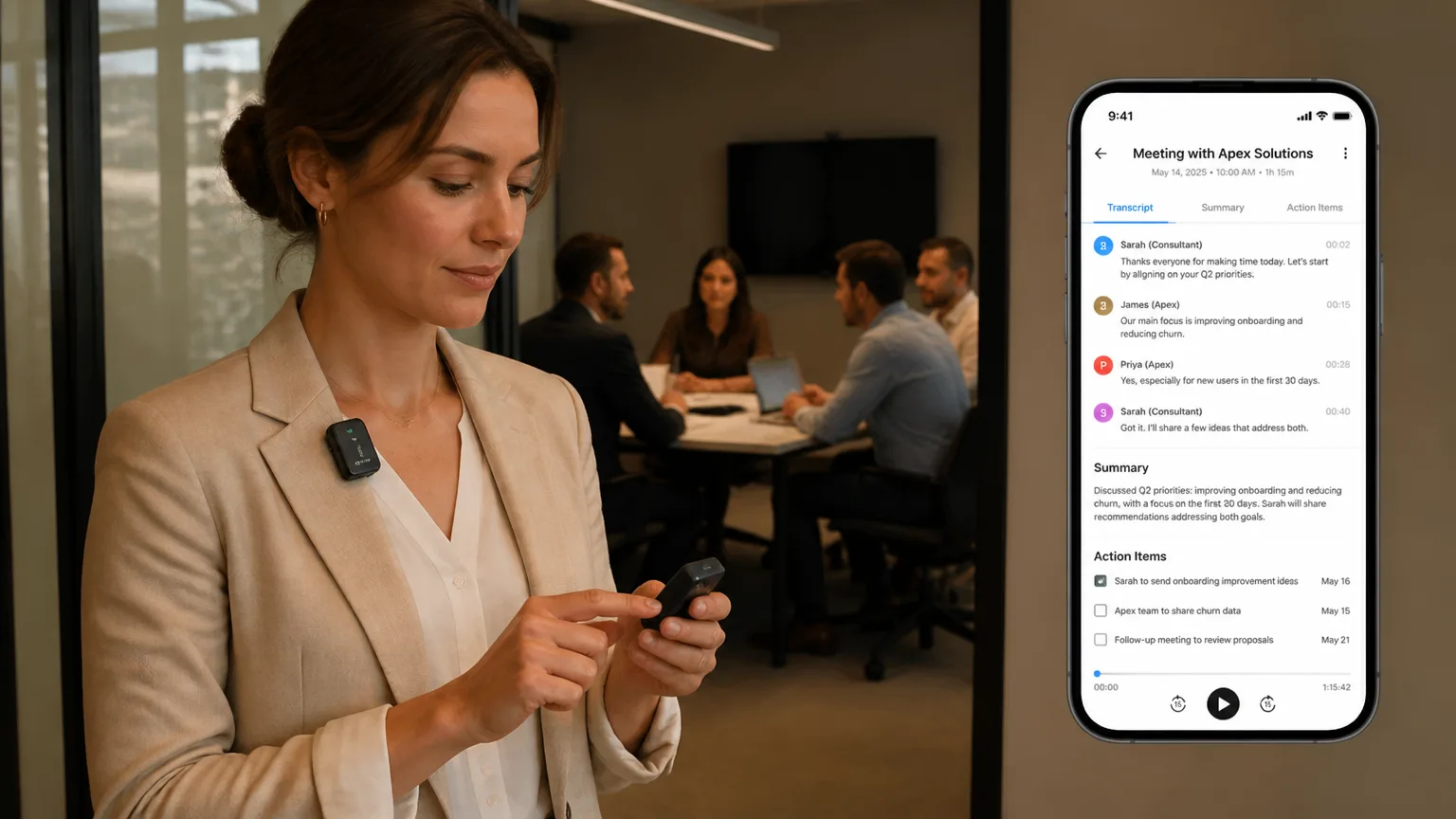
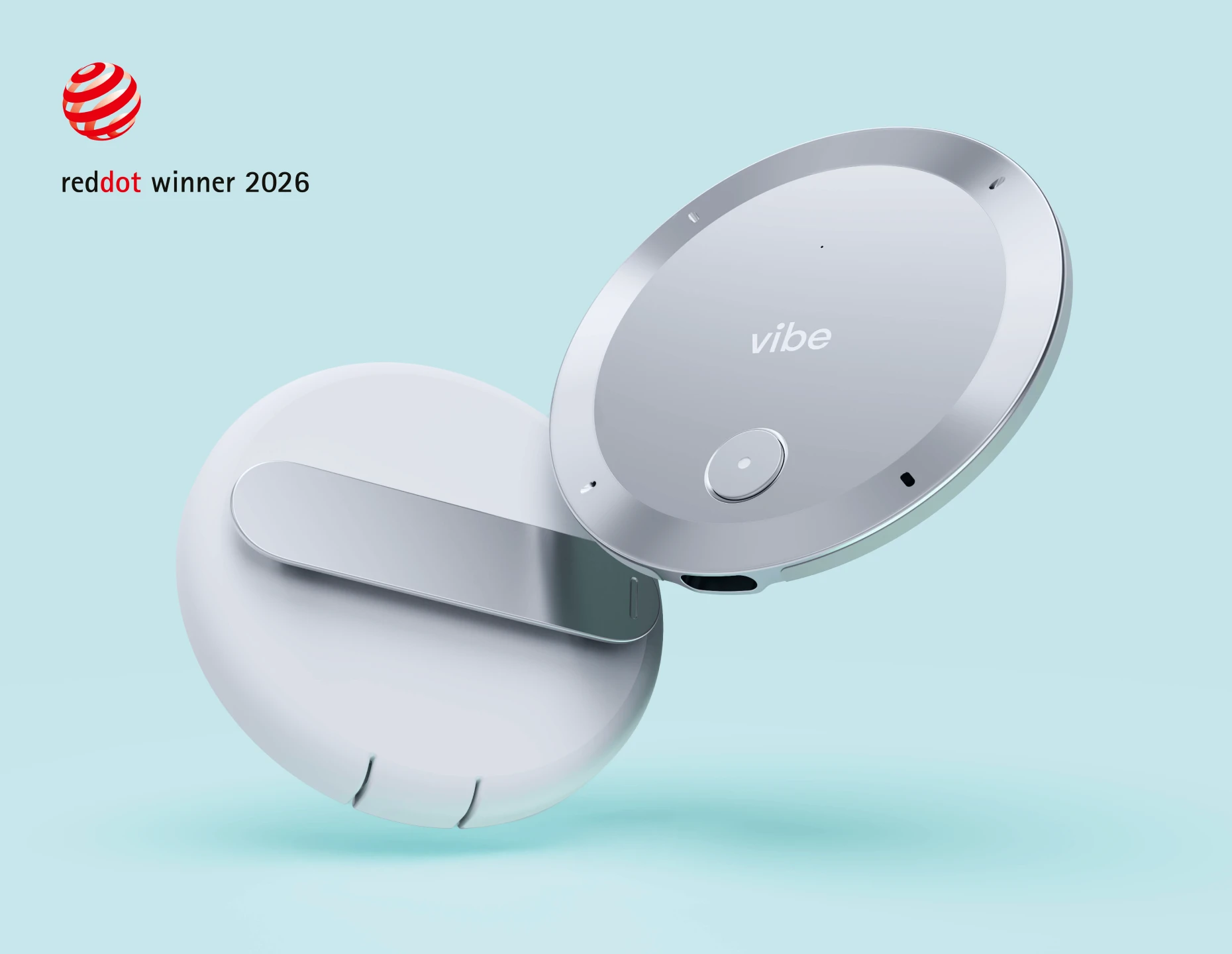
Capture starts with audio or video recording, typically through a conferencing platform or dedicated hardware. Modern systems identify speakers through voice fingerprinting, tracking who said what. The capture layer runs continuously in the background. It joins scheduled calls via calendar integration or records in-room conversations through devices designed for meeting capture.
Understand is where natural language processing takes over. The transcript gets parsed for semantic meaning. Topics cluster. Action items surface. Decisions get tagged. Named entity recognition pulls out product names, dates, and owner assignments. The system distinguishes between "we should probably" (an idea) and "let’s do X by Friday" (a commitment).
Structure delivers the output. A well-designed system produces more than a single summary. It generates topic clusters, extracted action items with owners and deadlines, decision records, and a searchable archive linking back to source timestamps. In 2026, modern AI transcription achieves 90–96% word accuracy on clear audio, with leading speaker diarization models reaching 7–12% error rates, per VexaScribe Transcription Accuracy Benchmark 2026. That accuracy threshold makes automated structuring viable. When the transcript is clean enough, the extraction layer works reliably.
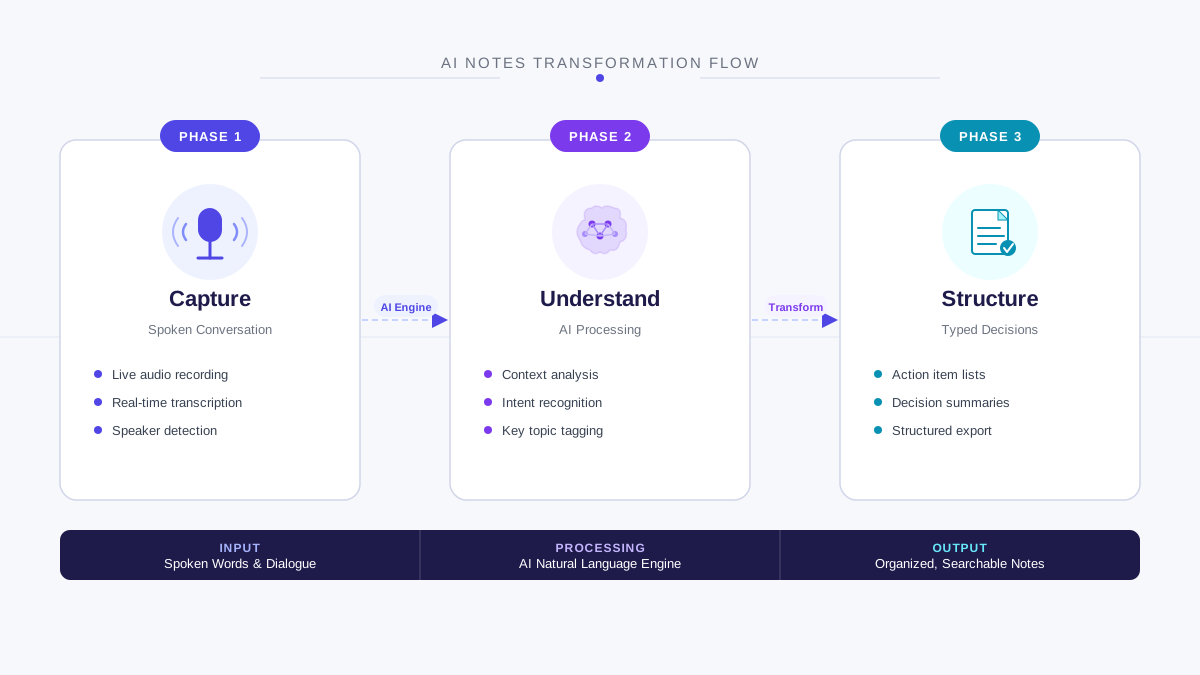 Flowchart showing the three-phase AI notes transformation: Capture (audio/video recording with speaker identification) flowing into Understand (NLP processing for topics, action items, decisions) flowing into Structure (summaries, action items, searchable archive)
Transcripts Capture Everything; AI Notes Surface What Matters
Transcripts are faithful but unsorted. Manual notes are sorted but incomplete. The best systems aim for both completeness and interpretation.
A transcript returns every word in order. If you need to verify exactly what someone said, it’s there. But finding three decisions buried in a 45-minute transcript means reading or scanning the whole thing. The signal-to-noise ratio is low by design.
Manual notes solve that problem by summarizing. The note taker filters in real time, writing what seems important. The filter is also the limitation. What the note taker missed or didn’t recognize as significant is permanently lost. If a stakeholder mentioned a constraint in passing while the note taker was focused elsewhere, that constraint evaporates.
These systems process the full transcript with consistent criteria. Decisions get flagged. Action items get extracted. Topics get clustered. The result: a structured summary plus the underlying record, linked so any extracted item traces back to its source. For teams spending significant time in meetings, an AI recorder reduces the gap between what was said and what gets remembered.
Why Action Items Fail Without Context
Action items fail not because people forget tasks but because decision rationale gets lost. An AI-generated list of follow-ups helps. One attached to the context that produced it helps more.
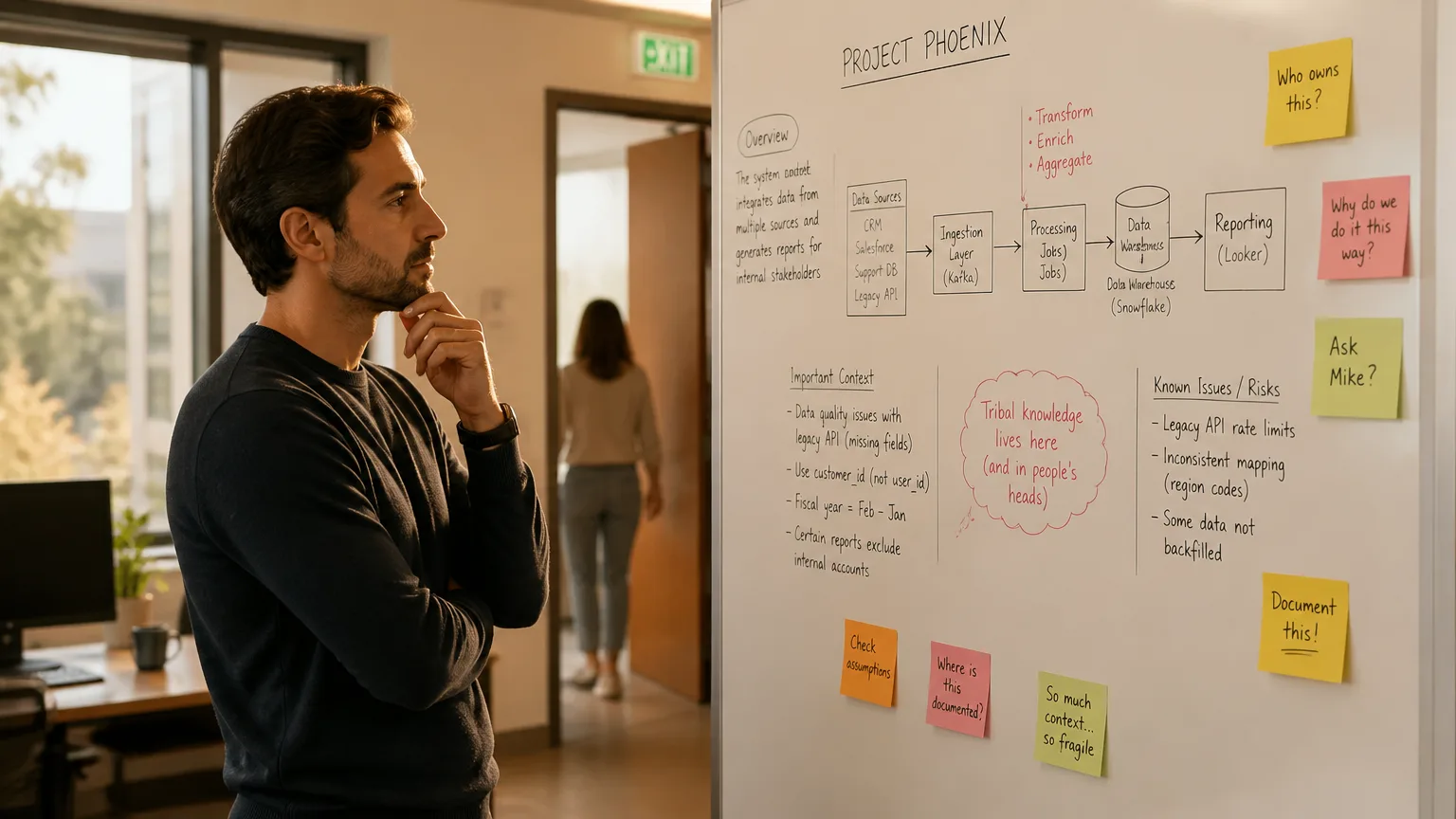
Laxis, State of Meetings 2026 found that 70% of decisions made in meetings are forgotten within 24 hours when no follow-up notes are shared. The forgetting curve is steep. The deeper problem: even when action items are tracked, the reasoning behind them often isn’t. A task says "finalize pricing model." The context, tradeoffs discussed, constraints named, concerns raised, lives in memory or not at all.
Speakwise, Action Item Tracking Statistics 2026 shows that 44% of action items from meetings are never completed. Completion rates jump from 50–60% to 85–95% with automated tracking. The gap isn’t just memory. It’s clarity. In 2025, multiple survey datasets compiled by Hintmint found that 54% of professionals leave meetings without clear understanding of next steps or task ownership. Notes that carry context, who requested it, why it matters, what constraint shaped it, give follow-through a fighting chance.
From Session Notes to Organizational Memory
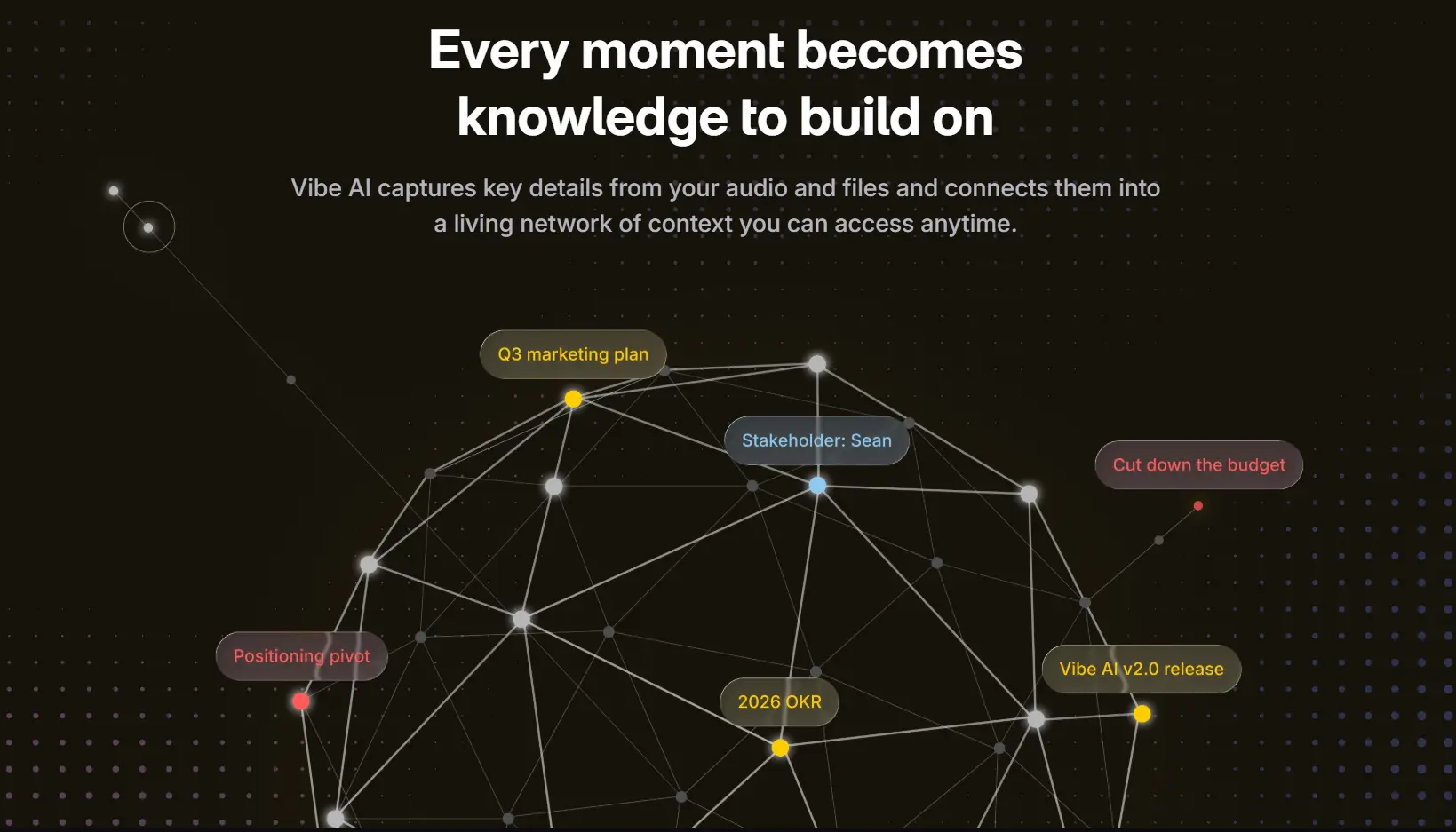
A single set of automated notes is useful. A continuous, linked thread across months of meetings becomes a team brain. Each session is a data point. The value accumulates as those points get linked and cross-referenced.
This is the category shift, from productivity tool to knowledge infrastructure. When you can query across every meeting from the past six months, the payoff isn’t just finding what was said last Tuesday. It’s recognizing patterns: which topics keep resurfacing, which decisions get revisited, which action items consistently stall. A well-built system can answer a question like "what did we decide about vector database options?" without requiring you to remember which meeting it was.
The institutional memory angle shows where compounding value becomes visible. In 2025, Org IQ and KS Agents knowledge loss research found that 42% of institutional knowledge is unique to the individual employee. When that person leaves, colleagues can’t perform nearly half their role’s tasks until the knowledge is rebuilt from scratch. These systems that persist and compound address this directly. Today’s conversation becomes context for a decision three months from now.
Consider a product team that has been using such a system for six months. When a stakeholder asks why the team deprioritized the API integration, anyone can query it and retrieve the exact reasoning from a sprint planning meeting four months earlier: the owner of the decision, the trade-offs discussed, the constraints that shaped it. The rationale doesn’t depend on who was in the room or whether anyone remembers it. It’s in the record, linked across sessions, retrievable in seconds.
Vibe AI and the Memory Engine
One system is designed explicitly around that compounding thesis: Vibe AI. Rather than treating each meeting as an isolated session, Vibe AI links recordings into memory threads, continuous work narratives that persist across sessions and enable cross-session question-answering.
The architecture follows the same three phases: capture → understand → act. Hardware capture from Vibe devices brings in conversations, whiteboarding, and spontaneous ideas. Software capture ingests files, messages, and updates from everyday tools. The understand phase links recordings into memory threads. The act phase surfaces what matters: cross-session Ask AI queries across the accumulated knowledge base, proactive task identification, and smart catch-up briefings for what was missed.
In 2025, researches found employees using AI meeting tools save an average of 4.2 hours per week on meeting-related tasks. 62% report saving 4 or more hours weekly. Organizations using AI meeting transcription report 25% fewer unnecessary meetings and 30% higher productivity, per Sonix and Zight AI Transcription Trends 2025. The compounding model isn’t just about efficiency. It’s building a knowledge substrate that outlasts any individual meeting or team member.
Conclusion
Today’s conversation becomes context for a decision three months from now. AI notes transform ephemeral meetings into structured, searchable, linked knowledge that compounds over time. The shift from recording to remembering isn’t about capturing more. It’s about surfacing what matters, preserving why it mattered, and building a memory layer that persists across the team.
-
AI notes are not transcription, they extract signal from the full record
-
70% of decisions are forgotten in 24 hours; AI notes close that gap
-
The compounding value is organizational memory: linked, queryable, persistent
-
Teams using these tools save 4+ hours per week and reduce unnecessary meetings
FAQs
What are AI notes?
They form the automated extraction layer between a meeting recording and structured, searchable knowledge. They capture the full spoken record and surface decisions, action items, and context without manual intervention. In 2025, 75% of professionals use an AI note taker in work meetings.
How do AI notes work?
AI notes work through three phases: capture (audio/video recording with speaker identification), understand (NLP processing to extract topics, decisions, and action items), and structure (output formatted as summaries, action items, and searchable archives). In 2026, modern AI transcription achieves 90–96% word accuracy on clear audio.
How do AI notes compare to manual note-taking?
Manual notes capture what the note taker recognized as important in real time. AI notes process the entire spoken record with consistent extraction criteria. The difference is completeness. In 2026, 70% of decisions made in meetings are forgotten within 24 hours when no follow-up notes are shared. This addresses that forgetting curve by capturing and structuring automatically.
What is an AI note taker?
An AI note taker is software that joins or records meetings, transcribes the conversation, and extracts structured outputs — summaries, action items, decisions — without human intervention. Adoption has accelerated: in 2025, 54% of enterprises had deployed AI meeting tools, up from 27% in 2023.
Do AI note takers work for in-person meetings?
Most note taker apps connect to video conferencing platforms and won’t capture offline conversations. Dedicated AI recorder hardware worn in the room or placed on a desk extends transcription, speaker identification, and action item extraction to in-person meetings, field conversations, and spontaneous discussions — keeping the full knowledge layer intact regardless of where work happens.
What should teams look for when choosing an AI note taker?
Look for three things: accuracy (90–96% is the current benchmark on clean audio), output structure (decisions and action items alongside a summary, not just a transcript), and memory persistence across sessions. A note taker that resets after each meeting captures conversations. One that links sessions over time builds institutional knowledge.