
Seven weeks. That is how long it took for three of the biggest AI labs in the world to each launch an always-on personal agent. Meta Muse arrived September 8. ChatGPT Dots launched September 29. Claude Duet opened its research preview October 21. Each one promises to read your email, scan your calendar, and work in the background while you sleep.
None of them can hear what happens in your meetings.
This is not a minor gap. For most professionals, the decisions that matter most are made in rooms — a client call that changes the project scope, a one-on-one where a deadline gets moved, a site visit where a commitment is made out loud and never written down. Your AI agent will manage your inbox beautifully while that information disappears.
This piece looks at what the new wave of AI agents actually sees, why the spoken layer of your work sits outside their reach, and what it takes to give any agent — Duet, Dots, Muse, or the next one — a complete picture of your day.
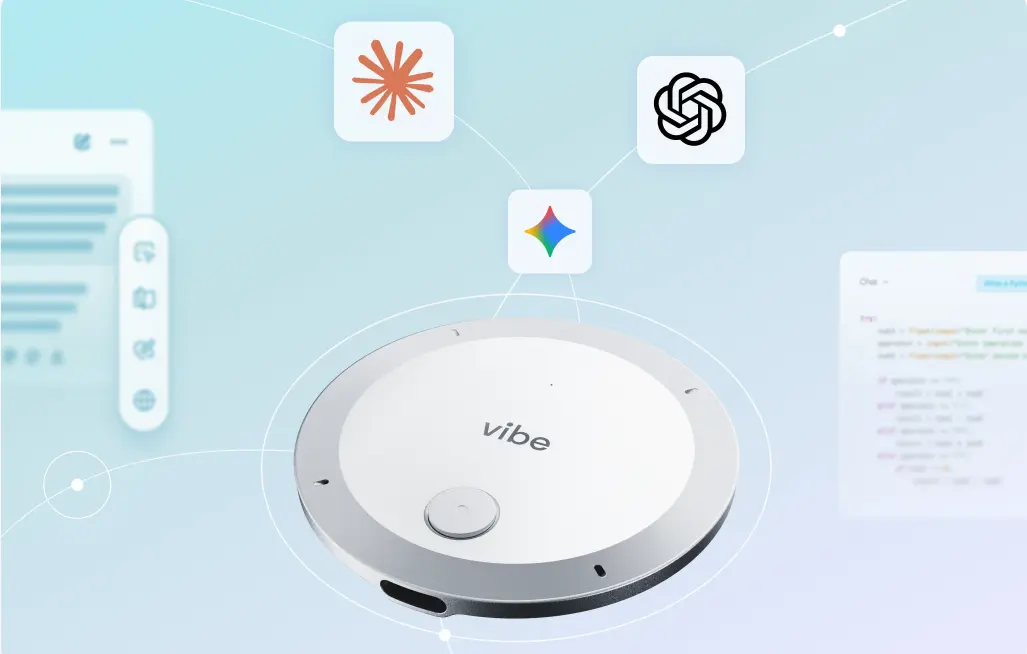
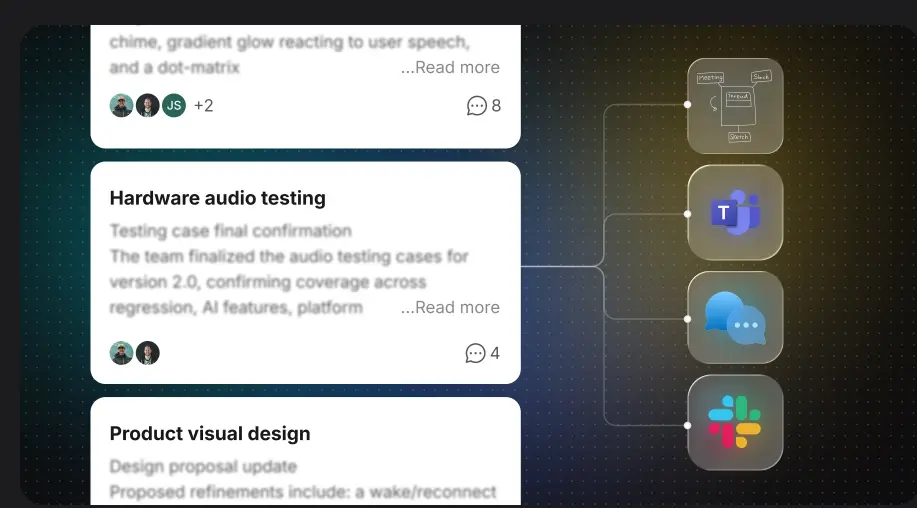 Vibe Dot meeting summaries syncing to Microsoft Teams and Slack
What All Three Agents Have in Common
Despite launching three weeks apart and running on different models, Duet, Dots, and Muse share the same basic architecture — and the same constraint.
All three are cloud-based agents with their own background compute. Claude Duet runs on Opus 5.5 and keeps working after you close the app. ChatGPT Dots runs on GPT-6 Astra and has its own cloud computer and browser. Meta Muse launched as a mobile and web agent in September and is building toward dedicated hardware with its Muse Charm device planned for December.
All three connect to your existing apps. Duet draws on Gmail, Google Calendar, Google Drive, Slack, HubSpot, and Calendly. Dots reaches more than 4,000 apps through OpenAI's plugin ecosystem and delivers work across ChatGPT, Slack, and Teams. Muse operates inside the Meta ecosystem and connects to social apps, messaging, and web content.
And all three are proactive by design. They are not waiting for a question. They scan, research, draft, and report on your behalf — automatically.
The constraint every one of them shares: their data access starts where text begins. Email is text. Calendar events are text. Slack messages are text. The spoken content of your actual conversations is not.
Why Meetings Are the Gap That Matters Most
Think about where the most consequential decisions in your work week actually happen. A proposal gets accepted on a call. A budget gets cut in a leadership meeting. A client expresses a new concern in a site visit. A colleague agrees to take on a task in a one-on-one.
None of that makes it into an email unless someone writes a follow-up. And often, no one does.
Your AI agent sees the calendar event and knows you met. It does not know what was said, what was agreed to, or what changed because of the conversation. It will draft your morning brief from your inbox and flag the thread that went quiet. It has no way to flag the commitment you made out loud two days ago that still has not been acted on.
This is the data problem underneath the agent promise. Agents are only as useful as the information they can access. Build an agent on top of a partial record of your working life, and you get partial results — no matter how capable the model is.
The spoken layer of professional work is the largest unstructured dataset most people generate, and today's agents cannot touch it.
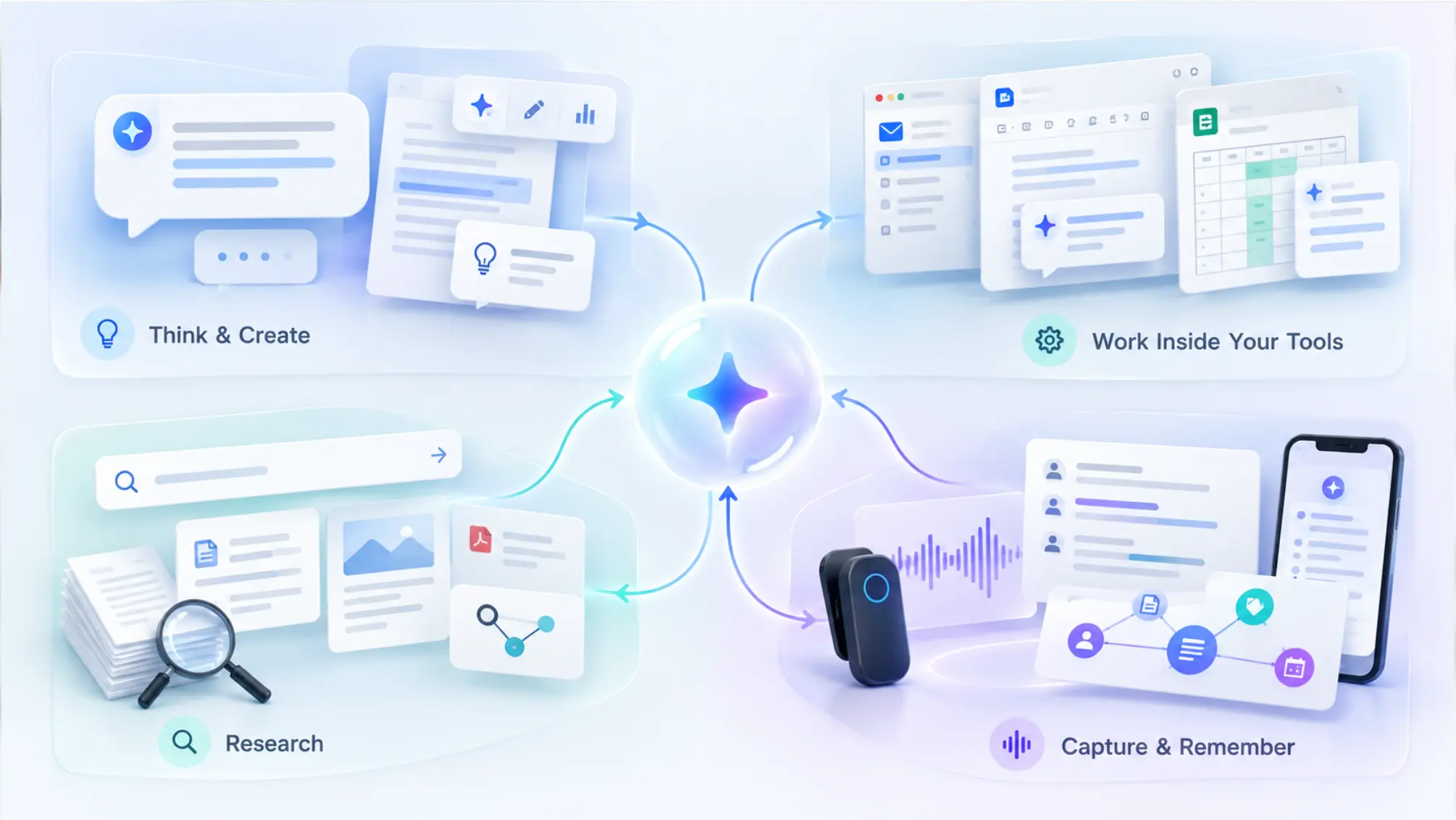
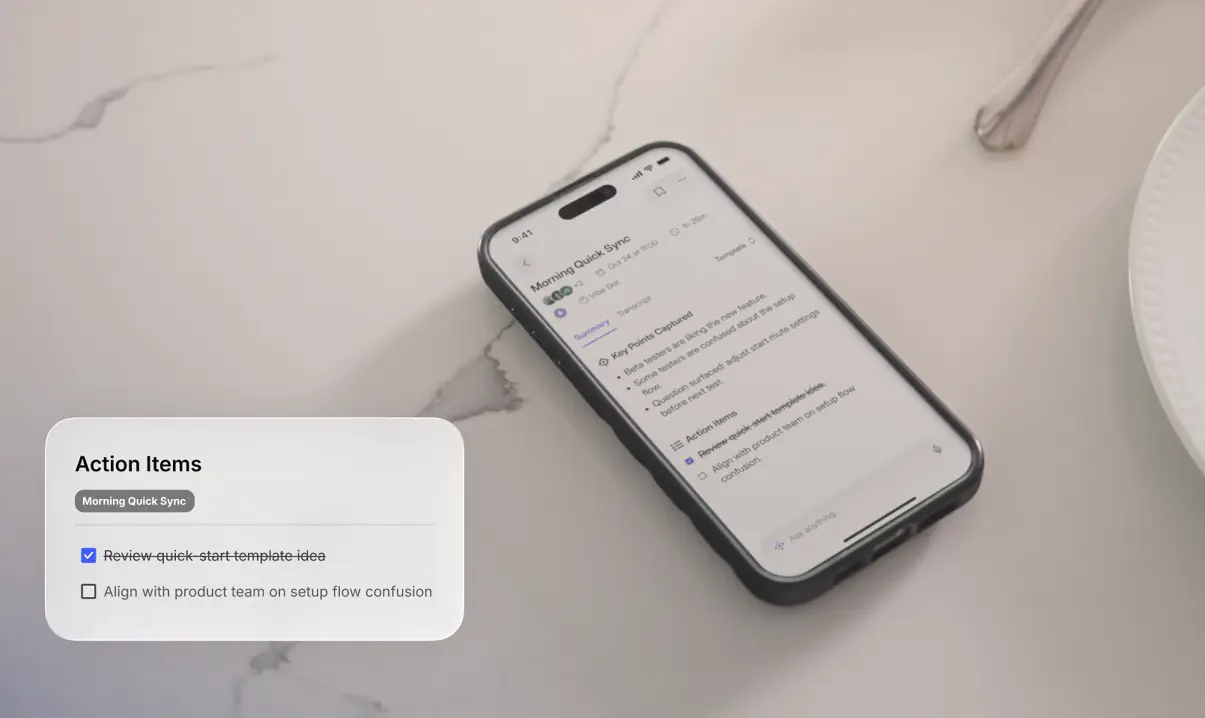 Vibe Dot app showing AI meeting summary and action items
How Each Agent Handles — and Misses — Your Meetings
Claude Duet
Duet is Anthropic's proactive agent for professionals and small business owners. It sends a morning brief, drafts follow-up emails for your approval, and keeps working on tasks after you close the app. It inherits your memory, skills, and connectors from your Claude account.
Duet's connectors cover Gmail, Google Calendar, Google Drive, Slack, HubSpot, Docusign, and Calendly. It can see your meeting on the calendar: the title, the time, the attendees. It can see email threads that preceded or followed a meeting. It cannot hear what happened in the room or on the call.
ChatGPT Dots
Dots is OpenAI's always-on agent, launched at DevDay 2026 and powered by GPT-6 Astra. It reaches more than 4,000 apps, has its own cloud computer, and can carry context across ChatGPT, Slack, and Teams. Its proactive research mode scans your connected apps in read-only mode between conversations to surface what you might have missed (DataCamp).
Dots can be connected to your calendar and productivity apps. Like Duet, it will see the meeting entry. Like Duet, it has no mechanism for capturing or processing what was spoken inside it.
Meta Muse
Muse is Meta's personal agent, available through the Muse app since September 8. It converses via voice and text, connects to Meta's social ecosystem, and is expanding toward a standalone hardware interface with the Muse Charm — a palm-sized device with a display, cameras, and 5G, aimed for December 2026. The Charm is designed primarily for voice interaction with the Muse agent, not for background meeting capture.
Muse's hardware ambition is real. But a device built for voice conversation is not the same as a device built for silent, unobtrusive meeting capture. The Charm is an interface for talking to Muse, not a tool for recording what others say.
The pattern
All three agents were built to work with the apps you already use. Meetings, unless they are recorded and transcribed by a dedicated tool, leave no trace in those apps. The agent gap is not a failure of any individual product — it is a structural feature of how agents access information.
|
Claude Duet |
ChatGPT Dots |
Meta Muse | |
|---|---|---|---|
|
Email & calendar |
✓ |
✓ |
Partial |
|
Slack / messaging |
✓ |
✓ |
✓ |
|
Docs & drive |
✓ |
✓ (4,000+ apps) |
— |
|
Meeting transcripts |
✗ (no capture) |
✗ (no capture) |
✗ (no capture) |
|
Spoken commitments |
✗ |
✗ |
✗ |
Why Meeting Context Needs Its Own Source
You could solve part of this problem without hardware. You could record calls on Zoom, use a platform notetaker, paste transcripts into Claude yourself. Some people do.
But those solutions cover only the meetings that happen on video. They miss the client visit, the hallway conversation, the on-site walkthrough, the one-on-one over lunch. Platform notetakers require a calendar link and a software join. They cannot follow you.
A purpose-built recording device solves the problem at the source. It captures any conversation, anywhere — not just the ones that happen on a screen. It runs on its own battery and storage, disconnected from whatever platform the meeting is on, which is also why it clears the compliance bar that platform bots often fail.
The other reason hardware matters is intent clarity. A device you clip on signals to the room that a record is being kept. That is a better practice than passive recording through a laptop microphone, and it is a cleaner consent posture in regulated industries.
Capturing the spoken record is not a workaround for the agent gap. It is the missing source of context that lets any agent work from a full record of your day.
Vibe Dot: The Agent That Holds Your Spoken Context
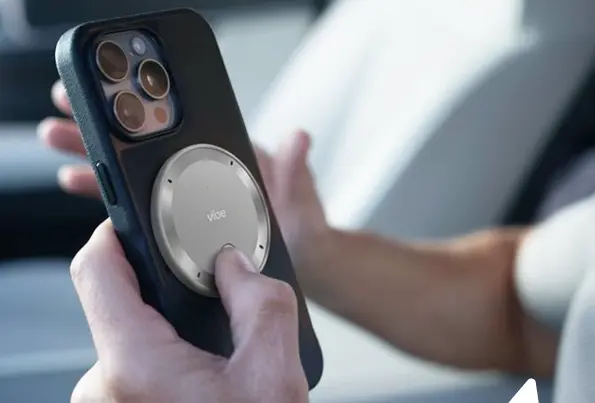
Vibe Dot is an AI agent built for the part of your workday other agents cannot see: what was actually said. It captures your meetings, calls, site visits, and hallway conversations, and Vibe AI turns them into speaker-separated transcripts, summaries, and memos. A Memory Graph links related conversations across weeks, so you can ask what was decided, get a catch-up briefing before your next call, or hand off follow-ups. It works on its own, and it also gives the agents you already use, like Claude, access to the same record. The hardware exists to make that context reliable. Dot is 0.17 inches thin, weighs 0.83 oz, and runs for 30+ hours on a single charge. Its 5-microphone array — four air mics plus a bone-conduction mic — is optimized for clear capture in noisy environments like construction sites, open offices, and crowded meeting rooms.
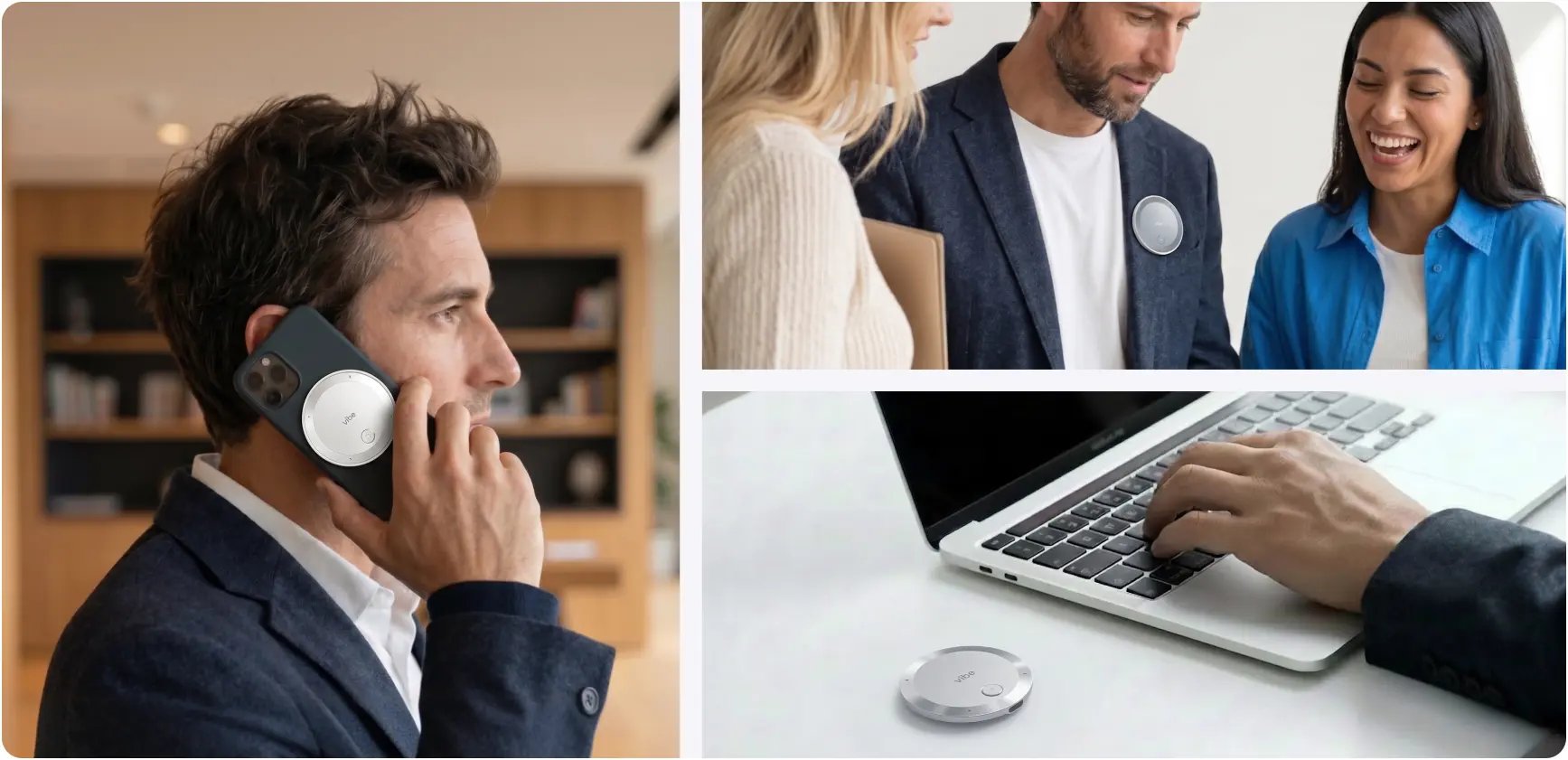 Vibe Dot AI recorder attached to a phone during a call, worn on a jacket in a meeting, and placed on a desk beside a laptop
What it records does not stay trapped in audio files. Every recording syncs to Vibe AI, where it is stored in a searchable memory graph that links related meetings and conversations across sessions. The Vibe AI subscription is what turns Dot from a recorder into an agent: the Pro plan ($9/seat/month) adds 1,200 minutes a month, AI Credits for agentic actions, 12 months of memory, and MCP access for Claude and ChatGPT. The free Starter plan is there to try Dot, not to run your workday on.
That memory is what agents can read. Vibe AI is a verified connector in Anthropic's connector directory — Claude can call it today to list meetings, search transcripts, pull summaries, and retrieve memos. The connector is read-only and respects Vibe's own access controls; Claude sees exactly what you see in the Vibe AI app (help.vibe.us).
The compliance story also matters. Vibe Dot carries FERPA and NDAA certifications, SOC 2 Type II and HIPAA attestation, and a dedicated hardware encryption chip certified to FIPS 140-3 and Common Criteria EAL 6+. For teams in education, healthcare, or government — where a third-party bot joining a meeting is not an option — those certifications make Vibe Dot a path to AI meeting memory that clears the bar.
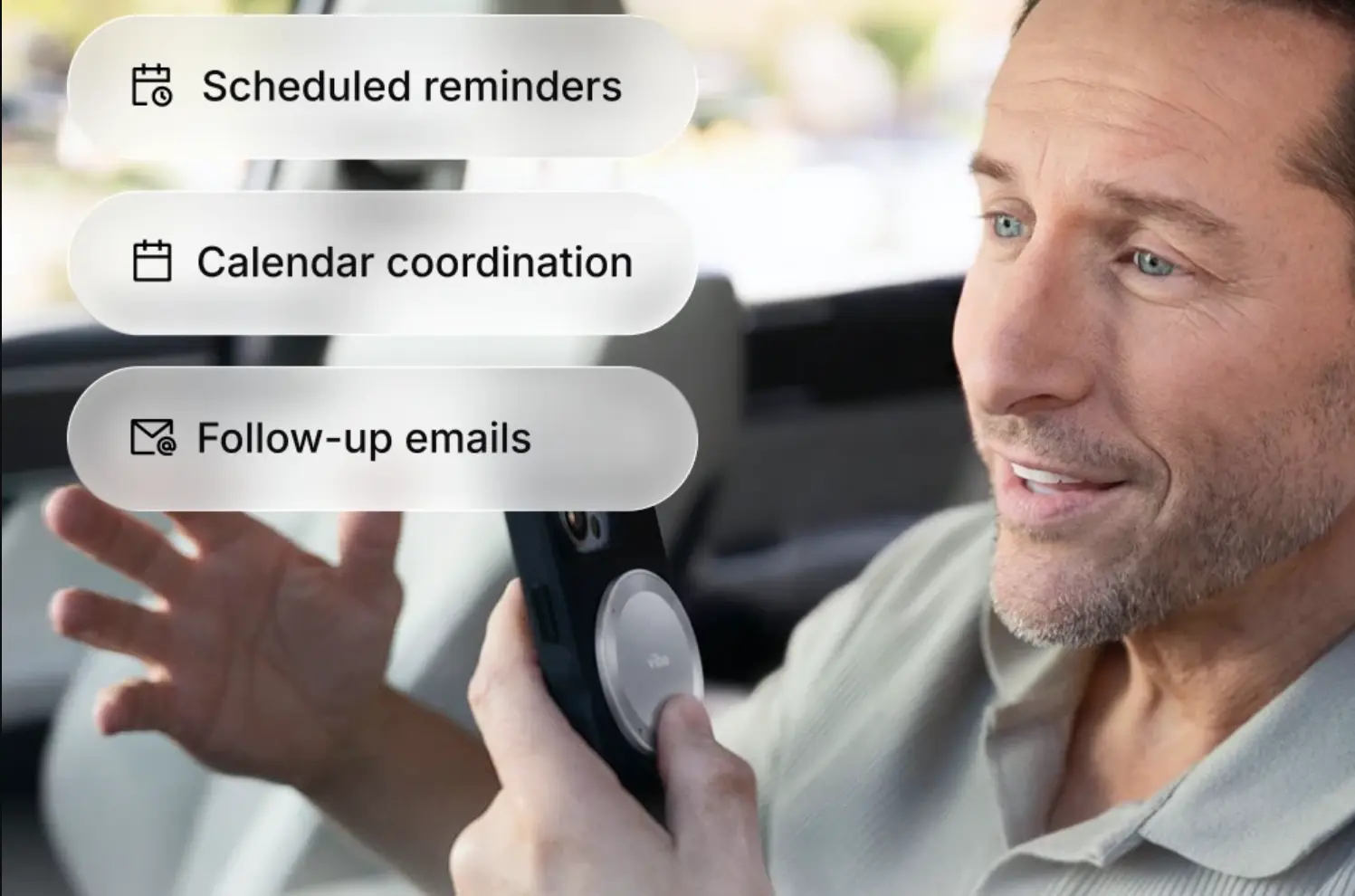
Three recording modes let users match the tool to the context. Tap to Record starts and stops manually. Auto Capture records on a schedule or activates when Dot detects your voice. Spark mode lets you press and hold to save a quick memo or trigger a Vibe AI action — without unlocking your phone.
Your Agent Is Only as Good as What It Can See
The race between Anthropic, OpenAI, and Meta to ship always-on personal agents is good for everyone who works. These tools are going to change how people manage their inboxes, their calendars, and their follow-up queues.
But an agent trained to handle everything still cannot handle a conversation it was not there for. The spoken layer of professional life — where the real decisions get made — sits outside every agent launched this fall.
Vibe Dot is an agent too, one built around the context the others cannot reach. Use it on its own, or connect it to Claude, ChatGPT, and whatever agent comes next, and the next time your morning brief is drafted, it will have the full picture.
Frequently Asked Questions
Can Claude Duet record my meetings?
No. Claude Duet is a proactive AI agent that works with your email, calendar, Google Drive, Slack, and other connected apps. It does not have a mechanism for capturing or processing live audio. To give Duet context about what happened in a meeting, you need to record the meeting with a dedicated tool, process it into a transcript and summary, and make that data available via a connector Duet can read.
Can ChatGPT Dots join my meetings and take notes?
No. Dots is an always-on agent that connects to over 4,000 apps and works across ChatGPT, Slack, and Teams. Its proactive research mode scans connected apps in read-only mode but cannot capture live audio. Like Duet, Dots depends entirely on text-based data — emails, documents, calendar entries — to understand what is happening in your work.
Is Meta Muse Charm an AI meeting recorder?
No. Muse Charm is a palm-sized hardware device planned for December 2026 that lets you interact with Meta's Muse AI agent via voice and a small touchscreen display. It is designed as an access point for conversations with Muse, not as a tool for recording meetings or capturing what other people say. It has front and rear cameras but is positioned as a social companion device, not a professional recorder.
Why can't AI agents just use Zoom or Google Meet transcripts?
Some can, if you connect those platforms and the meetings happen there. The problem is that many meetings don't: client site visits, in-person discussions, conference conversations, and informal one-on-ones leave no transcript unless someone records them deliberately. A dedicated recording device captures those conversations regardless of the platform, the location, or whether a calendar event exists.
How does Vibe Dot give my AI agent meeting memory?
Vibe Dot records your conversations, and Vibe AI converts those recordings into speaker-separated transcripts, summaries, and memos stored in a searchable memory graph. Vibe AI is a verified connector in Anthropic's connector directory — Claude can call it to list meetings, search transcripts, and retrieve summaries on demand. Dot works best with a Vibe AI subscription: MCP integration with Claude and ChatGPT is available on the Vibe AI Pro plan ($9/seat/month) and above, and the free Starter plan is meant for trying Dot out.