
If you landed on this page looking to buy the Limitless Pendant, there's one thing you need to know first: it's no longer available. In December 2025, Meta acquired Limitless and immediately halted new sales. Users in the EU, UK, and several other regions were given less than two weeks to export their data. The product is no longer sold through any official channel.
That changes the question. You're not comparing the Pendant to its rivals anymore — you're asking: what's the best wearable AI recorder you can actually buy and rely on in 2026?
This guide answers that directly, evaluating the leading options across five dimensions: audio quality, AI output, hardware design, privacy compliance, and long-term product stability — based on published specifications, compliance documentation, and hands-on user reports.
Quick Answer: The best Limitless Pendant alternative in 2026 is Vibe Dot — a wearable AI recorder with a 5-mic system, 64GB onboard storage, 30+ hours of battery, and SOC 2 / HIPAA / FERPA / NDAA compliance. For high-volume recording on a tighter budget, UMEVO Note Plus (~$89) offers 40-hour battery and 64GB storage at a lower price point. For the lowest entry cost, Bee Pioneer ($49.99) is a reasonable starting point.
What Made the Limitless Pendant Worth Replacing
Before covering the alternatives, it helps to understand what made the Pendant popular in the first place. It was a well-designed passive capture device — you wore it, it recorded, and the companion app turned those recordings into searchable transcripts and summaries. At launch, it was built for professionals who wanted a wearable memory layer for meetings, site visits, and in-person conversations where a laptop bot couldn't follow you. WearableXP described its core promise as passive capture plus AI-powered transcription, summaries, and searchable history — all from a device small enough to clip to a shirt.
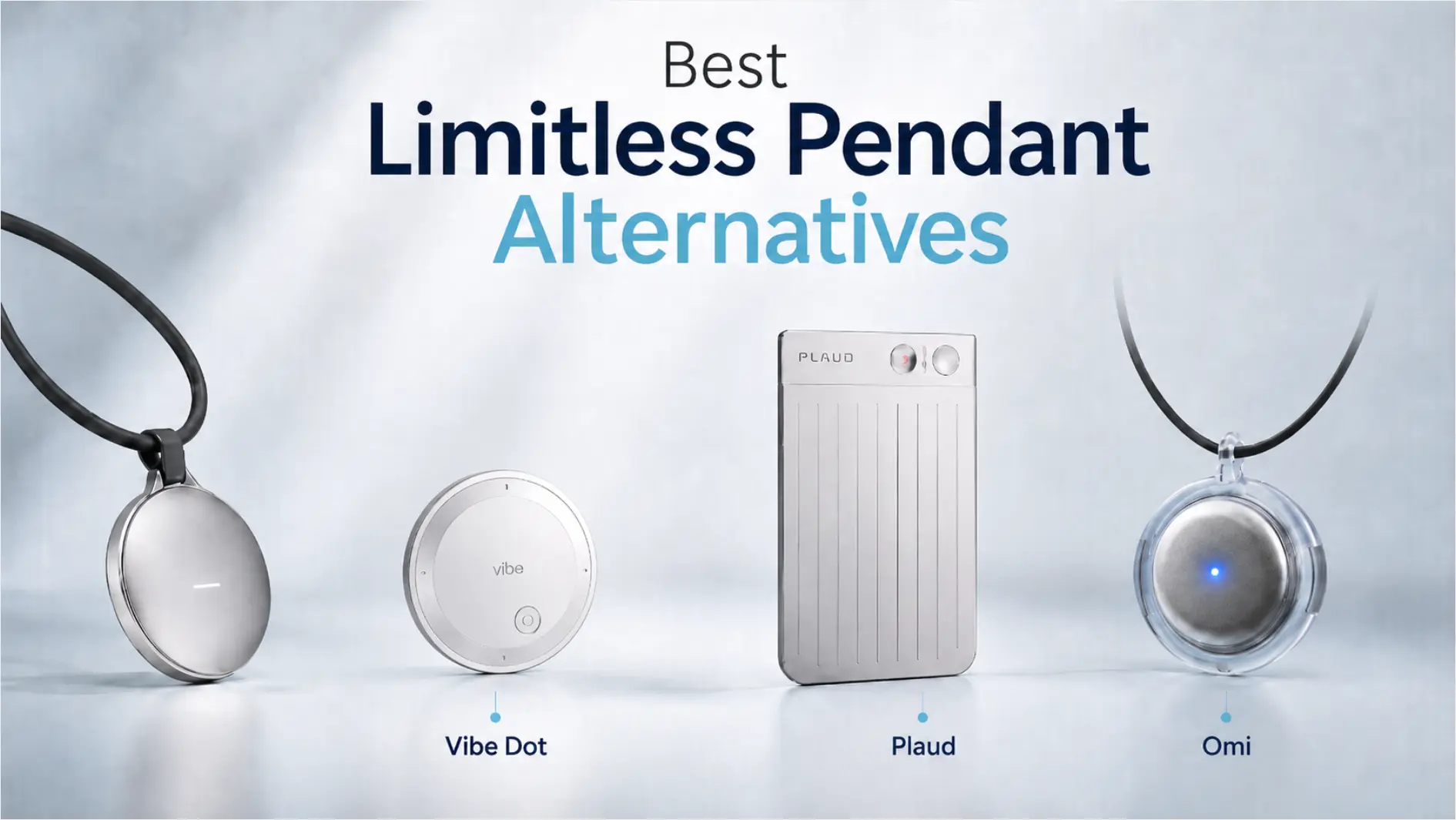 Best Limitless Pendant alternatives: Vibe Dot, Plaud, Omi, and more
Its weaknesses were just as clear in hindsight. It required a constant cloud connection, lacked enterprise compliance certifications for regulated industries, and — critically — was tied entirely to a single company's infrastructure. When that company was acquired, users in multiple regions lost access with almost no warning.
The right alternative addresses all three of those gaps.
The 5 Best Limitless Pendant Alternatives
Not sure where to start? Here's a quick overview of all five options before we dive into the details.
|
Device |
Price |
Battery |
Compliance |
AI Features |
Best For |
|---|---|---|---|---|---|
|
Vibe Dot |
$199 |
30+ hrs |
SOC 2, HIPAA, FERPA, NDAA |
Transcripts, summaries, action items, cross-session memory, agentic actions |
All-context professionals |
|
Plaud NotePin S |
$179 |
~100 hrs |
Limited |
Transcripts, 100+ summary templates, speaker diarization, mind maps |
Call recording focus |
|
Omi |
~$69 |
Variable |
Self-managed |
Transcripts, summaries (model depends on self-hosted config) |
Developers, open-source |
|
Bee Pioneer |
$49.99 |
160 hrs (claimed) |
None |
Daily recaps, to-do lists, color-coded conversation segments |
Budget / entry-level |
|
UMEVO Note Plus |
~$89 |
40 hrs |
HIPAA, SOC 2 (self-reported) |
Transcripts, summaries, action items, mind maps (1yr free unlimited) |
High-volume, budget-conscious |
1. Vibe Dot — Best Overall
Price: $199 | Battery: 30+ hours | Storage: 64GB onboard | AI Subscription: Free tier available (300 mins/mo, paid plans ~$9~$29/mo
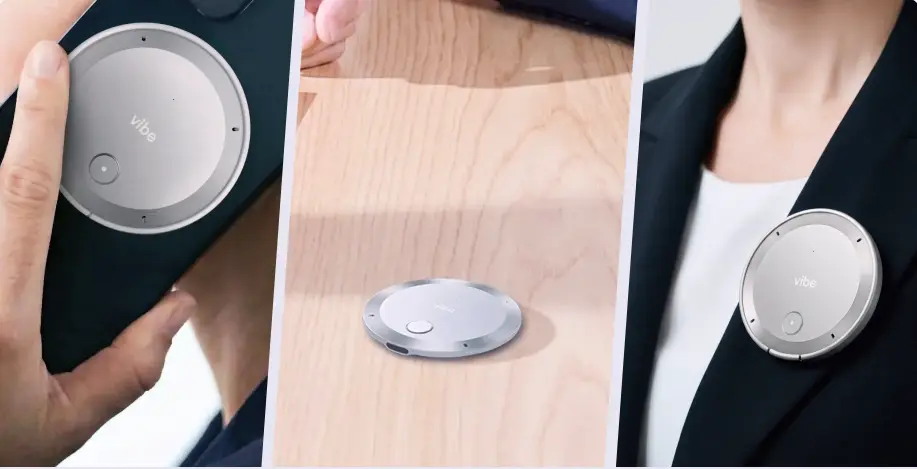 Vibe Dot AI voice recorder shown handheld, on desk, and worn as lapel clip
If you want the most direct upgrade from the Limitless Pendant — better hardware, stronger AI, and compliance certifications the Pendant never had — Vibe Dot is the answer.
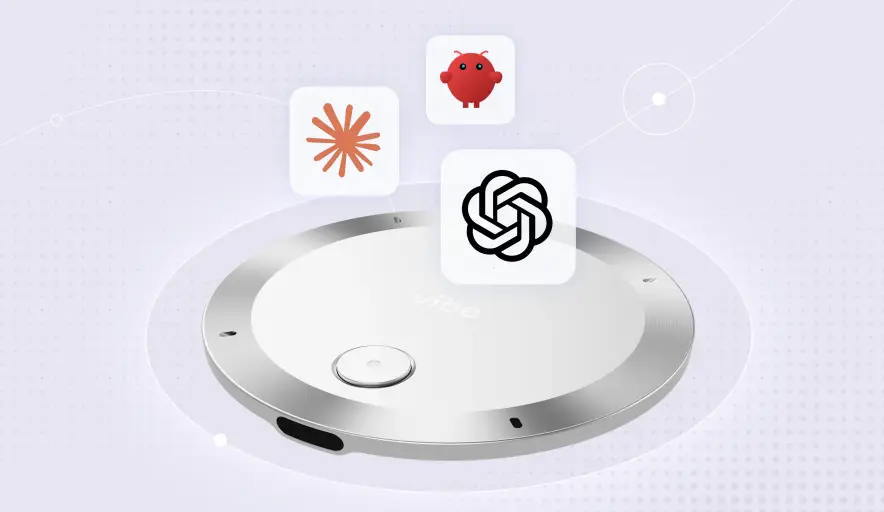
Vibe Dot is a palm-sized wearable that clips to a lapel, snaps magnetically to a phone (MagSafe for iPhone, magnetic ring adapter for Android), or sits on a desk during a meeting. It ships with a 5-microphone array — four high-fidelity MEMS air microphones plus a bone-conduction vibration sensor — which allows it to isolate your voice from background noise in environments like busy cafés, open-plan offices, or construction sites. The Pendant's single-mic setup couldn't compete in those conditions.
Where Vibe Dot pulls ahead most clearly is what happens after the recording ends. Rather than producing a raw transcript, Vibe AI processes each session into structured summaries, a timestamped transcript, automatically extracted action items, and a searchable memory layer that connects context across days and weeks. Ask "What were the client's main concerns last Tuesday?" and Vibe AI retrieves the answer from your own conversation history.
For regulated industries, the compliance story matters. Vibe Dot carries SOC 2, HIPAA, FERPA, and NDAA certifications — making it viable for healthcare, education, legal, and government use cases where the Pendant was never an option.
Why it ranks first: The combination of hardware quality, agentic AI output, offline-first storage (audio is saved locally and syncs when connected), and an independently operating company makes Vibe Dot the most complete Limitless Pendant alternative available today. It also won the Red Dot Award: Product Design 2026 — recognition for industrial design that holds up in professional settings.
Specs at a glance:
-
Weight: 0.83 oz | Thickness: 0.17 in
-
Microphones: 4 MEMS + 1 bone-conduction VPU
-
Battery: 30+ hours continuous recording
-
Storage: 64GB onboard
-
Charging: USB-C, full charge in ~90 minutes
-
Compliance: SOC 2, HIPAA, FERPA, NDAA
-
Pricing: Device $199; Vibe AI Pro $9/seat/mo (billed annually)
Best for: Professionals who need reliable capture across every context — in-person meetings, calls, field visits, and remote sessions — with AI that turns recordings into action, not just text.

2. Plaud NotePin S — Best for Call Recording
Price: $179 | Battery: ~100 hours | Storage: Cloud-dependent | AI Subscription: Free tier available (300 mins/mo), paid plans ~$8–$20/mo
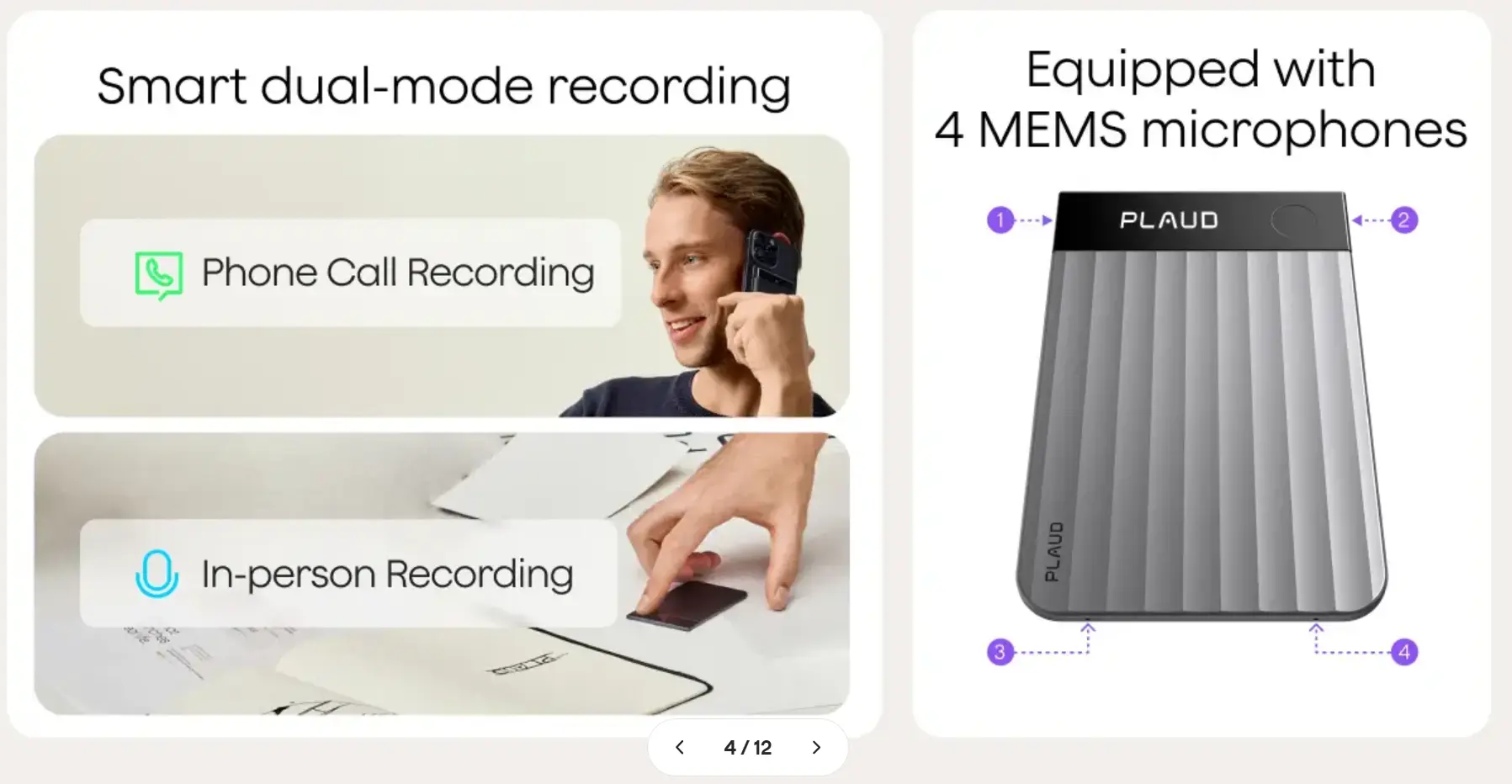 Plaud NotePin S dual-mode recording and 4 MEMS microphone diagram for call and in-person recording
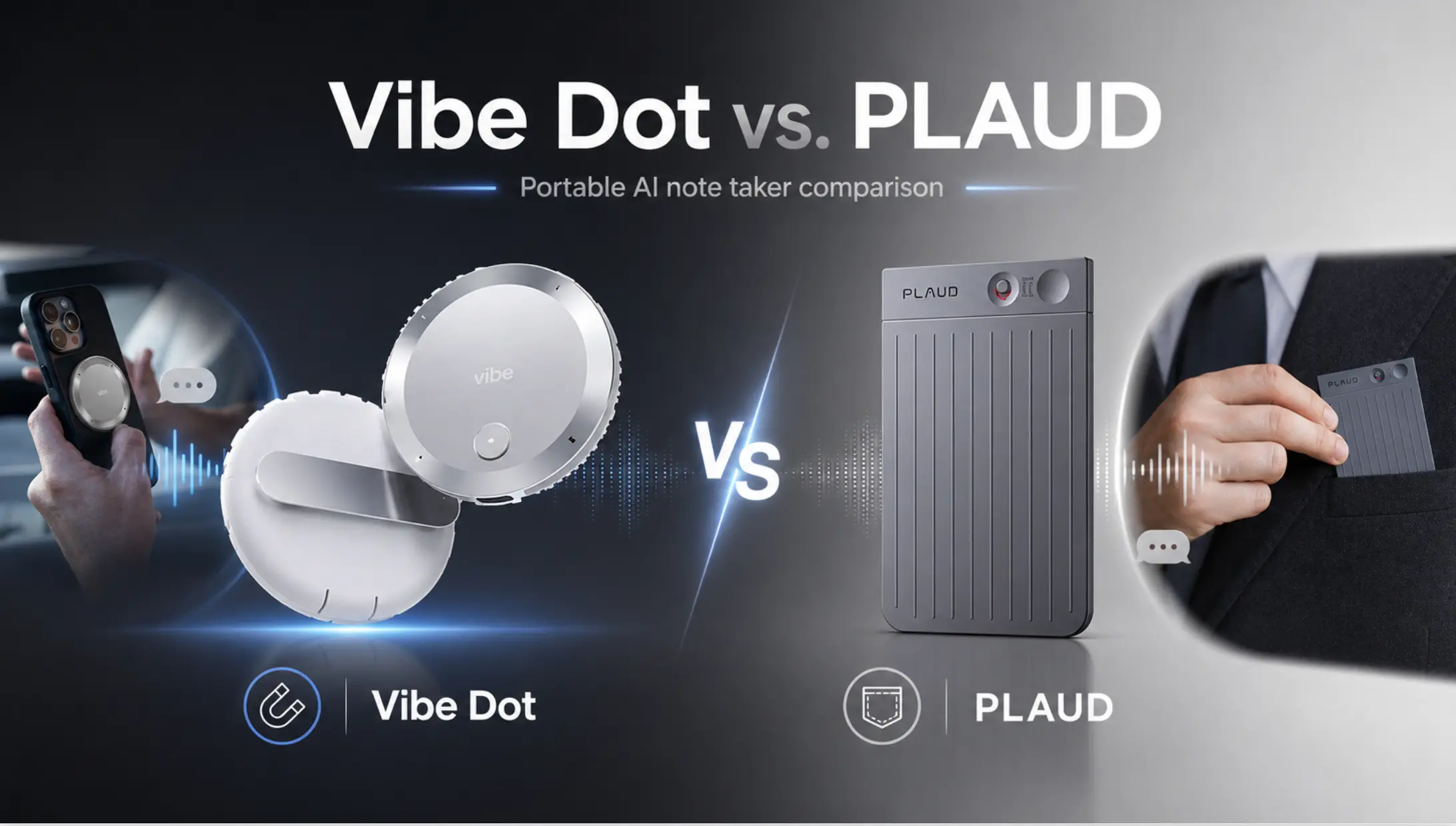
Plaud is the current category leader by sales volume following the Limitless acquisition, and the NotePin S earns that position. It's a slim magnetic device — thinner than a credit card — that attaches to the back of a phone, with a dedicated mode for capturing phone call audio through vibration sensing, something few hardware competitors replicate.
Plaud's AI platform is polished and template-heavy. It supports transcription in 112 languages with speaker diarization, custom vocabulary training, and a library of over 100 summary templates organized by use case — sales calls, interviews, lectures, legal consultations, and more. The companion app is clean and well-reviewed, with a gentler learning curve than most tools in this category.
Where it falls short: Plaud stores audio in the cloud by default, with no meaningful offline buffer if connectivity drops mid-recording. Its microphone array doesn't include a bone-conduction sensor, so voice isolation in loud environments is noticeably weaker than Vibe Dot's 5-mic setup. And while Plaud holds SOC 2 certification, it lacks the HIPAA, FERPA, and NDAA coverage that Vibe Dot carries — ruling it out for healthcare, education, and government procurement. The free tier covers 300 transcription minutes per month; heavier usage runs approximately $100–$240 per year.
Best for: Professionals whose recording workflow centers on phone calls and who want a large ready-made library of summary templates — and don't need enterprise compliance certifications.
3. Omi — Best for Developers and Open-Source Users
Price: ~$69 | Battery: Variable | Storage: Open-source / self-hosted | AI Subscription: Free (self-hosted) or pay-per-use via third-party APIs

Omi is a Bluetooth earpiece-style wearable with a fully open-source hardware and software stack. The device itself is small and unobtrusive — worn in or around the ear — and pairs with a companion app that can connect to self-hosted transcription models, local LLMs, or third-party AI APIs of your choosing. Everything from the firmware to the backend pipeline is available on GitHub, which made it a popular landing spot for former Limitless users who left after the Meta acquisition and no longer trusted cloud-first platforms.
The trade-off is setup friction. Omi is not a plug-and-play device — getting the most out of it requires comfort with APIs, Docker, or self-hosted infrastructure. The default companion app is functional but rough around the edges compared to the polished experiences Vibe Dot and Plaud offer out of the box. Audio quality and battery performance also vary depending on how the device is configured and which transcription pipeline you're running against.
For the right user, those trade-offs are irrelevant. If data sovereignty is the non-negotiable — and you have the technical chops to own the stack — Omi is the only option in this category that delivers it.
Best for: Developers, privacy-first power users, and teams who want full control over their transcription pipeline and data storage.
4. Bee Pioneer — Best Budget Option
Price: $49.99 | Battery: Up to 160 hours (claimed) | Storage: Cloud-processed | AI Subscription: Free (included, no current subscription fee)
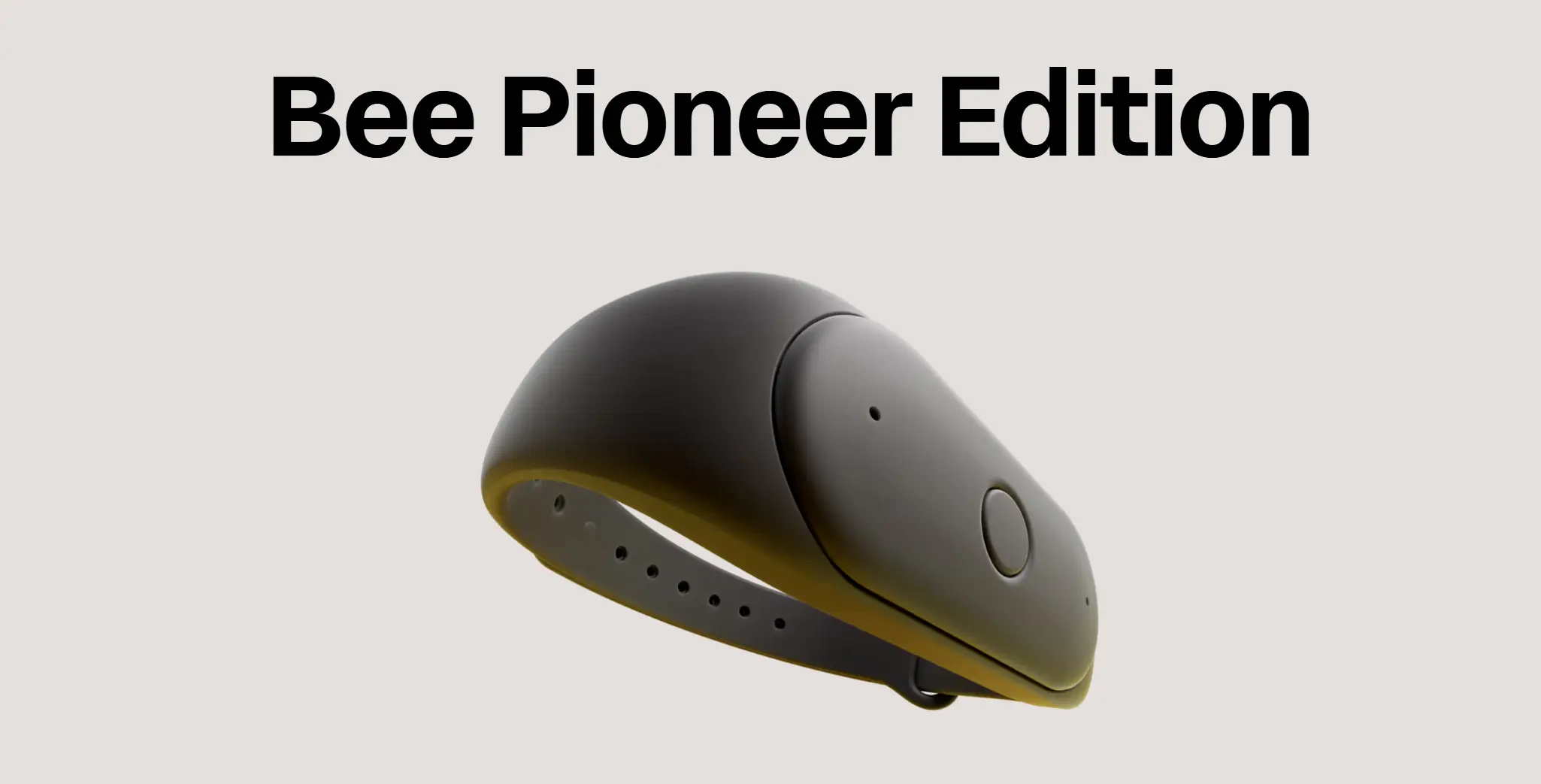 Bee Pioneer Edition wearable AI recorder wristband design in dark gray
Bee is a wristband-style wearable now owned by Amazon (acquired mid-2025). At $49.99, it's the lowest-cost entry point in the category by a wide margin. The device is worn on the wrist and listens passively throughout the day, generating color-coded conversation segments, daily recaps, and auto-generated to-do lists in its companion app. Its battery claim — over 160 hours — is ambitious; real-world active-listening performance is shorter, but still competitive.
The limitations are meaningful. Multi-speaker accuracy lags behind dedicated hardware competitors — in a room with more than two people, voice separation becomes unreliable. There's no waterproofing, no enterprise compliance certifications, and the Amazon acquisition raises legitimate data-governance questions for anyone in a regulated industry. Raw audio is deleted after transcription, which removes the ability to go back and verify a specific exchange. Bee also supports only 40 languages, compared to 112 for Plaud and broader coverage on Vibe Dot.
That said, for someone who simply wants to test whether an always-on wearable recorder fits their workflow — before committing to a $199 device — Bee is a reasonable, low-risk entry point. Just go in knowing that the professional ceiling is low.
Best for: Casual users and first-time wearable AI adopters who want to try the category before investing in professional-grade hardware.
5. UMEVO Note Plus — Best for High-Volume Recording
Price: ~$89 | Battery: 40 hours | Storage: 64GB onboard | AI Subscription: Free unlimited transcription for first year, then free monthly allowance
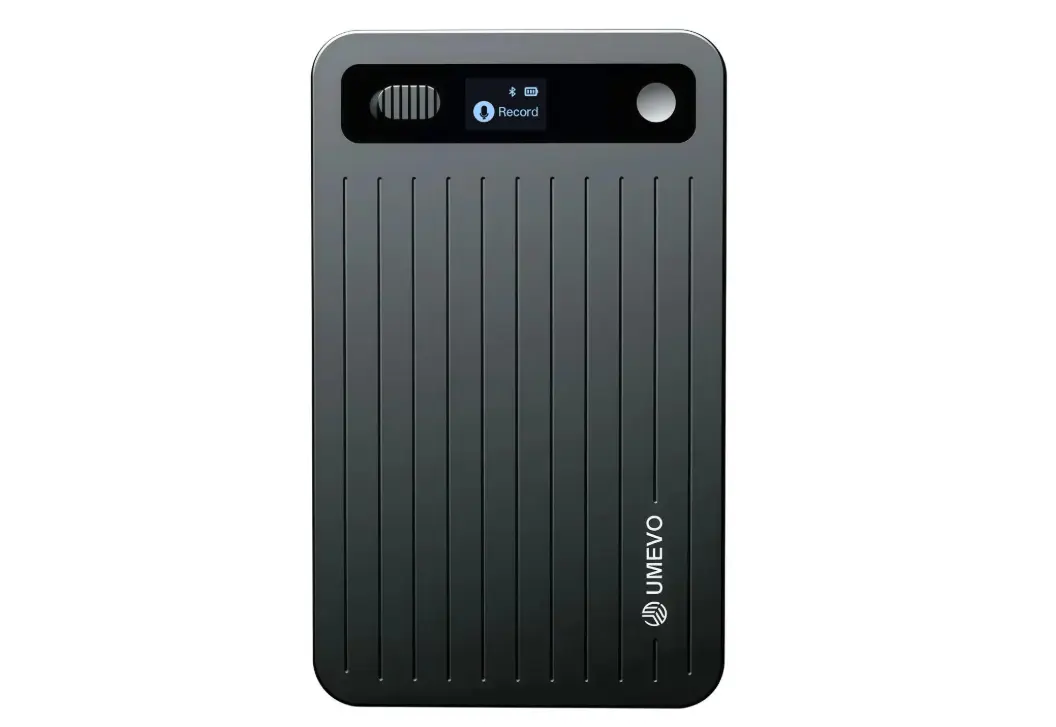 UMEVO Note Plus AI recorder with 64GB onboard storage and record button display
UMEVO Note Plus is a credit-card-thin MagSafe recorder that launched in April 2026, positioning itself as the value-focused alternative in a category that's increasingly dominated by $150–$200 devices. At roughly $89, it undercuts both Vibe Dot and Plaud on price while matching them on two specs that matter most for heavy users: 64GB of onboard storage and 40 hours of continuous recording on a single charge — enough to get through a multi-day conference without hunting for an outlet.
Like Plaud, UMEVO uses a piezoelectric vibration sensor that snaps to the back of a phone via MagSafe, capturing phone call audio directly from the chassis vibrations rather than through the air. This gives it clean call recording without speakerphone. For in-person meetings, a separate MEMS microphone handles ambient capture with AI noise cancellation. Transcription runs across 140 languages with speaker diarization, and the AI output covers summaries, action items, and mind maps. New users get one year of unlimited transcription included — a notably generous offer compared to most competitors who gate AI processing behind a subscription from day one.
The tradeoffs: UMEVO is a newer brand (founded 2024), so long-term platform reliability is less proven than Vibe Dot or Plaud. The companion app is functional but less refined. And while UMEVO claims HIPAA and SOC 2 compliance, the certifications haven't been independently scrutinized to the same degree as Vibe Dot's — worth noting for anyone in a strictly regulated industry.
Best for: Budget-conscious professionals who record frequently and want maximum battery and storage without paying premium prices — and who don't need enterprise-grade compliance verification.
How to Choose a Limitless Pendant Alternative
The most useful question isn't "which device has the best specs?" It's: where do your most important conversations actually happen?
If you're frequently in-person — client meetings, site visits, medical consultations, field work, conferences — you need hardware that travels with you. Software bots are blind to everything that doesn't happen on a scheduled call. Vibe Dot, Plaud NotePin / NotePin S, and Bee Pioneer all fit this profile; they differ mainly on audio quality, compliance depth, and AI output.
If your work is mostly virtual, software tools like Otter.ai or Granola can handle scheduled video calls well — but none of them replace a wearable for in-person capture. Think of them as complements, not substitutes, for anyone whose important conversations regularly happen outside a Zoom window.
If data privacy and compliance matter for your industry, the certification stack is non-negotiable. Vibe Dot's SOC 2 / HIPAA / FERPA / NDAA coverage makes it the only option in this group that works across healthcare, education, legal, and government contexts.
If you're a developer who wants to own your data pipeline entirely, Omi's open-source architecture is worth the setup investment.
If you're just testing the category, Bee's low price point is a sensible first step — with the understanding that upgrading later is straightforward.
For a deeper look at the hardware vs. software decision, see our guide: How to Choose an AI Note Taker.
The Bottom Line
The Limitless Pendant was a capable product. Its shutdown — and the short notice given to users in affected regions — underscored the risk of depending on a single company's cloud infrastructure for always-on personal data capture.
The best Limitless Pendant alternative in 2026 is one that won't disappear on you: solid hardware, AI that goes beyond transcription, compliance certifications for the industries that need them, and a company with a clear product roadmap.
Vibe Dot meets all of those criteria. It's available now, it works across every recording context, and the AI platform behind it — Vibe AI — keeps getting more capable with each update.
If you're evaluating the full AI note-taker landscape beyond wearables, our 10 Best AI Note Takers in 2026 guide covers both hardware and software options across every use case.
FAQs
Is the Limitless Pendant still available to buy?
No. Meta acquired Limitless in December 2025 and immediately stopped new sales. Existing users were moved to an unlimited plan at no charge, but support is only confirmed through 2026. The Pendant is no longer available through any official channel.
What is the best alternative to the Limitless Pendant?
For most professionals, Vibe Dot is the strongest replacement — it matches the Pendant's passive capture workflow while adding a 5-mic hardware array, 64GB onboard storage, SOC 2 / HIPAA / NDAA compliance, and an AI layer that generates summaries and action items, not just transcripts. For budget-conscious users, Bee Pioneer ($49.99) is the lowest-cost entry point in the wearable category.
Does Vibe Dot work without Wi-Fi?
Yes. Vibe Dot stores audio locally on its 64GB onboard storage and syncs to the Vibe AI app on your phone via Bluetooth when a connection is available. You can record in dead zones, basements, or any offline environment and sync later. This is a meaningful advantage over cloud-dependent devices that require a constant connection to function.
How does Vibe Dot compare to Plaud NotePin?
Both are wearable AI recorders in a similar price range ($179–$199). Vibe Dot's 5-mic system — including a bone-conduction sensor — gives it an edge in noisy environments. Vibe Dot also offers deeper compliance certifications (HIPAA, FERPA, NDAA) and a more advanced AI output layer through Vibe AI. Plaud NotePin has a strong call-recording mode and a larger library of summary templates. See our full Plaud alternatives breakdown for a detailed comparison.
What happened to Limitless users in the EU and UK?
When Meta acquired Limitless in December 2025, users in the EU, UK, and several other regions were given less than two weeks to export their data before access was cut off. This highlighted a significant risk with cloud-dependent wearable platforms: service can be discontinued with minimal notice. Vibe Dot's offline-first storage architecture and independent company structure are designed to avoid this failure mode.
Do I need hardware, or can a software tool replace the Limitless Pendant?
For in-person conversations — the core use case the Limitless Pendant was built for — hardware is the only answer. Software bots like Otter.ai, Fireflies.ai, and Granola only work inside scheduled video calls; they cannot capture a client lunch, a site visit, or a hallway conversation. If your recording needs are exclusively virtual, a software tool is cheaper and simpler. But if you're replacing the Pendant, you almost certainly need a wearable.