
If you’re researching the Limitless Pendant, there’s one critical fact to know before you go any further: the Limitless Pendant is no longer available for purchase. In December 2025, Meta acquired Limitless and immediately discontinued sales. The companion app stopped supporting new recordings, and users in the EU, UK, and several other regions were given less than two weeks to export their data.
That context matters for this comparison. Limitless built a genuinely capable product — and a loyal following — before the acquisition. Understanding what it did well, where it fell short, and why its users are now looking for alternatives helps clarify exactly what to look for in a wearable AI note taker today.
This article gives you an honest, spec-by-spec comparison of Vibe Dot and the Limitless Pendant, so you can make an informed decision — even if one of them is no longer on the shelf.
 Man using Vibe Dot to record his ideas on the go
Quick Answer: Vibe Dot vs. Limitless Pendant at a Glance
|
Vibe Dot |
Limitless Pendant | |
|---|---|---|
|
Availability |
Available, Buy now to get 20% off |
❌ Discontinued (acquired by Meta, Dec 2025) |
|
Device price |
$199 |
$199 (was; no longer sold) |
|
Free plan |
300 min/mo transcription |
1,200 min/mo (historical) |
|
Paid plan |
Pro $9/seat/mo · Max $29/seat/mo |
Pro ~$19/mo · Unlimited ~$29/mo (historical) |
|
Recording trigger |
Tap, press-and-hold, or Auto capture (Beta) |
Always-on passive |
|
Battery |
30+ hours |
~6–7 hours real-world |
|
Local storage |
64 GB |
None (cloud-dependent) |
|
Compliance |
SOC 2 Type 2 · HIPAA attested |
Neither (HIPAA was aspirational; lost post-acquisition) |
|
Team features |
Shared workspaces via Vibe AI |
Single-user only |
|
AI workspace |
Vibe AI — Memory Graph, cross-session recall, agentic actions |
Lifelog + Ask AI (single user) |
|
Best for |
Client-facing professionals and teams needing a compliant, long-term AI memory workspace |
Individual knowledge workers who wanted passive, frictionless capture |
What Was the Limitless Pendant?
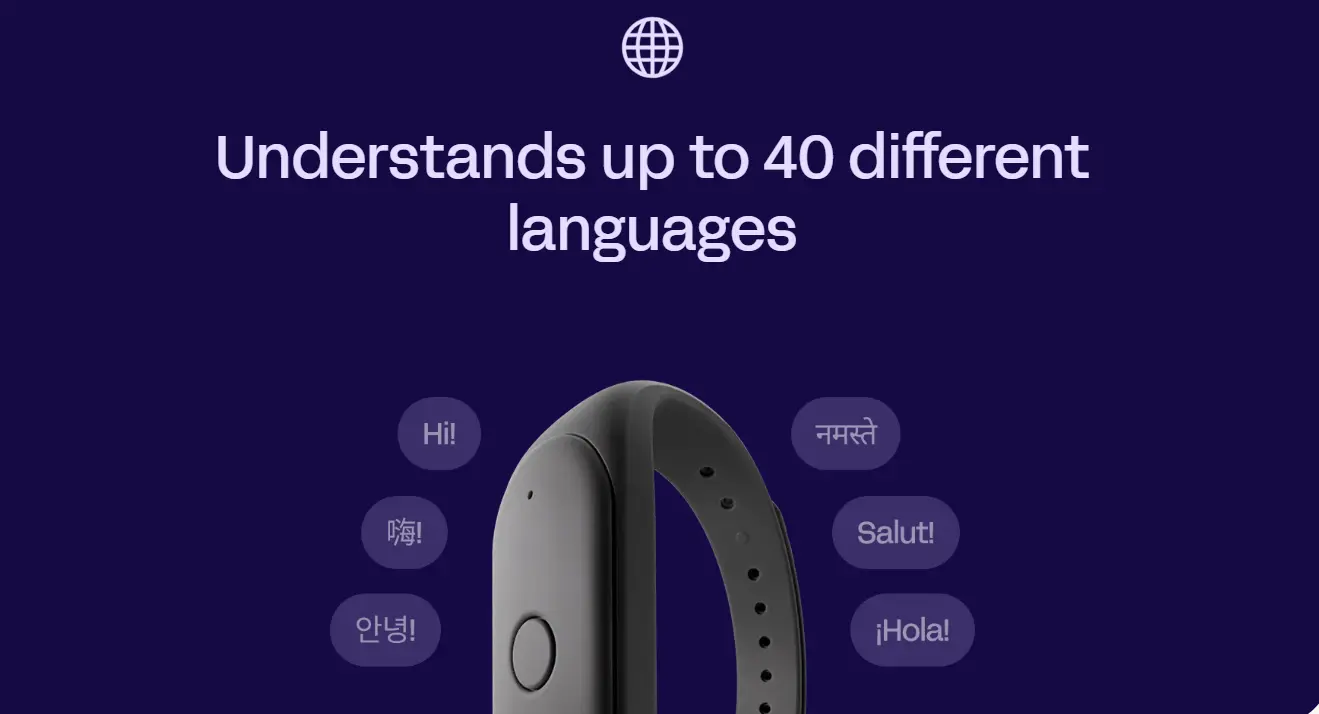
The Limitless Pendant was a coin-sized wearable — roughly 1.25 inches wide — that clipped to a shirt or hung on a lanyard. Its core proposition was radical simplicity: clip it on, and it passively captures every conversation you have throughout the day. No app to open. No button to press.
The hardware was well-executed. A beam-forming microphone array handled multi-speaker environments reasonably well. A white LED lit up whenever the device was recording — on by design, and not dimmable — which served as a visible consent signal for anyone nearby. The device was IP54 water-resistant and supported 103 languages on mobile.
The companion app surfaced transcripts, AI summaries, and action items, and let users query their recorded history by asking natural-language questions — essentially a searchable lifelog of everything they said and heard.
Where It Fell Short
Despite the elegant concept, Limitless had real limitations:
Battery life didn’t match the pitch. The marketing claimed up to 100 hours of battery. Hands-on reviewers consistently found 6–7 hours of real-world life — enough for a full workday, but requiring nightly charging. For professionals with early starts and late finishes, that became a daily anxiety.
It was cloud-dependent by design. The Pendant stored nothing locally. Every recording synced to Limitless’s cloud servers for processing. This made the device unusable offline and meant users had zero data control at the device level.
Speaker identification was inconsistent. Multiple reviewers noted that voice labeling — a core feature for meeting notes — frequently failed or required repeated corrections.
It was built for one person. Limitless had no team workspace, no shared context, and no way to push a conversation into a broader project. It was a personal memory device, full stop.
The Meta Acquisition: Why It Matters for Buyers
On December 5, 2025, Meta acquired Limitless and absorbed its team into Reality Labs. Within days, the Pendant was pulled from sale. The desktop and web apps lost their recording capabilities. Users in the EU, UK, Brazil, China, Israel, South Korea, and Turkey were given approximately two weeks to export their data before service ended in those regions.
The acquisition also ended Limitless’s HIPAA positioning. As reported by the SF Standard, the deal meant the loss of HIPAA privacy protections, so professionals who had adopted the device for clinical or legal use — relying on its promise of HIPAA-compliant capture — had to find alternatives immediately.
For anyone evaluating AI wearables today, the Limitless story is a useful case study: a technically capable product, built on a privacy-first brand promise, that became unusable to its most trust-sensitive users the moment it changed hands.
Introducing Vibe Dot
Vibe Dot is a wearable AI conversation capture device built for the parts of the workday that don’t start with a calendar invite. A client meeting at a client’s office. A site visit. A workshop. The thirty-second hallway conversation that changes the direction of a project.
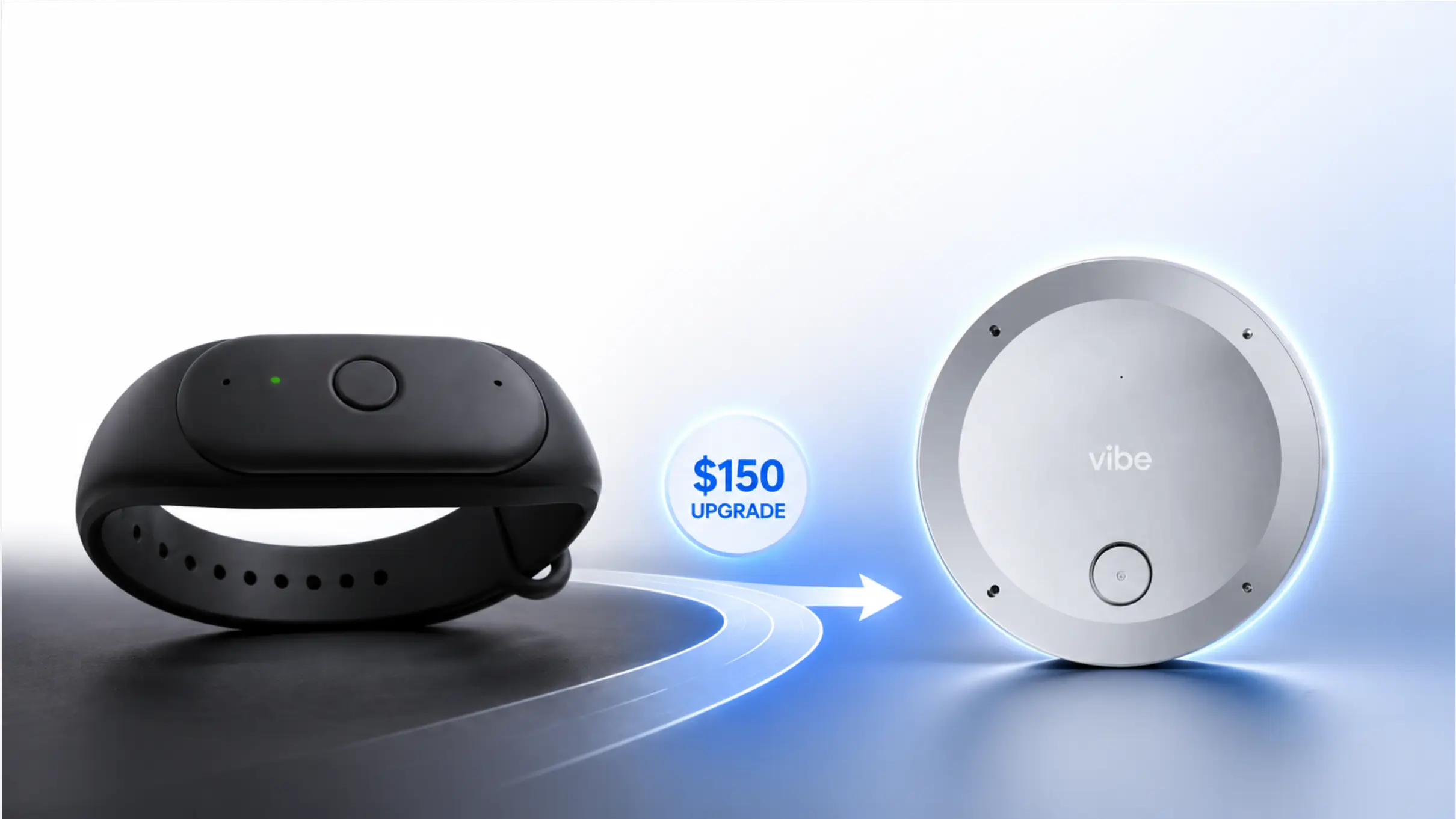
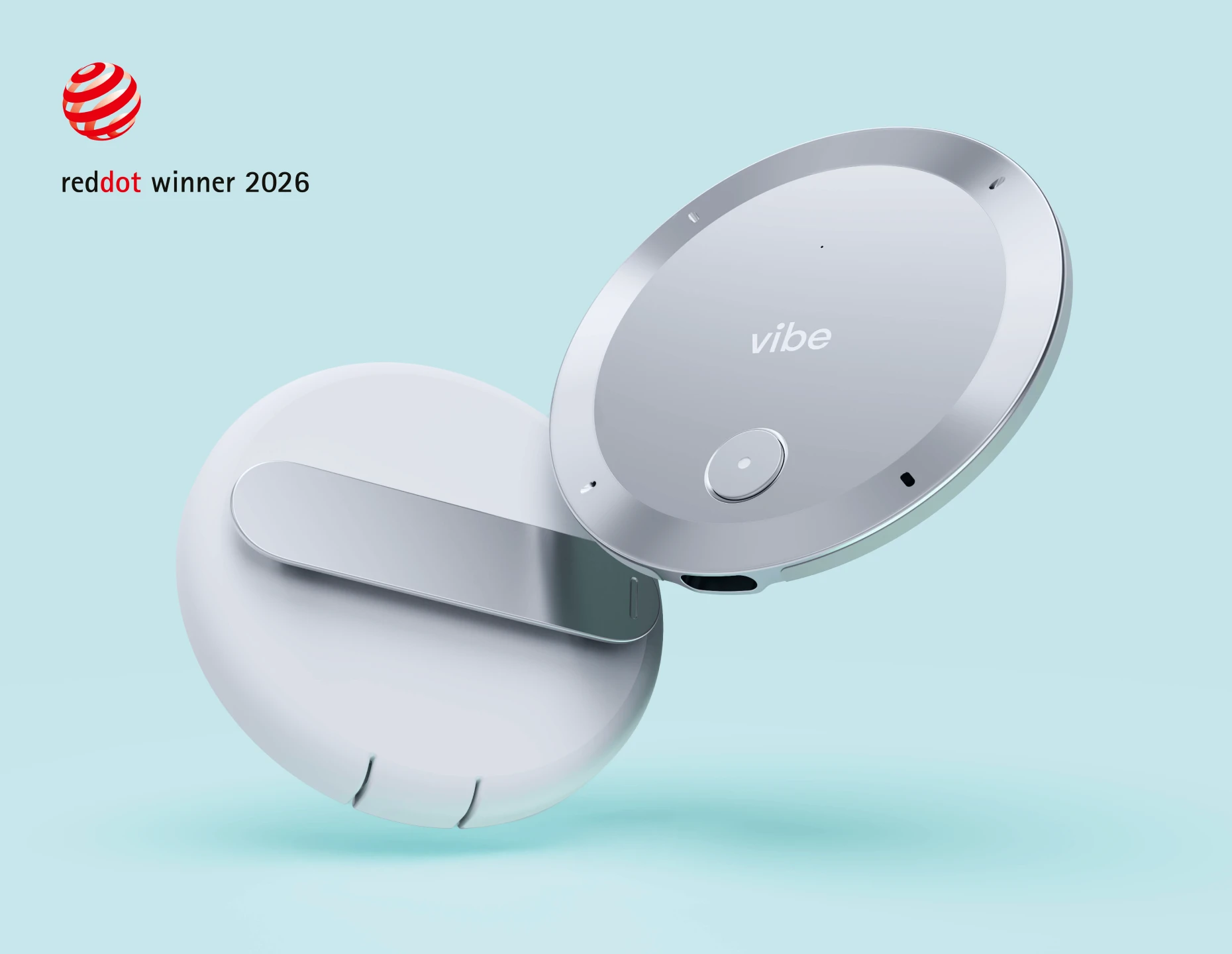
At 2.36 inches wide and 0.17 inches thick, Vibe Dot sits closer to a large coin than a traditional recorder. It attaches magnetically to the back of an iPhone via MagSafe, clips to clothing, or sits flat on a desk. A five-microphone array — four MEMS air microphones plus a bone-conduction vibration sensor — handles multi-speaker environments and filters out background noise. The device is a Red Dot Award: Product Design 2026 laureate, selected from submissions across 61 countries.
But the hardware is only part of the story. What makes Vibe Dot different from a standalone recorder is what happens once the recording is captured.
Vibe AI: The Workspace Behind the Device
Every recording captured on Vibe Dot flows into Vibe AI, a contextual workspace that treats conversations as connected information, not isolated files.
Where most AI note takers give you a transcript and a summary and stop there, Vibe AI builds a Memory Graph — a map of the people, decisions, and details that surface across your conversations over time. Ask it "What did we decide about the pricing structure last month?" and it can pull the answer from a meeting three weeks ago.
Vibe AI also supports agentic actions (currently in Beta): the ability to push tasks, follow-ups, and decisions directly into Slack, Notion, and other tools without leaving the workspace. The AI stack behind it — Claude for reasoning, Codex for structure, and Vibe’s proprietary OpenClaw layer for task execution — is designed to move from captured conversation to completed action with minimal manual work.
Conversations can stay private or be shared with a team. A client debrief can become team context for everyone working on that account. A project decision captured during a site visit can land in the project workspace before the drive home is over.
This is where Vibe Dot’s positioning diverges sharply from a personal lifelog device like the Pendant: it is designed not just to capture your day, but to connect what you capture to the work that follows.
Head-to-Head: The Key Differences
Hardware and Battery
Vibe Dot’s 30+ hour battery is one of its most practical differentiators. Compared to the Limitless Pendant’s real-world 6–7 hours, Vibe Dot covers two full workdays on a single charge — removing the daily charging overhead that frustrated Pendant users.
The 64 GB of local storage matters too. Vibe Dot stores recordings on-device first and syncs to the cloud when a connection is available. If you’re in a basement conference room, a plane, or a client site with restricted Wi-Fi, the recording still happens. The Limitless Pendant required a live connection to function fully — its cloud-first architecture was a liability in exactly the environments where off-calendar conversations happen.
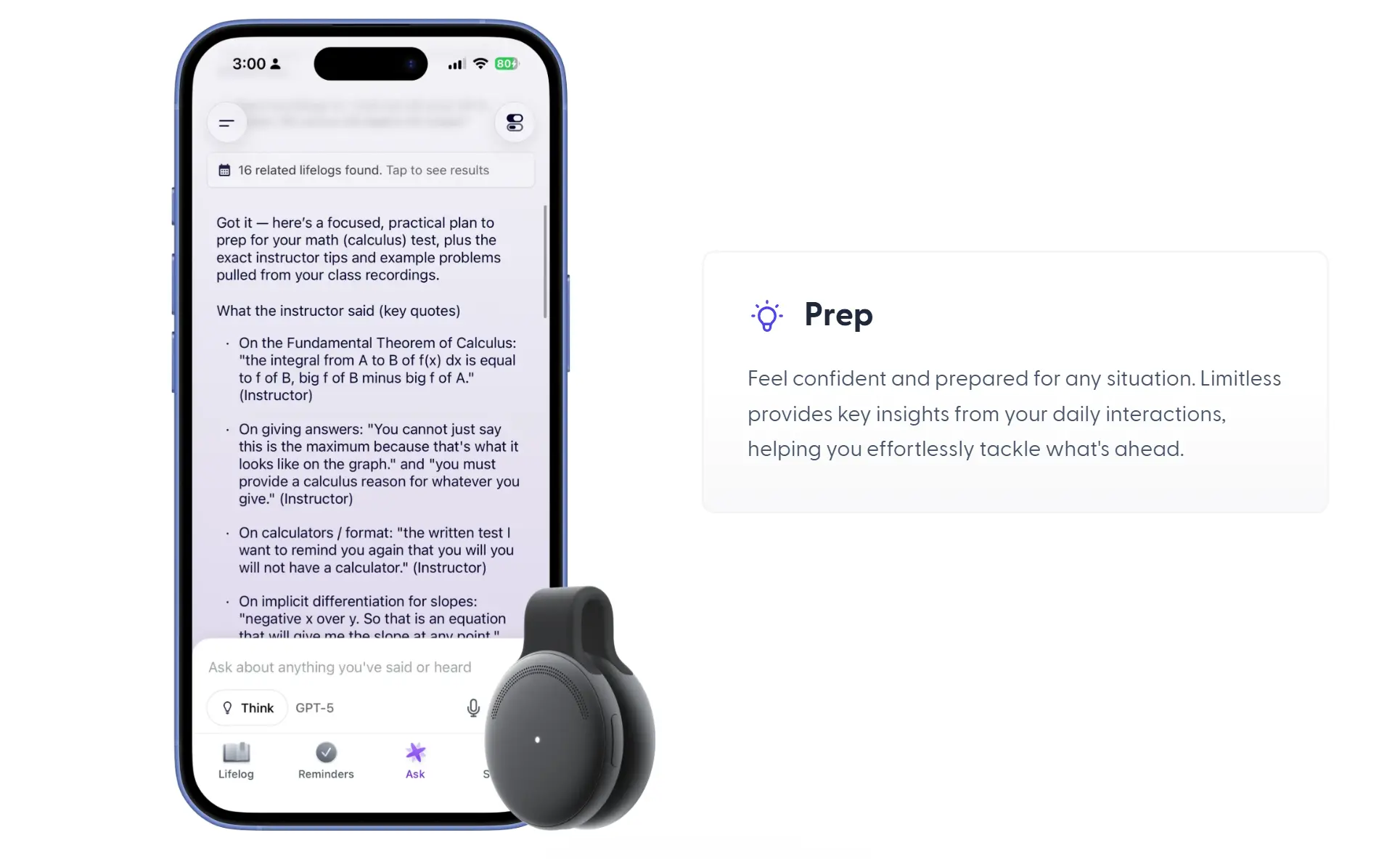 Limitless Pendant screenshot
Recording Trigger
This is the most meaningful philosophical difference between the two devices.
The Limitless Pendant was always-on. Clip it on, and it starts recording. The appeal is obvious: zero friction. But the trade-off is equally obvious — you’re capturing everything, whether or not it’s relevant, in environments where continuous recording may raise consent questions.
Vibe Dot offers three modes: Spark (press-and-hold for a quick memo), Tap to record (double-tap to start), and Auto capture (a scheduled, auto mode, currently in Beta). Voice Activity Detection filters out background noise, so the device is not recording ambient sound continuously — it activates on actual conversation.
Neither approach is objectively better; the right choice depends on your workflow. But for professionals in regulated industries, intentional capture is not just a preference — it is a compliance requirement.
Privacy and Compliance
This is where the gap between the two products is most significant.
Vibe Dot has completed SOC 2 Type 2 certification (audited by Prescient Assurance) and carries a HIPAA attestation. It uses a dedicated hardware encryption chip with TPM 2.0, and Vibe has committed that recorded data is never used to train its models. You can review Vibe’s full security posture on their Security Overview page. For healthcare professionals, legal professionals, and enterprises with data governance requirements, these certifications matter in concrete ways.
The Limitless Pendant never completed its compliance roadmap. Its HIPAA positioning was aspirational — and when Meta acquired the company, whatever HIPAA pathway existed was closed. Professionals who had relied on it for sensitive conversations had to migrate immediately, with little warning.
The compliance story also reinforces a broader point about data ownership. With a cloud-only architecture and no local storage, Pendant users had no copy of their recordings beyond what Limitless’s servers held. When the EU service shut down, that data was gone.
AI Features and Team Workflow
Both devices transcribe, summarize, and surface action items. The Limitless Pendant added a solid "Ask AI" feature for querying your personal lifelog — and it worked well for individual knowledge workers who wanted to recall what was said in a meeting or reconstruct a conversation from memory.
Vibe AI goes further in two directions: depth of context and team scope.
The Memory Graph builds a relational view of your captured conversations — connecting the same client, project, or decision across multiple sessions over time. This is fundamentally different from keyword search over a transcript archive. You are not searching for a word; you are navigating a web of connected context.
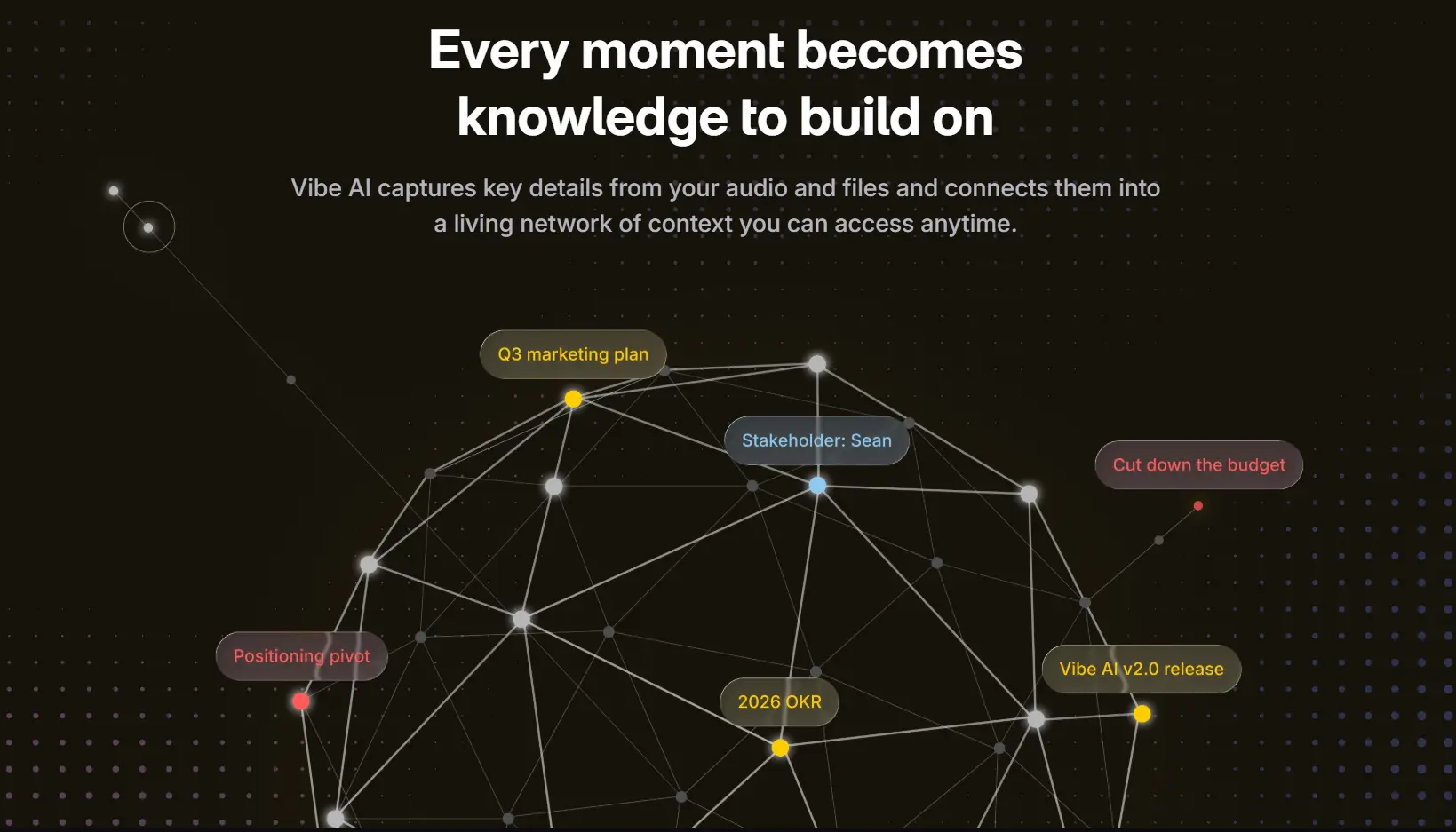
The team scope means that Vibe Dot is not just a personal capture device — it is an entry point into a shared workspace. When a conversation is relevant to a team, it can move into a shared space where other team members can review the full transcript and summary, see the action items, and carry the context forward. Combined with Vibe Bot (for conference room capture) and Vibe Board (for collaborative whiteboarding), Vibe Dot becomes the personal layer of a complete workplace AI ecosystem — not a standalone product.
Pricing
|
Vibe Dot |
Limitless Pendant | |
|---|---|---|
|
Device |
$199 |
$199 (discontinued) |
|
Free tier |
300 min/mo transcription, core features |
1,200 min/mo (historical) |
|
Mid tier |
Pro: $9/seat/mo (annual) — 1,200 min/mo, 12-mo memory |
Pro: ~$19/mo (historical) |
|
Top tier |
Max: $29/seat/mo (annual) — unlimited transcription, permanent retention |
Unlimited: ~$29/mo (historical) |
At the device level, both products were priced identically at $199. The meaningful difference is in the software model. Vibe AI’s $9/seat Pro tier delivers comparable transcription volume to Limitless’s ~$19/month Pro plan — roughly half the subscription cost for a similar monthly allocation. For teams buying multiple seats, that difference compounds quickly.
Who Should Choose What
Choose Vibe Dot if:
-
You are a client-facing professional who needs a reliable record of conversations that happen off-calendar
-
Your work involves regulated industries (healthcare, legal, financial services) where SOC 2 and HIPAA compliance are requirements, not nice-to-haves
-
You want a single device that connects to a broader team workspace — not just a personal recorder
-
Battery life and offline recording are practical priorities
-
You want an AI workspace that builds context across sessions, not just file-by-file summaries
The Limitless Pendant was right for you if:
-
You wanted zero-friction passive capture with no button to press
-
You were a solo knowledge worker who needed a personal memory assistant for individual recall
-
Your primary use case was meeting-dense days where you needed a reliable searchable archive
That second group of users — the ones the Pendant served well — are now, necessarily, looking for alternatives. Vibe Dot is worth a serious look. So is our roundup of the best Limitless Pendant alternatives in 2026 for a broader comparison.
If you’re also evaluating other dedicated recorders, see our guide to the best AI note takers in 2026.
The Bottom Line
The Limitless Pendant demonstrated that the market for wearable AI conversation capture is real and growing — and then illustrated, in sharp relief, the risk that comes with a cloud-dependent, single-user device tied to a company whose ownership can change overnight.
Vibe Dot is built for what comes next: longer battery, local storage, enterprise compliance, and an AI workspace that connects your captured conversations to the work your team actually needs to get done.
If you’re evaluating AI wearables in 2026, the question isn’t whether Vibe Dot or the Limitless Pendant is better. The Pendant is gone. The question is what a wearable AI note taker should do for you — and whether the tool you choose will still be there in a year.
Last updated: July 2026. Limitless Pendant specifications reflect pre-acquisition product details. Vibe Dot Auto capture and Agentic actions features are currently in Beta.
FAQ
Is the Limitless Pendant still available?
No. Meta acquired Limitless in December 2025 and immediately discontinued new sales. The device is no longer purchasable through any official channel.
Can I still use my Limitless Pendant if I already own one?
Functionality is significantly reduced post-acquisition. Recording was disabled in the desktop and web apps; the mobile app continues in a limited capacity for existing users who were moved to the Unlimited plan free of charge. Users in the EU, UK, and several other regions lost service entirely in December 2025.
Is Vibe Dot HIPAA compliant?
Vibe carries a HIPAA attestation from Prescient Assurance. For healthcare professionals or organizations with specific BAA requirements, contact Vibe directly to understand the coverage scope.
How does Vibe Dot handle consent?
Vibe Dot’s LED indicator is visible when recording is active. Consent laws for recording vary by jurisdiction — some states require all-party consent. Vibe’s design leaves consent management to the user; the device is not always-on by default.
Does Vibe Dot work without a phone?
Vibe Dot captures and stores recordings locally on its 64 GB onboard storage without a phone connection. A paired phone (iOS or Android) and internet connection are required for transcription processing, AI summaries, and sync to Vibe AI.
How does Vibe Dot compare to Plaud Note Pro?
Both are strong options for professionals. For a detailed breakdown, see our Vibe Dot vs. Plaud comparison.
Where can I learn more about Vibe AI?
The full feature overview — Memory Graph, cross-session recall, agentic integrations, and team workspace — is on the Vibe AI product page.