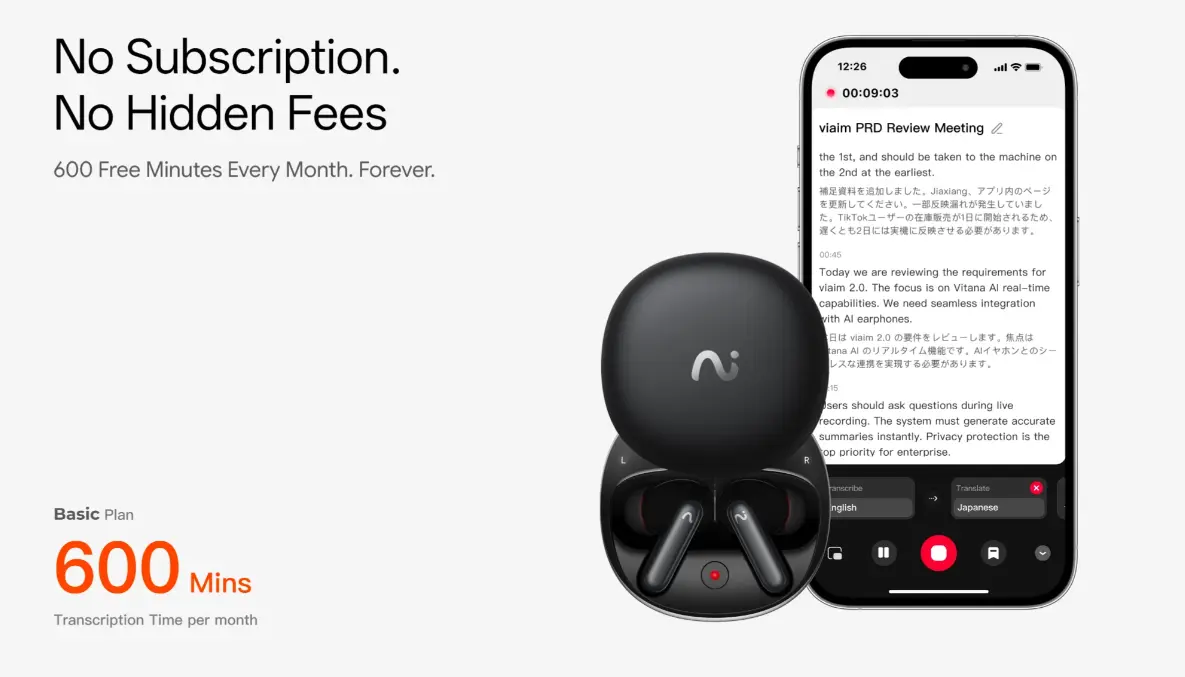

The viaim RecDot is a capable AI note-taking device — but it’s built around a specific set of assumptions: that you want earbuds, that you’ll always remember to press record, and that a per-session transcript is enough. For a lot of professionals, one or more of those assumptions don’t hold.
Maybe you’re in back-to-back in-person meetings where wearing earbuds feels awkward. Maybe you’ve missed the start of enough conversations that a manual trigger is itself the problem. Or maybe you need your AI recorder to connect context across weeks of meetings — not just summarize each one in isolation.
This roundup covers the best viaim RecDot alternatives in 2026, with a clear-eyed look at what each one trades away and what it does better. If you want a broader category overview first, see our guide to wearable AI recorders — it covers how the category works, what to evaluate, and where RecDot sits in the landscape.
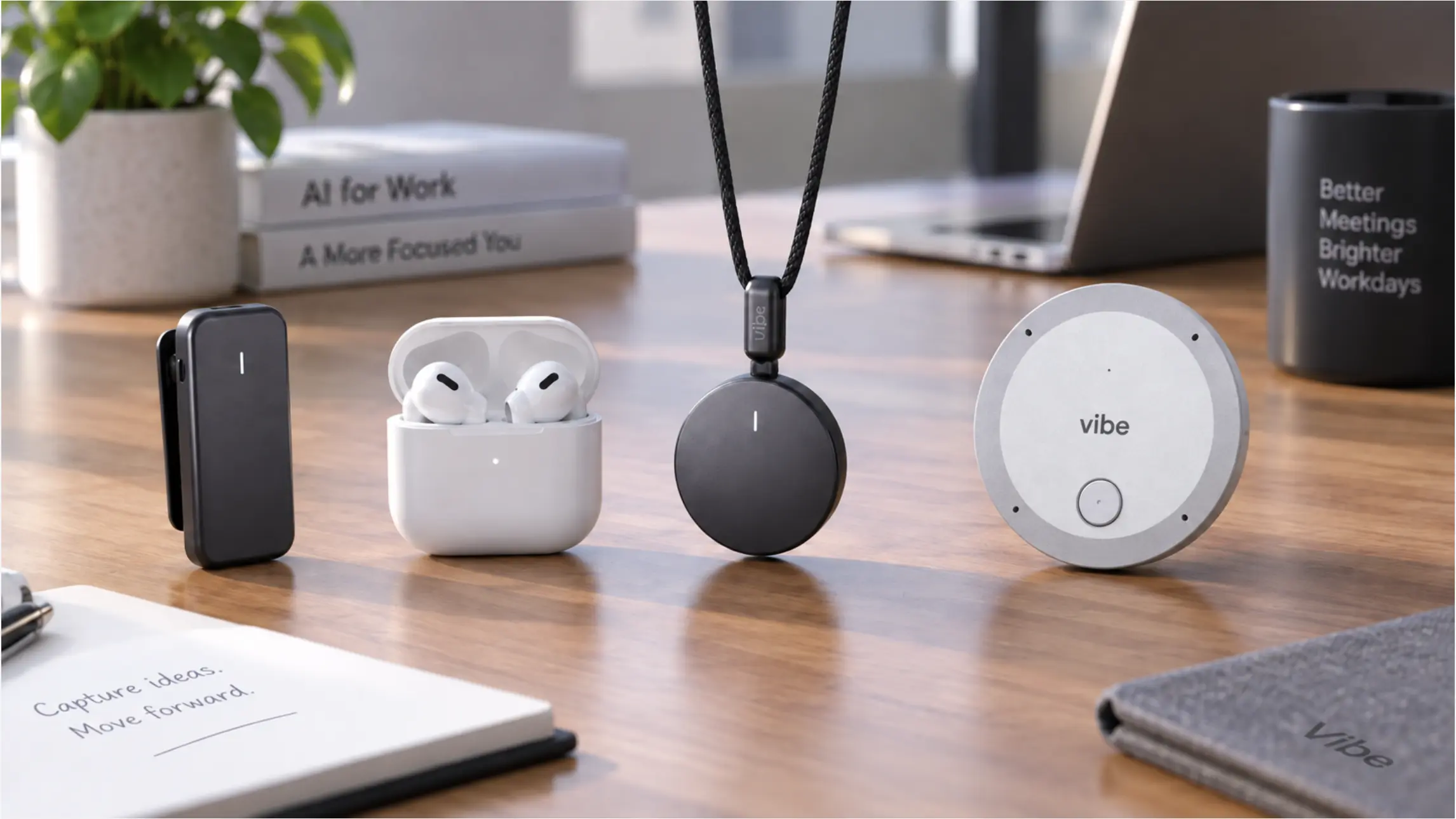 viaim alternatives: earbuds, pendants, Vibe Dot and more
What to Look for in a RecDot Alternative
Before diving in, here’s what RecDot does well — and where it runs short. Use these as your evaluation criteria:
RecDot’s strengths to match:
-
Solid TWS audio hardware (48dB ANC, Hi-Res certification)
-
600 free transcription minutes/month — generous for light users
-
Real-time transcription across 78 languages
RecDot’s gaps that alternatives address:
-
No Auto Capture: every recording requires a deliberate button press
-
No cross-session memory: each meeting is an isolated transcript — no AI layer that connects decisions over time
-
Earbud form factor: uncomfortable or impractical for extended in-person meetings
-
Compliance ceiling: ISO 27001/27701 only — no FERPA, NDAA, or HIPAA
-
Limited storage: ~60–70 minutes of onboard recording
The 5 Best viaim RecDot Alternatives
1. Vibe Dot — Best Overall
Best for: Professionals who need in-person meeting capture, cross-session AI memory, and institutional compliance — and can’t afford to miss the start of a recording.
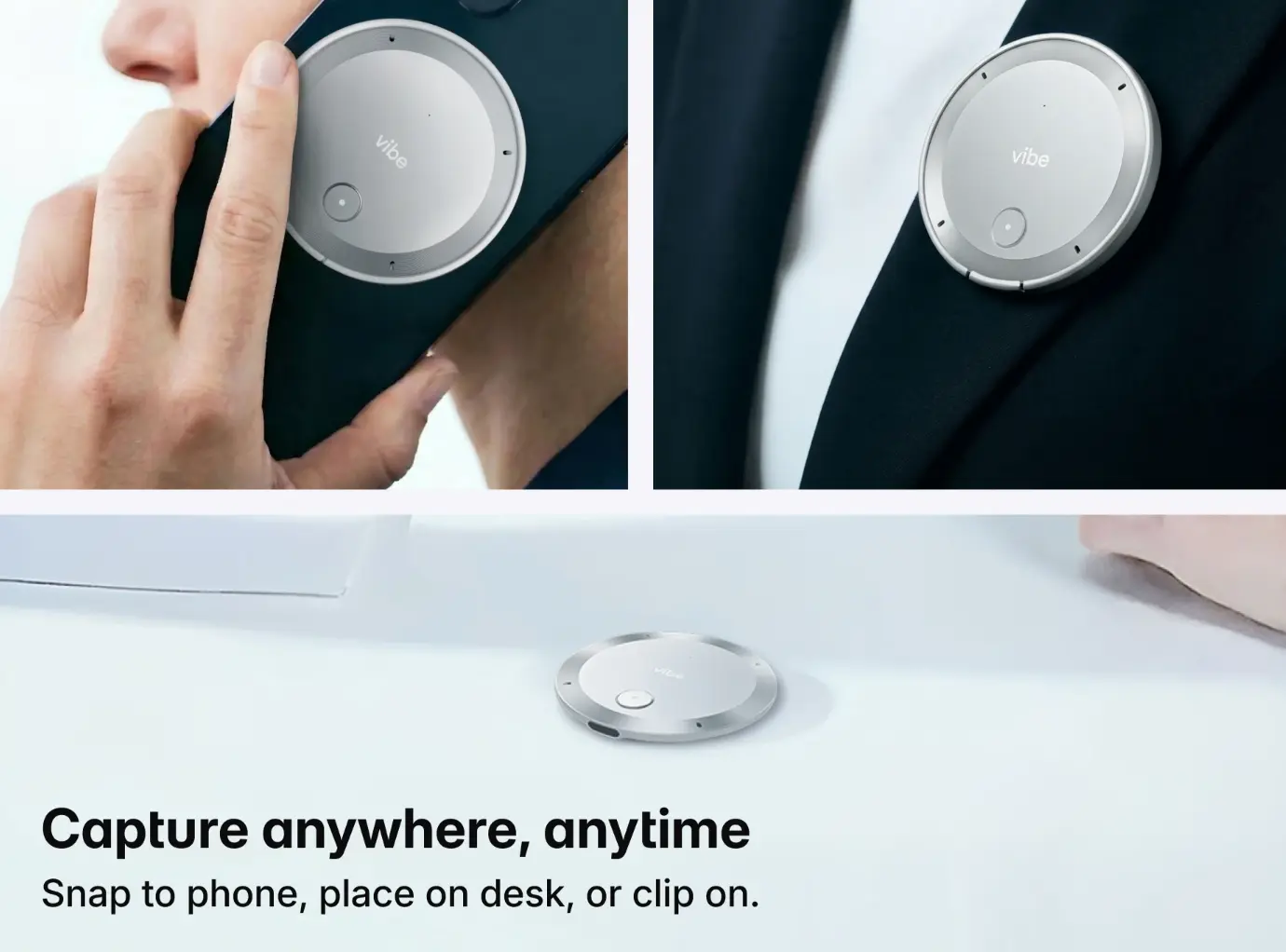
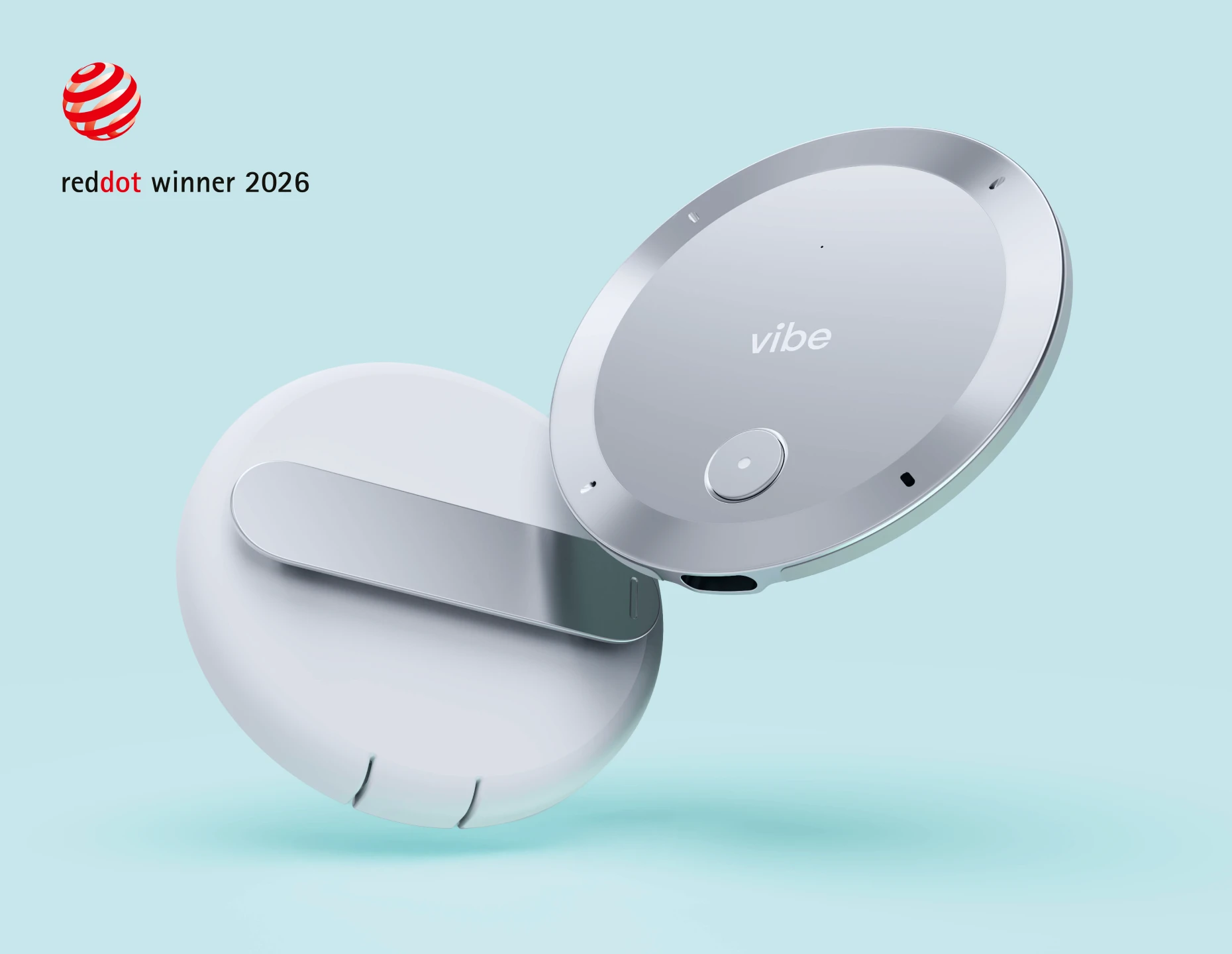
Vibe Dot is the most complete answer to every gap RecDot leaves open. It’s a wearable clip — not earbuds — so it records the room while you stay fully present in it. Its 5-microphone array (4 air mics + 1 bone-conduction mic) captures multi-speaker conversations across larger spaces, not just from your ear position.
 Vibe Dot magnetic recorder used on a phone call, clipped to a blazer in conversation, and beside a laptop on a desk
Auto Capture is the feature that separates it most practically from RecDot. Two modes:
-
Standby: Vibe Dot detects your voice and starts recording automatically — no button press required
-
Scheduled: Set a time window and Dot records continuously throughout it, whether the meeting starts early or runs long
For anyone who’s ever walked out of an important conversation and realized they forgot to hit record, this is the fix.
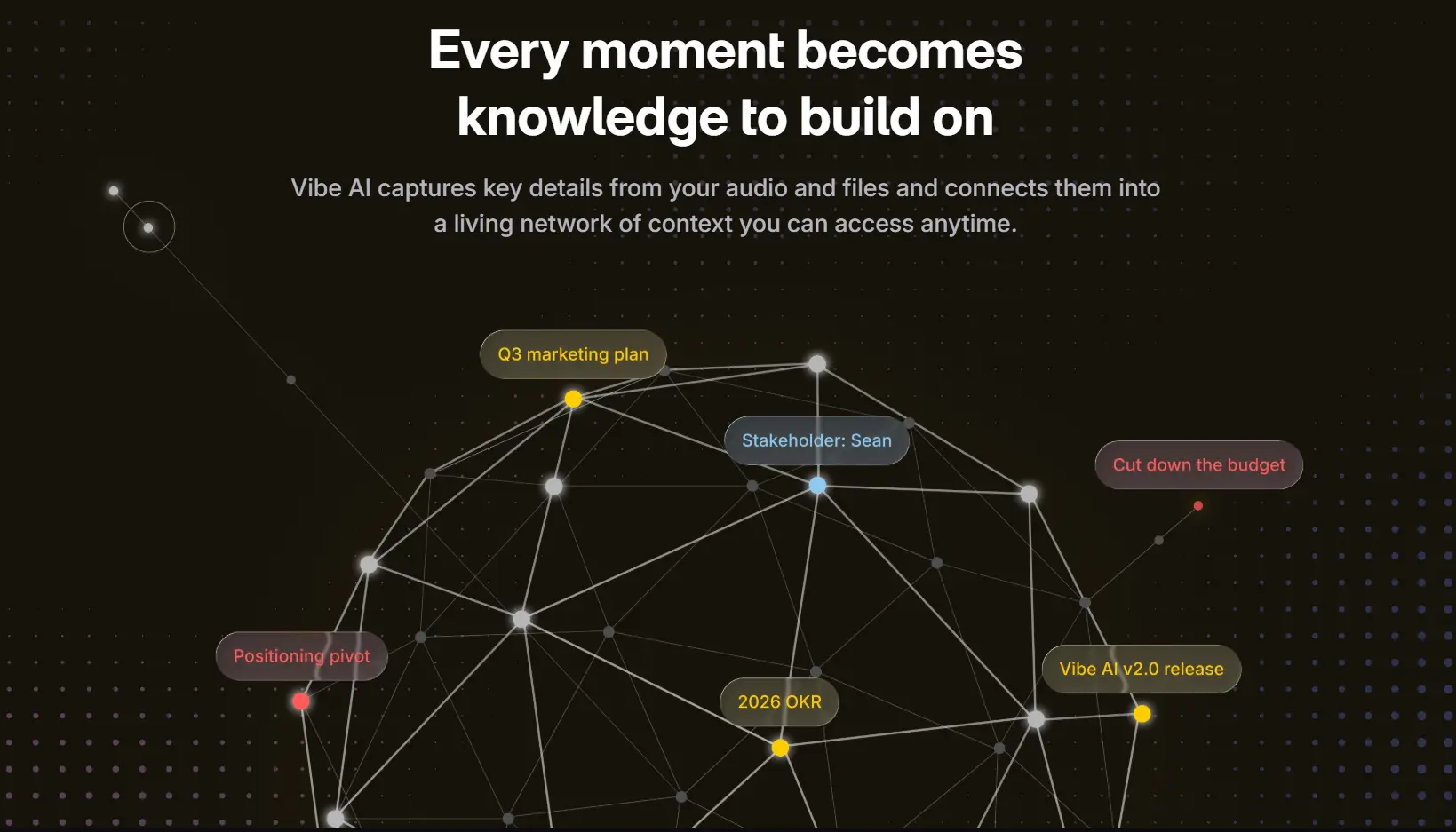
On the AI side, Vibe Dot feeds into the Vibe Memory Engine — a cross-session knowledge layer that links every meeting into a continuously growing graph. RecDot gives you a transcript. Vibe AI gives you answers: "What did the Acme team say about pricing across our last four conversations?" pulls from the right moments, not keyword searches. The Max plan covers your entire recorded history with no retention limit.
The agentic layer goes further: Vibe AI can draft follow-up emails in Gmail, update HubSpot opportunities, assign Jira or Asana tasks, and schedule next steps in your calendar — automatically, from the meeting summary. RecDot’s AI stops at the summary.
For institutional buyers, Vibe Dot’s compliance stack — SOC 2 Type 2, HIPAA, FERPA, NDAA, FIPS 140-3 hardware encryption, Common Criteria EAL 6+ — is in a different tier from RecDot’s ISO-only certification.
|
Vibe Dot |
viaim RecDot | |
|---|---|---|
|
Form factor |
Wearable clip |
TWS earbuds |
|
Auto Capture |
✅ (voice + scheduled) |
❌ |
|
Cross-session memory |
✅ Vibe Memory Engine |
❌ |
|
Agentic workflow actions |
✅ |
❌ |
|
Storage |
64GB |
~60–70 min |
|
Battery |
30+ hours |
9 hr / 36 hr w/ case |
|
FERPA / NDAA / HIPAA |
✅ |
❌ |
|
Device price |
$199 |
$199.99 |
|
Free transcription |
300 min/mo |
600 min/mo |
Trade-off to know: RecDot doubles as your everyday earbuds — Vibe Dot doesn’t play audio. If device consolidation is your top priority, that matters. If AI depth and in-person capture are your priority, Vibe Dot is the clear step up. For a full feature-by-feature breakdown, see our viaim RecDot review vs. Vibe Dot.
Pricing: $199 device. Starter free (300 min/mo). Pro $9/mo (1,200 min, 12-month memory). Max $29/mo (unlimited transcription + full memory history).
2. Plaud One — Best if You Want AI Earbuds with a Stronger Pedigree
Best for: Users who specifically want AI-recording earbuds and prefer Plaud’s more established AI platform over viaim’s.
The Plaud One Explorer Edition is the most direct RecDot competitor in this list — both are AI-recording TWS earbuds at roughly the same price point. Where Plaud One differentiates: its charging case has a built-in 4G LTE module, meaning it works as a standalone recorder that can upload and process audio without needing your phone or Wi-Fi nearby. Three microphones per earbud (six total) capture up to two meters of range (TechCrunch).
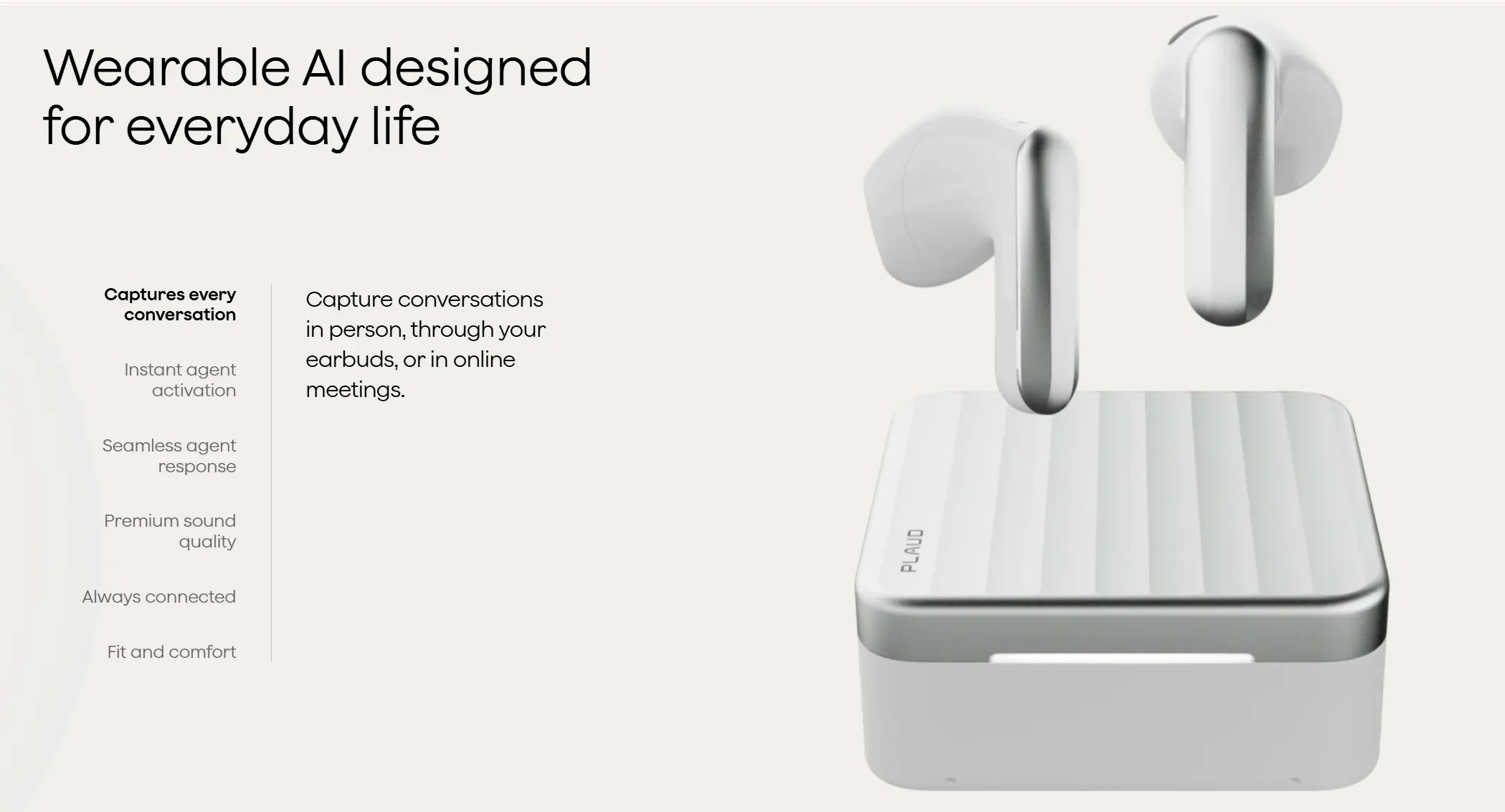 PLAUD wireless earbuds and charging case
Like RecDot, Plaud One requires a manual trigger to record — no voice-activated Auto Capture — and its AI output is per-session: transcript, summary, action items, with no cross-session memory layer connecting meetings over time. Compliance certifications (FERPA, NDAA, HIPAA) are absent, same as RecDot.
One practical caveat: as of September 2026, Plaud One is in limited pre-order (2,000 units globally, Explorer Edition), with shipments expected Q4 2026. If you need a device now, RecDot ships immediately — Plaud One does not. See more Plaud One alternatives.
Pricing: $249.99 device (includes $200 in Plaud Credits). Free Starter: 300 min/mo. Pro: $20/mo (1,200 min).
3. Limitless Pendant — Best for Passive, Always-On Capture
Best for: Professionals who want always-on ambient capture throughout the day — not meeting-by-meeting recording.
The Limitless Pendant takes a different philosophical approach: it records continuously, all day, and surfaces what’s relevant later. No button, no trigger — it’s always listening and relies on the Limitless AI platform to organize and filter what matters.
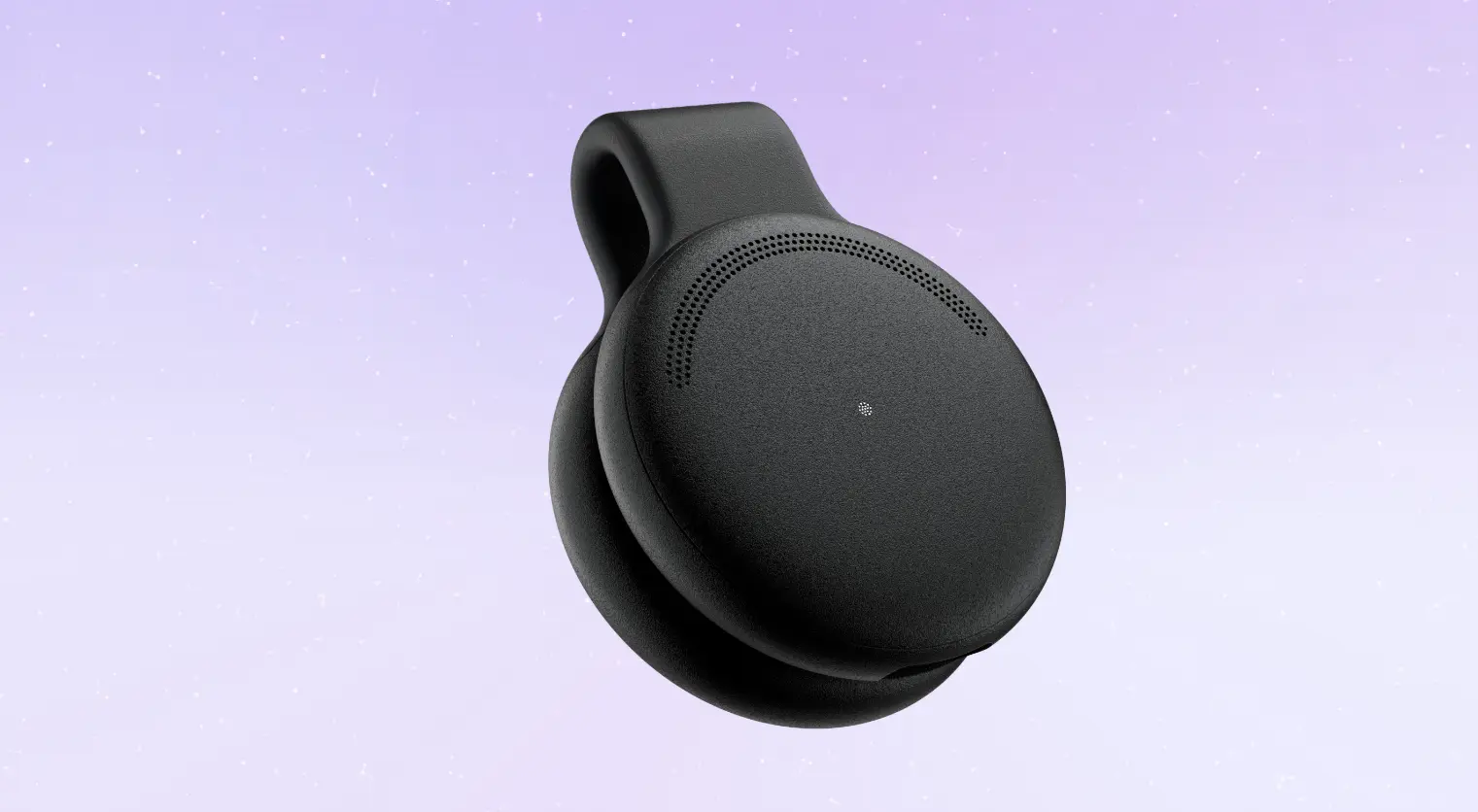 Limitless Pendant front view
This directly addresses RecDot’s manual trigger problem. The trade-off is the "always-on" model itself: it records everything, which raises its own consent and social considerations, and it positions itself more as a personal life logger than a professional meeting tool.
The Limitless AI platform has improved significantly in 2026, but still lags behind Vibe AI in enterprise integrations and agentic capability — there’s no equivalent to Vibe’s OpenClaw execution layer for pushing outcomes to HubSpot, Jira, or Asana. See how they stack up in our Vibe Dot vs. Limitless Pendant comparison.
Pricing: Pendant $99. Limitless AI free (limited); Pro $19.99/mo.
4. Otter.ai — Best Software-Only Alternative
Best for: Remote teams running all their meetings through Zoom, Google Meet, or Microsoft Teams who want AI notes without any hardware purchase.
If RecDot’s earbud form factor is the problem rather than the AI quality, Otter.ai is the cleanest escape: no device, no carry, no charge. It joins your video calls as a participant bot and produces real-time transcripts, speaker labels, and summaries automatically.
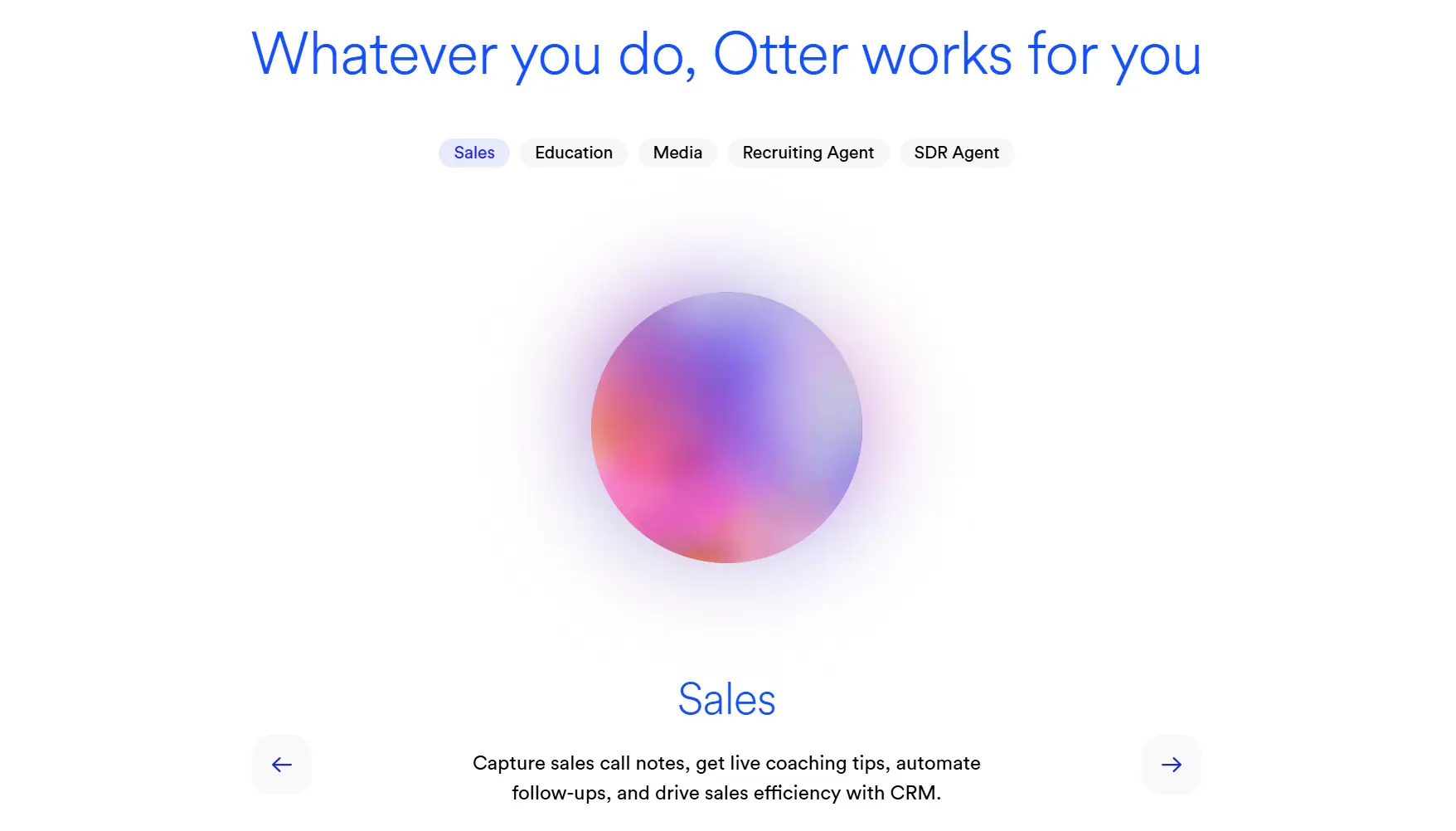 Homepage screenshot of Otter AI
Its AI outputs are solid for per-meeting capture, and its integrations cover the main productivity stack. Where it doesn’t reach RecDot or Vibe Dot: in-person meetings are harder without a dedicated microphone feeding the platform, and like RecDot, each meeting is treated as a standalone document — there’s no cross-session memory layer that builds knowledge over time. For a deeper look at how Vibe Dot compares to Otter.ai as a combined hardware+software system, see our Vibe Dot vs. Otter.ai breakdown.
For in-person-heavy workflows, Otter.ai alone isn’t sufficient. Paired with a hardware recorder, it works well as a transcription layer. See a full list of Otter.ai alternatives.
Pricing: Free (300 monthly transcription minutes, 30-min limit per meeting). Pro $16.99/mo (1,200 min). Business $30/user/mo.
5. Fireflies.ai — Best for CRM and Meeting Workflow Integration
Best for: Sales teams and revenue operations professionals who need structured meeting intelligence pushed directly into their CRM.
Fireflies.ai sits closer to Vibe AI on the workflow integration side than any other pure-software alternative. It automatically joins your video calls, transcribes them, and — on higher plans — pushes structured data to Salesforce, HubSpot, and other CRMs with deal stage updates and custom fields.
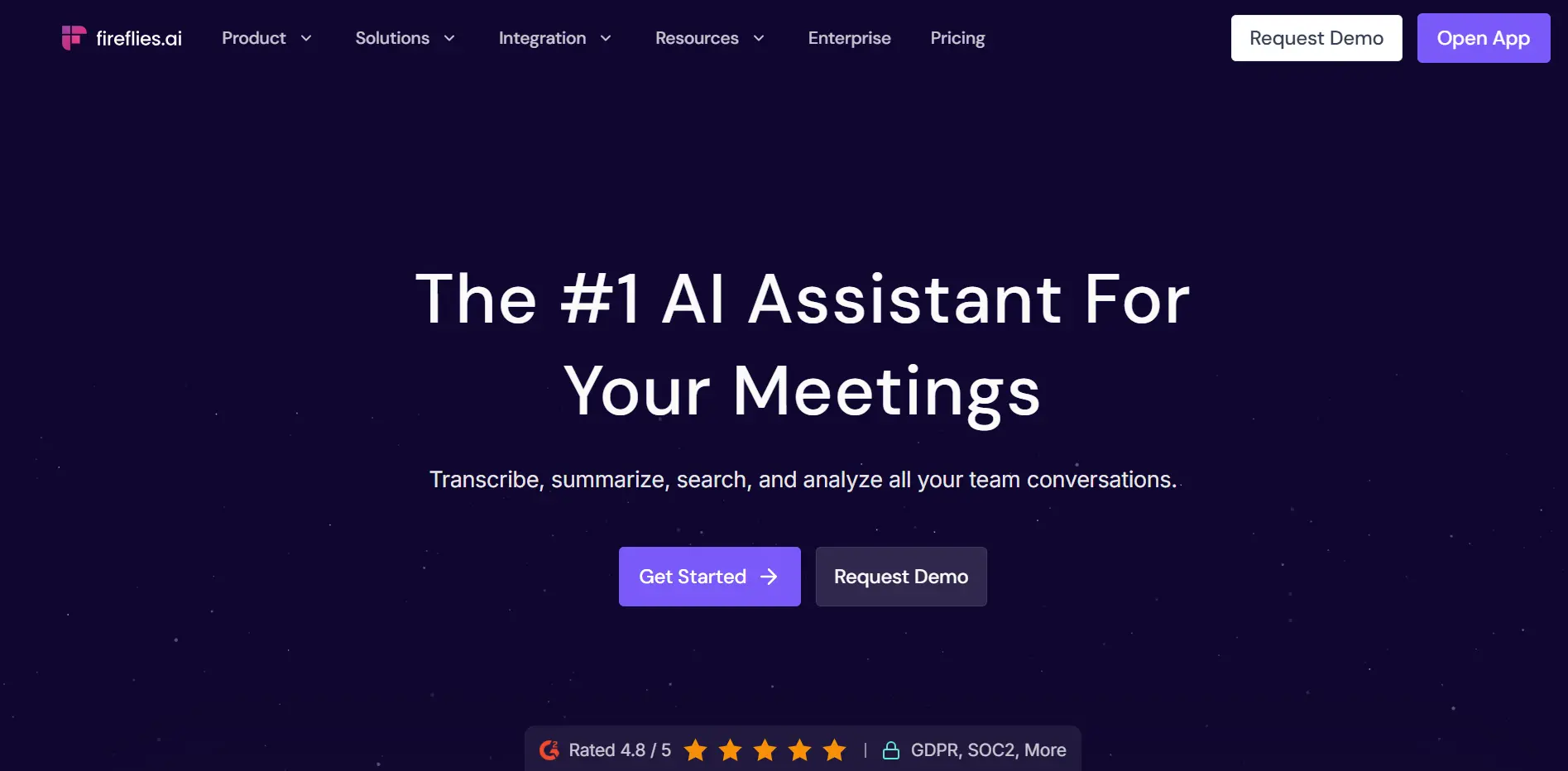 Homepage screenshot of Fireflies AI
Where it doesn’t match Vibe Dot’s full system: no hardware recorder (in-person meetings require a separate device or a phone placed on the table), and while it integrates well into per-call CRM workflows, it doesn’t have a cross-session memory graph that surfaces context across your entire relationship history the way Vibe AI does.
For sales teams already invested in Salesforce or HubSpot as their system of record, Fireflies is a well-developed integration layer. For professionals who want the full capture-to-action loop including in-person meetings, Vibe Dot + Vibe AI covers more ground. See our Vibe Dot vs. Fireflies.ai comparison for a side-by-side on CRM integration depth and agentic capability.
Pricing: Free (800 min storage/seat). Pro $18/seat/mo (unlimited transcription). Business $29/seat/mo (CRM integrations, advanced analytics).
Side-by-Side Comparison
|
Vibe Dot |
Plaud One |
Limitless |
Otter.ai |
Fireflies | |
|---|---|---|---|---|---|
|
Form factor |
Wearable clip |
TWS earbuds |
Pendant |
Software only |
Software only |
|
Auto Capture |
✅ |
❌ |
✅ (always-on) |
❌ |
❌ |
|
In-person capture |
✅ |
✅ |
✅ |
Limited |
Limited |
|
Cross-session memory |
✅ |
❌ |
Limited |
❌ |
❌ |
|
Agentic workflow actions |
✅ |
❌ |
❌ |
❌ |
Partial (CRM) |
|
FERPA / NDAA / HIPAA |
✅ |
❌ |
❌ |
❌ |
❌ |
|
Hardware price |
$199 |
$249.99 |
$99 |
— |
— |
|
Paid plan (mid-tier) |
$9/mo |
$20/mo |
$19.99/mo |
$16.99/mo |
$18/seat/mo |
|
Available now |
✅ |
❌ (Q4 2026) |
❌ |
✅ |
✅ |
Which Alternative Should You Choose?
Choose Vibe Dot if your RecDot frustration is any combination of: earbud form factor, missed recordings, per-session AI that doesn’t connect context, or compliance requirements your organization can’t work around. It addresses all four gaps in a single device.
Choose Plaud One if you want AI-recording earbuds specifically, prefer Plaud’s platform and template library over viaim’s, and are willing to wait for Q4 2026 delivery. Note it’s $50 more than RecDot and still in pre-order. For more options in the AI earbud category, see our Plaud One alternatives roundup.
Choose Limitless Pendant if you want genuinely passive capture — no trigger, no button, always on — and you’re comfortable with the consent and privacy implications of all-day recording.
Choose Otter.ai if your meetings are predominantly remote video calls and you don’t want to carry a hardware device. It’s the smoothest software-only entry point.
Choose Fireflies.ai if you’re in sales or revenue operations and need structured meeting data pushed into your CRM automatically. Its Salesforce and HubSpot integrations are among the deepest in the category.
Bottom Line
viaim RecDot is a good device for what it is: an AI-enhanced pair of earbuds that handles calls and meeting transcription in one package. If that’s the product you want, it delivers.
If you need more — a recorder that starts without prompting, an AI that remembers across your entire history, or compliance certifications your organization actually requires — you’re in the right place. Vibe Dot addresses all three, and it’s the alternative we’d reach for first.

For a broader look at the full category, see our best AI meeting recorders roundup — it covers hardware and software options across every form factor and use case.
Frequently Asked Questions
What is the best viaim RecDot alternative overall?
Vibe Dot is the strongest alternative for professionals who need more than a per-session transcript. It addresses RecDot’s three main gaps — no Auto Capture, no cross-session memory, and a compliance ceiling — in a single device. For users who specifically want to keep earbuds as their recording device, Plaud NotePin or Limitless Pendant offer a different form factor without the earbud constraint.
Is there a viaim RecDot alternative that records automatically without pressing a button?
Yes — two, with different approaches. Vibe Dot’s Auto Capture Standby mode detects your voice and starts recording when you begin speaking; its Scheduled mode records a set time window without any trigger. Limitless Pendant records continuously all day and lets you review what’s relevant afterward. RecDot and Plaud One both require a manual button press to start.
Is there a RecDot alternative that is FERPA or NDAA compliant?
Among hardware AI recorders, Vibe Dot is the only device in this category certified for both FERPA and NDAA, alongside HIPAA and SOC 2 Type 2. RecDot, Plaud One, and Limitless Pendant do not list these certifications. For US educational institutions and government-adjacent organizations, this effectively makes Vibe Dot the only viable option in the hardware segment.
Do any RecDot alternatives offer cross-session AI memory?
Only Vibe Dot, in this comparison. Vibe AI’s Memory Engine links every captured conversation into a growing knowledge graph — you can ask questions across months of meetings and get specific, contextual answers. RecDot, Plaud One, and Otter.ai treat each meeting as an independent document. Limitless offers limited cross-session context on its Pro plan but doesn’t match Vibe AI’s depth or agentic capability.
Can any of these alternatives push meeting outcomes to Slack, HubSpot, or Asana automatically?
Vibe Dot (via Vibe AI’s agentic layer) and Fireflies.ai (partial — strongest for CRM) are the two options with meaningful workflow automation. Vibe AI can draft Gmail follow-ups, update HubSpot, assign Jira or Asana tasks, and schedule next calls — triggered from the meeting summary without manual input. RecDot, Plaud One, Otter.ai, and Limitless require you to route action items manually.
What’s the cheapest viaim RecDot alternative?
Otter.ai has no upfront hardware cost and a functional free plan (300 min/month). For hardware alternatives, Limitless Pendant ($99) is the lowest-cost device, followed by Vibe Dot ($199) and Plaud One ($249.99). Note that Plaud One is still in pre-order as of September 2026. Total cost of ownership also depends on your transcription volume — free tiers on all platforms have minute limits that fill quickly for heavy users.