
Fathom earns its reputation. A 5.0 on G2 across nearly 7,000 reviews, a genuinely unlimited free tier for recording and transcription, and a clean CRM sync that sales teams actually use — it is the easiest AI meeting assistant to recommend for teams that live on Zoom, Google Meet, and Microsoft Teams.
But Fathom has real architectural limits, and as the AI meeting assistant category has matured in 2026, those limits show up in more and more workflows. No mobile app. No offline or in-person capture. No persistent cross-session memory — each meeting is a standalone document rather than a node in an accumulating knowledge base. No HIPAA or FERPA certification for regulated industries.
This guide ranks the five best Fathom alternatives by the specific gap they fill, not by a generic feature checklist. Every tool is fairly reviewed.
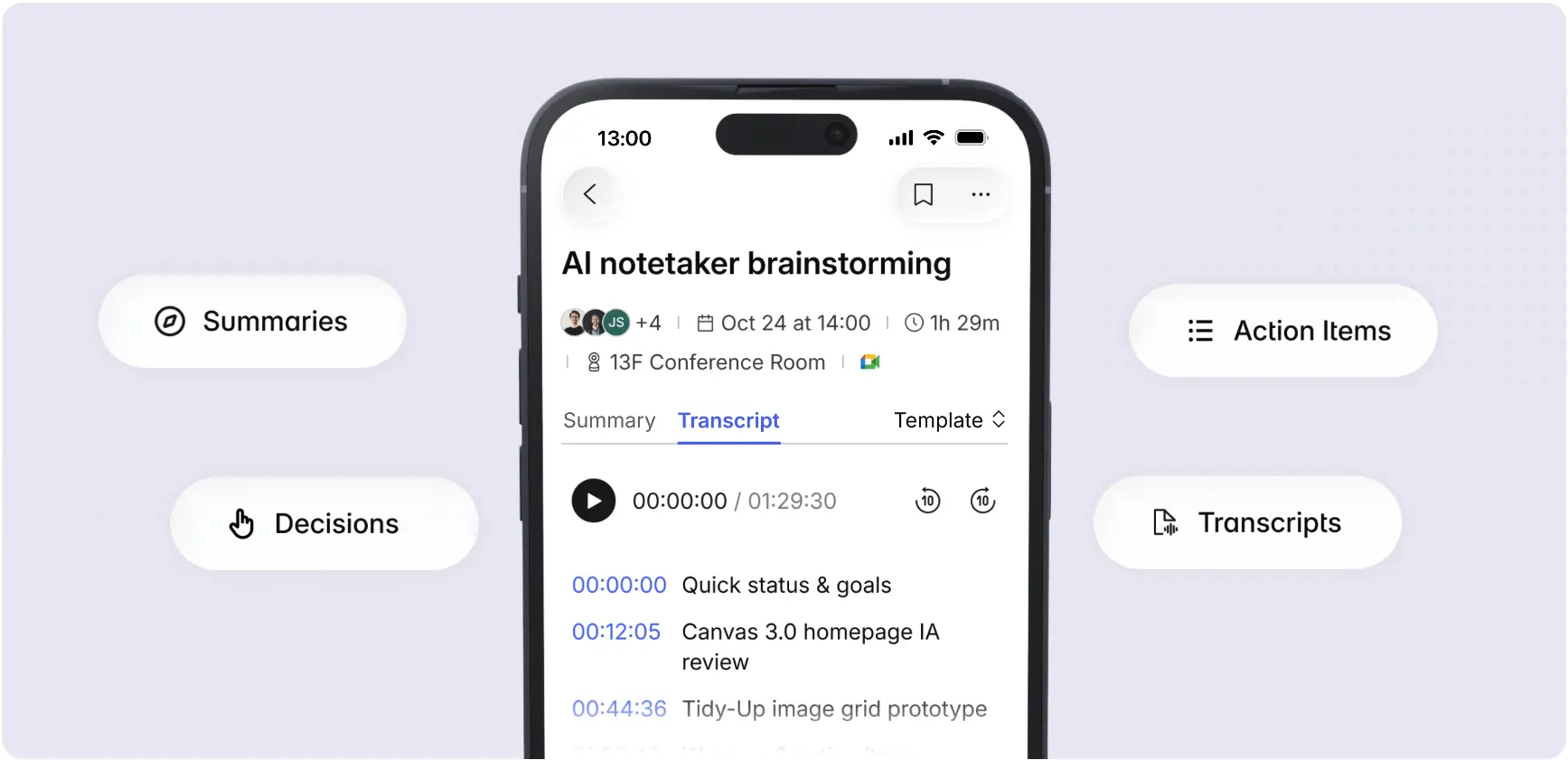 Vibe Dot's AI app meeting transcript with summaries and action items
Why Teams Look for a Fathom Alternative in 2026
Most searches for a Fathom alternative start with one of four concrete problems:
1. No offline or in-person capture. Fathom works by joining your video call as a bot. The moment a conversation moves off-screen — a client site visit, a conference room without a laptop, a working lunch — Fathom cannot see it. There is no mobile recording mode, no audio upload, no workaround.
2. No mobile app. As of October 2026, Fathom runs on Mac and Windows desktops only. iOS is described as in development; Android has no public timeline. For reps, consultants, or anyone who joins calls from a phone or tablet, Fathom is not usable.
3. Per-meeting summaries, not cross-session memory. Fathom’s intelligence is scoped to individual meetings. There is no way to ask what a specific account said about budget across the last six months, or what themes are emerging across your discovery calls, without manually reviewing recordings yourself.
4. Missing compliance certifications. Fathom’s security posture — SOC 2 in progress, GDPR, CCPA — does not include HIPAA, FERPA, or NDAA. Teams in healthcare, education, or government-adjacent industries often cannot deploy it.
The 5 Best Fathom Alternatives
1. Vibe Dot — Best for Teams Whose Conversations Don’t Stay on a Screen
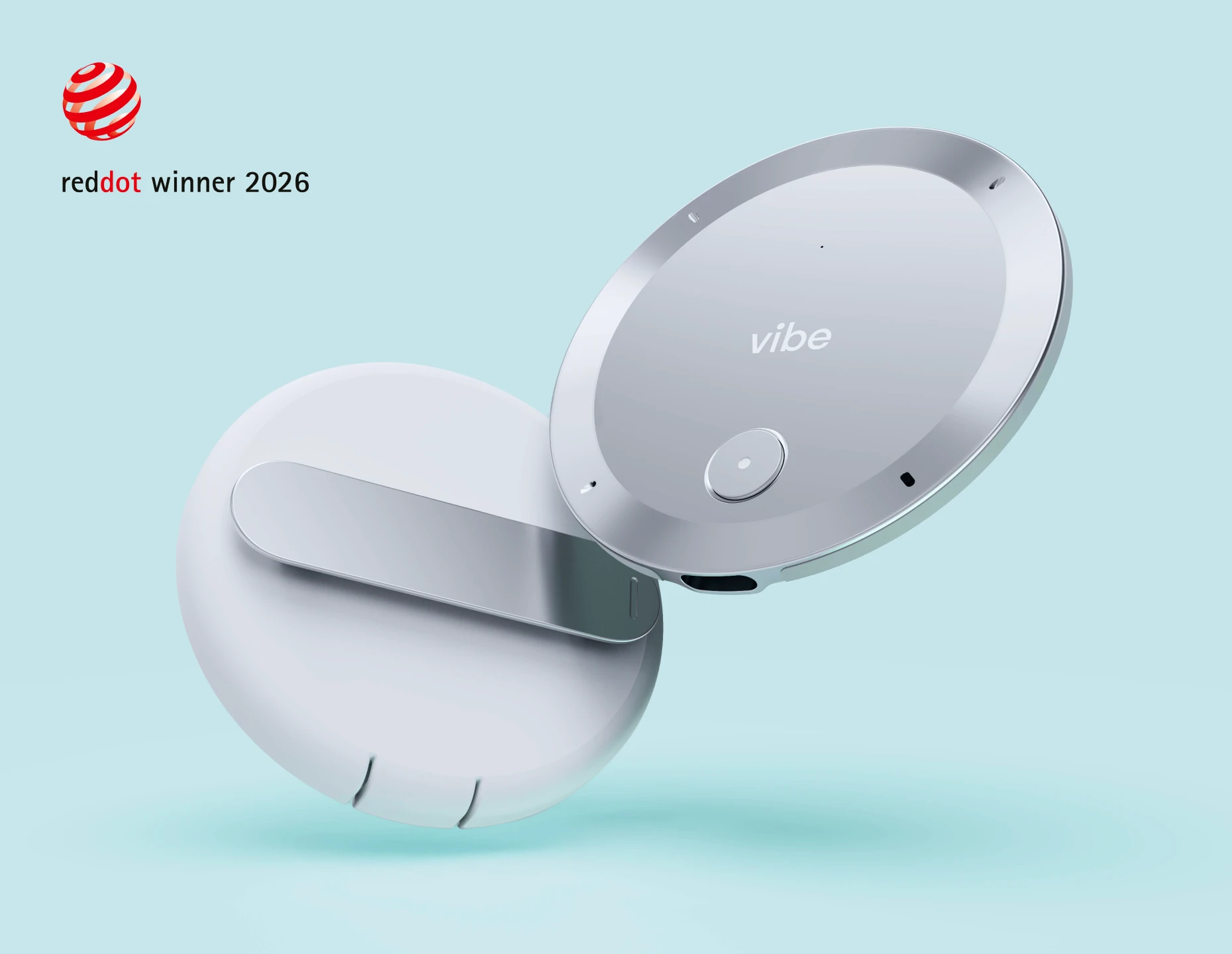
Vibe Dot is a wearable AI device — 0.83 oz, 0.17 inches thin, a Red Dot Design Award winner for 2026 — with a 5-microphone array (4 air mics + 1 bone-conduction) and 64GB of onboard encrypted storage. It captures, transcribes, and summarizes conversations wherever they happen: a client’s office, a conference room, a field walkthrough, or a working lunch — without requiring a laptop, a video call, or an app running in the background.
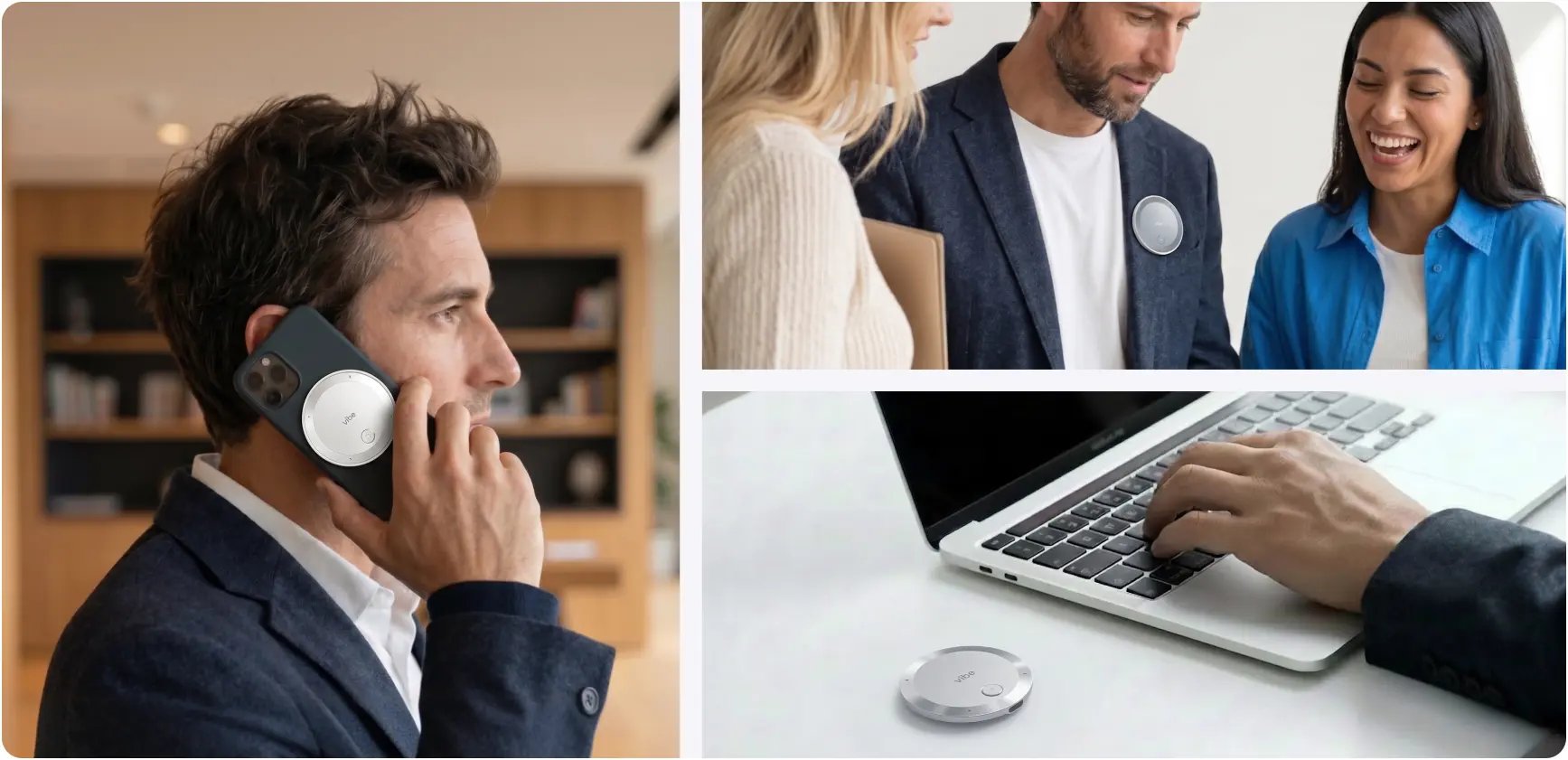 Vibe Dot portable AI recorder used on a phone call, as a lapel clip in a meeting, and on a desk next to a laptop
This makes Vibe Dot the only alternative on this list that addresses Fathom’s core structural limit. Every other tool here is still software-only and online-meeting-only. Vibe Dot is the only option that captures the physical world.
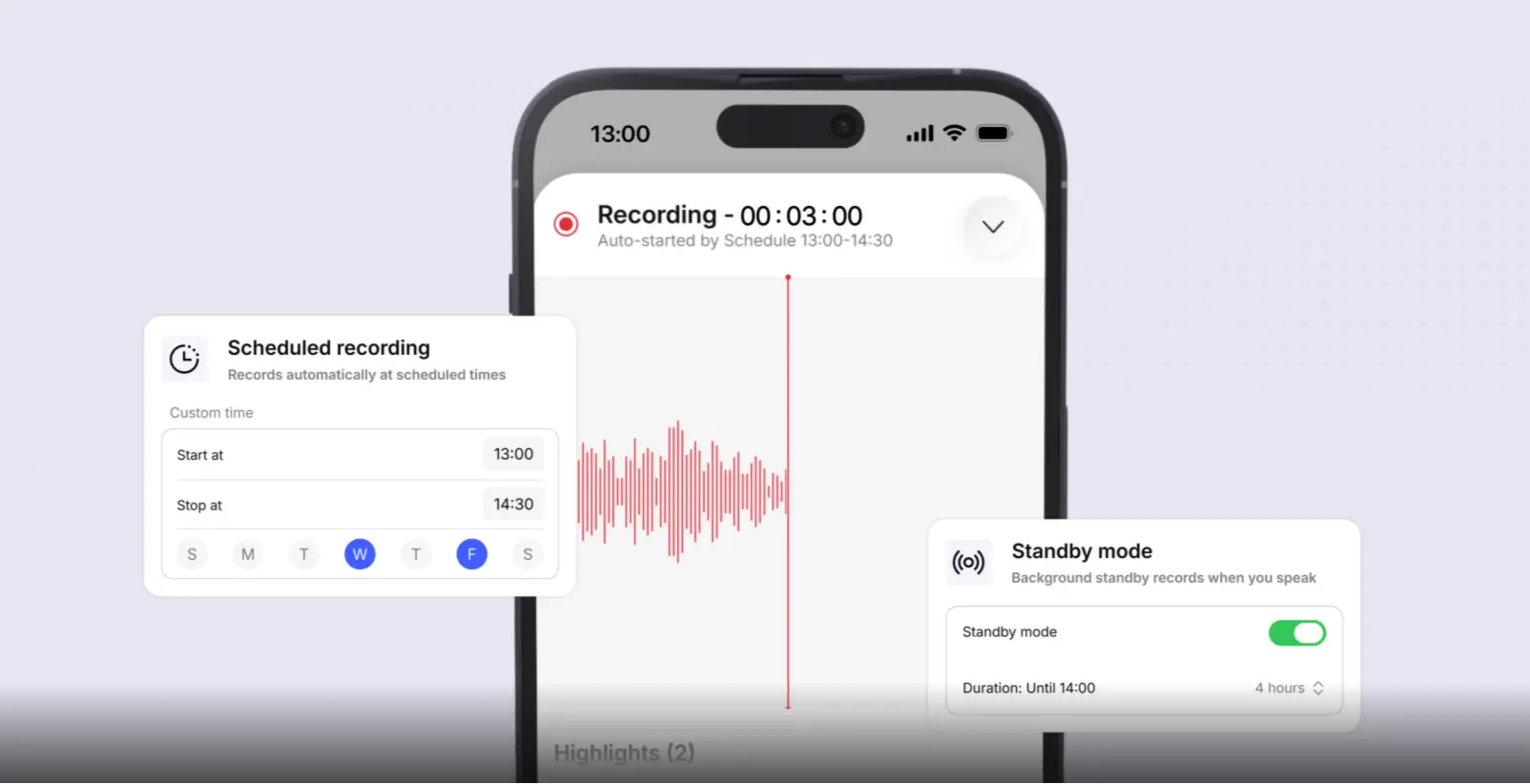
Three recording modes cover different workflows. Tap to Record (double-tap to start, tap to mark key moments, tap to stop) handles intentional capture. Auto Capture Standby recognizes your voice and starts recording automatically when you begin speaking. Auto Capture Scheduled lets you set a time window and records the full duration — useful for back-to-back in-person days. All three sync to the Vibe AI platform automatically once the device is in range.
Every recording feeds into Vibe AI’s Memory Graph — a persistent, cross-session knowledge base that links meetings, documents, and Slack threads over time. Ask what a specific client said about contract terms across the last three months and it returns cited, searchable results drawn from every captured conversation, online or offline. This is architecturally different from Fathom’s per-meeting summary model, and it is the capability that disappears the moment you close Fathom after each call.
On compliance, Vibe Dot carries certifications Fathom does not: HIPAA (attested by Prescient Assurance), FERPA, NDAA, SOC 2 Type 2, and FIPS 140-3 on the hardware encryption chip. For healthcare organizations, education institutions, and government-adjacent teams, these certifications shift Vibe Dot from a strong option to the obvious one.
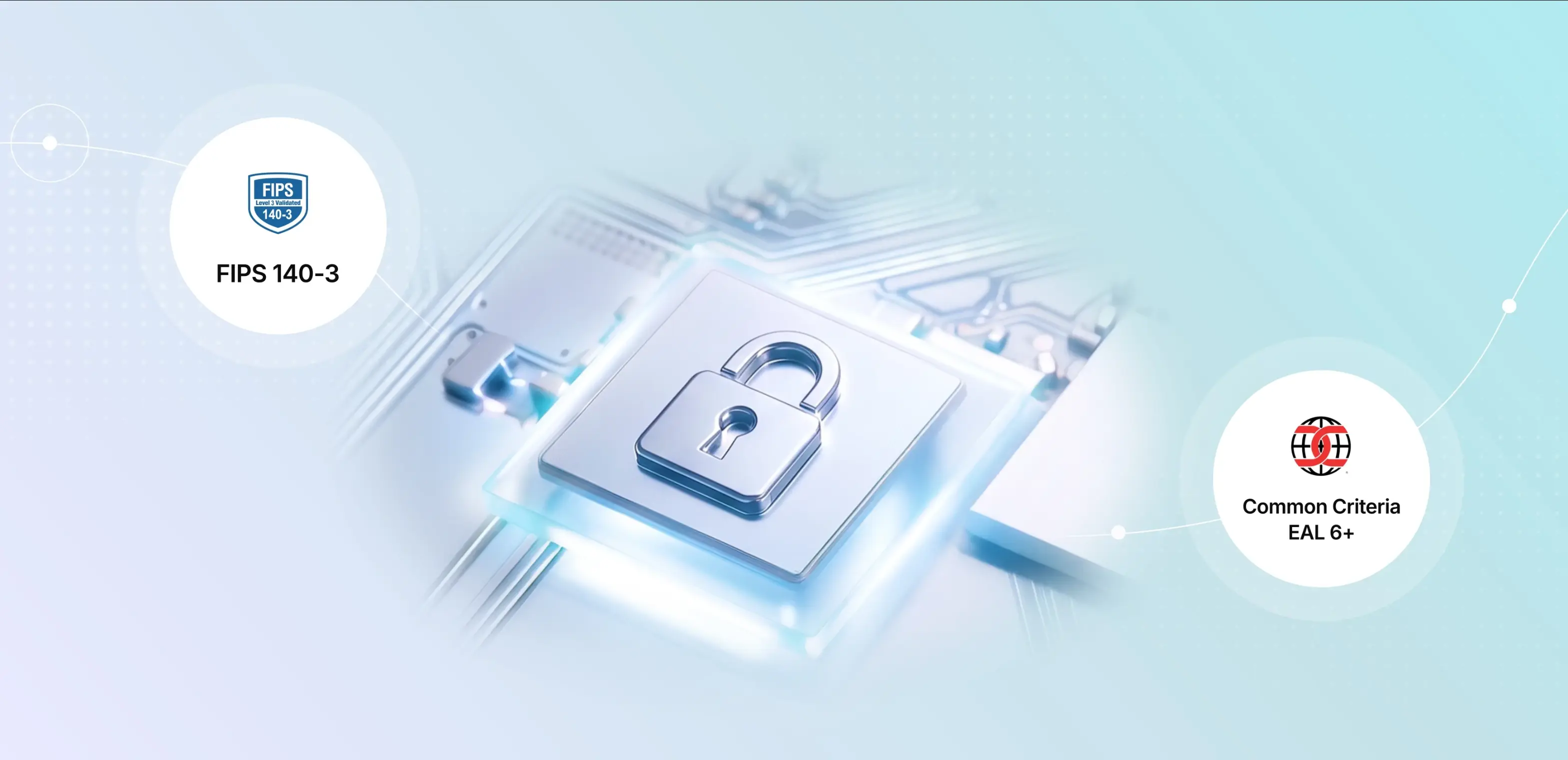 Enterprise data security chip with FIPS 140-3 and Common Criteria EAL 6+ certifications for secure meetings and privacy
For a deeper side-by-side breakdown, see our full Vibe Dot vs. Fathom comparison.
Best for: Sales teams with field activity, enterprise teams operating across virtual and physical environments, regulated industries requiring HIPAA or FERPA compliance.
Pricing: $199 device (one-time) + Vibe AI Starter free (300 min/month, 7-day memory); Pro $9/seat/month (1,200 min/month, 12-month memory); Max $29/seat/month (unlimited transcription and memory).
Key differentiators vs. Fathom:
-
Captures in-person and offline meetings natively — no laptop or video call required
-
Persistent Memory Graph across all conversations, not per-meeting summaries
-
HIPAA, FERPA, NDAA, FIPS 140-3 certifications Fathom does not carry
-
Hardware encryption chip (FIPS 140-3, Common Criteria EAL 6+) — recordings unreadable if device is lost
-
iOS + Android companion apps
2. Granola — Best for Online Meetings Without a Visible Bot
Granola is the AI meeting assistant most often mentioned alongside Fathom in the same breath — both target the same knowledge worker who spends their day on video calls, both produce polished post-meeting notes, and both are positioned as individual-first tools that scale into teams. The meaningful difference is how they capture: Fathom joins meetings as a visible bot in the participant list; Granola captures system audio silently, with no bot presence.
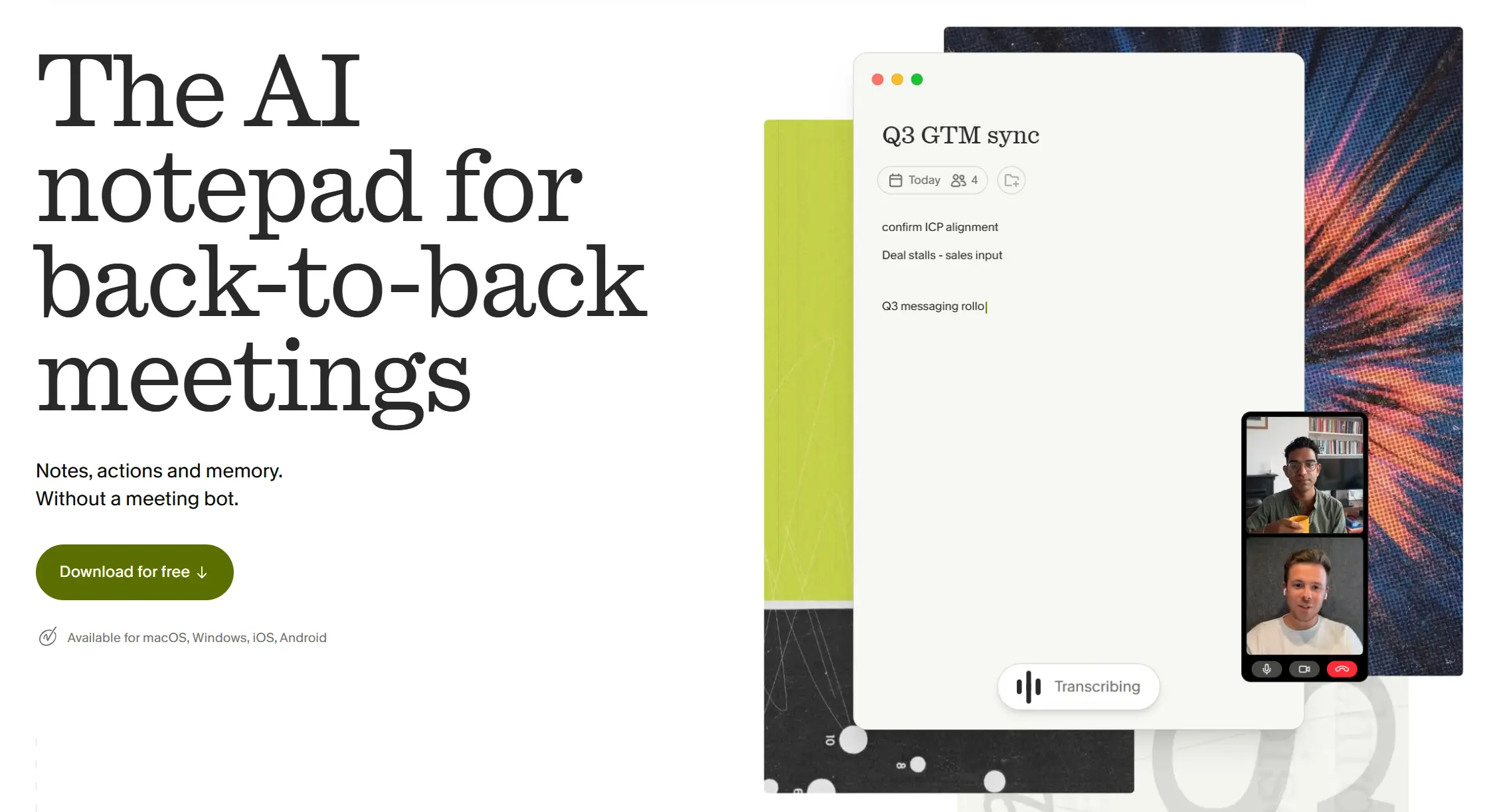 Granola homepage hero promoting an AI notepad for back-to-back meetings, with a Q3 GTM sync note and a video call window
For users whose meeting culture is sensitive to bots — clients who find the bot name in the participant list awkward, or organizations whose video platform policies restrict third-party bots — Granola’s no-bot architecture is the practical reason to switch.
The product experience is also distinct. Rather than producing a fully automated summary, Granola asks you to jot rough notes during the meeting — whatever you think is important. After the call ends, it merges your notes with the full AI-processed transcript to produce a polished result that reads in your voice, not like a generic extraction. For many knowledge workers, the output feels more useful and less templated than Fathom’s summaries.
Granola 2.0 (launched May 2025) expanded the product into team workflows: shared folders, cross-meeting AI chat with inline citations, Slack summary push, and Recipes — reusable AI workflows triggered from meeting notes, covering pipelines, user research, and hiring loops. The free tier includes unlimited meetings with AI notes, custom templates, and AI chat. The Business tier at $14/seat/month adds shared workspaces, team-level Recipes, and admin controls.
One significant caveat: a federal class action filed July 30, 2026 alleges that Granola’s silent capture model recorded conversations without participant knowledge and used that content to train AI models by default. Organizations with compliance or legal exposure should review Granola’s data practices carefully before deployment. For a full breakdown of how Granola and Vibe Dot compare on this dimension, see our Granola alternatives guide.
Best for: Knowledge workers and teams who want polished meeting notes in their own voice, without a bot joining the call; product and VC teams doing back-to-back online meetings.
Pricing: Free (unlimited meetings, AI notes, AI chat); Business $14/seat/month; Enterprise $35+/seat/month.
Key differentiators vs. Fathom: No bot in the participant list; human-guided note enrichment produces more natural summaries; Recipes for reusable post-meeting AI workflows; stronger free-tier AI feature depth.
Limitations vs. Vibe Dot: Software-only — no offline or in-person capture; no mobile app; no persistent cross-session memory; active privacy litigation around undisclosed recording.
3. Fireflies.ai — Best for Teams Needing Deep Integration Coverage
Fireflies.ai is the most integration-heavy AI meeting assistant in the category. Where Fathom connects cleanly to HubSpot and Salesforce, Fireflies connects to over 40 tools natively — spanning CRM platforms, project management (Asana, Linear, Notion, Jira), ATS systems, communication tools (Slack, Teams), and more — and pushes meeting data into those systems automatically after each call.
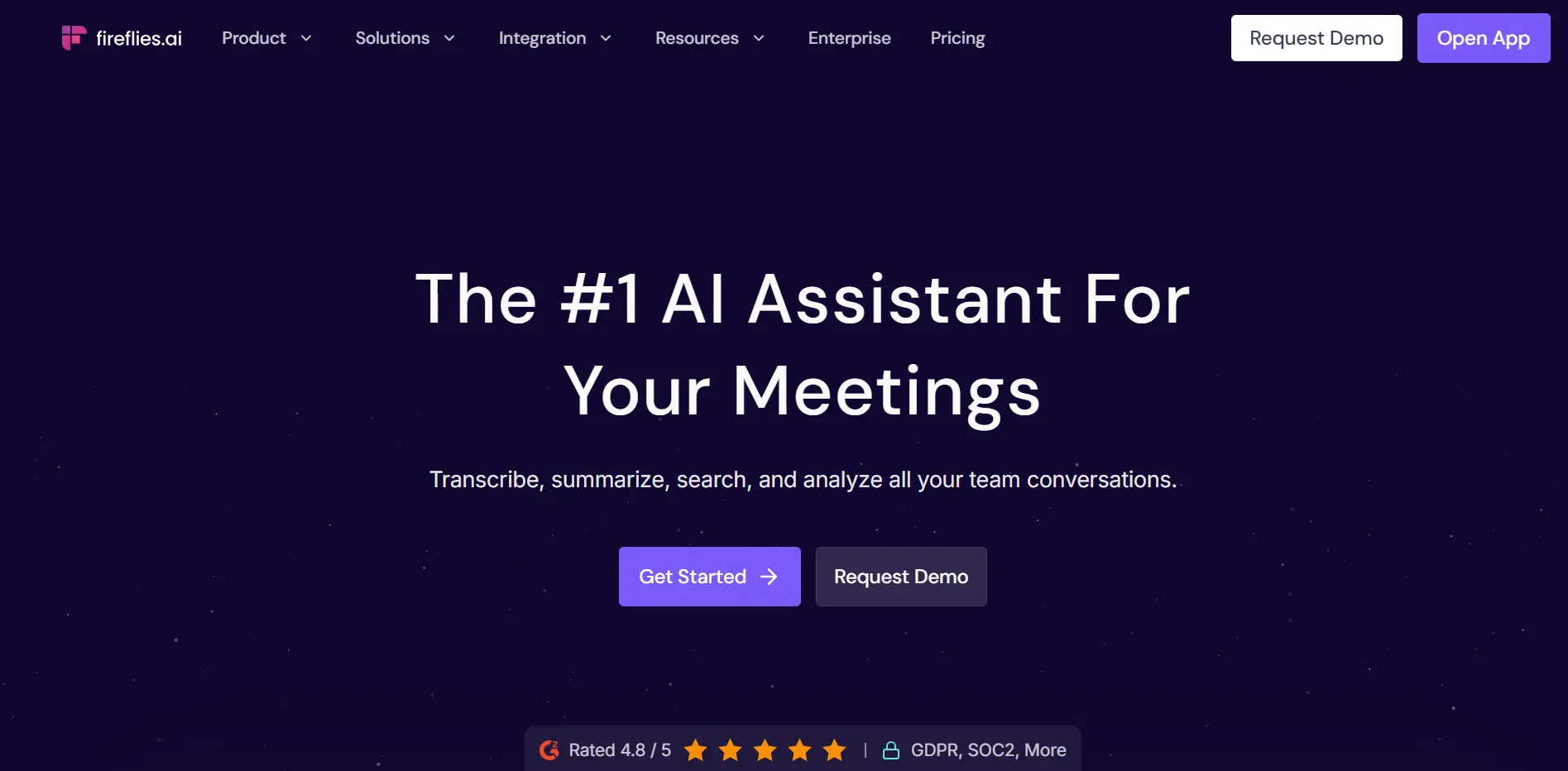 Fireflies.ai homepage promoting an AI assistant for meetings
The AskFred conversational AI layer lets teams query across their entire meeting history in natural language. "What did the sales team say about pricing objections last quarter?" or "Which accounts mentioned competitor X in the last 30 days?" returns cited answers drawn from every recorded call Fireflies has processed. This cross-meeting intelligence is directionally similar to Vibe AI’s Memory Graph, but structurally limited to online meetings where the Fireflies bot was present.
Language support is a concrete area where Fireflies outpaces Fathom: Fireflies supports 69+ languages versus Fathom’s 38, making it the stronger choice for multilingual sales organizations or globally distributed teams.
Fireflies’ free plan caps storage at 800 minutes per seat and limits AI summaries to 20 credits per month — sufficient to evaluate but not for daily team use. The Pro plan at $10/seat/month (annual) opens unlimited storage and the full AskFred intelligence layer.
For a full breakdown of where Fireflies AI and Vibe Dot compare on offline capture, memory, and compliance, see our Vibe Dot vs. Fireflies.ai comparison.
Best for: Revenue and operations teams who need meeting intelligence wired automatically into a broad stack of CRM, project management, and communication tools; multilingual organizations.
Pricing: Free (800 min storage, 20 AI credits/month); Pro $10/seat/month (annual); Business $19/seat/month; Enterprise custom.
Key differentiators vs. Fathom: 40+ native integrations with automatic post-meeting sync; 69+ language support vs. Fathom’s 38; AskFred cross-meeting AI search; works across all platforms including Windows and Android.
Limitations vs. Vibe Dot: Software-only — online meetings only; bot joins visibly; per-meeting intelligence rather than persistent cross-session memory; free tier storage cap pushes most teams to paid quickly.
4. Otter.ai — Best for Real-Time Live Transcription
Otter.ai is one of the earliest and most recognized AI meeting assistants, and it has a feature no other tool on this list offers: a live transcript that streams to the screen as people speak, in real time, during the meeting itself.
 Otter homepage section promoting AI agents for sales, education and more
Every other alternative here — including Fathom — generates notes after the meeting ends. Otter shows the words as they are spoken, which changes the workflow meaningfully. Accessibility use cases benefit directly: users with hearing difficulties can follow conversation without relying on audio; non-native speakers can read along while listening; anyone who needs to catch a specific phrase mid-call can scan the live stream rather than waiting for a post-meeting export.
Beyond live transcription, Otter’s OtterPilot feature handles the post-meeting layer: AI summaries, action item extraction, and integration pushes to Salesforce and HubSpot. The AI Chat function lets users query any past meeting transcript in natural language. Otter runs on Zoom, Google Meet, and Teams via bot, and a mobile app supports basic in-person recording — though this requires manually opening the app and starting a session, unlike Vibe Dot’s automatic capture modes.
A consistent limitation in user reviews is speaker separation in multi-participant calls, particularly when audio quality is mixed or participants speak over each other. Teams running large group calls or noisy environments flag this as a reliability gap. Otter is also currently facing wiretap litigation in the same California federal district as Granola, which organizations in regulated industries should factor into their evaluation.
For how Vibe Dot compares to Otter.ai across offline capture, speaker identification, and compliance, see our Vibe Dot vs. Otter.ai comparison.
Best for: Teams who need live transcription during meetings; accessibility use cases; non-native speakers who benefit from reading along; anyone who needs to reference a specific moment in real time.
Pricing: Free (300 min/month); Pro $16.99/seat/month; Business $30/seat/month; Enterprise custom.
Key differentiators vs. Fathom: Real-time live transcript during the meeting; audio recording kept for playback; mobile app for basic in-person recording; works cross-platform including Windows and Android.
Limitations vs. Vibe Dot: Bot joins meetings visibly; speaker separation struggles in noisy or multi-person environments; mobile in-person recording requires manual activation; no persistent cross-session organizational memory; active privacy litigation.
5. Avoma — Best for Revenue Teams Who Need Conversation Intelligence
Avoma sits at a different price and capability tier than the other tools on this list. Where Fathom, Granola, and Fireflies are primarily meeting recorders with AI notes on top, Avoma is a full meeting intelligence platform built around the revenue team workflow — pre-meeting agenda preparation, live transcription, post-meeting CRM automation, and longitudinal conversation analytics across hundreds of calls.
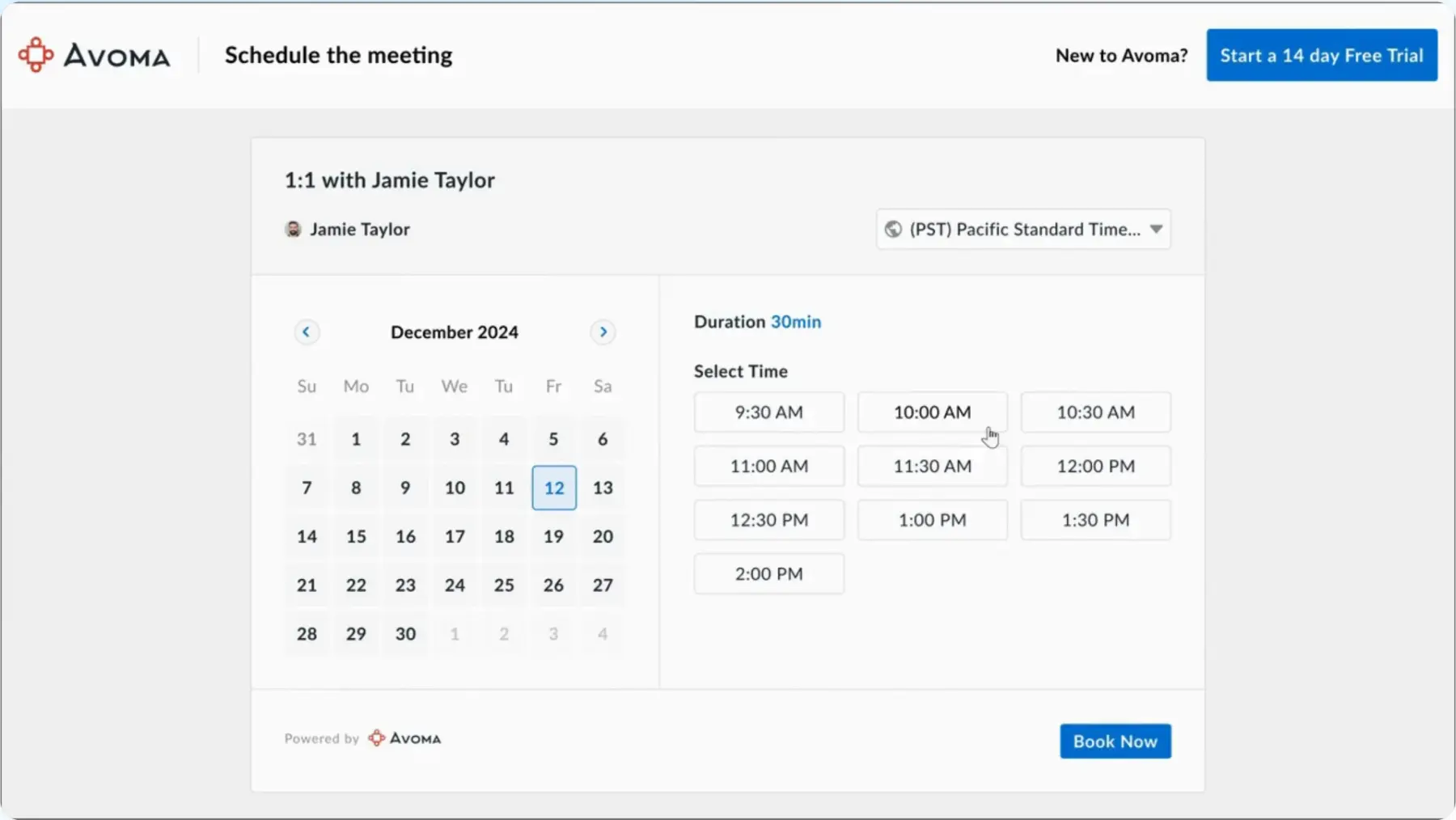 Avoma's page for scheduled meeting
The analytics layer is what sets it apart. Avoma tracks talk-time ratios, filler word usage, topic frequency, and question patterns, and surfaces coaching insights for sales managers. A manager can see that a rep talks 75% of the time on discovery calls, that competitor names come up in 40% of late-stage deals, or that specific objection-handling patterns correlate with longer sales cycles — all derived automatically from the meeting record rather than manually tagged. These are insights that transcript-only tools, including Fathom, cannot generate without manual review.
Avoma integrates deeply with Salesforce, HubSpot, and Pipedrive, automatically writing call summaries, next steps, and deal stage updates back to the CRM record after each meeting. Its pre-meeting agenda templates — with custom structures for discovery calls, QBRs, and customer check-ins — make it an operating layer for customer-facing meetings rather than a recording tool that sits beside them.
The main trade-off is complexity and price. The full sales intelligence feature set realistically costs $74–$109/seat/month with add-ons, which is a significant step up from Fathom Business at $25/seat/month. Teams with simple transcription needs will find the platform over-engineered for their workflow.
Best for: Sales managers who need conversation intelligence and rep coaching data; revenue operations teams who want CRM records automatically updated from call content; organizations running structured discovery call and QBR programs.
Pricing: Free (limited); Starter $19/seat/month; Plus $49/seat/month; full sales intelligence add-ons bring realistic cost to $74–$109/seat/month.
Key differentiators vs. Fathom: Full conversation intelligence with talk-time analytics and coaching scorecards; deep CRM auto-write to Salesforce, HubSpot, Pipedrive; pre-meeting agenda templates; 20+ language support.
Limitations vs. Vibe Dot: Online-meeting-only — no offline or in-person capture; highest price point on this list at full capability; significant learning curve; no persistent memory across non-meeting conversations.
Quick Comparison Table
|
Tool |
Form factor |
Offline / in-person |
Mobile app |
Cross-session memory |
Compliance |
Price (entry) |
|---|---|---|---|---|---|---|
|
Vibe Dot |
Hardware wearable |
✅ |
✅ iOS + Android |
✅ Memory Graph |
HIPAA, FERPA, NDAA, SOC 2 |
$199 + free plan |
|
Granola |
Software (no bot) |
❌ |
❌ |
❌ Per-meeting |
SOC 2, GDPR |
Free / $14/mo |
|
Fireflies.ai |
Software (bot) |
❌ |
✅ |
⚠️ AskFred (online only) |
SOC 2, GDPR |
Free / $10/mo |
|
Otter.ai |
Software (bot) |
❌ |
✅ (basic) |
❌ Per-meeting |
SOC 2, GDPR |
Free / $17/mo |
|
Avoma |
Software (bot) |
❌ |
✅ |
❌ Per-meeting |
SOC 2, HIPAA |
$19/mo |
|
Fathom (reference) |
Software (bot) |
❌ |
❌ |
❌ Per-meeting |
SOC 2 (in progress), GDPR |
Free / $18/mo |
Which Fathom Alternative Should You Choose?
If your team’s important conversations happen outside video calls — at client sites, in conference rooms, in the field — choose Vibe Dot. It is the only option on this list that captures the physical world, and the only one with HIPAA, FERPA, and NDAA certifications alongside persistent cross-session memory.
If you want no-bot online meeting notes that read in your voice, choose Granola — with the caveat that its privacy litigation is worth reviewing before enterprise deployment. See the Granola alternatives guide for context on the full category.
If your team needs meeting data flowing automatically into 40+ tools, choose Fireflies.ai. Its integration breadth is the widest at this price point.
If real-time live transcription is the priority — for accessibility, non-native speakers, or mid-meeting reference — choose Otter.ai.
If you lead a revenue team and need conversation intelligence, rep coaching, and automatic CRM write-back, choose Avoma and budget for the full platform cost.
Conclusion
Fathom is a genuinely good AI meeting assistant for the workflow it was designed for — structured video calls on a desktop, with clean CRM sync and a free tier that holds up at team scale. The search for a Fathom alternative almost always starts with a specific gap: no offline capture, no mobile app, missing compliance certifications, or the need for intelligence that accumulates over time rather than resetting after each meeting.
The right alternative depends entirely on which of those gaps is actually blocking you. For teams who need to capture the conversations that never make it to a calendar invite, Vibe Dot is the only tool on this list that was designed to solve that problem from the ground up.
Frequently Asked Questions
What is the best free Fathom alternative?
Fathom’s own free tier is exceptionally strong — unlimited recording and transcription with no cap is genuinely hard to match. Among the alternatives, Granola offers the deepest free-tier AI features (unlimited meetings, custom templates, AI chat). Fireflies.ai and Otter.ai both offer free plans with monthly transcription limits. Vibe Dot requires a $199 hardware purchase but includes a free Starter software plan, which may offer better value for teams whose critical conversations frequently happen in person.
Is there a Fathom alternative that works for in-person meetings?
Yes — Vibe Dot is the only AI meeting assistant on this list designed for in-person and offline capture. All other alternatives, like Fathom, require an active video call to function. Vibe Dot’s 5-mic array captures multi-speaker in-person conversations without any laptop or app running, and syncs automatically to the Vibe AI Memory Graph. For a direct comparison, see Vibe Dot vs. Fathom.
Does any Fathom alternative have a mobile app?
Fathom has no mobile app as of October 2026. Fireflies.ai, Otter.ai, and Avoma all have mobile apps, though their in-person recording requires manual activation. Vibe Dot has iOS and Android companion apps and captures in-person conversations natively via the hardware device — no manual start required in Auto Capture Standby mode.
Which Fathom alternative is best for HIPAA-regulated industries?
Vibe Dot and Avoma both carry HIPAA attestation — Vibe Dot additionally holds FERPA, NDAA, and FIPS 140-3 certifications that Avoma does not. Fathom, Granola, and Fireflies.ai do not currently carry HIPAA certification. For healthcare organizations or any team handling PHI in meeting content, Vibe Dot is the more comprehensive choice, with hardware-level encryption as an additional protection layer.
What is the best Fathom alternative for multilingual teams?
Fireflies.ai supports 69+ languages versus Fathom’s 38 and is the strongest software-based option for multilingual organizations. Vibe Dot supports 90+ languages across its transcription engine — the broadest coverage on this list.
Can I use Vibe Dot and Fathom together?
Yes. Some enterprise teams run Vibe Dot for in-person and field capture alongside Fathom for structured desktop video calls, letting each tool cover the environment it handles best. All Vibe Dot recordings feed into the Vibe AI Memory Graph regardless. Whether Fathom’s Business-tier CRM features justify the additional per-seat cost alongside Vibe AI Pro depends on whether Deal View and AI scorecards are active requirements for your sales team.